
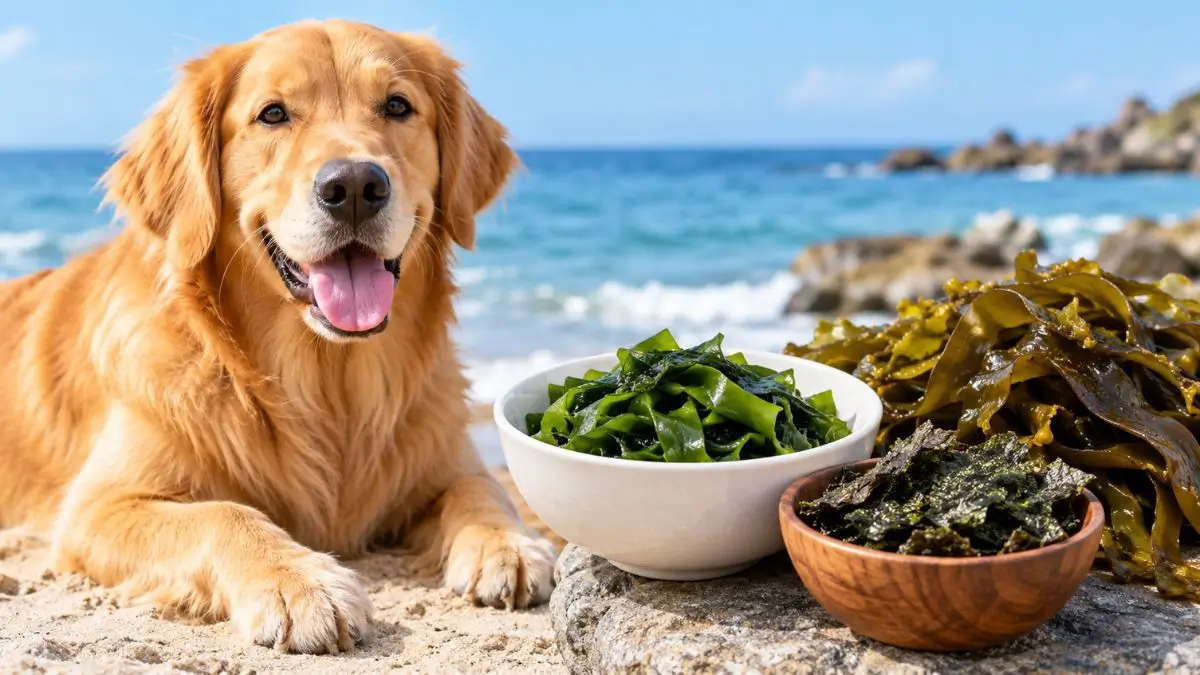
Can dogs eat seaweed? Yes, in small amounts, if it is plain, unseasoned, food-grade seaweed such as nori. Salted or flavored snacks are a poor choice, and wild beach seaweed is dangerous because dried pieces swell in the gut and can cause a blockage.
Is seaweed safe for dogs?
Plain, unseasoned seaweed is not toxic to dogs and is safe in small, occasional amounts for most healthy dogs. The danger comes from added salt, garlic, onion or oil in human snacks, from high iodine in some types, and from wild seaweed on beaches.
Dr. Jerry Klein, Chief Veterinarian for the AKC, says dogs can eat processed sheets of seaweed or nori without added salt or garlic. Canine nutritionist Micaela Caltran told Great Pet Care that seaweeds people eat are typically fine for dogs, and holistic dog nutritionist Emily Lancaster says to buy only unseasoned, unsalted kinds.
Which types of seaweed can dogs eat?
Four types are fine in small, plain amounts: nori, dulse, wakame and Irish moss, with nori the safest place to start. Kombu and other kelp are so high in iodine that only dog-formulated products make sense. Avoid hijiki, beach seaweed and seasoned snack seaweed.
| Seaweed | Also known as | Verdict for dogs |
|---|---|---|
| Nori | Laver, sushi sheets | Safe. Lowest iodine of the common types. Check for salt, oil and garlic. |
| Dulse | Palmaria palmata | Safe in small amounts if plain. |
| Wakame | Undaria, used in miso soup | Safe in tiny amounts if plain. More iodine than nori. |
| Irish moss | Sea moss gels and powders | Safe in tiny amounts if unflavored. Iodine varies by batch. |
| Kombu and other kelp | Laminaria, kelp granules | Very high iodine. Dog products at the label dose only. |
| Hijiki | Japanese side dish | Avoid. Regulators have warned about its inorganic arsenic. |
| Beach seaweed | Washed up on the shore | Avoid. It can swell in the gut and is often salty and contaminated. |
| Seasoned snack seaweed | Flavored packs, seaweed salad | Avoid. Salt, oil, sugar, garlic and onion are common extras. |
The iodine gap is huge. A 2024 study in Scientific Reports measured about 5 micrograms of iodine per gram of nori, 27 in wakame and 3,522 in kombu. Set against the National Research Council’s iodine allowance for adult dogs, one gram of that kombu holds about 16 times what a 33-pound dog needs in a day. So kelp should come from a dog product, never a kitchen jar.
Is seaweed good for dogs?
Seaweed adds small amounts of minerals such as iodine, iron and magnesium, plus some fiber and protein. A dog on a complete and balanced diet already gets what it needs, though, so seaweed is an optional extra, not a nutrient your dog is missing.
Dr. Klein lists protein, iron, iodine, magnesium and omega-3s, and Caltran adds antioxidants, fiber and prebiotics. Claims about gut health, immunity and coat come mostly from human and lab studies. The one independent dog trial we found, a 2021 study that fed 10 dogs four seaweeds, saw no change in gut bacteria or digestibility. Webvet’s vet-reviewed guide says dogs on complete food should not get kelp as a mineral supplement. For omega-3s, plain sardines are a far richer source.
Can seaweed help clean a dog’s teeth?
One brown seaweed, Ascophyllum nodosum, has dog trial evidence for less plaque and tartar, and products made from it carry the Veterinary Oral Health Council seal. That evidence covers those specific products, not nori sheets or kitchen kelp, and it does not replace brushing.
In a 2018 double-blind trial, 60 small-breed dogs ate treats containing A. nodosum or identical placebo treats for 90 days after a cleaning. By day 90 the seaweed group had about 38% less plaque, 20% less tartar and 46% fewer bad-breath compounds. The manufacturer paid for the study and we found no independent repeat, but several ProDen PlaqueOff products are on the VOHC accepted products list. The treats added iodine, so the authors advise caution for dogs with thyroid problems.
How much seaweed can a dog have? Safe amounts by weight
Keep plain dried seaweed to about 1/4 teaspoon a day for dogs under 20 pounds and no more than 2 teaspoons for the largest dogs, crumbled over food. Start well below that ceiling, and give kelp only as a dog product at its label dose.

No official body sets a seaweed dose for dogs. The chart follows PetMD’s serving guide, reviewed by veterinarian Dr. Sandra C. Mitchell, as a daily maximum, not a target.
| Dog weight | Most plain dried seaweed per day |
|---|---|
| 2 to 20 lb | 1/4 tsp |
| 21 to 30 lb | 1/2 tsp |
| 31 to 50 lb | 1 tsp |
| 51 to 90 lb | 1 1/2 tsp |
| 91 lb and up | 2 tsp |
Start with a few flakes. Seaweed still counts toward the 10% daily treat allowance, which you can check with our dog treat calculator. If you cook for your dog, a balanced homemade dog food recipe should already cover iodine, so ask your vet before adding kelp.
Can dogs eat seaweed snacks, sushi and seaweed salad?
Plain roasted nori is fine in tiny amounts, but most seaweed snacks, sushi rolls and seaweed salads are not. They often contain salt, oil, garlic, onion, soy sauce, sugar or raw fish, and those extras cause more trouble than the seaweed itself.
Read the label first. If it lists anything beyond seaweed, such as salt, oil or garlic powder, skip it. Sesame oil is not toxic but adds fat, as our guide to sesame seeds for dogs explains, and salt is the same problem that puts pretzels and pepperoni on the skip list.
Sushi is riskier than its nori. The AKC warns against raw fish. Sushi rice is seasoned with vinegar, sugar and salt, unlike plain cooked rice, and the pickled ginger on the side is sweetened, unlike fresh ginger. Cooked plain fish is safer, as our salmon skin guide explains. Seaweed salad, usually wakame in sesame oil, sugar and salt, fails the label test too.
Why beach seaweed is dangerous for dogs
Dried beach seaweed can absorb fluid and swell after a dog swallows it, blocking the intestine. It can also carry heavy salt, bacteria and pollutants. This is the seaweed risk that sends dogs to emergency vets, so never let a dog eat it.
If you are asking can dogs eat seaweed after a beach walk, this section matters most. Sun shrinks seaweed on the sand. Once swallowed, Vets Now explains, it absorbs liquid, expands, can lodge in the gut and may rupture it. Not every nibble ends in surgery, but these real cases show how badly it can go.
Lola, a five-year-old dog on her first seaside holiday in Cornwall, chewed through a mound of seaweed, according to a Vets Now case report. She vomited elastic bands and huge lumps of seaweed, needed an IV drip and anti-vomiting medicine, and took about a week to recover. Stanley, a Springer Spaniel, ate seaweed on a Guernsey beach in 2021 and needed three operations, one of which removed a foot of infected intestine.
Vetwest, an Australian vet group, reported in 2022 that its vets surgically removed seaweed from the stomach of a dog named Bindi. In a June 2026 column, vet Joe Shams described Riley, an older Labrador who seemed fine after a March beach walk, then stopped eating and vomited. His blockage cleared without surgery, which Shams called incredibly lucky, and he recommended a basket muzzle for future beach trips.
Andy Barcis of New Era Veterinary Hospital, which treated Stanley, told Channel 103 that seaweed is hard to see on an x-ray and that his team opens up dozens of dogs a year to remove it. Watch for vomiting, diarrhea, appetite loss and lethargy, sometimes days later. Swelling is also why dry chia seeds are best soaked, and blockage is why a swallowed avocado pit or cooked chicken bones need a vet.
Seaweed vs blue-green algae: how to tell them apart
Seaweed and toxic blue-green algae differ. Blue-green algae are cyanobacteria that form scum or paint-like films, mostly on warm, still fresh water, and they can kill a dog within hours. Seaweed on a beach looks like leafy fronds, and its main risk is a blockage.
The CDC says animals can become very ill or die within hours of contact with a harmful algal bloom. Dogs swallow toxins by drinking the water or licking their fur after a swim. California’s veterinarian reference lists vomiting, diarrhea and jaundice, or stumbling, seizures and breathing failure, depending on the toxin. If you see scum or a paint-like film, keep your dog out, rinse its coat with tap water if it went in, and call a vet.
What to do if your dog ate seaweed
Check what kind it was. A small piece of plain nori usually needs only watching. A salty or garlic-flavored snack, a large amount, or any dried beach seaweed means calling your vet or Pet Poison Helpline now, before symptoms start.
| What your dog ate | What to do |
|---|---|
| A pinch of plain nori or dried seaweed | Watch for 24 hours and keep fresh water available. |
| One plain or lightly salted snack sheet | Usually fine for a healthy dog. Call your vet if your dog is small or shows symptoms. |
| Several snack packs, or any garlic or onion flavor | Call your vet or Pet Poison Helpline at (855) 764-7661 with the package in hand. |
| Beach seaweed, especially dried | Call a vet the same day, even if your dog looks fine. |
| Scummy water from a lake or pond | Rinse your dog with tap water and go to a vet immediately. |
Never make your dog vomit with salt or salt water, which Pet Poison Helpline warns can cause salt poisoning. Keep the packaging and note how much was eaten. Pet Poison Helpline charges $99 per incident, and the ASPCA Animal Poison Control Center at (888) 426-4435 may also charge a fee.
Salt poisoning starts with vomiting and diarrhea and can progress to stumbling, tremors, seizures and collapse. If your vet suggests a bland diet after a mild upset, plain white rice and plain pumpkin are common choices.
Who should skip seaweed: iodine, thyroid, sodium and heavy metals
Dogs with thyroid disease, dogs taking thyroid medication, and dogs with heart problems should not eat seaweed unless their vet approves it. Many seaweeds are high in iodine, and some also carry a lot of sodium and metals such as arsenic.
Lancaster advises avoiding seaweed for dogs with hypothyroidism or on any thyroid medication or supplements. PetMD notes that excess iodine from seaweed can cause thyroiditis and flags its sodium for dogs with cardiovascular issues. Puppies are small and still growing, so ask your vet before offering more than a taste of plain nori.
A 2025 Journal of Food Protection analysis of 100 supermarket seaweeds found kombu and wakame higher in iodine and arsenic than nori, and a 2010 NSW Food Authority survey notes regulator warnings about inorganic arsenic in hijiki. In 2021 tests, ConsumerLab found lead, cadmium and arsenic in all six dried seaweeds it checked, so buy from a seller that publishes testing.
How to introduce seaweed safely
Start with a few flakes of plain nori on regular food, add no other new food that day, and watch for 24 hours. If stool and appetite stay normal, repeat the same small amount occasionally. Stop at the first sign of upset.
Crumble sheets or grind them to flakes, because Hepper’s vet-reviewed guide warns that seaweed can clump and cause hacking and coughing, and gulping it raises the risk of choking. If your dog also grabbed something else, run it through our free Can My Dog Eat This? food checker.
Frequently asked questions about dogs and seaweed
Can dogs eat nori?
Yes. Plain nori is the safest seaweed for dogs because it is low in iodine and usually sold with nothing added. Crumble a small piece over food, check that the label lists only seaweed, and skip sushi nori that comes wrapped around seasoned rice.
Is kelp good for dogs?
A dog on complete food does not need kelp, and kelp is very high in iodine. If your vet suggests it, use a product made for dogs at the label dose. Skip kitchen kelp granules, and avoid kelp entirely for dogs with thyroid problems.
Can dogs eat sea moss?
Plain sea moss, usually Irish moss, is a red seaweed, so a small amount of unflavored gel or powder follows the same rules as other seaweed. Many gels are blended with fruit or sweeteners, so read the label and avoid any product containing xylitol.
Can dogs eat spirulina?
Spirulina is a blue-green alga, not a seaweed, and there is little research on it in dogs. The FDA has seen recalls of other blue-green algae supplements over liver toxins called microcystins, so use only a tested pet product your vet approves.
Can dogs eat seaweed from the beach?
No. Dried beach seaweed can swell in the gut and cause a blockage, and signs can appear hours to days later. Call your vet the same day even if your dog seems fine, and go straight in for vomiting, lethargy or loss of appetite.
Final answer: can dogs eat seaweed?
Yes, dogs can eat plain, unseasoned seaweed such as nori in tiny, occasional amounts. Skip salted or flavored snacks, give kelp only as a dog-formulated product, and never allow beach seaweed. Dogs with thyroid or heart problems need a vet’s approval first.
The routine is short. Read the label, crumble a few flakes over regular food, wait a day, and keep it occasional. At the beach, keep your dog leashed near the tide line, practice a firm leave-it cue, and consider a basket muzzle for a dog that scavenges, as Riley’s vet advised. If your dog does eat something questionable, call a vet early, because seaweed that has already swelled in the gut is far harder to treat. If your dog just likes a crunch, plain zucchini or bell peppers come with far less fine print, and our dog nutrition guides cover many other foods.
How we checked this guide
We checked every claim in this guide against vet-reviewed guides, poison control pages, published case reports and peer-reviewed studies, all linked above. Where a popular claim had no current source, we left it out. This is general information, not veterinary advice.


