
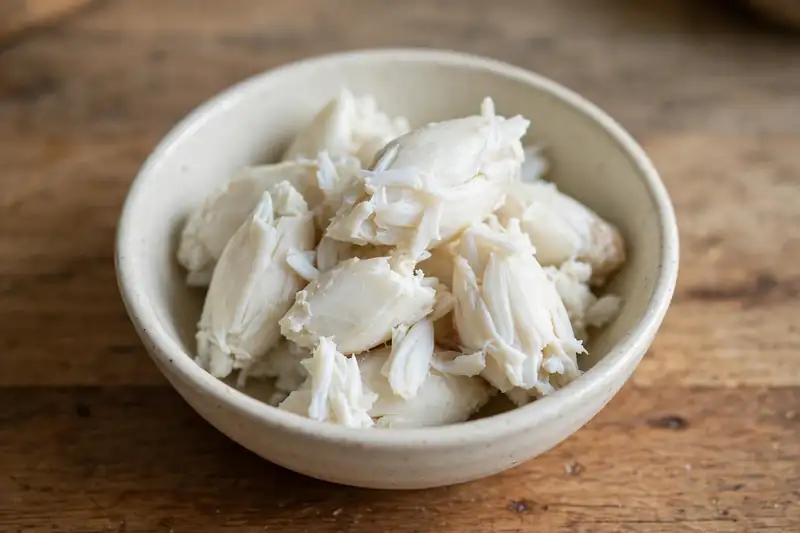
Can dogs eat crab? Yes — but only plain, fully cooked, shell-free crab meat, served in small amounts as an occasional treat. The meat itself is not toxic to dogs, but the shell, the seasonings we usually serve it with, and imitation crab products are where the real danger lies.
If you’re cracking crab legs at the table and your dog is staring up at you hopefully, a tiny piece of the plain white meat is fine for most healthy adult dogs. Just don’t hand over a leg still in its shell, a buttery or garlicky piece from your plate, or anything labelled imitation crab. Get those three things right, and crab becomes a safe once-in-a-while treat instead of something to worry about.
The Short Answer
Plain, shelled crabmeat is not toxic to dogs in small amounts, according to PetMD, and feeding it as an occasional treat is typically fine — with some important caveats. The meat has to be thoroughly cooked, completely plain, and free of every trace of shell. Portions need to stay small, and it’s worth checking with your veterinarian first, especially if your dog has any health condition or has never tried shellfish before.
Think of crab as a treat, not a meal ingredient. Like all treats, it should make up no more than about 10% of your dog’s daily calories, and it should never replace a complete and balanced dog food. PetMD makes a fair point here: the nutrients in crab are already provided by a well-balanced commercial dog food, so your dog doesn’t actually need crab to be healthy — it’s simply a tasty extra.

Is Crab Good for Dogs?
Crab meat does have some nutritional positives. PetMD describes it as a lean protein source loaded with amino acids, zinc, vitamin B12, and fatty acids, including omega-3 fatty acids. Lean protein supports muscle maintenance, zinc supports immune health and skin, vitamin B12 supports nerve function and energy metabolism, and omega-3s support skin and coat health.
Here’s the honest part, though: because the safe portion is so small, your dog won’t get a meaningful nutritional boost from the occasional bite of crab. It’s more of an enjoyable flavour experience than a health supplement. If you want those nutrients in your dog’s diet every day, a good-quality complete dog food already delivers them in the right balance.
The Risks of Feeding Crab to Dogs
The shell is the biggest danger
Crab shell is sharp and indigestible, and PetMD warns it can injure your dog’s mouth and intestinal tract, as well as pose a choking hazard or cause an intestinal blockage. Legs, claws, and even small shell fragments mixed into picked meat all count — so check the meat carefully before serving, and never let your dog chew on a shell “for fun.” Beach trips need the same care: a dog that catches or scavenges a crab on the sand can end up eating shell and raw meat together.
Raw crab can carry parasites
Raw crab — the kind your dog might find at the beach, for example — can contain intestinal parasites that may result in health problems, according to PetMD. The American Kennel Club’s (AKC) shellfish guidance makes the same point: raw, uncooked shellfish can contain harmful pathogens, and cooking is what removes that risk. Never feed raw crab, and don’t let your dog snack on a dead crab found on the shore.
High sodium, cholesterol, and iodine
Crabmeat is very high in sodium, cholesterol, and iodine, none of which are healthy for your dog in large quantities, PetMD notes. That’s the main reason portions have to stay small and infrequent. Dogs with kidney disease or heart disease are especially sensitive to extra sodium, so they should skip crab unless your vet says otherwise. Canned crab is usually even saltier than fresh-cooked crab, so fresh, plain-cooked meat is the better choice — and if you do use canned crab, check that it has no added salt or seasonings.
Allergies are uncommon but possible
Some dogs do develop an allergy to crab if fed crabmeat repeatedly, although PetMD notes this is uncommon. Since shellfish is a known allergen for some dogs, that first taste should be tiny, and it’s worth watching your dog for the next 24 hours. If your dog already has a known shellfish or food allergy, skip crab entirely.
Seasonings can be toxic
Many of the seasonings we put on crab aren’t good for dogs, and some can be toxic, PetMD warns. Garlic and onion are the big ones to avoid, along with heavy salt, butter, and spicy blends such as Old Bay-style seasoning. A piece dipped in melted butter or garlic sauce isn’t a dog treat — it’s a stomach upset waiting to happen.
How to Serve Crab Safely
Stick to these steps every time and you’ll have very little to worry about:
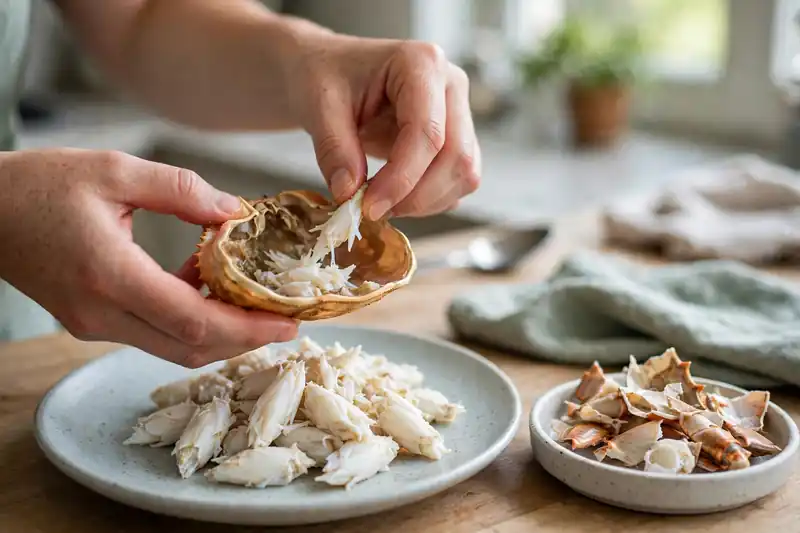
- Cook it yourself. Boil, steam, or bake the crab until it is thoroughly cooked, so you know exactly how it was prepared. PetMD advises cooking it yourself rather than sharing restaurant crab, where you cannot be sure what was added.
- Remove every trace of shell. Pick through the meat carefully, including small sharp fragments and cartilage. If you are serving crab legs, the meat must come fully out of the shell first — never hand your dog a leg to chew.
- Serve it completely plain. No butter, no salt, no garlic, no onion, no lemon butter, no cocktail sauce, and no seasoning blends.
- Let it cool completely. Hot crab straight from the pot can burn your dog’s mouth.
- Cut it into small, bite-sized pieces. This reduces the choking risk, especially for small dogs and enthusiastic eaters.
- Start tiny the first time. Offer a single small piece, then wait and watch for any reaction before ever offering a full portion.
- Throw shells away safely. Bag crab shells and take them out of reach — dogs that raid the trash can easily get hold of shells after dinner. This is one of the most common ways dogs actually get hurt by crab, and most competitor articles never mention it.
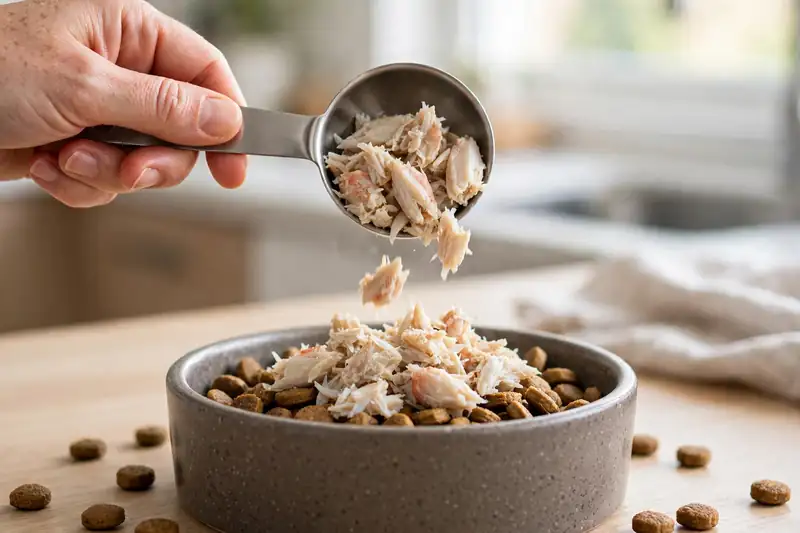
You can offer the plain meat on its own, sprinkled as a topper over your dog’s regular food, or frozen into a Kong-style toy, as PetMD suggests. Just keep the portion small, and stop giving it if you notice any signs of stomach upset.
How Much Crab Can Dogs Eat?
PetMD gives a clear guideline: about 1 tablespoon of plain, unseasoned, well-cooked crab per 10 pounds of body weight, offered at most once or twice per week. Use this table as a starting point, and stay at the lower end if your dog is trying crab for the first time:
| Dog size | Weight | Safe portion (once or twice a week, maximum) |
|---|---|---|
| Extra-small | 2–20 pounds | 1 tablespoon |
| Small | 21–30 pounds | 2–3 tablespoons |
| Medium | 31–50 pounds | Up to ¼ cup |
| Large | 51–90 pounds | Up to ½ cup |
| Extra-large | 91+ pounds | Up to 10 tablespoons |
Remember, these are maximums, not targets. A small taste is plenty, and for most dogs, once a week or less is a sensible rhythm. If your dog is overweight, on a restricted diet, or managing kidney or heart disease, ask your vet before offering crab at all — the sodium and cholesterol make it a poor choice for those dogs.
What to Avoid
- Crab shells, legs, and claws — sharp, indigestible, and a choking and blockage risk.
- Raw crab — parasite risk, including crab found on the beach.
- Imitation crab (surimi, “krab” sticks) — PetMD is clear on this: imitation crab is not related to authentic crab. It is a blend of different seafood products mixed with preservatives and binders, and it is not a healthy food for your dog. Skip it, even though it is cheaper and easier to find.
- Crab cakes — these contain a mix of ingredients, some of which may not be safe for dogs, such as spices, onion, and garlic. PetMD advises avoiding them unless you made them yourself and know they contain only dog-safe ingredients. Most shop-bought or restaurant crab cakes also come fried in oil and served with sauce.
- Soft-shell crab — even though the shell is soft, soft-shell crab is almost always fried and seasoned, so it carries the same fat, salt, and coating problems as other fried foods. Skip it.
- Crab rangoon, crab dip, and crab salad — usually made with cream cheese, mayonnaise, garlic, onion, sugar, or frying oil. None of that belongs in a dog’s bowl.
- Sushi with crab — even if the crab itself is plain, sushi often brings soy sauce (very salty), wasabi, pickled ginger, and imitation crab. Do not share it.
- Butter, garlic butter, and seasoned dipping sauces — garlic and onion can be toxic to dogs, and butter adds fat that can upset the stomach.
- Canned crab with added salt or flavourings — check the label; plain, no-salt-added is the only version worth considering, and fresh-cooked is still better.
- Crab shells in the trash — bag them and get them out of reach, or a determined dog will find them after dinner.

Which Dogs Should Skip Crab?
Most healthy adult dogs can enjoy a tiny piece of plain crab — but the dogs below should skip it, or only have it with explicit vet approval:
- Dogs with a known shellfish allergy or a history of food allergies
- Dogs with kidney disease or heart disease (extra sodium is a real concern)
- Dogs on a low-sodium, low-cholesterol, or weight-management diet
- Puppies, senior dogs, and dogs with sensitive stomachs — their digestion is less forgiving, so check with your vet first
- Any dog that has reacted badly to seafood before
When in doubt, leave it out. No dog’s health depends on eating crab, and there are plenty of safer treats to offer instead.
Symptoms to Watch For and When to Call a Vet
After that first taste, keep an eye on your dog for 24 hours. Mild stomach upset — a bit of gas or one loose stool — can settle on its own once you stop feeding crab, but call your vet if it doesn’t pass quickly or your dog seems unwell.
Stop feeding crab and call your vet promptly if you see:
- Vomiting or ongoing diarrhoea
- Itchy skin, hives, redness, or swelling of the face, lips, or ears
- Watery eyes, excessive drooling, or lethargy
- Difficulty breathing, wheezing, or collapse — this is an emergency; go to an emergency vet clinic immediately
- Straining to pass stool, abdominal pain, a swollen belly, or refusing food after eating shell — these can signal a blockage from shell fragments
If your dog ate crab shell, a whole crab leg, or a large amount of crab: don’t wait for symptoms if a blockage is possible. Call your vet straight away and tell them what and how much your dog ate, and when. Your vet may want to examine your dog even if they seem fine at first, because blockages can take time to show. If you can’t reach your vet, contact an animal poison control helpline such as ASPCA Poison Control for guidance.
It’s also worth telling your vet if your dog ate seasoned crab, crab dip, or imitation crab — the concern there is usually the garlic, onion, salt, or other additives rather than the crab itself, and your vet will advise based on the ingredients and the amount eaten.

FAQ
Q1: Is plain crab meat safe for dogs?
A: Yes, in small amounts — as long as it is real crab meat that is fully cooked, completely plain, and completely free of shell. Keep it as an occasional treat rather than a regular part of meals, and check with your vet first.
Q2: What about the meat inside crab legs?
A: The meat itself is fine, but never hand over the leg. The shell is sharp and indigestible and can choke your dog or cause an intestinal blockage. Always take all the meat out of the shell first and check for fragments before serving.
Q3: Can dogs eat imitation crab?
A: No, it’s best to avoid it. PetMD notes that imitation crab is a blend of seafood products with preservatives and binders, not real crab, and it isn’t a healthy food for dogs. It often also contains added salt, sugar, and flavourings.
Q4: Can dogs eat raw crab?
A: No. Raw crab can contain intestinal parasites and harmful bacteria. Only fully cooked crab is safe, and even then only in small, plain, shell-free portions. That includes crab your dog finds on the beach — don’t let them eat it.
Q5: How much crab can I give my dog?
A: PetMD’s guideline is about 1 tablespoon of plain, cooked crab per 10 pounds of body weight, at most once or twice per week. For an extra-small dog that’s just 1 tablespoon; a large dog’s maximum is about ½ cup. Start with less than the maximum, especially the first time.
Q6: What should I do if my dog eats crab shells?
A: Call your vet straight away, especially if your dog ate a large piece or a whole leg. Watch for vomiting, straining, abdominal pain, a swollen belly, or refusal to eat, which can signal a blockage. Don’t try to make your dog vomit unless your vet tells you to.
Q7: Can dogs be allergic to crab?
A: Yes, though it is uncommon. Like people, some dogs react to shellfish proteins, with signs such as itching, hives, vomiting, diarrhea, or swelling of the face. Stop feeding it and call your vet if you see any of these; trouble breathing or collapse is an emergency.
Q8: What seafood should dogs not eat?
A: Skip raw or undercooked seafood of any kind, anything battered, fried, or heavily seasoned, and fish that run high in mercury (such as swordfish, king mackerel, and tilefish) except as a rare treat. Plain, fully cooked, shell-free seafood in small amounts is the safe version.
Q9: Can dogs eat canned crab meat?
A: Only if it is no-salt-added and rinsed well, and even then only in small amounts. Most canned crab is too salty and may contain preservatives, so fresh, plain, cooked crab meat is always the better choice.
The Bottom Line
Crab is one of those foods where the answer is a careful yes. Plain, cooked, shell-free meat in a small portion is safe for most healthy dogs as an occasional treat. The trouble almost always comes from the shell, the seasoning, the butter, or the imitation version — not from the meat itself. Keep it plain, keep it small, keep the shells in the bin and out of reach, and check with your vet if your dog has any health condition or has never had shellfish before.
Vet disclaimer: This article is for general information only and is not a substitute for professional veterinary advice, diagnosis, or treatment. Every dog is different, and dogs with allergies, kidney or heart disease, or other health conditions may need different guidance. Always talk to your own veterinarian before adding a new food to your dog’s diet, and contact your vet or an emergency clinic immediately if your dog shows signs of an allergic reaction or a possible blockage.


