

The Short Answer
Yes, dogs can eat lentils — but only when they are fully cooked, completely plain, and served in small amounts. Raw or undercooked lentils are a different story: they contain lectins, natural plant compounds that are hard on a dog’s stomach and can cause vomiting, gas, or diarrhea. Thorough cooking greatly reduces those lectins, which is why the preparation matters far more than the lentil itself.

Why Lentils Confuse So Many Dog Owners
If you have seen headlines linking lentils to heart disease in dogs, you are not alone — and you are right to ask questions. That worry traces back to a U.S. Food and Drug Administration (FDA) investigation into certain grain-free dog foods that used legumes, including lentils and peas, as main ingredients. Here is the part most headlines skip: the FDA has said there is not enough data to prove those diets cause dilated cardiomyopathy (DCM), and DCM cases have been reported in dogs eating grain-inclusive diets too. A small occasional serving of plain cooked lentils is not the same thing as a grain-free kibble built mostly on legumes. If your dog eats a commercial food, that food is already balanced — lentils are an optional extra, not a necessity.
Benefits of Cooked Lentils for Dogs
Lentils are not a superfood for dogs, but they do bring something useful to the bowl in small amounts:
- Plant protein and fiber. Cooked lentils offer soluble fiber that supports steady digestion, plus a modest amount of plant-based protein.
- Iron, folate, and B vitamins. These support energy metabolism and red blood cell health, which is helpful in a varied, vet-approved homemade diet.
- Low fat. Plain lentils add bulk and fullness without much fat, which can help a dog that always seems hungry on a weight-management plan — with your vet’s agreement.
- Gentle on many stomachs. Red and yellow lentils are hulled, so they cook down soft and are usually easier to digest than green or brown lentils, which keep a firmer skin.
None of this makes lentils a replacement for meat. Dogs do best with animal protein as the core of their diet, and lentils should only ever play a supporting role.

Risks to Know Before You Serve Them
- Raw or undercooked lentils. Never feed these. Besides lectins, dried lentils are hard and can be difficult to digest, and a large amount swallowed whole could upset the gut.
- Gas and loose stools. Lentils are high in fiber, and too much at once is the most common cause of trouble — even when they are cooked properly.
- Seasoned dishes. Lentil soup, dal, and stews made for people are not safe for dogs. They very often contain onion, garlic, or a lot of salt, and onion and garlic are toxic to dogs (the ASPCA lists both as toxic). Even “low-sodium” broth can hide seasonings.
- Canned lentils. Most are packed in salty water with preservatives. If you ever use them, rinse very thoroughly — but freshly boiled lentils are the safer choice.
- Sprouted lentils. Sprouting lowers lectin levels compared with dried lentils, but raw sprouts can carry bacteria. If you serve sprouted lentils, cook them first, just like dried ones.
- Dogs who should skip lentils. Puppies under a year need precise nutrition for growth, and dogs with kidney disease or pancreatitis should not get lentils unless their vet says so. Dogs with a known legume sensitivity should avoid them too.

How to Serve Lentils Safely
- Rinse dried lentils and pick out any stones or debris.
- Boil plain in water for 20–30 minutes until completely soft and mushy. No salt, no oil, no stock, no spices.
- Cool completely before serving — hot food can burn a dog’s mouth.
- Start tiny. For a first taste, offer about half a teaspoon per 10 lbs of body weight and watch for 24–48 hours before offering more.
- Keep portions small. As a regular treat, roughly 1–2 tablespoons per 20 lbs of body weight, no more than once or twice a week, and always within the 10% treat rule — treats should stay under 10% of daily calories.
- Store leftovers properly. Cooked lentils keep in the fridge for up to 3 days; freeze the rest in small portions.
Red or yellow lentils are the best choice for sensitive stomachs because they break down so softly. Green and brown lentils are fine too when fully cooked, but they hold more fiber and are more likely to cause gas. Like rice, plain boiled lentils work as a simple staple in a bland diet — but only in small amounts.

What to Do If Your Dog Eats Raw Lentils
Do not panic. A small amount of raw lentils is unlikely to be an emergency, but it can cause vomiting, diarrhea, bloating, or a reduced appetite. Make sure your dog has fresh water, skip their next treat, and watch them for a day. Call your vet if vomiting or diarrhea is severe or lasts more than 24 hours, if your dog seems lethargic, or if they swallowed a large quantity of dried lentils.
When to Call the Vet
- Vomiting or diarrhea that does not settle within 24 hours, or any blood in vomit or stool
- Signs of an allergic reaction: itching, ear inflammation, swelling, or hives
- Your dog has kidney disease, pancreatitis, or is a puppy, and ate lentils anyway
- Your dog ate lentil soup or a seasoned dish containing onion or garlic — in that case, call sooner rather than later, because onion and garlic effects can be delayed
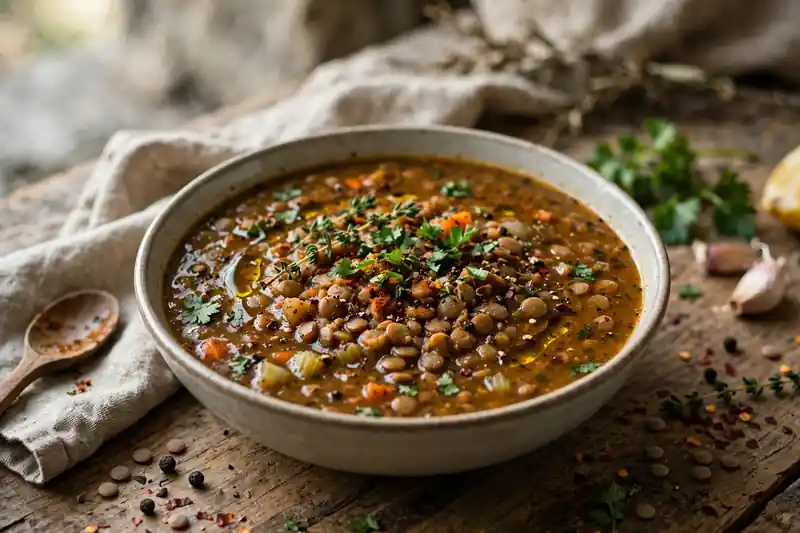
FAQ
Q: Can dogs eat lentils every day?
A: It is better not to. Lentils work best as an occasional treat once or twice a week. Daily servings raise the risk of gas, loose stools, and an unbalanced diet.
Q: Are red lentils better than green lentils for dogs?
A: For sensitive stomachs, yes. Red and yellow lentils are hulled and cook down softer, so they are easier to digest. Nutritionally the colors are very similar once cooked.
Q: Can dogs eat lentil soup?
A: No. People-style lentil soup almost always contains onion, garlic, salt, or stock — all things dogs should not have. Only plain, water-boiled lentils are safe.
Q: Are lentils in dog food safe?
A: Lentils as one ingredient in a complete, balanced commercial food are different from feeding lentils at home. If your dog’s food already contains legumes, there is no need to add more.
Q: Do lentils cause heart disease (DCM) in dogs?
A: There is no proven link between plain cooked lentils and DCM. The FDA investigation concerned certain grain-free diets as a whole, and the agency has said the evidence does not establish a cause. If you are worried about your dog’s heart, talk to your vet about their overall diet rather than one ingredient.
Q: Can puppies eat lentils?
A: Puppies should stick to vet-approved puppy food. Their growth needs precise nutrient ratios, and high-fiber foods like lentils can upset that balance and their digestion.
Q: Can dogs eat lentil-based treats or lentil flour?
A: Generally yes, in small amounts. Treats made mainly from lentil flour are fine as part of the treat allowance, as long as the ingredient list is plain — no onion, garlic, or heavy salt. Check the label, and remember these treats still count toward the 10% rule.
Q: How much lentils can I feed my dog?
A: Keep it small and occasional — a spoonful or two of plain cooked lentils mixed into a meal, once or twice a week at most, and always inside the 10% treat rule. Start with a tiny amount the first time and watch for gas or loose stools before offering more.
Q: Are lentils and chickpeas good for dogs?
A: Both are fine in the same way: plain, fully cooked, and in small amounts. They are a useful fiber and protein extra, but neither should replace meat in your dog’s diet, and both should be served without onion, garlic, salt, or seasoning. See also our guide to Can Dogs Eat Chickpeas?
Q: Can dogs have lentils with quinoa?
A: Yes — plain cooked quinoa is fine for most dogs in small amounts, under the same moderation rules. Just skip seasoned quinoa mixes and keep both grains as small extras, not the main part of the meal.
Q: What grains should dogs avoid?
A: No plain grain is toxic to dogs, but avoid grain dishes with onion, garlic, heavy salt, or xylitol, and never feed raw dough, which can expand and ferment in the stomach. Plain, cooked grains in small amounts are the safe version.
Vet Disclaimer
This article is for general information only and is not a substitute for veterinary advice. Every dog is different, and dogs with kidney disease, pancreatitis, allergies, or other health conditions need individual guidance. Talk to your veterinarian before adding lentils — or any new food — to your dog’s diet.


