

The Short Answer
Yes, dogs can eat mandarins — but only the peeled, seedless flesh, and only a segment or two as an occasional treat. The peel and the white pith underneath it are the problem: they contain concentrated citrus oils that can upset a dog’s stomach and, in larger amounts, are toxic. The seeds are a choking risk and contain trace amounts of cyanide compounds. Peel it, seed it, keep it small, and most dogs will be fine.
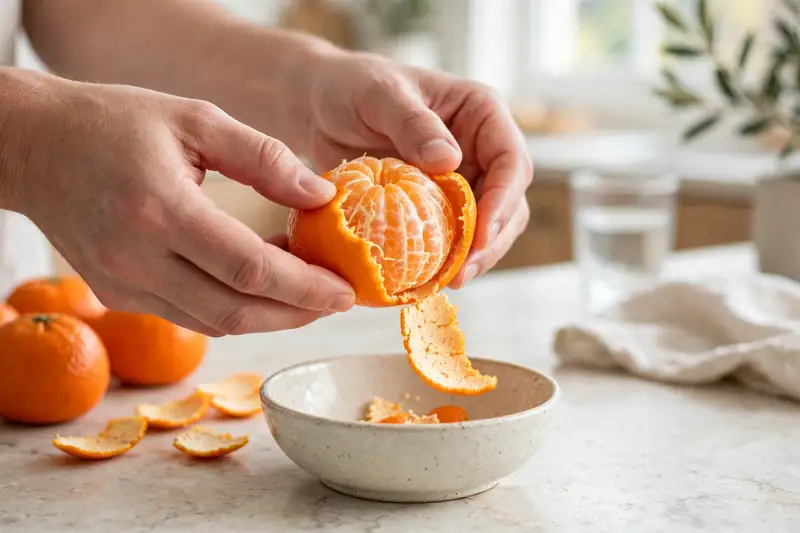
What Mandarins Offer (and Why Dogs Do Not Need Them)
Mandarins bring vitamin C, potassium, fiber, and water — all good things in theory. Dogs make their own vitamin C in their liver, so they do not need citrus to stay healthy, and a complete commercial dog food already covers their vitamin needs. Mandarins are a fun, juicy extra, not a nutritional requirement. If your dog turns their nose up at a mandarin segment, they are missing nothing. Can Dogs Eat Papaya? covers another sweet tropical fruit with similar treat-sized portions.

The Risks, Plainly Stated
- Sugar. Mandarins are sweet, and that sugar adds up fast in a small dog. Overweight dogs should get less, and diabetic dogs should skip mandarins unless the vet approves.
- Acidity. Citrus acid can irritate a dog’s stomach, especially in larger amounts — vomiting or diarrhea are the usual signs.
- Peel and pith. The peel is tough and hard to digest, and it carries concentrated essential oils that can cause stomach upset and, in quantity, toxicity. The bitter white pith carries the same oils.
- Seeds. Seeds are small, hard, and easy to swallow whole — a choking risk for small dogs — and citrus seeds contain trace cyanide compounds. Always remove them.
- Strong smell, strong opinions. Many dogs dislike the scent and taste of citrus. That is normal, and there is no reason to push it.

How Much Mandarin Can a Dog Eat?
Think of mandarin as a treat, not a snack, and stay within the 10% treat rule. A few times a week at most is plenty. One whole mandarin is too much for any dog in one sitting — the sugar and acid alone make it a bad idea.
| Dog size | Amount |
|---|---|
| Small (2–20 lbs) | Half a segment |
| Medium (21–60 lbs) | 1–2 segments |
| Large (over 60 lbs) | 2–3 segments |

How to Serve Mandarins Safely
- Peel completely, including all the white pith you can manage.
- Remove every seed and break the flesh into small, bite-sized pieces. Can Dogs Eat Kiwi? covers another fruit with similar peel and seed cautions.
- Start with one small piece the first time and watch for stomach upset over the next day.
- Serve plain — no sugar, no syrup, no dipping.
- Skip the juice and the can. Orange juice is concentrated sugar and acid, and commercial juices may contain added sweeteners — xylitol, which is toxic to dogs, is the one to fear. Canned mandarins in syrup are just sugar water. Neither belongs in a dog’s bowl. Can Dogs Eat Applesauce? explains the same plain-versus-sweetened lesson for another fruit.
- Clementines, tangerines, and satsumas follow the same rules — they are all mandarin-type citrus: flesh fine in small amounts, peel and seeds not fine.
What If Your Dog Eats Mandarin Peel?
A stolen lick of peel is rarely an emergency, but watch your dog for the next day. Mild stomach upset — a bit of vomiting or soft stool — is most likely. Offer fresh water and plain food, and skip further treats. Call the vet if vomiting or diarrhea lasts more than 24 hours, if your dog seems lethargic or in pain, or if they ate a large amount of peel. If your dog swallowed a whole unpeeled mandarin, call the vet sooner — there is a potential blockage risk, especially for small dogs.
When to Call the Vet
- Vomiting or diarrhea lasting more than 24 hours, or any blood in vomit or stool.
- Signs of blockage: straining, loss of appetite, belly pain, or repeated vomiting.
- Your dog is diabetic and ate mandarins, or ate a large quantity.
- Allergic-type reactions: swelling, hives, or trouble breathing (rare, but always urgent).

FAQ
Q: Can dogs eat mandarin oranges?
A: Yes, in moderation. The peeled, seedless flesh is not toxic, but keep it to a segment or two as an occasional treat.
Q: Can dogs eat mandarin peels?
A: No. The peel and pith contain concentrated citrus oils that can upset a dog’s stomach and are toxic in larger amounts, and the peel is hard to digest.
Q: Are mandarin seeds poisonous to dogs?
A: Seeds contain trace cyanide compounds and are a choking hazard, so always remove them. A single swallowed seed is unlikely to poison a dog, but there is no reason to risk it.
Q: Can dogs drink mandarin or orange juice?
A: No, not recommended. Juice concentrates sugar and acid, and store-bought juices may contain added sugars or xylitol, which is toxic to dogs.
Q: Can diabetic dogs eat mandarins?
A: Best to skip them. The natural sugar can affect blood sugar, so ask your vet for a fruit treat that fits your dog’s plan.
Q: Are clementines and tangerines safe too?
A: Yes, under the same rules: peeled, seedless flesh only, in small amounts. The peel and seeds carry the same risks.
Q: Can puppies eat mandarins?
A: A tiny piece of peeled, seedless flesh is not toxic, but puppies have sensitive stomachs and are still growing on puppy food — best to wait. If you do offer one, give one small piece and watch for stomach upset.
Q: Are Cuties ok for dogs?
A: Yes, under the same rules. Cuties are just small mandarins (clementines): peeled, seedless flesh is fine in small amounts — a segment or two as an occasional treat — and the peel and seeds carry the same risks.
Q: How much mandarin can I give my dog?
A: A segment or two at a time, occasionally, always inside the 10% treat rule. Mandarins are sugary for a dog treat, so more than a little can mean stomach upset and extra calories.
Q: What fruit can’t a dog eat?
A: Grapes and raisins are the big one — they can cause kidney failure even in small amounts. Also skip fruit pits and seeds, citrus peels, and any fruit served with added sugar or xylitol. When in doubt about a new fruit, check with your vet first.
Vet Disclaimer
This article is for general information only and is not a substitute for veterinary advice. Dogs with diabetes, weight problems, or sensitive stomachs need individual guidance, and any new food should be introduced slowly. Talk to your veterinarian before adding mandarins — or any citrus — to your dog’s diet.


