
The Short Answer
No, dogs should not eat gummy bears. Regular gummy bears are pure sugar and gelatin with zero nutrition for a dog, and sugar-free gummy bears can be genuinely life-threatening because they are often sweetened with xylitol.
That one word on the label — xylitol — is what turns a stolen candy into a veterinary emergency. If your dog just ate gummy bears, check the packet for xylitol first, and if it is there, call your vet or a poison line right away instead of waiting to see how your dog feels.
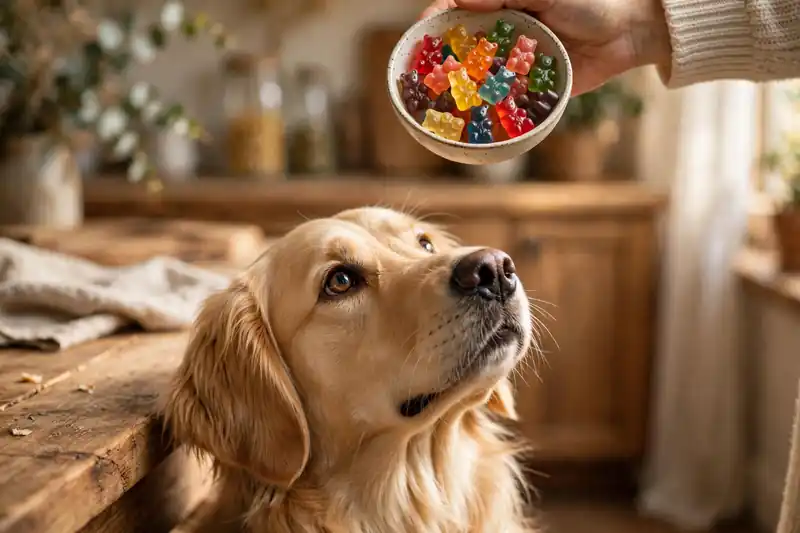
Why Gummy Bears Are Bad for Dogs
Gummy bears look harmless. They are soft, fruity, and small. But they combine three separate problems for dogs, and most competing guides only talk about one of them.
1. Sugar with no upside
A regular gummy bear is basically sugar, corn syrup, and gelatin. Sugar is not poisonous to dogs the way chocolate is, but it does them no good at all. A few bears will most likely just upset your dog’s stomach, but eaten regularly or in large amounts, sugar contributes to weight gain, tooth decay, and diabetes. Dogs on a complete dog food already get everything they need — candy adds calories and nothing else.
2. Xylitol: the ingredient that makes sugar-free gummies dangerous
This is the big one, and it is where many dog owners get caught out. Sugar-free does not mean safer for dogs. In fact, for gummy bears, sugar-free is usually far worse.
Xylitol is a sugar alcohol used to sweeten sugar-free candy, gum, and baked goods. It is perfectly safe for people, but a dog’s body reacts to it completely differently. According to the American Kennel Club (AKC), a dog’s pancreas mistakes xylitol for real sugar and releases a large amount of insulin, which strips real sugar out of the bloodstream. Blood sugar can crash within 30 minutes, and larger amounts can cause liver failure over the following days. PetMD notes the same two-stage danger: fast hypoglycemia first, then possible liver damage.
The AKC also warns that even a very small amount of xylitol can be fatal, and that in a small-breed dog as few as two pieces of certain sugarless gum can trigger a dangerous reaction. A dog that finds an open bag of sugar-free gummy bears will not stop at two.
Xylitol hides under other names on labels, so check for all of these:
- Xylitol
- Birch sugar
- Birch bark extract
- Wood sugar
- E967

3. Other sugar alcohols: sorbitol and maltitol
Not every sugar alcohol is as dangerous as xylitol. PetMD points out that sorbitol and maltitol do not have the same toxic effect on dogs as xylitol. That does not make them a good treat, though — in larger amounts they can still cause stomach upset and diarrhea. And if a label just says “sugar alcohols” without naming which one, assume the worst and treat it as xylitol until you know otherwise.
4. Choking and blockage
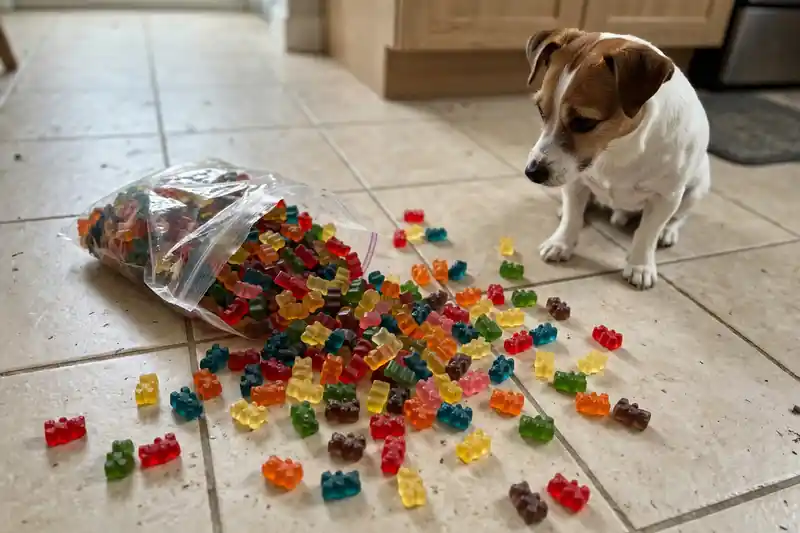
Gummy bears are small, sticky, and chewy — exactly the kind of thing a dog gulps down without chewing. For small breeds and puppies, a gummy bear can lodge in the throat. And because dogs rarely eat just one, a whole bag can mean a stomach full of sticky candy, which can cause vomiting, diarrhea, and dehydration. The packaging itself is a hazard too if your dog tears into a bag.
Regular vs Sugar-Free vs Other Gummies: What’s the Difference?
| Type of gummy | Verdict | Main danger |
|---|---|---|
| Regular gummy bears (Haribo, Black Forest, Albanese, etc.) | Not recommended | Sugar, stomach upset, tooth decay, choking |
| Sugar-free gummy bears | Dangerous — vet emergency if xylitol is listed | Xylitol poisoning, liver failure |
| Sour gummy bears | Not recommended | Same sugar problems, plus citric acid that irritates the stomach |
| Gummy vitamins | Dangerous if xylitol-sweetened; otherwise unsuitable | Xylitol, plus concentrated vitamins and minerals meant for humans |
| THC or CBD gummies | Never give to dogs | Disorientation, drooling, vomiting, tremors, incoordination |
| Organic or “natural” gummy bears | Still not recommended | Still mostly sugar, even without artificial colors |
A note on brands: regular Haribo gummy bears do not typically contain xylitol, but that does not make them safe — they are still loaded with sugar. The brand matters far less than the ingredients list. Always read the label.
How Much Is Too Much?
There is no safe serving of gummy bears for a dog, so there is no portion chart here — and any guide that gives you one is guessing. What matters is what kind your dog ate and how much:
- One or two regular gummy bears: Unlikely to harm a healthy adult dog. Watch for mild stomach upset over the next day.
- A handful or a whole bag of regular gummies: Expect vomiting or diarrhea, and call your vet if it is severe or your dog cannot keep water down.
- Any amount of xylitol-sweetened gummies: Treat as an emergency, whatever the amount and whatever the size of your dog. Do not wait for symptoms.
- Any amount of THC gummies: Call your vet or a poison line. Effects can include wobbliness, drooling, vomiting, and unusual sleepiness or agitation.
What to Do If Your Dog Ate Gummy Bears
Stay calm and work through these steps in order:
- Take the rest away. Remove the bag and anything your dog dropped, including packaging.
- Read the label. Look for xylitol, birch sugar, or E967. Note the brand, how much is missing, and roughly when your dog ate it.
- If xylitol is listed, call immediately. Call your vet, an emergency vet clinic, or a poison line. Do not wait for symptoms — by the time a dog looks sick, blood sugar may already be dangerously low.
- If they were regular gummies, keep fresh water available, feed normally, and watch your dog for 24 hours.
- Do not make your dog vomit at home unless a veterinarian specifically tells you to. Inducing vomiting the wrong way can cause harm, and it does not help once sugar or xylitol is already being absorbed.
Poison lines to save in your phone:
- ASPCA Animal Poison Control: (888) 426-4435
- Pet Poison Helpline: (855) 764-7661
Both may charge a consultation fee. Have your dog’s weight, the product name, and the amount eaten ready before you call.
Symptoms to Watch For
Xylitol poisoning (minutes to hours after eating)
- Vomiting
- Weakness or sudden lethargy
- Loss of coordination, stumbling, or difficulty standing
- Tremors or seizures
- Collapse
Symptoms of low blood sugar can appear within 10 to 30 minutes, but the AKC notes that some signs can take up to 8 hours to appear, and liver problems may develop over a few days. A dog that seems fine at first still needs veterinary care after xylitol exposure.
Too many regular gummies
- Vomiting and diarrhea
- Stomach cramps or a sore belly
- Excessive thirst
- Refusing food or acting flat
Choking or blockage
- Gagging, coughing, or pawing at the mouth
- Difficulty breathing
- Repeated retching without bringing anything up
- Swollen belly or straining
Choking and a suspected blockage are emergencies — get to a vet immediately.

Which Dogs Are at Higher Risk?
- Small breeds and puppies: A smaller body means a smaller dose causes trouble, and puppies are more likely to swallow things whole.
- Dogs with diabetes or weight problems: Extra sugar is the last thing they need.
- Dogs with liver disease: Xylitol’s liver effects make any exposure more dangerous.
- Dogs with pancreatitis history: A sudden load of sugar and sticky candy can upset a sensitive gut.
- Greedy dogs and households with children: Most gummy bear incidents are not deliberate feeding — they are a bag left on a low table or in a school bag. If your dog is a known counter-surfer, candy belongs in a closed cupboard, not a bowl on the coffee table.
Safe Alternatives Your Dog Will Actually Enjoy
If those begging eyes are the real problem, you do not need candy to make your dog happy. Try these instead:
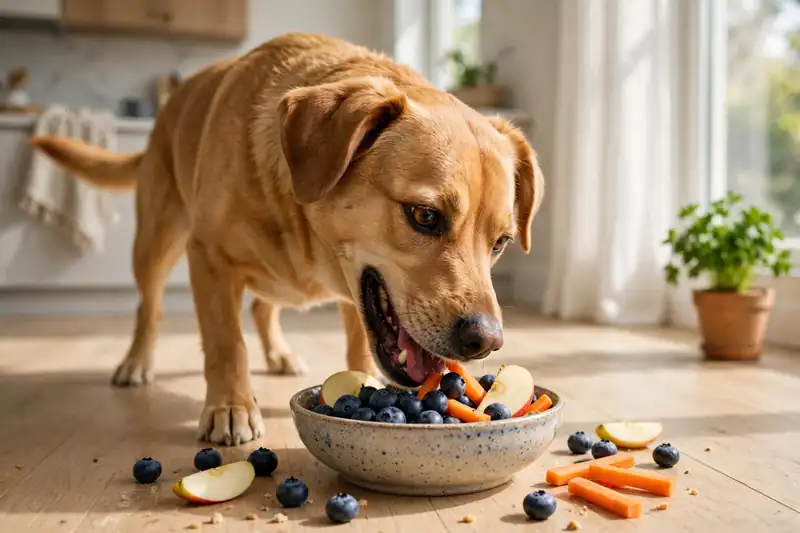
- Blueberries — small, sweet, and easy to use as training treats.
- Apple slices — crunchy and juicy, with seeds and core removed.
- Carrot sticks — a satisfying crunch with almost no calories.
- Plain cooked chicken or turkey — cut into small pieces, no seasoning.
- Dog treats made for dogs — including gummy-style treats formulated for dogs, which use dog-safe ingredients.
Keep all treats under about 10% of your dog’s daily calories, just like any other snack.
Make Your Own Dog-Safe Gummy Treats
If your dog loves the chewy texture, you can make a dog-safe version at home with plain gelatin, low-sodium bone broth, and a little fruit puree. Pour the mixture into a silicone mold, chill until set, and store in the fridge for a few days. No sugar, no sweeteners, no xylitol — just ingredients a dog’s stomach actually handles. Keep portions small and count them as treats.

How to Keep Gummy Bears Away From Your Dog
- Store candy in closed cupboards or high shelves, never in open bowls or low drawers.
- Keep children’s school bags and Halloween buckets out of reach.
- Close trash lids tightly — dogs love raiding bins for wrappers.
- Tell guests and children not to share candy with the dog.
- Teach a reliable “leave it” cue for dropped food.
- Keep THC and CBD edibles stored completely separately from regular candy, in a locked container if possible.
The Bottom Line
Dogs should not eat gummy bears. Regular ones are unhealthy sugar with a choking risk, and sugar-free ones may contain xylitol, which can kill a dog. There is no nutritional reason to share them, and there are plenty of treats your dog will like more. If your dog does get into them, the label check for xylitol is the single most important step — it decides whether you are watching for an upset stomach or driving to the vet.
FAQ — Frequently Asked Questions About Dogs and Gummy Bears
Q: Can dogs eat gummy bears?
A: No. Regular gummy bears are high in sugar and offer dogs no nutrition, and sugar-free gummy bears often contain xylitol, which is toxic and potentially fatal to dogs.
Q: Can dogs eat 1 gummy bear?
A: One regular gummy bear is unlikely to harm a healthy adult dog, but it is still not a good idea. One xylitol-sweetened gummy bear is a different story — call your vet right away, no matter how small the amount.
Q: What happens if my dog eats gummy bears?
A: It depends on the type. Regular gummies usually cause mild stomach upset — vomiting or diarrhea. Sugar-free gummies with xylitol can cause a dangerous drop in blood sugar within 30 minutes and liver failure over the following days, so they need immediate veterinary care.
Q: Can dogs eat Haribo gummy bears?
A: Regular Haribo gummy bears do not typically contain xylitol, but they are still loaded with sugar and are not a safe treat for dogs. Always check the label, because recipes and sugar-free versions vary.
Q: Can dogs eat sugar-free gummy bears?
A: No — these are the most dangerous kind. Many sugar-free gummies are sweetened with xylitol (also listed as birch sugar or E967), which triggers a massive insulin release in dogs and can cause seizures, liver failure, and death.
Q: Can dogs eat gummy vitamins, THC gummies, or CBD gummies?
A: No. Gummy vitamins may contain xylitol and human-dose vitamins, and THC or CBD gummies can cause disorientation, drooling, vomiting, tremors, and incoordination in dogs. Keep all of them well out of reach.
Q: Can dogs eat Nerds candy?
A: No. Nerds are pure sugar with no nutrition for a dog, and their small, hard pieces are a choking risk for small dogs and puppies. Sugar-free versions may also contain xylitol — check the label, and call your vet right away if xylitol is listed.
Vet Disclaimer
This article is general information only and is not a substitute for professional veterinary advice. If your dog has eaten gummy bears — especially sugar-free ones — contact your veterinarian or an animal poison control center immediately rather than relying on this guide. Every dog, dose, and product is different, and only a vet who knows your dog can judge the risk.
Related guides: Can Dogs Have Pepperoni? and Can Dogs Eat Seaweed?


