

Yes, dogs can eat jasmine rice — as long as it is plain, fully cooked, and served in a small portion. Jasmine rice is simply a fragrant type of long-grain white rice, so it follows the same rules as regular white rice for dogs.
If you have just cooked a pot for dinner and your dog is giving you those hopeful eyes, a spoonful of the plain stuff is fine. What is not fine is the seasoned, buttery, saucy version from your plate. That distinction is really the whole story with jasmine rice: the rice itself is safe, but what people usually add to it is where the trouble starts.
The Short Answer
Jasmine rice is safe for most healthy adult dogs when it is:
- Cooked plain in water, with no salt, butter, oil, or seasoning
- Served cooled, never straight from the pot
- Kept to a small part of the meal — treats and extras should stay within about 10% of your dog’s daily calories
PetMD confirms that jasmine and basmati are two types of long-grain white rice and are OK for dogs to eat, and the American Kennel Club (AKC) notes that plain white rice is a common, easy-to-digest carbohydrate used in bland diets for dogs with an upset stomach. In other words, jasmine rice is not some exotic exception — it behaves in a dog’s stomach almost exactly like ordinary white rice.
It is not, however, a complete food. Rice is mostly carbohydrate. It does not replace a balanced dog food, and it should not become the main event in the bowl every day.

Benefits of Jasmine Rice for Dogs
For a healthy dog, plain jasmine rice offers a few genuine upsides:
- Easy on the stomach. White rice is low in fiber and easy to digest, which is why vets so often pair it with boiled chicken for a short-term bland diet when a dog has mild diarrhea or an upset tummy. The AKC explains that rice helps bind the stool in cases of diarrhea.
- Quick, gentle energy. The carbohydrates in jasmine rice give your dog a steady source of energy without the fat and richness that can upset a sensitive gut.
- A useful bland-diet ingredient. If your vet has suggested chicken and rice for a few days, jasmine rice from your pantry works just as well as any other white rice — you do not need to buy a special kind.
- Usually well tolerated. Rice allergies in dogs are uncommon, and plain rice is one of the least likely foods to trigger a reaction, though no food is allergy-proof for every dog.
That said, jasmine rice is not a nutrient powerhouse. It contains small amounts of B vitamins and minerals such as manganese and magnesium, but it is not a meaningful source of protein, healthy fats, or fiber. Think of it as a gentle filler and a stomach-soother, not a health food.
Risks and Downsides to Know About
Jasmine rice is safe, but it is not risk-free in every situation:
- Blood sugar spikes. Like other white rice, jasmine rice has a high glycemic index, meaning it can raise blood sugar fairly quickly. PetMD advises asking your vet before giving any rice to a dog that has diabetes or is overweight. For diabetic dogs, it is best to skip jasmine rice unless your vet specifically says otherwise.
- Weight gain. Rice is calorie-dense for what it is, and a “small scoop” can easily become a big one. Regular large servings on top of normal meals can quietly push an already chubby dog toward obesity.
- Nutritional imbalance. A bowl that is mostly rice is missing the protein, fat, vitamins, and minerals a dog needs. A bland rice diet is meant to be short-term — a few days at most, and ideally under your vet’s guidance.
- Rare grain sensitivity. Some dogs are sensitive to grains. If your dog develops itching, ear irritation, or ongoing loose stools after eating rice, stop and talk to your vet.
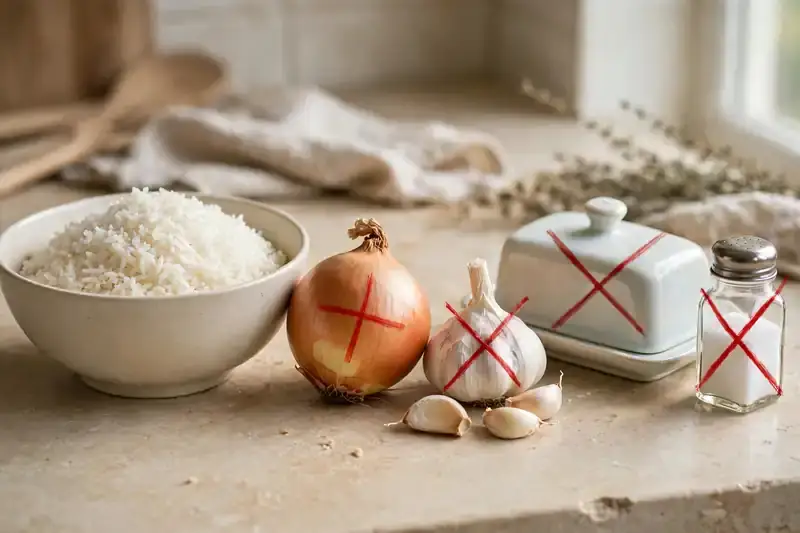
- Seasoned rice is a different food entirely. Fried rice, rice pilaf, risotto, and takeaway rice dishes often contain onion, garlic, excess salt, butter, oil, or sauces. Onion and garlic are toxic to dogs, and the ASPCA lists them among foods that can damage a dog’s red blood cells. Never share those versions.
How to Serve Jasmine Rice Safely
Step-by-step preparation
- Rinse the rice if you normally do — this is optional, but it helps remove excess surface starch.
- Cook it plain in water only. No salt, no butter, no oil, no stock cubes, no seasoning. A rice cooker or a pot on the stove both work fine.
- Cook it fully until soft and fluffy. Undercooked, hard grains are harder to digest and less pleasant for your dog.
- Let it cool completely to room temperature before serving. Hot rice can burn your dog’s mouth.
- Serve it plain, or mixed with a lean protein such as boiled, boneless, skinless chicken or turkey. For a bland diet, PetMD suggests a ratio of about two parts rice to one part boiled chicken or turkey.
- Start small the first time. Give a tablespoon or two, then watch your dog for a day before making it a regular occasional treat.

A note on arsenic in rice
Rice absorbs more arsenic from soil and water than most grains. Rinsing mainly removes surface starch and does little to lower arsenic, but cooking rice in plenty of water (like pasta, roughly 6–10 parts water to 1 part rice) and draining it can cut inorganic arsenic by 40–60%, according to the FDA. For an occasional small serving this is not something to worry about, but it is a good reason to vary your dog’s carbohydrate sources rather than serving rice every day.
Portion guide
Keep rice within the 10% treat rule, and use these servings as a rough guide, two to three times a week at most (based on PetMD’s serving guidance for rice):
| Dog size | Cooked jasmine rice per serving |
|---|---|
| Extra-small (2–10 lbs) | 1–2 tablespoons |
| Small (11–20 lbs) | 2–3 tablespoons |
| Medium (21–50 lbs) | 1/4 cup |
| Large (51–90 lbs) | 1/2 cup |
| Extra-large (91+ lbs) | 2/3 cup |
These are starting points, not prescriptions. A less active, older, or overweight dog needs less. If your dog is already eating a complete food that contains rice, extra rice from the kitchen is on top of that — count it.

Puppies
Puppies can have a tiny amount of plain cooked jasmine rice, but their stomachs are sensitive and their nutrition needs are very specific. Keep portions very small, introduce it slowly, and check with your vet first — especially if your puppy is on a special diet or has had any stomach trouble.
Storage
Store leftover cooked rice in an airtight container in the fridge and use it within a day or two. Do not feed rice that has been left sitting out at room temperature for hours — cooked rice can grow harmful bacteria once it cools and sits out. When in doubt, throw it out and cook a fresh batch.
What to Avoid
- Uncooked rice. Dry, uncooked grains can be hard on the gut and may swell with moisture. Always serve it fully cooked.
- Fried rice, pilaf, risotto, and seasoned rice mixes. These usually bring onion, garlic, salt, butter, oil, or sauces with them.
- Onion and garlic in any form — fresh, powdered, or cooked into a sauce. The ASPCA warns that these can be toxic to dogs.
- Salt, butter, and oil. None of these help your dog, and they can upset the stomach or add unnecessary fat and sodium.
- Rice as a daily staple. If rice is crowding out your dog’s balanced food day after day, the overall diet becomes unbalanced.
- Feeding it to a diabetic or overweight dog without vet approval. The high glycemic index makes this a vet-first decision.
Jasmine Rice vs. Other Types of Rice
| Rice type | For dogs |
|---|---|
| Jasmine rice | Safe when plain and cooked — a fragrant long-grain white rice, easy to digest |
| Regular white rice | Safe, and the usual choice for a bland diet and upset stomachs |
| Basmati rice | Safe when plain and cooked; similar to jasmine, sometimes slightly lower in glycemic impact |
| Brown rice | Safe for healthy dogs, with more fiber and nutrients, but harder to digest — not the best choice during a stomach upset |
There is no need to switch to jasmine rice specifically for your dog’s health. If plain white rice is what you have, it does the same job. Jasmine rice is simply a fine option when it is what is already in your pantry.
Symptoms to Watch For — and When to Call a Vet
Most dogs handle a small serving of plain jasmine rice without any problem. Still, watch for these signs after the first few servings:
- Vomiting or ongoing diarrhea
- Bloating, gas, or obvious belly discomfort
- Itching, skin rash, red or inflamed paws, or ear irritation
- Lethargy or refusing food and water
Call your vet promptly if you see any of the following:
- Vomiting or diarrhea that lasts more than 24–48 hours, or keeps coming back
- Blood in vomit or stool
- Signs of pain, a tight or swollen belly, or your dog hiding and refusing to move
- Your dog will not drink water, or seems weak and lethargic
- Your dog is a young puppy, pregnant, or has a chronic illness such as diabetes, kidney, or liver disease
A bland rice diet is a short-term bridge, not a treatment. If your dog is genuinely ill, rice can wait — your dog needs a proper check-up, not a home remedy.

Frequently Asked Questions
Q: Can dogs eat jasmine rice every day?
A: It is better not to. As an occasional extra a few times a week, plain jasmine rice is fine. Every day, in large amounts, it adds unbalanced calories and can crowd out the balanced nutrition in your dog’s regular food.
Q: Is jasmine rice good for dogs with diarrhea?
A: Plain cooked jasmine rice, usually mixed with boiled chicken in about a 2:1 rice-to-chicken ratio, is a classic short-term bland meal for mild diarrhea. The AKC notes that rice helps bind the stool. If diarrhea lasts more than a day or two, or comes with vomiting, blood, or lethargy, see your vet instead of extending the rice diet.
Q: Can diabetic dogs eat jasmine rice?
A: Generally no, unless your vet approves it. Jasmine rice has a high glycemic index and can raise blood sugar. PetMD advises checking with your vet before giving rice to a diabetic or overweight dog.
Q: Can puppies eat jasmine rice?
A: Yes, in very small amounts, once it is plain and fully cooked. Puppies have sensitive stomachs and specific nutritional needs, so introduce it slowly and check with your vet first.
Q: Can dogs eat uncooked jasmine rice?
A: No. Always serve jasmine rice fully cooked and cooled. Uncooked grains are hard to digest and can cause stomach upset.
Q: Is jasmine rice better than white rice for dogs?
A: Not really — jasmine rice is a type of white rice. It is slightly more fragrant and cooks up soft and fluffy, but nutritionally and digestively it is very similar to regular long-grain white rice. Either is fine when served plain.
Q: What rice can dogs not eat?
A: No plain rice variety is toxic to dogs, but some rice dishes are off the menu: uncooked rice, fried rice, pilaf, risotto, and seasoned rice mixes, which usually bring onion, garlic, salt, butter, oil, or sauces with them. Diabetic dogs should also skip rice unless their vet approves it.
Vet Disclaimer
This article is for general information only and is not a substitute for professional veterinary advice, diagnosis, or treatment. Every dog is different — age, weight, breed, and health conditions all change what is right for them. If your dog has diabetes, kidney or liver disease, a grain allergy, or any ongoing health problem, talk to your veterinarian before adding jasmine rice (or any new food) to their diet. If your dog shows worrying symptoms after eating, contact your vet promptly.


