

Short answer
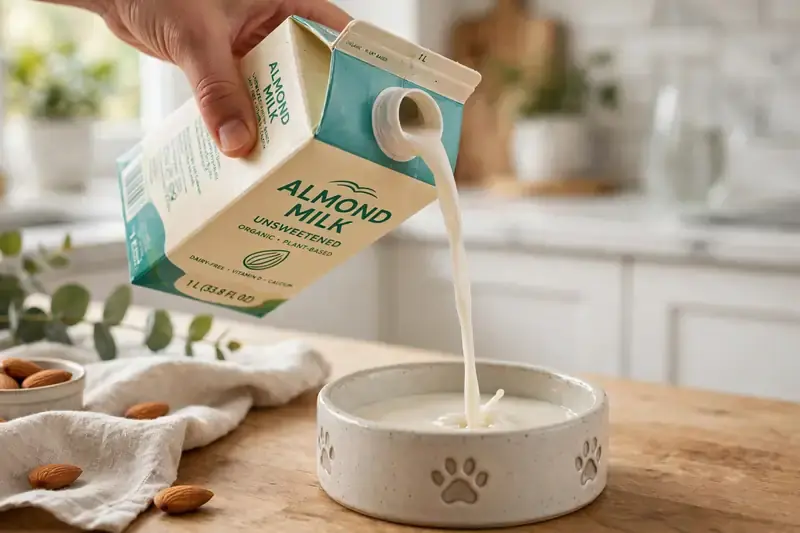
Can dogs have almond milk? Yes, in moderation, but only if it is plain and unsweetened, with no xylitol and no added flavors. Almond milk is not toxic to dogs, yet it is not something they need, so think of it as an occasional treat rather than a daily drink.
The reason almond milk is generally safer than regular milk is simple: it contains no lactose. Many adult dogs are lactose intolerant, which is why dairy milk often upsets their stomachs. Nut allergies are also rare in dogs, so most dogs handle a small amount of almond milk without trouble.
What makes almond milk safe — or unsafe
The carton matters more than the drink itself. Safe almond milk for dogs is:
- Unsweetened — no added sugar
- Unflavored — no chocolate, vanilla, or other flavorings
- Xylitol-free — this one is non-negotiable, because xylitol is extremely toxic to dogs
- Free of other additives — the shorter the ingredient list, the better
Dangerous versions include sweetened almond milk, chocolate almond milk (chocolate is toxic to dogs), and any product listing xylitol or “birch sugar” among its ingredients. Sugar-free products are the biggest trap here, because xylitol is the sweetener manufacturers often use in them. Always read the label, even on a brand you have bought before, since recipes change.
Watch out for “barista” blends as well. These are made to foam for coffee and often contain added oils, sugars, and stabilizers, so they fail the plain-and-simple test even when the carton looks healthy. If the ingredient list is longer than almonds, water, and a few vitamins, skip it.
Benefits of almond milk for dogs
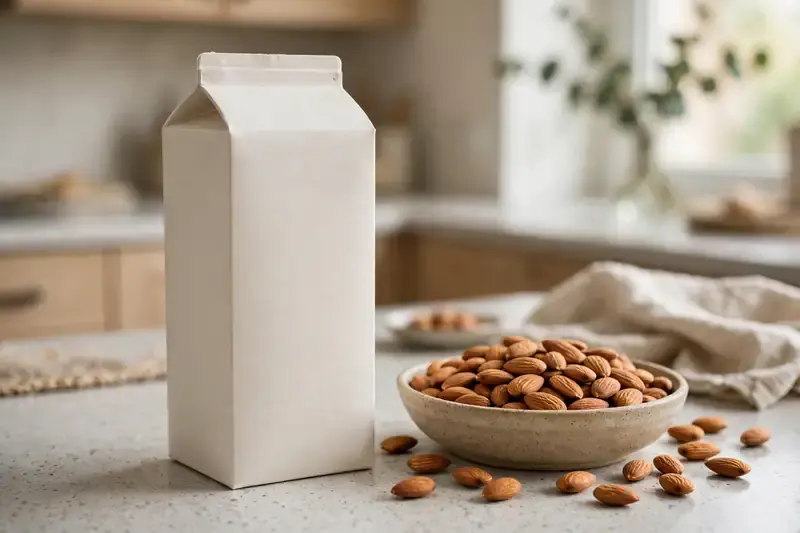
Plain almond milk is low in calories and offers a little vitamin E and magnesium. That makes it a reasonable dairy-free option for a dog that cannot handle regular milk. Two practical uses owners like:
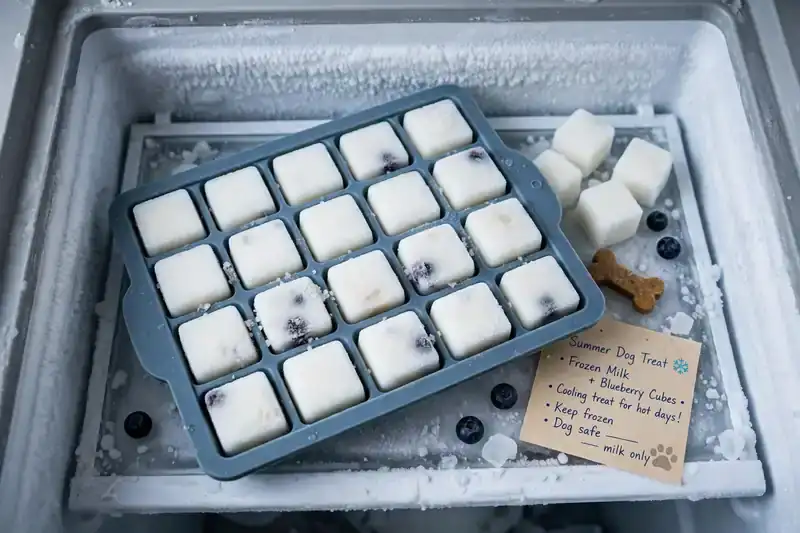
- A summer cool-down. Pour a little into an ice cube tray, freeze it, and offer one cube as a frozen treat on a hot day.
- Baking homemade treats. A splash of almond milk can moisten a homemade dog biscuit recipe without using dairy.
That said, almond milk adds almost nothing your dog actually needs. It should never replace water, and it should never become a regular part of meals.
How much almond milk can a dog have?
Keep it small and occasional:
- Start with a splash. The first time, offer just a small amount and watch how your dog reacts over the next day.
- A few laps, not a bowlful. For most dogs, a small serving as a treat is plenty. There is no daily requirement to meet.
- Keep treats under 10% of daily calories. Almond milk counts toward that total, just like any other treat.
- Puppies need extra caution. A tiny taste is unlikely to harm a healthy puppy, but their stomachs are sensitive, and they get nothing useful from it — check with your vet first if you are unsure.
If your dog does not enjoy it, skip it entirely. Water is always the best drink for a dog.

Warning signs and what to do
Mild stomach upset is the most common reaction: vomiting, diarrhea, gas, or bloating after drinking almond milk. These usually settle on their own if you offer fresh water and let your dog rest, but call your vet if symptoms last more than a day or your dog seems lethargic or in pain.
Watch for allergy signs too, though they are uncommon: itching, redness, hives, or itchy paws and ears after drinking it.
Xylitol is a different story and always an emergency. The ASPCA warns that even small amounts of xylitol can cause a sudden, dangerous drop in a dog’s blood sugar, leading to weakness, loss of coordination, collapse, and seizures, and larger amounts can damage the liver. If your dog drank almond milk containing xylitol, do not wait for symptoms — call your vet, an emergency clinic, or the ASPCA Animal Poison Control Center at (888) 426-4435 immediately.
Almond milk vs other plant milks
The same rules apply to oat, soy, and coconut milk: unsweetened, unflavored, and xylitol-free, in small amounts only. Soy can trigger allergies in some dogs, and coconut milk is higher in fat, so almond milk is often the simplest choice of the three. None of them replace water, and none of them are necessary for a healthy dog.

FAQ
Is almond milk better than regular milk for dogs?
For most adult dogs, yes, because it has no lactose. Dairy milk often causes gas and diarrhea in dogs that cannot digest lactose well. But “better” does not mean necessary — water is still the best drink.
Can puppies drink almond milk?
A tiny taste of plain, unsweetened almond milk is unlikely to harm a healthy puppy, but puppies gain nothing from it and have sensitive stomachs. Keep it to an occasional small taste, or skip it and ask your vet.
How much almond milk can I give my dog?
Think in splashes, not bowls. A small serving as an occasional treat is enough. If you are pouring it regularly or in large amounts, that is too much.
What if my dog drank sweetened almond milk?
Check the label first. If it contains xylitol, treat it as an emergency and call your vet or the ASPCA Animal Poison Control Center at (888) 426-4435 right away. If it was only sweetened with sugar, watch for stomach upset and offer water, and call your vet if symptoms persist.
Can I freeze almond milk into treats?
Yes. Freezing plain, unsweetened almond milk in an ice cube tray makes a refreshing summer treat. Offer one cube at a time, not a whole tray.
Is homemade almond milk safe for dogs?
Yes, if it is just almonds and water with nothing sweetened or flavored added. It still counts as an occasional treat, not a daily drink.
Is oat milk or almond milk better for dogs?
Both are fine as long as they are plain, unsweetened, and xylitol-free, and both are only occasional treats. Oat milk tends to be a little higher in calories and carbohydrates, while almond milk is usually lighter — so almond milk is often the simpler choice. Neither one replaces water, and neither is something your dog actually needs.
Vet disclaimer
This article is for general information only and is not a substitute for professional veterinary advice, diagnosis, or treatment. If your dog shows signs of illness after drinking almond milk, or if it may have ingested xylitol, contact your veterinarian or an emergency clinic immediately.


