Short answer
Can dogs eat sourdough bread? Yes, a small piece of plain, fully baked sourdough is safe for most dogs as an occasional treat. But it offers almost no nutrition, and there is one hard line: raw sourdough dough and starter are a veterinary emergency, because the yeast keeps fermenting in your dog’s warm stomach.
Why baked sourdough is fine in small amounts
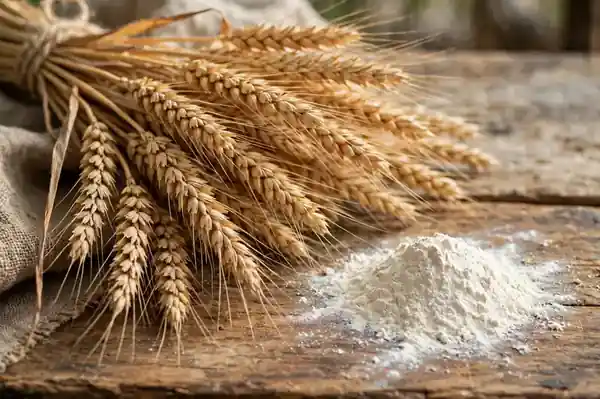
By the time sourdough is fully baked, fermentation is complete. The yeast is no longer active, so there is no risk of it continuing to ferment inside your dog. A plain baked loaf is just flour, water, salt, and starter culture — nothing toxic to dogs.
That does not make it a good treat, though. Sourdough is low in the nutrients dogs need and relatively high in calories. It is best thought of as an occasional nibble, not a regular addition to the diet. Dogs that get bread often may put on weight and suffer stomach discomfort, and there are far better treats available, such as dog-safe fruits, vegetables, and small bites of unseasoned cooked lean meat.
How to serve sourdough safely
- Plain and fully baked only. No butter, spreads, garlic butter, or toppings.
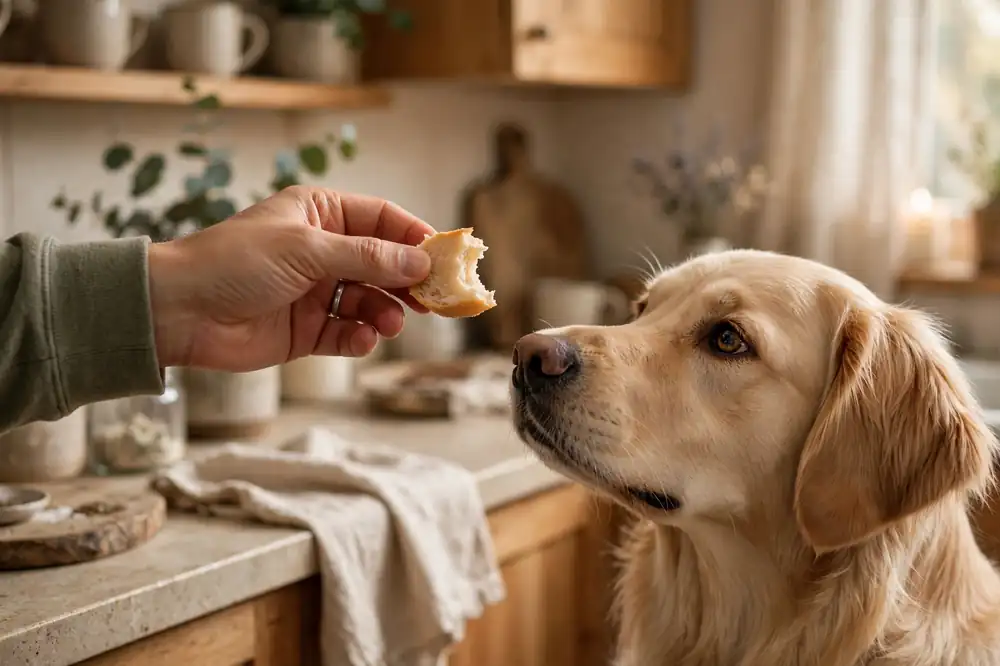
- A small piece, occasionally. A bite or two, not a whole slice every day.
- Check the label. Skip any loaf containing raisins, garlic, onion, chocolate chips, macadamia nuts, or xylitol.
- Tear the crust small. Crust is no more dangerous than the rest of the loaf, but small dogs may find it tough to chew.
- Count the calories. All treats together should stay under about 10% of your dog’s daily calories. Bread is calorie-dense, so even a slice or two can push a small dog over that limit.
- Watch the salt. A typical slice of sourdough carries roughly 200–300 mg of sodium, which adds up quickly for a small dog or one on a low-sodium diet. That is another reason to keep servings to a bite or two.
- Skip it for at-risk dogs. Dogs with wheat or grain sensitivities, diabetes, obesity, or a history of pancreatitis should avoid bread entirely.

Raw dough and starter: a veterinary emergency
This is the part every sourdough baker needs to know. The ASPCA Animal Poison Control Center warns that raw bread dough is a serious danger to pets. When a dog eats raw dough, the yeast finds the warm stomach a perfect place to keep working. Two things happen:
- The dough expands. It can swell to fill the stomach, causing painful bloating and, in severe cases, a twisted stomach, which is life-threatening.
- The yeast produces ethanol (alcohol). As fermentation continues, alcohol is absorbed into the bloodstream, and the dog effectively becomes drunk.
Warning signs of raw dough ingestion include a swollen or painful belly, retching without vomiting, vomiting, drooling, pacing or restlessness, unsteadiness, disorientation, weakness, and collapse. If you suspect your dog ate raw dough or starter, go to your vet or an emergency animal hospital immediately. Do not try to make your dog vomit at home — the expanding dough can lodge in the esophagus. Keep rising dough covered and stored somewhere your dog cannot reach, and keep starter jars closed and out of reach too.

Bread types that are never safe for dogs
Not all bread is equal. Keep these away from your dog completely:
- Raisin bread and hot cross buns. Raisins and currants are toxic to dogs and can cause kidney failure.
- Garlic bread and onion bread. Garlic, onions, chives, and leeks belong to the allium family and can damage red blood cells, potentially causing anemia.
- Sugar-free bread. If it contains xylitol, it is an emergency — xylitol causes a dangerous drop in blood sugar and can damage the liver.
- Moldy bread. Mold can produce tremorgenic mycotoxins that cause tremors, seizures, and other serious neurological symptoms.
- Macadamia nut or chocolate chip bread. Both macadamia nuts and chocolate are toxic to dogs.
When in doubt, read the ingredient list before your dog gets a taste. Plain bread from standard ingredients (flour, water, yeast, salt) is low-risk. Flavored, sweetened, or specialty breads always deserve a label check first.

FAQ
Can dogs eat sourdough toast?
Yes, if it is plain toast with no butter or toppings, and only a small amount. Butter adds fat that dogs do not need, and toppings like garlic butter are unsafe.
What should I do if my dog ate raw sourdough starter?
Treat it exactly like raw dough ingestion: a veterinary emergency. Go to your vet or an emergency clinic immediately, and do not induce vomiting at home.
Is sourdough better than white bread for dogs?
Nutritionally, they are very similar — neither is a health food for dogs. Sourdough has a slight edge in that it is usually made with simpler ingredients, but that does not make it a good treat.
Can dogs with wheat allergies eat sourdough?
No. Sourdough is still wheat bread. Dogs with wheat or grain sensitivities may develop itching, paw licking, ear infections, or digestive upset. Avoid all wheat breads for those dogs.
How much sourdough can my dog eat?
A bite or two as an occasional treat. Regular slices add up quickly in calories, especially for small and medium dogs.
Can dogs eat sourdough crust?
Yes, crust is just bread cooked a little longer, so it is no more dangerous than the soft part. Tear it into smaller pieces for small dogs.
What kind of bread is safe for dogs?
Plain, fully baked bread in a small amount — white, wheat, or sourdough, with no toppings and nothing mixed in. The kinds to keep away from dogs are raisin bread, garlic or onion bread, sugar-free bread that may contain xylitol, moldy bread, and bread with chocolate or macadamia nuts. And raw dough of any kind is never safe.
Vet disclaimer
This article is for general information only and is not a substitute for professional veterinary advice, diagnosis, or treatment. If your dog shows signs of illness after eating bread, or may have eaten raw dough, raisins, garlic bread, or xylitol-containing bread, contact your veterinarian or an emergency clinic immediately.