
Yes, dogs can eat beets. Beets are not toxic to dogs, and plain, fresh beets served in small amounts make a perfectly fine occasional treat for most healthy dogs.
That short answer comes with a few important conditions, though. Beets are sugary for a vegetable, they contain oxalates that matter for stone-prone dogs, and they famously turn your dog’s pee and poop pink or red. None of that means you should panic — it just means portions and preparation matter. Here is everything you need to know before sharing your beets.
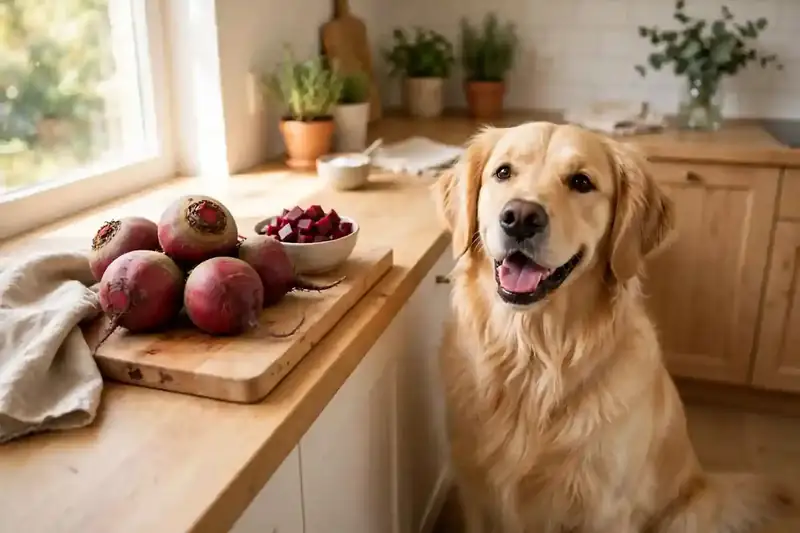
Short Answer: Are Beets Safe for Dogs?
Beets are safe for most dogs when they are fresh, plain, and served in moderation. The American Kennel Club (AKC) puts it simply: beets are safe for dogs when served fresh and in moderation, and they even show up as an ingredient in some commercial dog foods. The ASPCA likewise lists beets (Beta vulgaris) as non-toxic to dogs.
But “safe” does not mean “unlimited.” Beets should be an occasional treat, not a daily staple, and they should never replace your dog’s regular balanced food. Think of them the way you would any extra: a small, colorful bonus on top of a complete diet.
Benefits of Beets for Dogs
Beets pack a surprising amount of nutrition into a humble root. According to the AKC and PetMD, beets offer:
- Fiber — supports healthy digestion and regular stools.
- Vitamin C — an antioxidant that supports general health (dogs also make their own vitamin C, so this is a bonus, not a necessity).
- Folate, potassium, magnesium, and manganese — minerals involved in metabolism, cell function, and bone health.
- Betalain pigments — the compounds that give beets their deep red color. The AKC notes these have antioxidant and anti-inflammatory properties.
- Skin and coat support — PetMD notes beets are considered beneficial for a dog’s coat and skin, as well as aiding digestion.
That is also why you will see beet pulp listed as a fiber source in many commercial kibbles. The beet in your dog’s food bowl is not an accident — it is there because the fiber is genuinely useful. A spoonful of fresh beet is simply the whole-food version of the same idea.

The Risks: What to Watch Out For
Oxalates and urinary stones
This is the one risk that genuinely matters. Beets are high in oxalic acid, which can contribute to calcium oxalate crystals and bladder or kidney stones. The AKC warns that if your dog is prone to kidney stones or has a calcium deficiency condition such as osteoporosis, you should check with your vet before giving beets at all. PetMD gives the same advice: if your dog is prone to oxalate crystals in the urine or oxalate stones, your vet may recommend avoiding beets altogether.
Some breeds are more prone to urinary stones than others, including Schnauzers, Shih Tzus, Bichons, and Yorkshire Terriers. If your dog has ever had a urinary stone, a urinary tract infection, or a prescription urinary diet, skip beets unless your vet says otherwise.
Sugar and weight gain
Beets are higher in natural sugar and carbohydrates than most vegetables. A little is harmless, but regular large servings can contribute to weight gain, and they are a poor choice for diabetic dogs or dogs watching their weight. The AKC notes that too much sugar in a dog’s diet can contribute to pancreatitis or obesity.
Digestive upset
Beets are an acidic vegetable, and PetMD notes this can cause gastrointestinal upset. Too much at once commonly means gas, bloating, or loose stools. This is the most common “problem” owners actually see, and it is almost always a portion problem, not a poisoning problem.
Allergies (rare)
True beet allergies in dogs are uncommon, but any new food can disagree with an individual dog. Watch for itching, hives, vomiting, or diarrhea after the first serving, and stop if you see them.
Beeturia: Why Your Dog’s Pee and Poop Turn Red
If there is one thing that sends beet-feeding dog owners into a panic, it is this. After eating red beets, your dog’s urine, stool, or both may turn pink or red. This is called beeturia, and it is caused by the betalain pigment (betacyanin) in beets passing through the body.
The AKC says not to panic if your dog pees dark pink or red for the next 12 to 24 hours after eating beets — the pigment is excreted in urine and should not cause any medical problems. In practice, the color can linger up to about 48 hours, especially after a larger serving, and it affects stool as well as urine.
How to tell beeturia from actual blood:
- Beeturia follows a beet meal within the last day or two, and your dog otherwise acts completely normal — eating, drinking, playing, and peeing without straining.
- Blood is a concern when the red color appears without any beets eaten recently, lasts longer than a day or two after the beets, or comes with straining to urinate, frequent small urinations, pain, lethargy, or vomiting.
If you are unsure whether the color is beets or blood, call your vet rather than guessing. A quick urine check settles it, and it is always better to ask than to wait.
Two practical notes most guides skip: golden or white beets do not stain at all, so they are a good pick if the red mess worries you. And beets stain everything — floors, bowls, blankets, and your hands — so feeding them outside or on a hard floor saves you cleanup.
Raw vs Cooked Beets: Which Is Better?
Dogs can eat beets raw or cooked, and both are fine as long as they are plain. Here is how they compare:
| Form | Pros | Watch out for |
|---|---|---|
| Raw, peeled, grated or finely diced | Keeps the most nutrients; good crunch | Hard chunks can choke small dogs or gulpers; tougher to digest |
| Boiled or steamed, then mashed or cubed | Softer, easier to digest; best for puppies, seniors, and sensitive stomachs | Must be cooled and served plain |
| Roasted or baked, plain | Soft and sweet; easy to cut small | No oil, salt, or seasoning |
| Canned | Convenient | Only if no salt added and no other additives — most canned beets fail this test |
| Pickled | None for dogs | Brine, vinegar, salt, and often garlic or onion — skip entirely |
| Beet juice | None for dogs | Concentrates the sugar — skip it |
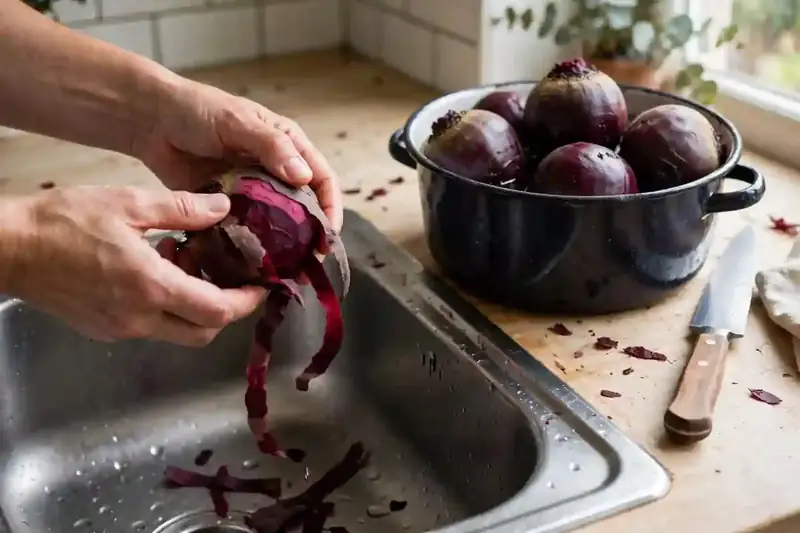
Cooked beets are the safest all-round choice for most dogs, especially the first time. Boiling is the simplest method: scrub, peel, boil until tender, cool, and cut into small pieces or mash.
One more distinction worth knowing: beet pulp in commercial dog food is not the same as feeding fresh beets. Beet pulp is a processed fiber ingredient used in small amounts in kibble. It is not a reason to add extra fresh beets on top, and it does not mean unlimited beets are fine.
How to Serve Beets Safely: Portions and Preparation
Follow these steps every time:
- Pick fresh beets. Choose firm beets with no soft spots or mold. Organic is a nice bonus since it avoids pesticide residue, but any fresh beet works if you wash it well.
- Wash, scrub, and peel. Scrub off dirt and peel the skin, which is the hardest part to digest.
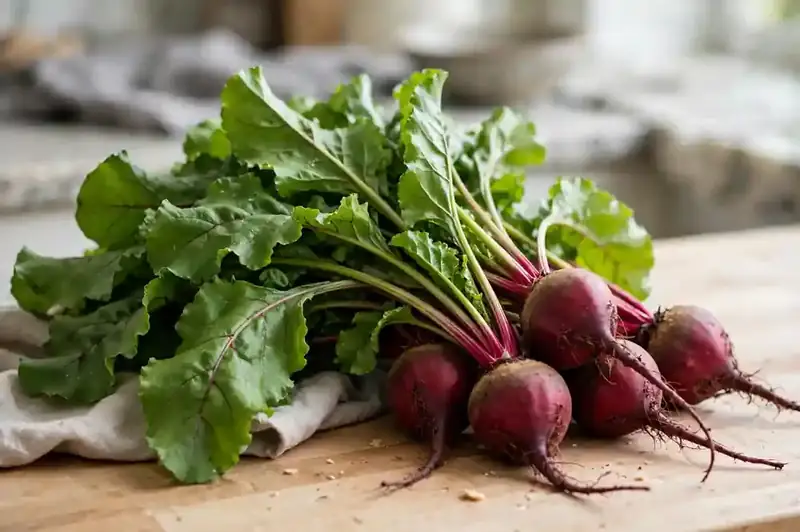
- Cut off the leafy tops and throw them away. The greens hold the highest oxalate levels in the plant, and the ASPCA notes that large mature leaves contain oxalic acid. The root is the part to feed.
- Cook or grate. Boil or steam until tender, then cool completely — or grate raw beets finely for a healthy adult dog that chews well.
- Cut small. Dice into bite-sized pieces for your dog’s size. Small pieces prevent choking, especially for small breeds and dogs that gulp food.
- Serve plain. No salt, butter, oil, garlic, onion, sugar, or spice. A beet cooked for your dinner with seasoning is not a dog beet — set plain pieces aside before you season yours.
- Start tiny. Offer a piece or two the first time and watch your dog for 24 hours before serving more.
- Keep it occasional. A few times a week at most, and always inside the 10% treat rule: all treats combined should stay under 10% of your dog’s daily calories.
Sensible starting portions (a few times a week, not daily):
| Dog size | Starting portion of cooked, diced beet |
|---|---|
| Small (under 20 lb) | 1–2 teaspoons |
| Medium (20–50 lb) | 1–2 tablespoons |
| Large (50 lb and up) | 2–3 tablespoons |
These are starting points, not targets. If your dog has a sensitive stomach, diabetes, or weight issues, start smaller or skip beets and ask your vet.
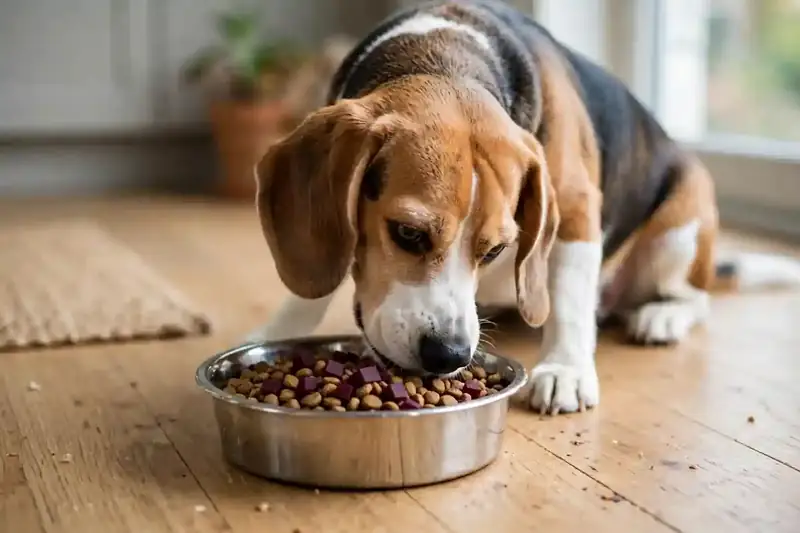
What to Avoid
- Beet greens (tops): The leafy tops contain the most oxalates in the plant. Leave them out of your dog’s bowl entirely.
- Pickled beets: Brine, vinegar, salt, and often added sugar or garlic make these unsuitable for dogs.
- Canned beets in salted water or syrup: Most canned beets are too salty or sweet. Only a no-salt-added, no-additive can is acceptable, and fresh is better.
- Beet juice and beet chips: Juice concentrates the sugar; chips are usually salted and fried.
- Seasoned beet dishes: Roasted beets with garlic, onion, butter, or balsamic glaze, borscht made with onion and stock, and beet salads with dressing are all off the menu.
- Beets for dogs on prescription diets: PetMD cautions that dogs on prescription diets should not be fed any food or treats outside the diet unless your vet approves. A beet can quietly undo a carefully balanced therapeutic diet.
- Beets as a daily habit: Even a healthy food causes problems when it becomes a large part of the diet. Occasional means occasional.
Puppies, Seniors, and Special Cases
- Puppies: Once a puppy is fully weaned and eating solid food, a tiny piece of soft, cooked beet is fine. Keep it very small — growing puppies need nearly all their calories from complete puppy food.
- Senior dogs: Soft cooked or mashed beets suit older dogs with dental problems or sensitive digestion.
- Dogs with diabetes or weight problems: Beets’ natural sugar makes them a poor regular treat. Ask your vet first.
- Dogs with kidney, bladder, or urinary problems: Skip beets unless your vet clears them.
- Dogs on prescription diets: Ask your vet before adding any extra food, beets included.
Symptoms: When to Call the Vet
Most beet problems are mild and pass on their own: a bit of gas, soft stool, or pink pee for a day. Stop the beets, keep fresh water available, and offer plain food until things settle.
Call your vet if you see:
- Vomiting or diarrhea that lasts more than a day
- Blood in stool or urine that cannot be explained by recent beets, or red color lasting longer than 48 hours after eating beets
- Straining to urinate, very frequent small urinations, or crying while urinating — possible signs of urinary stones or infection
- Lethargy, loss of appetite, a painful or swollen belly, or signs of dehydration (dry gums, sunken eyes)
- Facial swelling, hives, or trouble breathing after eating beets (emergency — go to a vet immediately)
- Choking signs: gagging, pawing at the mouth, panic, or noisy breathing (emergency)
If your dog ate a large amount of beets — say, raided a bag or a whole bowl — monitor closely, offer water, and call your vet if any of the above appear. A one-time large serving of plain beets is unlikely to poison a healthy dog, but it can cause real stomach upset, and stone-prone dogs deserve a vet call sooner rather than later.
Beet Varieties: Red, Golden, and Candy Cane
All common beet varieties are equally safe for dogs in moderation, but they are not identical in practice:
- Red beets: The classic. Most nutritious-looking, most staining. Expect pink or red pee and poop.
- Golden beets: Milder and sweeter, and they do not stain urine or stool. A great choice if the red mess puts you off.
- Candy cane (Chioggia) beets: Pink-and-white striped inside. They will stain mildly but less dramatically than red beets.
Variety does not change the rules: plain, peeled, small portions, occasional only.

The Bottom Line
Can dogs eat beets? Yes — plain, fresh beets in small amounts are a safe, nutritious occasional treat for most healthy dogs, and they bring fiber, vitamin C, folate, potassium, and manganese to the bowl. Cook them plain, peel them, cut them small, and keep portions modest.
The two things to remember are the ones that surprise owners most: skip the leafy tops and any pickled, canned-in-brine, or seasoned beets, and do not panic when the pee turns pink. If your dog has kidney or bladder stones, diabetes, or a prescription diet, check with your vet first — for those dogs, beets are a “not without asking” food, not a free treat.
FAQ
Q1: Can dogs eat beets every day?
A: It is better not to. Beets work best as an occasional treat a few times a week. Daily servings raise the chance of digestive upset, extra sugar, and oxalate buildup, especially in stone-prone dogs.
Q2: Can dogs eat raw beets?
A: Yes. Raw beets are safe when washed, peeled, and grated or cut into very small pieces. Cooked beets are gentler on digestion, so they are the better choice for puppies, seniors, and dogs with sensitive stomachs. Large raw chunks are a choking risk for small dogs and gulpers.
Q3: Why is my dog’s pee red after eating beets?
A: That is beeturia, caused by the betalain pigment in red beets. It is harmless and usually clears within 12 to 24 hours, sometimes up to 48 hours. If the color lasts longer, or your dog strains to urinate or seems unwell, call your vet — that may be blood or a urinary problem, not beets.
Q4: Can dogs eat beet greens?
A: No, it is best to skip them. The leafy tops contain the highest levels of oxalates in the plant, which can contribute to bladder and kidney stones, and the ASPCA notes that large mature leaves contain oxalic acid. Feed the root only.
Q5: Can dogs eat canned or pickled beets?
A: Pickled beets, no — the brine, vinegar, salt, and often garlic or sugar make them unsuitable. Canned beets are only acceptable if the can is no-salt-added with no other additives, but fresh beets are always the better choice.
Q6: Can puppies eat beets?
A: Yes, once fully weaned and eating solid food, puppies can have a tiny piece of soft, cooked beet. Keep portions very small, since a growing puppy needs nearly all its calories from complete puppy food.
Q7: What vegetables can dogs not eat?
A: The main ones to avoid are onions, garlic, leeks, and chives — all alliums that can damage a dog’s red blood cells — plus raw potatoes and wild mushrooms. Most common vegetables, like carrots, green beans, and cucumber, are fine in moderation.
Q8: What is the healthiest vegetable for dogs?
A: There is no single winner, but the vegetables vets most often recommend as healthy extras are carrots, green beans, pumpkin, and sweet potatoes — low in calories, easy on digestion, and genuinely nutritious. Broccoli is fine too, but only in small amounts, since larger portions can cause gas. Whichever you pick, keep it plain and inside the 10% treat rule.
This article is general information only and is not a substitute for professional veterinary advice, diagnosis, or treatment. Every dog is different, and dogs with kidney or bladder stones, diabetes, allergies, or prescription diets may need different guidance. If you are unsure about feeding beets to your dog, or if your dog shows any worrying symptoms after eating them, contact your own veterinarian.
Related guides: Can Dogs Eat Bell Peppers? and Can Dogs Eat Zucchini?


