

Can dogs eat bell peppers? Yes. Plain bell peppers in red, yellow, orange or green are non-toxic to dogs and make a crunchy, low-calorie treat. Remove the stem and seeds, cut them small, skip salt, oil, onion and garlic, and keep portions modest.
Most trouble with bell peppers for dogs comes from what the pepper was cooked with, or from a dog eating far more than its stomach is used to. Every nutrition figure here was checked against USDA FoodData Central, and the feeding advice against veterinary guidance from the AKC and PetMD.
Why can dogs eat bell peppers but not hot peppers?
Bell peppers contain no capsaicin, the compound that makes chili and jalapeño peppers burn. Sweet peppers are gentle on a dog’s mouth and stomach, while hot peppers can cause pain, drooling, vomiting and diarrhea. Both belong to the same species, yet only one burns.
Bell peppers and jalapeños are both Capsicum annuum. Sweet varieties carry a gene variant that stops them making capsaicin, so a bell pepper scores zero on the Scoville scale while a jalapeño usually lands between 2,500 and 8,000. The risks with bell pepper are practical ones: a big chunk can cause choking, and the waxy skin is hard for some dogs to digest.
Which bell pepper color is best for dogs?
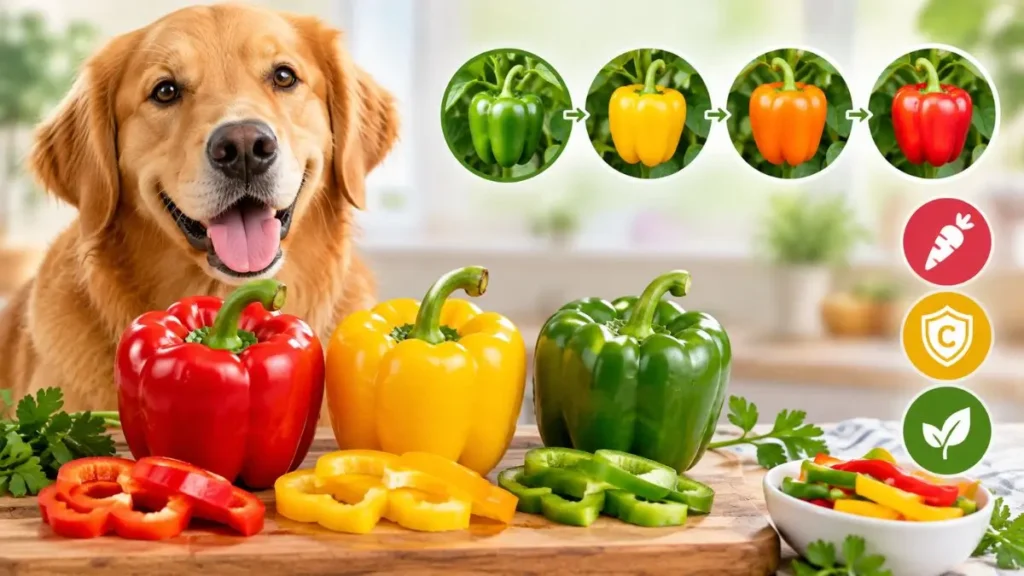
Red bell peppers are the best pick for most dogs. They are fully ripe, taste sweeter, and contain far more beta-carotene than green ones. Yellow peppers have the most vitamin C. Green peppers are less ripe and slightly bitter, but still safe.
Color mostly tells you how ripe the pepper is. Green peppers are picked early; left on the plant, most turn yellow, orange or red and get sweeter. Per 100 g of raw pepper, USDA lists:
| Per 100 g, raw | Red | Yellow | Green |
|---|---|---|---|
| Calories | 31 kcal | 27 kcal | 20 kcal |
| Vitamin C | 127.7 mg | 183.5 mg | 80.4 mg |
| Beta-carotene | 1,624 mcg | 120 mcg | 208 mcg |
| Fiber | 2.1 g | 0.9 g | 1.7 g |
| Potassium | 211 mg | 212 mg | 175 mg |
Red has nearly eight times the beta-carotene of green, while yellow leads on vitamin C. USDA’s standard tables have no separate raw orange entry, but orange peppers are ripe too and taste much like yellow and red. If your dog spits out green pepper, try red. Some dogs just dislike the bitterness.
Do dogs need the vitamins in bell peppers?
Not really. Unlike people, dogs make their own vitamin C in the liver, and a complete and balanced dog food already covers their vitamin needs. Bell pepper is a healthy extra rather than a supplement. Its real value is low calories, water and crunch.
This is where a lot of pet articles overreach. Peppers are often said to “boost your dog’s immune system” with vitamin C, but dogs make vitamin C themselves, so the extra is a bonus.
Beta-carotene is a fairer point: dogs convert it into vitamin A for skin, coat and eyes. Even so, a food labeled complete and balanced under AAFCO nutrient profiles already supplies what a healthy dog needs. About 92 percent of a red pepper is water, and a whole medium one has roughly 37 calories, which is why it works as a light snack.
How much bell pepper can a dog eat?
Small dogs should get less than a quarter of a pepper at a time, and large dogs less than half, according to veterinary advice published by the AKC. Count bell pepper as a treat, and keep all treats under 10 percent of daily calories.
That advice comes from Dr. Carly Fox, a senior emergency veterinarian at the Schwarzman Animal Medical Center in New York, quoted in the American Kennel Club’s bell pepper guide. Another vet in that article warns that overloading a dog with vegetables can cause vomiting or diarrhea. The 10 percent treat rule is standard advice from PetMD and most vets.
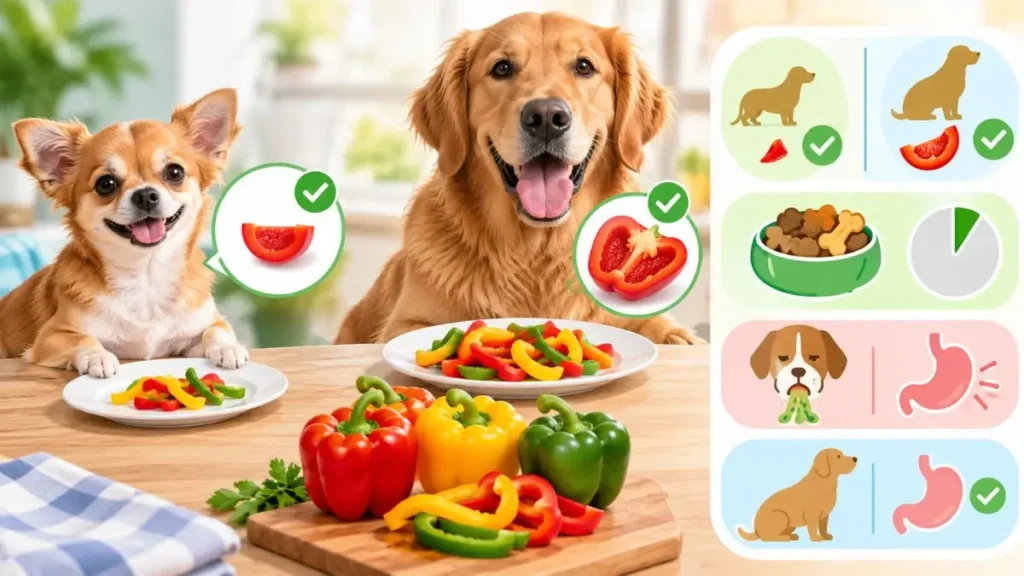
The stomach sets the limit, not the calories. A quarter of a medium red pepper has only about 9 calories, as the table shows.
| Dog’s weight | Estimated daily calories | 10% treat budget | Bell pepper at one time | Calories in that amount (red) |
|---|---|---|---|---|
| 5 kg (11 lb) | about 375 | about 37 | under 1/4 medium pepper | 9 or fewer |
| 10 kg (22 lb) | about 630 | about 63 | under 1/4 medium pepper | 9 or fewer |
| 20 kg (44 lb) | about 1,060 | about 106 | 1/4, working up to under 1/2 | 9 to 18 |
| 30 kg (66 lb) | about 1,440 | about 144 | under 1/2 medium pepper | 18 or fewer |
Daily calories are estimates for a typical neutered adult at a healthy weight (resting energy needs of 70 times body weight in kg to the power of 0.75, multiplied by 1.6). Active, senior and overweight dogs differ. For your own dog’s numbers, use our dog treat calculator.
A worked example: a 10 kg dog has a treat budget of roughly 63 calories a day. A quarter of a medium red pepper uses about 9 of them, which is why bell pepper suits dogs on a weight-loss plan. It fills the bowl without adding much.
Can dogs eat bell peppers raw or cooked?
Dogs can eat bell peppers raw or cooked, as long as they are plain. Raw pepper keeps the most vitamin C and gives a satisfying crunch. Lightly steamed pepper is softer and easier to digest, which suits puppies, seniors and dogs with dental problems.
Raw strips suit a healthy adult dog that chews. Cut them so your dog has to bite rather than swallow, and dice them small for a gulper.
Steamed pepper suits puppies, seniors and dogs with sore teeth. Steam the pieces for a few minutes until soft, then cool them. You can also blend steamed pepper and stir a teaspoon or two into regular food for picky eaters. Steaming keeps more vitamin C than boiling, though that hardly matters for a dog.
Home-roasted pepper is fine with no oil or seasoning, and long frozen strips make a cold chew on hot days. Finely diced pepper also mixes into a plain scrambled egg cooked without butter or salt, or into a homemade dog food recipe your vet has approved.
7 rules for feeding bell peppers safely
Wash the pepper, remove the stem, seeds and pith, cut it to suit your dog’s size, and serve it plain. Start with a piece or two the first time, count it as a treat, and never swap in hot, pickled or stuffed peppers.
- Choose a firm, fresh pepper and wash it under running water.
- Cut out the stem, seeds and white pith.
- Size the pieces to the dog: thin strips or tiny dice for toy breeds, longer strips for big dogs that chew properly.
- Serve it plain, with no salt, oil, butter, cheese, garlic, onion or spice.
- Offer one or two pieces the first time and watch your dog for the next 24 hours before giving more.
- Count it toward the daily treat allowance and stay under 10 percent of calories.
- Never swap in chili, jalapeño, pickled, jarred or stuffed peppers.
Peppers and pepper dishes to keep away from your dog
Skip hot peppers such as jalapeño and chili, and any pepper cooked with onion, garlic, salt or heavy oil. That rules out most fajitas, stir fries, stuffed peppers, pizza toppings and jarred or pickled peppers, even though the pepper itself is harmless.
Onion and garlic are the main worry. The ASPCA Animal Poison Control Center lists onions, garlic and chives as foods that can irritate a dog’s gut and damage red blood cells. Cooking doesn’t make them safe, and onion or garlic powder counts too.
Stuffed peppers are a similar story. The usual fillings, plain ground beef and white rice, are fine on their own, but recipes add onion, garlic, cheese and salt. Peppers picked off a pizza carry salty sauce that often contains garlic, and jarred or pickled peppers sit in brine, vinegar or oil. Black pepper is a different plant; a pinch isn’t toxic, but your dog doesn’t need it.
If your dog grabs a hot pepper, expect drooling, pawing at the mouth and possibly vomiting or diarrhea. Offer water, and call your vet if vomiting continues or your dog seems in pain. For any other ingredient you are unsure about, look it up in our Can my dog eat this? food checker before you share.
Are bell peppers nightshades, and does that matter for dogs?
Yes, bell peppers belong to the nightshade family with tomatoes, potatoes and eggplant. The ripe fruit is safe for dogs. Claims that nightshades worsen arthritis in dogs have no solid research behind them, though an individual dog can still react to any food.
The worry comes from glycoalkaloids such as solanine in green potatoes and tomatine in tomato vines. A ripe bell pepper is not a meaningful source, and like eggplant, another nightshade, it is something dogs generally handle well in small amounts.
Keep your dog away from pepper plants in the garden, since the leaves and stems aren’t food and may have been sprayed. If your dog has a diagnosed food allergy or inflammatory bowel disease, ask your vet before adding any new vegetable.
Signs your dog isn’t handling bell peppers well
Watch for vomiting, loose stool, gas or a gurgling stomach within a day of the first serving. Mild upset that passes quickly usually means too much, too soon. Call your vet for repeated vomiting, lethargy, blood in stool, choking or signs of dehydration.
Tough skin is the usual culprit, especially when a dog eats a lot of raw pepper at once. For mild upset, stop the pepper, keep water available, and try a smaller steamed portion another day. PetMD advises calling your vet promptly for lethargy, persistent vomiting or dry gums.
Choking is different. Gagging, pawing at the mouth, panic or noisy breathing need your vet or an emergency clinic right away. Itching or hives after a new food also deserve a vet’s opinion, and facial swelling or trouble breathing is an emergency.
Bell peppers vs other dog-safe vegetables
Bell pepper sits at the low-calorie end of dog-safe vegetables, at 20 to 31 calories per 100 g depending on color. Zucchini is lower still, while sweet potato and butternut squash carry more calories and are best served cooked for dogs.
| Vegetable (raw, per 100 g) | Calories | Fiber | Note for dogs |
|---|---|---|---|
| Red bell pepper | 31 | 2.1 g | Sweetest bell pepper; raw or steamed |
| Green bell pepper | 20 | 1.7 g | Slightly bitter; some dogs refuse it |
| Zucchini | 17 | 1.0 g | Very mild; easy to slice thin for small dogs |
| Cabbage | 25 | 2.5 g | Can cause gas; keep portions small |
| Butternut squash | 45 | 2.0 g | Serve cooked and plain |
| Sweet potato | 86 | 3.0 g | Serve cooked; highest in calories here |
Figures are from USDA FoodData Central.
Frequently asked questions about dogs and bell peppers
Plain bell pepper is safe for most dogs, raw or cooked. Nearly every problem traces back to how it was prepared or how much was eaten. These answers cover the questions dog owners search for most, including seeds, puppies, fajitas and jarred peppers.
Can dogs eat bell peppers every day?
They can, but it works better as an occasional snack a few times a week. A small daily piece is unlikely to hurt a healthy dog, but variety matters more, and large daily amounts raise the chance of gas and loose stool.
Can dogs eat bell peppers with the seeds?
A few bell pepper seeds are not toxic, so don’t worry if your dog eats some. Still, remove the seeds and white pith before serving. They add bitterness and nothing useful, and a clean pepper is easier for your dog to digest.
Can dogs eat green bell peppers?
Yes. Green bell peppers are unripe bell peppers and are just as safe as red, yellow or orange ones when served plain. They have less beta-carotene and a slightly bitter taste, so some dogs ignore them. Red is the better choice.
Can puppies eat bell peppers?
Yes, once a puppy is fully weaned and eating solid puppy food. Offer one or two tiny, soft pieces of steamed pepper and watch for loose stool. Puppy food should provide nearly all of a growing dog’s calories, so keep vegetable treats very small.
Can dogs eat bell peppers and onions together?
No. Bell peppers on their own are safe, but onions are toxic to dogs whether raw, cooked or powdered. Peppers cooked with onions, as in fajitas, stir fries or sausage and peppers, pick up the onion juices, so don’t share any of that dish.
Can bell peppers give dogs diarrhea?
They can if a dog eats too much or isn’t used to vegetables. The tough skin and fiber are the usual reasons. Cut back to a small amount, try steamed pepper instead of raw, and call your vet if diarrhea lasts more than a day.
Can dogs eat mini sweet peppers?
Yes. Mini sweet peppers are small, non-spicy peppers similar to bell peppers, and they are safe for dogs served plain. Remove the stem and seeds and slice them into rings or strips. Read the label, since cherry and Fresno peppers look similar but are hot.
Can dogs eat roasted red peppers from a jar?
It’s better not to. Jarred roasted red peppers are usually packed in brine or oil, and some contain garlic, vinegar and added salt. A single rinsed strip is unlikely to harm a large dog, but roasting a fresh pepper at home without oil is safer.
Can dogs eat banana peppers?
Skip them. Banana peppers are only mildly hot, but they are often sold pickled in vinegar and salt, the same as pepperoncini. That combination can upset a dog’s stomach. A plain bell pepper gives the same crunch without the heat or the brine.
The bottom line on bell peppers for dogs
So, can dogs eat bell peppers? Yes. A few plain, deseeded pieces of red, yellow, orange or green pepper make a safe, low-calorie snack for most dogs. Red gives the most beta-carotene, and steaming helps dogs with sensitive stomachs or bad teeth.
Where owners get into trouble is the dish, not the vegetable. Fajitas, stuffed peppers, pizza toppings and jarred peppers bring onion, garlic, salt and oil along with them, and those are the ingredients that hurt dogs. Keep the pepper plain and the pieces small, start with one or two, and treat it as part of the 10 percent treat allowance rather than a meal.
If your dog has a sensitive stomach, a diagnosed food allergy or a prescription diet, check with your vet first. For everyone else, a strip of red pepper while you cook is an easy, honest treat, and most dogs are happy to take it.
This guide is general information and does not replace advice from your own veterinarian. Sources: USDA FoodData Central, the American Kennel Club, PetMD, AAFCO and the ASPCA Animal Poison Control Center.