

Can dogs eat sweet potatoes? Yes, when they are cooked, plain, and served in small portions. A tablespoon or two of boiled, mashed sweet potato is a safe, fiber-rich treat for most healthy dogs. Raw chunks, fries, and holiday casseroles are a different story.
Can dogs eat sweet potatoes safely?
Yes. Sweet potatoes are non-toxic to dogs, and the ASPCA lists the sweet potato plant, Ipomoea batatas, as safe for dogs, cats, and horses. The real risks come from how it is served: raw, in big chunks, heavily seasoned, or in oversized portions.

| Form of sweet potato | OK for dogs? | Why |
|---|---|---|
| Boiled or steamed, plain | Yes | Easiest to digest, lowest blood sugar effect |
| Baked or microwaved, plain | Yes | Fine, but raises blood sugar faster than boiled |
| Raw | No | Hard to chew and digest, blockage risk |
| Cooked skin | Small amounts | Not toxic, but tough for small dogs and gulpers |
| Plain canned, no salt or sugar | Yes | Read the label first |
| Dehydrated chews | With care | Hard pieces can be swallowed whole |
| Fries, chips, casserole, pie, candied yams | No | Oil, salt, sugar, butter, spices |
What are the benefits of sweet potatoes for dogs?
Cooked sweet potato gives dogs fiber, beta-carotene, potassium, vitamin C, and vitamin B6 with almost no fat. Per 100 grams of boiled, peeled sweet potato, USDA data lists 76 calories, 17.7 grams of carbohydrate, 2.5 grams of fiber, and 787 micrograms of vitamin A.
| Nutrient | Per 100 g (boiled, no skin) | Per tablespoon mashed (about 20 g) |
|---|---|---|
| Calories | 76 | About 16 |
| Carbohydrate | 17.7 g | 3.5 g |
| Fiber | 2.5 g | 0.5 g |
| Natural sugars | 5.7 g | 1.1 g |
| Protein | 1.4 g | 0.3 g |
| Fat | 0.1 g | Trace |
| Potassium | 230 mg | 46 mg |
| Vitamin C | 12.8 mg | 2.6 mg |
| Vitamin A (RAE) | 787 mcg | 157 mcg |
Source: USDA National Nutrient Database, entry 11510. Tablespoon values estimated from 328 grams per cup of mash.
Beta-carotene is the orange pigment also found in butternut squash, and dogs convert it into vitamin A for vision, skin, and immunity. Claims that sweet potato causes vitamin A toxicity confuse two things: toxicity comes from preformed vitamin A in liver-heavy diets or cod liver oil, while plant beta-carotene has low toxicity for dogs.
Can dogs eat sweet potatoes raw?
No, do not feed raw sweet potato. It is not poisonous, but raw pieces are hard and dense, so dogs struggle to chew and digest them. Swallowed chunks can cause vomiting, diarrhea, choking, or an intestinal blockage, especially in small dogs and fast eaters.
Several pet sites claim raw sweet potatoes contain toxic solanine because they are nightshades. They are not. Sweet potatoes belong to the morning glory family, Convolvulaceae, and the ASPCA plant database lists the whole plant, ornamental vine included, as non-toxic. Solanine matters for true nightshades such as white potatoes and eggplant. Cook sweet potato until a fork slides in easily.
Can dogs eat sweet potatoes with the skin on?
Yes, in small amounts, but peeling is the safer default. Sweet potato skin is not toxic. It is fibrous and chewy, though, so small dogs, puppies, sensitive stomachs, and dogs that gulp their food do better with the skin removed.
Vet sources disagree here. A 70-pound Labrador that chews properly can handle a little cooked skin, while a Chihuahua that gulps food should get it peeled. Scrub the potato either way.
Does boiling or baking change the blood sugar impact?
Yes. Boiling keeps the glycemic impact far lower than baking or roasting. In a study of ten sweet potato varieties, boiled samples scored 41 to 50 on the glycemic index, while baked samples scored 82 to 94. That gap matters for diabetic and overweight dogs.
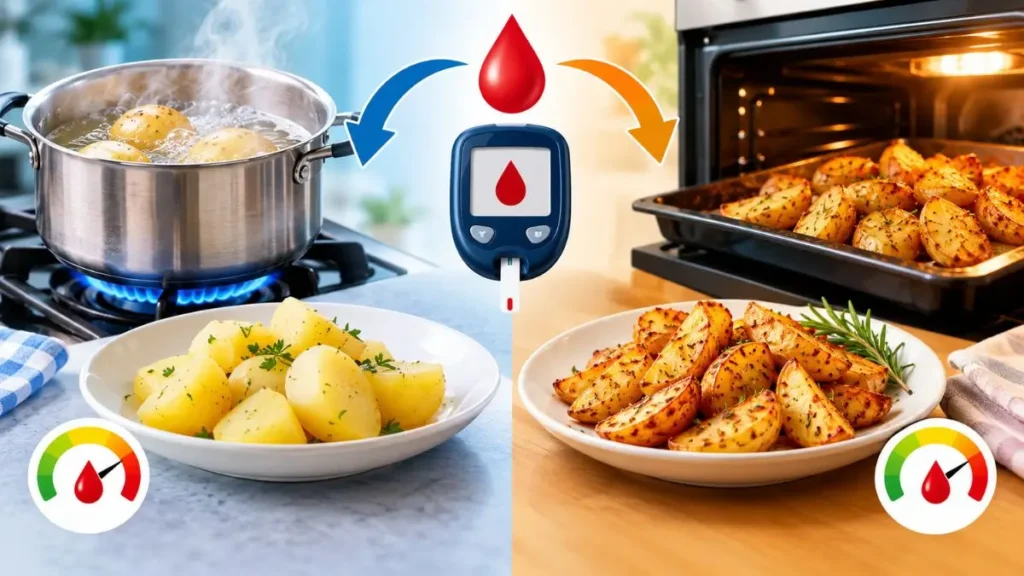
That 2011 study in the Journal of Nutrition and Metabolism measured blood sugar in people, not dogs. Boiling appears to keep more resistant starch, which digests slowly, while dry oven heat breaks more of it down. That is why sources disagree on whether sweet potatoes are low or high glycemic.
If your dog has diabetes, ask your vet first, because carbohydrate changes can affect insulin dosing. If approved, give boiled sweet potato in the same amount at the same time each day.
How much sweet potato can a dog eat?
Treats, sweet potato included, should stay under 10% of a dog’s daily calories. For most dogs that means about 1 tablespoon for toy breeds, 2 for medium dogs, and up to 4 for large breeds. One tablespoon of mashed sweet potato has about 16 calories.
| Dog weight | Approx. daily calories | 10% treat budget | Sweet potato serving | Calories in serving |
|---|---|---|---|---|
| 10 lb (4.5 kg) | 350 | 35 | 1 tbsp | 16 |
| 20 lb (9 kg) | 590 | 59 | 1 to 2 tbsp | 16 to 32 |
| 30 lb (13.6 kg) | 790 | 79 | 2 tbsp | 32 |
| 50 lb (22.7 kg) | 1,160 | 116 | 3 tbsp | 48 |
| 70 lb (31.8 kg) | 1,500 | 150 | 4 tbsp (1/4 cup) | 64 |
| 90 lb (40.8 kg) | 1,810 | 181 | 4 to 5 tbsp | 64 to 80 |
Calories use the resting energy formula (70 x kg to the power of 0.75) times 1.6 for a neutered adult dog. Servings leave room for other treats.
A worked example for a 30-pound dog
A neutered 30-pound adult dog needs roughly 790 calories a day, so its treat budget is about 79 calories. Two tablespoons of mashed sweet potato use 32 of those, leaving about 47 calories for training treats or a small chew that day.
How do you cook sweet potatoes for dogs?
Scrub the sweet potato, peel it, cut it into cubes, and boil or steam it until fork tender, usually 15 to 20 minutes. Mash it or chop it small, let it cool completely, and serve it plain with no butter, oil, salt, sugar, or spices.
For the first serving, offer a teaspoon and wait 24 hours, watching for gas, loose stool, vomiting, or itching. After that, mix it into kibble, thin it with onion-free chicken broth, or freeze it on a lick mat. It keeps 3 to 4 days in the fridge, or freeze tablespoon portions in an ice cube tray.
Which sweet potato foods should dogs avoid?
Skip sweet potato fries, chips, casseroles, pie, candied yams, and anything canned in syrup. These add fat, sugar, salt, and spices dogs do not need. Some also contain garlic, onion powder, nutmeg, or xylitol, a sugar-free sweetener that is dangerous to dogs.
Seasoned fries, like regular french fries, often carry garlic or onion powder, whose thiosulfates damage red blood cells. Casserole brings butter, brown sugar, marshmallows, and sometimes a pecan crumble, and rich food can trigger pancreatitis. Pie adds nutmeg, whose myristicin upsets the stomach in small amounts and causes disorientation or a racing heart in larger ones, plus any whipped cream on top. Xylitol may be listed as birch sugar.
Are sweet potato chews and jerky treats safe?
Many are fine, but buy them carefully. Hard dehydrated chews can snap into chunks that dogs swallow whole. The FDA also received thousands of illness reports tied to chicken, duck, and sweet potato jerky treats, mostly imported from China, without identifying a single cause.
By December 31, 2015, the FDA jerky treat investigation had logged about 5,200 complaints involving more than 6,200 dogs and over 1,140 dog deaths. Some dogs developed Fanconi-like syndrome, a kidney disorder that shows up as increased drinking and urination, and manufacturers do not have to list each ingredient’s country of origin.
People face a second risk. In February 2022, Massachusetts health officials told owners to discard Dog Gone Dog Treats, dehydrated, not fully cooked chips that included sweet potato, after three people caught Salmonella from handling them. Wash your hands after touching dried treats.
Pick a brand that names where its sweet potatoes are grown and processed, and supervise chewing. For homemade chews, bake plain 1/4-inch slices at about 250 F for 2.5 to 3 hours until leathery.
Do sweet potatoes cause heart disease in dogs?
Current research points to pulses, not sweet potatoes. A June 2026 Tufts University update links diet-associated dilated cardiomyopathy (DCM) to diets high in peas, lentils, chickpeas, and beans, whether grain-free or grain-inclusive, and says a lack of grains is not the cause.
The worry began with a 2018 FDA investigation into DCM reports in dogs eating foods with peas, lentils, other legume seeds, or potatoes as main ingredients. In the Tufts Petfoodology update, veterinary nutritionist Lisa Freeman cites more than 30 studies since, says taurine deficiency does not explain the disease, and describes work on a urine marker of abnormal fat metabolism.
A spoonful of home-cooked sweet potato is not a pulse-heavy diet. Check your dog’s food label instead, and talk to your vet if pulses sit high on the list, especially if your dog coughs, tires easily, breathes hard, or faints.
Which dogs should skip or limit sweet potatoes?
Dogs with diabetes, obesity, kidney disease, a food allergy, or past calcium oxalate bladder stones need a vet’s approval first. So do dogs on prescription diets, because extra foods can undo what the diet is built to do. Healthy adults can usually enjoy small portions.
Sweet potatoes contain oxalates, the compounds involved in calcium oxalate stones, so a dog with past stones should follow its vet’s prevention plan. Overweight dogs do better with lower-calorie extras such as plain cooked cabbage or a few blueberries. Allergies are uncommon, but itching, ear infections, or loose stools after eating it are reasons to stop.
Can sweet potato help a dog with diarrhea or constipation?
In mild, short-lived cases, a small amount of plain, boiled, mashed sweet potato can help firm loose stool or ease mild constipation thanks to its fiber. Treat it as support, not a cure. Call your vet if symptoms last longer than 24 to 48 hours.
See a vet sooner for blood in the stool, repeated vomiting, lethargy, a swollen belly, diarrhea in a puppy or senior dog, or straining with nothing coming out. For a vet-approved bland diet, plain white rice with boiled chicken is the usual base.
What should you do if your dog ate too much or the wrong kind?
Work out what your dog ate and how much. A few bites of plain cooked sweet potato only need watching. A whole raw sweet potato, seasoned fries, or casserole with butter, marshmallows, or nutmeg calls for a phone call to your vet.
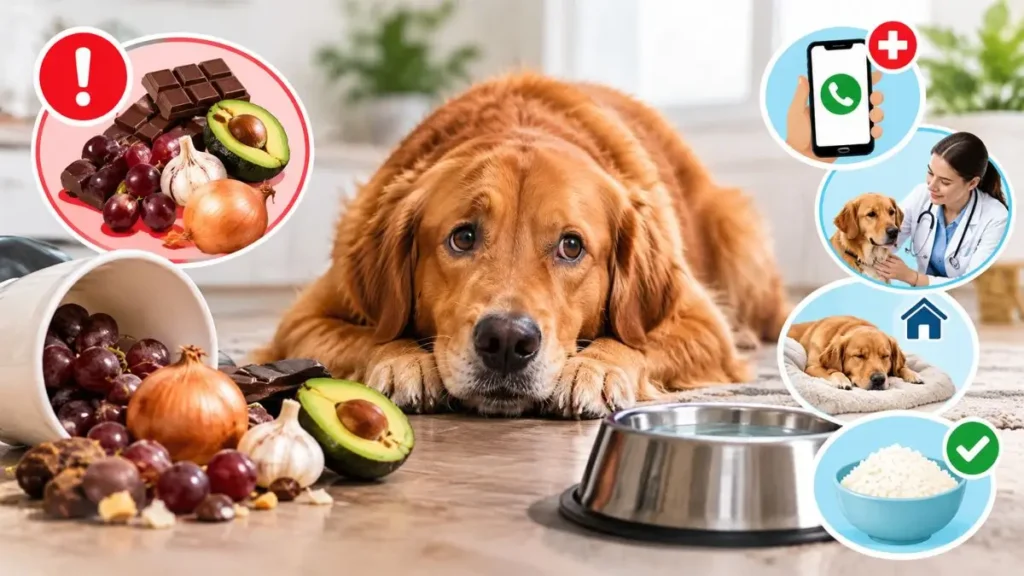
After raw chunks, watch for gagging, drooling, repeated vomiting, belly pain, or no bowel movement, which can signal a blockage. After casserole or pie, watch for vomiting, a hunched posture, or refusing food over the next few days. If xylitol was involved, go to a vet immediately.
If you cannot reach your vet, the ASPCA Animal Poison Control Center (888-426-4435) and Pet Poison Helpline (855-764-7661) answer around the clock. Both charge a consultation fee.
How we checked this guide
We read the pages ranking on Google for can dogs eat sweet potatoes in September 2026, listed every claim they made, and checked each one against primary sources: USDA nutrient data, the ASPCA plant database, FDA investigations, Tufts research, and peer-reviewed studies.
The top pages contradicted each other on glycemic index, sweet potato skin, and raw safety, and several still treated the 2018 heart alert as current. We settled each point with the sources linked above and calculated the serving table ourselves. This guide does not replace your vet. Last reviewed September 26, 2026.
Frequently asked questions
Are sweet potatoes good for dogs?
Yes, in moderation. Plain cooked sweet potato adds fiber, beta-carotene, potassium, and vitamin C to a dog’s diet with almost no fat. It works best as an occasional treat or food topper alongside a complete and balanced dog food, not as a meal replacement.
Can dogs eat sweet potatoes every day?
A small daily portion is fine for a healthy adult dog if it fits the 10% treat budget. For regular use, build it into a balanced homemade dog food recipe instead of adding it freely, and cut back if your dog gains weight.
Can puppies eat sweet potatoes?
Yes, puppies can eat small amounts of plain, cooked, mashed sweet potato once they eat solid food. Keep it to a teaspoon or two, because puppies need most calories from complete puppy food to grow properly. Introduce it slowly and watch for loose stool.
Can dogs eat sweet potato fries?
Not restaurant or frozen fries. They are cooked in oil, salted, and often seasoned with garlic or onion powder. A plain oven-baked wedge with no oil, salt, or seasoning is fine as an occasional treat, as long as you cut it into dog-sized pieces first.
Why do some vets say no to sweet potatoes?
Most warnings trace back to three concerns: the 2018 FDA heart disease alert that named potatoes, the starch and sugar load for diabetic or overweight dogs, and oxalates for stone-prone dogs. For a healthy dog, a small plain portion is not what those warnings describe.
Are sweet potatoes better than rice for dogs?
Neither wins for every dog. Sweet potato has more fiber, beta-carotene, and vitamin C, while plain white rice is gentler during an upset stomach. Brown rice sits in between. Most healthy dogs do well with any of them as a small add-in.
Is sweet potato or pumpkin better for dogs?
Both are safe plain and cooked. Plain canned pumpkin has about 34 calories per 100 grams versus 76 for boiled sweet potato, so it suits weight control and stool firming. Sweet potato makes a sweeter, more filling treat. Most dogs happily eat either one.
Can dogs eat yams?
Yes, cooked and plain. True yams are a different tuber, but many US stores label orange sweet potatoes as yams, so what you buy is usually sweet potato anyway. Regular white potatoes are different again, since they are nightshades and must always be cooked.
The bottom line
Can dogs eat sweet potatoes? Yes, and they are one of the easier human foods to share. Cook them, keep them plain, and portion them as a treat, which for most dogs means one to four tablespoons of mashed sweet potato sized to body weight.
Boil rather than bake if blood sugar is a concern, peel for small dogs and gulpers, and skip anything that came off a holiday table. Count every spoonful toward the 10% treat budget, and start with a teaspoon before a full serving. Raw sweet potato is not poisonous, but the blockage risk is not worth it. If you buy chews, choose a brand that names its sourcing and wash your hands afterward. The heart disease warning in older articles now points to pulse-heavy diets, not a spoonful of sweet potato. If your dog has diabetes, kidney problems, bladder stones, or eats a prescription diet, ask your vet before adding anything new to the bowl.
4 thoughts on “Can Dogs Eat Sweet Potatoes? Safe Portions by Weight, Raw vs Cooked, Chews, and Foods to Avoid”