

The short answer is no, skip the rind. A dog that licks a sliver off the floor will likely walk away fine, while a dog that gulps a whole wedge may need a vet the same day. The difference sits in the size of the piece and the size of the dog. A sliver and a wedge are two different calls.
Can Dogs Eat Watermelon Rind?
No, dogs should not eat watermelon rind, because the tough rind can choke a dog or block the gut. The flesh is safe, and the rind is not food. A small piece may pass, while a large chunk calls for a vet visit right away.

Watermelon flesh is the safe part, and our guide to can dogs eat melon covers melon flesh in full. This guide stays on the rind, the part owners cut off and toss aside.
Search data from Semrush in November 2026 puts US searches for “can dogs eat watermelon rind” at 8,100 a month, with a global figure of 12,200, so plenty of owners face the same question you do.
PetMD states that dogs should not eat watermelon rind because it can create a choking hazard or cause an intestinal blockage, and its guide calls the rind tough and hard to chew and digest.
Many vets cite a 10% treats rule, which keeps treats a small share of what a dog eats in a day. Flesh fits that rule in small bites. Rind never fits it, because no amount of rind turns into food a dog can use.
A dog that steals rind off a plate usually grabs it at a cookout, off a picnic table, or out of a bin. The rind looks like a chew, and a strong-jawed dog may gnaw it the way it gnaws a toy. The gut has no way to break the chunk down. It either passes whole or lodges on the way.
| Part of the watermelon | Safe for dogs? | Why |
|---|---|---|
| Red flesh | Yes, in small bites | About 92% water, soft, breaks down with ease |
| White inner rind | No | Tough and fibrous, hard to digest |
| Green outer skin | No | Hardest layer, most fibrous, worst for blockages |
Is Watermelon Rind Toxic?
No, watermelon rind is not toxic, because it carries no poison that harms a dog the way grapes or xylitol do. The danger is physical, not chemical. A swallowed chunk can choke a dog or lodge in the gut and block it.

Petful puts it plainly: the rind is not toxic, and the ASPCA Animal Poison Control Center does not list watermelon as a poisonous plant or food.
Grapes poison a dog through chemistry. Onions do the same, and xylitol can kill one. Rind works the other way. It harms a dog through size and shape, not through poison.
AKC says the rind is difficult for dogs to digest and may cause vomiting, diarrhea, stomach upset, or intestinal obstruction.
The same question shows up as is watermelon rind safe for dogs, and every source gives the same answer.
Owners often ask the wrong question first. They ask if the rind is poison, and the answer is no. The better question is whether a dog’s gut can break the rind down, and the answer there is no as well. A dog’s stomach acid and chewing cannot soften dense fibre the way they soften meat or cooked rice.
| Worry | What is true |
|---|---|
| Poison | The rind holds no poison |
| Choking | A large chunk can catch in the throat |
| Blockage | A swallowed piece can lodge in the gut |
| Stomach upset | Tough fibre can bring vomiting or diarrhea |
Why the Rind Is Hard for Dogs to Digest
The rind is hard to digest because it is built from dense fibre that a dog’s gut cannot break down. Dogs gulp rind in chunks, and the chunks travel through the gut partly intact. That is why rind shows up in the stool.

A dog chews meat and soft food well, but rind resists the teeth. The outer skin bends and springs back, and the white band stays firm under the jaw. A dog that wants the piece down will often swallow it whole rather than chew it to a pulp.
Once inside, the piece meets stomach acid that cannot dissolve fibre. The red flesh breaks down with ease because it is about 92% water. The rind holds far less water and far more fibre, so much of it passes through partly intact.
| Feature | Red flesh | Rind |
|---|---|---|
| Water | About 92% | Far less |
| Fibre | Low | Dense and tough |
| Chewing | Soft, breaks apart | Resists the teeth |
| Digestion | Breaks down with ease | Passes partly intact |
| Risk | Low in small bites | Choking or blockage |
A dog that eats rind and feels fine an hour later may still be in trouble, because a piece can sit in the stomach for a day before it moves on or causes a blockage. That delay is why the watch after a rind grab runs for days, not hours.
The Green Skin and the White Rind
Both parts of the rind are unsafe, the dark green skin and the pale white band under it. The green skin is the most fibrous layer and the worst for blockages. The white band is softer, yet still tough enough to block the gut.

A watermelon has three layers, and only the first is food. The red flesh sits in the middle. It is soft and wet.
The white band wraps it. It is firm and pale.
The green skin wraps that. It is hard and striped. Owners often cut off the green skin and leave the white band, thinking the pale part is safe. The white band is still rind, and it still blocks a gut the same way.
| Layer | What it looks like | Risk for dogs |
|---|---|---|
| Red flesh | Soft, pink, wet | Safe in small bites |
| White inner rind | Firm, pale, bland | Tough, hard to digest |
| Green outer skin | Hard, dark, striped | Most fibrous, worst for blockages |
The green skin may also carry pesticide or wax residue from the store, so wash the melon before you cut it. A knife that hugs the rind leaves a pale band on every slice, and that band is the part that causes trouble. Cut the flesh well clear of the white part.
What to Do If Your Dog Ate Watermelon Rind
Take the rest of the rind away first, then check the dog for choking and watch for trouble over the next three days. Do not make the dog vomit at home. Call the vet if a large piece went down.
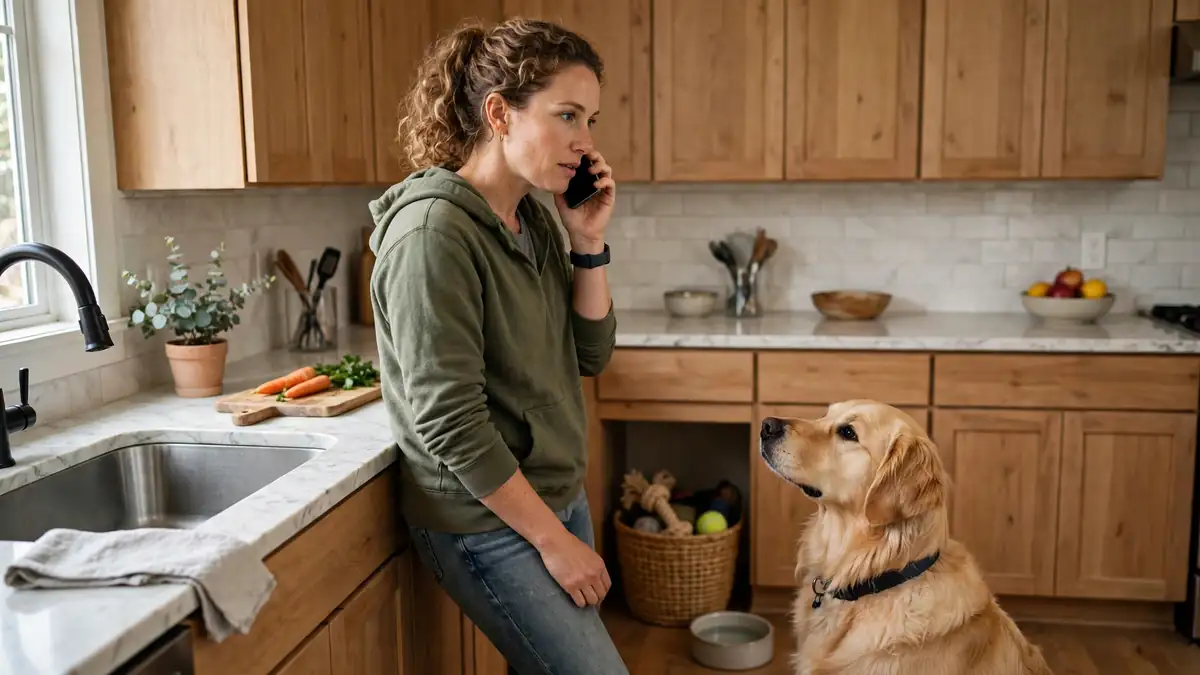
Start by taking the rest of the rind out of reach, then look at the dog. A dog that paws at its mouth, gags, or struggles to breathe needs help right now. A dog that seems calm still needs watching, because a blockage can show up a day or two later.
Offer fresh water and keep the dog calm. Do not try to make the dog vomit at home, since a hard piece can come back up into the throat or the airway. Only a vet should decide that step.
Call the vet and say what happened. Note the size of the piece and the size of the dog, so the vet can judge the risk. A sliver in a large dog is a different call from a whole wedge in a small dog. Bigger piece plus smaller dog means call the vet sooner, and any doubt means call anyway.
The vet may ask you to watch the dog at home, or may ask you to bring the dog in. Watch for 24 to 72 hours after the rind went down. Signs of a blockage usually show in that window, though a piece stuck in the stomach can bring vomiting sooner.
| What to track | Looks fine | Call the vet |
|---|---|---|
| Stools | Normal and on time | None, or straining to pass |
| Vomiting | None | Vomiting that repeats |
| Appetite | Eager at meals | Refuses food |
| Energy | Normal play and walks | Weak or lethargic |
| Belly | Soft and calm | Hard, swollen, or sore |
Stop the next accident before it happens. Bag rinds the moment the melon is cut. Use a bin with a lid, and clear plates at cookouts before the dog checks them.
Give the dog its own treat at the table, such as a plain bite of steak, so it has no reason to hunt for rind. Never reach for human pain medicine such as Tylenol if the dog seems sore.
Signs of a Blockage to Watch For
Repeated vomiting and appetite loss are the first signs of a gut blockage, and belly pain, weakness, or stool changes may follow. Two or more together call for a vet visit the same day. Do not wait for the signs to pass on their own.

Petful, citing the Merck Veterinary Manual, lists vomiting, loss of appetite, abdominal pain, lethargy, and changes in stool as the typical signs of an obstruction in dogs.
A blockage can turn serious fast. Food and water cannot get past the stuck piece. The gut swells, the dog stops eating, and the pain grows. A dog that vomits more than once after eating rind needs a vet the same day, not a wait-and-see day.
At the clinic, the vet feels the belly for pain and swelling, then may take an X-ray or use ultrasound to find the piece. Fluids and monitoring may follow, and a piece that will not move may need endoscopy or surgery to come out.
Do not offer Pedialyte or any home remedy while you wait, and do not offer food to a dog that keeps vomiting. The vet decides what goes in next.
Puppies, Small Dogs, and Dogs That Gulp
A small dog faces the highest risk from one large piece of rind, and puppies and gulpers sit in the same group. A small gut leaves less room for a chunk to pass. Never offer rind as a chew toy.

A toy breed or a puppy that gulps a whole wedge is a reason to call the vet today. The same piece that passes through a large dog can lodge in a small one, because the gut is narrower and the piece is bigger by comparison.
Gulpers make it worse. A dog that swallows food without chewing gives the gut a whole chunk to deal with, and rind is the worst kind of chunk. Slow the dog down at meals, and keep rind off the floor while the melon is cut.
Puppies can taste seedless, rind-free flesh once they eat solid food, usually from around eight to twelve weeks, but rind stays off the menu for them. A puppy that gnaws rind learns to treat it as a toy, and the next piece may go down whole. Keep rind out of reach from the start, and give the puppy a safe chew instead.
Dogs that gulp face the same trouble with other foods, and our guide to popcorn covers one of them.
Seeds, Other Melons, and Rind in Other Forms
Seeds, other melon rinds, and rind in other forms all follow the same rule, keep them out of the bowl. Mature black seeds can block a small dog, and cantaloupe or honeydew rind is just as tough. Frozen or pickled rind is worse, not better.

Watermelon seeds split the sources. Petful says the seeds are not toxic, and the risk is purely mechanical: a mouthful of mature black seeds can block a small dog. PetMD says the seeds hold trace amounts of cyanide, though a dog would be unlikely to eat enough seeds for poisoning. Both agree on the action, which is to remove the seeds before serving.
The soft white seeds in seedless watermelon are immature and harmless, which is one reason seedless melons make serving easier. The rind rule stays the same for seedless melons, though. Seedless changes the seeds, not the rind.
Other fruit carries the same rule about inedible parts. A mango pit stays out of the bowl, and the same goes for apricots, where the pit stays out too.
The flesh of cantaloupe is safe for dogs in small bites, and honeydew is fine too, but the rind and seeds of any melon should always come off first.
Frozen rind is worse than fresh rind, because freezing makes a hard piece harder. Pickled rind adds sugar and vinegar, and some recipes add spices or xylitol, which can kill a dog. Cooked rind dishes often add garlic, onion, salt, or oil, so they stay off the menu too.
Frequently Asked Questions
Most rind questions come down to one check, the rind stays out of the bowl, whatever form it takes. The answers cover peeled rind and seedless melons, washing, chewing without swallowing, and the dog that seems fine a day later.
Can dogs eat watermelon rind if I peel off the green skin?
Peeling off the green skin does not make the rind safe. The white band under it is still rind. It stays tough and fibrous, and it can still choke a dog or block the gut. Cut the flesh well clear of the white part, and throw the whole rind away.
Can dogs eat watermelon rind from a seedless watermelon?
Seedless changes the seed risk, not the rind risk. A seedless melon still has a tough rind, and the rind still blocks a gut the same way. Remove the rind before serving, the same as with any other watermelon.
My dog ate rind yesterday and seems fine. Should I still watch him?
Keep watching for the full 72 hours. A piece can sit in the stomach for a day before it moves on, and blockage signs often show on the second or third day. Call the vet if vomiting, appetite loss, or belly pain shows up.
Should I wash a watermelon before cutting it for my dog?
Wash the melon before you cut it. The green skin can carry pesticide or wax residue from the store, and a wash keeps that residue off the knife and off the flesh. Cut the flesh well clear of the rind once the melon is clean.
What if my dog chews on rind but does not swallow it?
Take it away anyway. A dog that chews rind can bite off a chunk mid-chew and swallow it before you can react. A rind slice is not a chew toy, even under supervision.
Can I cut rind very small and feed it as a treat?
Cutting rind small does not make it digestible. Small pieces are still fibrous, and a dog that gulps can swallow several at once. The safe treat is the flesh, cut clear of the rind, and the rind goes in the bin.
The Bottom Line
Skip the rind every time, and serve the flesh cut clear of the white band and the green skin. The rind carries no poison, but a swallowed chunk can choke a dog or block the gut. A large piece calls for a vet visit.
Next time you cut a watermelon, bag the rind the moment the knife comes out, before anyone takes a bite. That one habit keeps the risky part out of the dog’s reach, and the flesh stays the only part in the bowl.
Sources
- PetMD: Can Dogs Eat Watermelon?
- AKC: Can Dogs Eat Watermelon?
- Petful: Can Dogs Eat Watermelon Rind? What to Do If Yours Did
- Petful: Can Dogs Eat Watermelon? Safe Servings by Weight
- Petco: Can Dogs Eat Watermelon?
- PrettyFluffy: Can Dogs Eat Watermelon?
Disclaimer
This article shares general food safety information for dog owners and does not replace advice from a vet who knows your dog. If your dog has a health condition, takes medicine, or shows signs of illness after eating rind, contact your vet before you offer a new food again.


1 thought on “Can Dogs Eat Watermelon Rind? Risks and Rules”