

Your dog comes back from the litter box with crumbs on its muzzle. The short answer is access. The box sits open, the smell pulls the dog in, and scolding changes nothing.
Why do dogs eat cat poop, and why does my dog eat cat poop again the next day? Most dogs do it because cat poop smells like food to them. The risk depends on the cat, and the fix depends on the box.
Why Do Dogs Eat Cat Poop?
Most dogs eat cat poop because it smells like food to them, and the litter box sits open in the house. Habit, boredom, and stress drive most cases. Medical causes are less common, so a sudden new habit still deserves a vet check.

A 2018 survey from the University of California, Davis puts a number on how common this is. About 23% of the 1,441 owners surveyed had seen their dog eat stools at least once, and 16% had seen it six times or more. The same study found no link between the habit and the dog’s diet or age.
PetMD splits the causes into two groups: behavior first, then medical. Behavioral reasons come first: habit, boredom, stress, and curiosity. Medical causes sit in the second group, and they show up less often. A dog that starts the habit out of nowhere or loses weight needs a vet look before any training starts.
Habit does most of the work. A dog that finds a prize in the litter box once will check the box again tomorrow, because the reward lands every time.
Medical causes are rarer, and they look different. A dog with worms or a hormone problem may eat stool to replace lost nutrients. PetMD names malnutrition as the most likely medical cause, seen most often in homemade diets. The Hart survey disagrees: it found no link between stool eating and diet at all.
| Reason | What it looks like | First move |
|---|---|---|
| Habit | Daily box checks | Block access |
| Boredom | Long alone hours | More play and walks |
| Stress | A move or new routine | Calm the routine down |
| Medical cause | Sudden start, weight loss | Vet check first |
What Makes Cat Poop So Tempting to Dogs?
Cat poop tempts dogs because cat food runs high in protein, and cats pass some of it undigested. To a dog’s nose, the stool smells like a second serving of cat food. The box sits indoors, so the prize stays within reach all day.
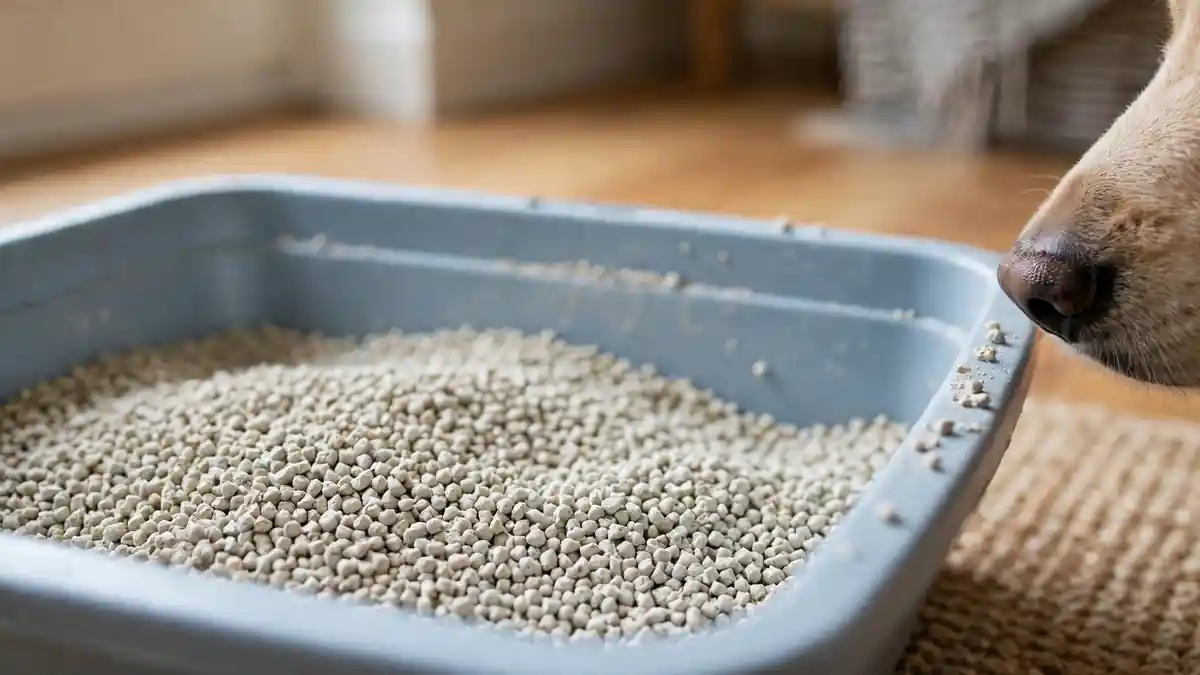
Cats eat meat. They are obligate carnivores, so their food runs far higher in protein than a dog’s food, and their short gut leaves some of it undigested.
“Cat foods are extremely high in protein, and they typically have a very strong odor,” says Allyson Harris, a vet quoted by Chewy. “Some dogs feel if they can’t get the cat’s food on the way in, they’ll get it coming out!”
The AKC makes the same point in plainer words: dogs like strong smells, and cat poop smells like cat food to them. A dog that begs for steak at the table feels the same pull at the litter box.
Access seals the deal. Cat poop sits indoors, in a box the dog walks past all day. Scavenging runs deep in dogs. A box of strong-smelling stool looks like a meal to a dog built to scavenge.
| Feature | Cat food | Dog food |
|---|---|---|
| Protein | High | Moderate |
| Smell | Strong | Milder |
| What passes through | Some stays undigested | Less left behind |
Is Cat Poop Dangerous for Dogs?
Cat poop can make a dog sick, though one small taste rarely causes trouble in a healthy adult dog. Parasites and bacteria pose the real risk, and swallowed litter can block the gut. The risk climbs when the cat lives outdoors or the habit repeats.
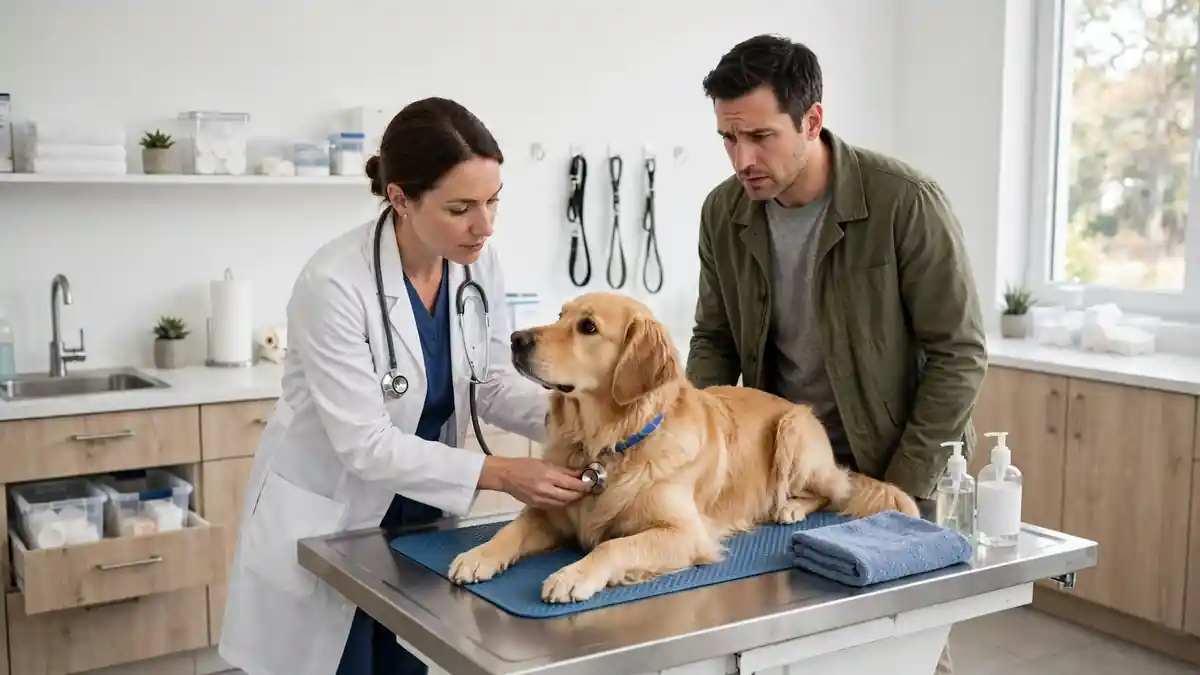
Parasites lead the risk list. Cat stool can carry roundworms and hookworms. A cat that looks healthy can still carry worms, and the dog may show nothing for weeks.
Toxoplasma gondii draws the most worry. Cats are the only animals that shed this parasite in their feces. The shed oocysts need one to five days to turn infectious, so a box scooped daily breaks the chain.
A healthy adult dog usually keeps it in check. Puppies and dogs with weak immune systems face the real danger, with fever, diarrhea, coughing, and seizures in severe cases.
The cat behind the stool changes the risk. A strictly indoor cat that gets dewormed on schedule carries far less risk, though the risk never drops to zero. A stray cat or an indoor-outdoor cat carries far more.
Salmonella and E. coli can pass from cat stool to dog, and Salmonella can pass from dog to person. Cat medicine adds a quieter risk: drug residues can linger in the cat’s feces and reach the dog.
The litter itself can hurt the dog more than the stool. Clumping litter swells as it soaks up moisture, and it swells inside the gut the same way. A large amount can block the gut, and that is a vet emergency.
| Risk | Where it comes from | Who faces it most |
|---|---|---|
| Roundworms and hookworms | Cat stool | Daily box raiders |
| Toxoplasma gondii | Cat stool after a few days | Puppies and weak dogs |
| Salmonella and E. coli | Cat stool | Dog and family |
| Litter blockage | Clumping litter swallowed with stool | Small dogs |
| Drug residues | The cat’s medicine | Any dog |
What to Do Right After Your Dog Eats Cat Poop
Stay calm and take the dog away from the box first, then check the mouth, offer fresh water, and skip the scolding. Then watch the dog closely over the next day or two for vomiting, loose stools, or a sore belly.
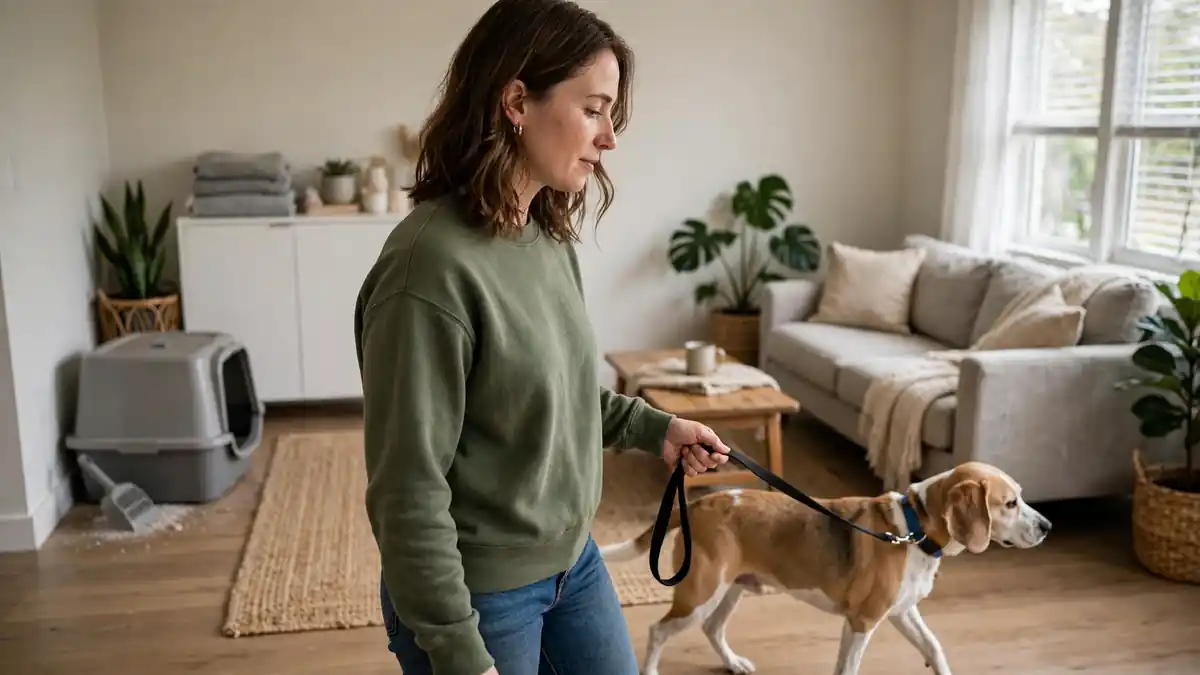
Call the dog away from the box in a calm voice. Do not shout, and do not chase the dog. A chase turns the stool into a prize worth guarding, and the dog will swallow faster next time.
Wipe the dog’s teeth and gums with a damp cloth, and offer fresh water. Never use human toothpaste, since it can harm a dog. Do not offer Pedialyte or any home remedy on your own, and never reach for human pain medicine such as Tylenol if the dog seems sore.
Watch the dog over the next day or two. Most one-off raids end with no symptoms at all. Call the vet sooner if the dog vomits more than once, refuses food, or turns lethargic.
| What to check | Looks fine | Call the vet |
|---|---|---|
| Stools | Normal | None, or straining |
| Vomiting | None | Vomiting that repeats |
| Appetite | Eager | Refuses food |
| Energy | Normal play | Weak or lethargic |
| Belly | Soft | Hard or sore |
How to Stop Your Dog Eating Cat Poop
Block the box and the habit fades, and scolding fails because the dog learns to eat faster, not to stop. A gate, a raised box, or a top-entry box ends the access, and training plus daily exercise handles the rest for good.

A dog cannot eat what it cannot reach. A gate, a raised box, or a door latch all do the same job. Pick one this week and the habit loses its fuel.
Scolding backfires. PetMD warns that punishment can make the problem worse. A dog punished for a potty accident may eat the evidence to dodge the next scolding, and a scolded dog scarfs the stool down faster.
Training works when the dog gets paid better for leaving the box alone. Teach “leave it” near the box, and pay the dog with a treat that beats the stool. A small bite of canned tuna works, because the smell competes with the box. A mat station helps too.
Boredom needs an outlet: daily walks, food puzzles, and training games. A food puzzle stuffed with a safe treat such as mango keeps a dog busy. Feed a complete diet too, built around real foods such as chicken, and let a vet visit rule out medical causes first.
Supplements split the sources. PetMD says food additives and supplements may help deter the habit. The Hart survey found the opposite: the reported success rate of commercial deterrent products sat close to zero. Treat a supplement as a vet conversation, not a fix on its own.
| Fix | How it works | What it takes |
|---|---|---|
| Gate the room | The dog cannot reach the box | One gate |
| Scoop daily | No stool waits in the box | Minutes each day |
| Train leave it | The dog chooses the reward | Short daily sessions |
| More exercise | Less boredom and less scavenging | Walks and play |
| Deterrent products | Make the stool taste bad | Vet advice; low success |
Litter Box Setups That Keep Dogs Out
The best setup depends on your dog’s size and your cat’s nerve, and a gate works for most homes. A raised box suits a calm cat, and a top-entry box suits a large dog. Pick the setup your cat still uses every day.
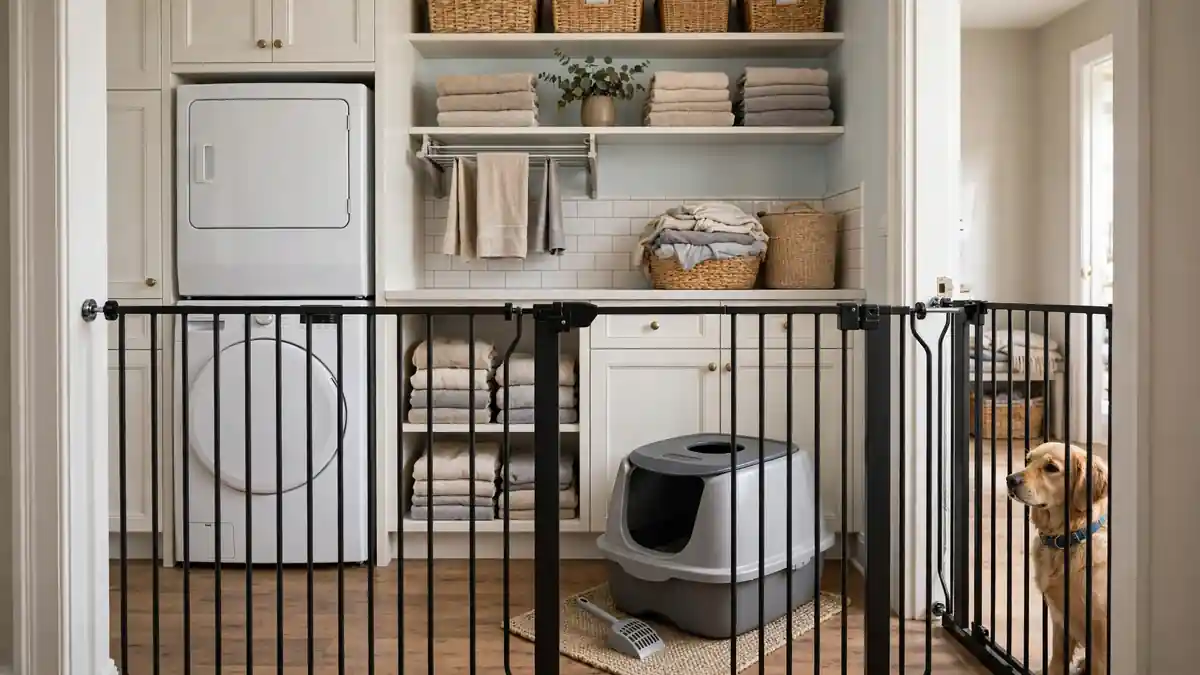
Start with a pet gate with a cat door. It works in most homes. The dog stays out and the cat slips through. Measure the gap first: a gate fails when the dog and the cat sit close in size, because a small dog can follow the cat straight through.
Raising the box suits a calm cat and a dog that cannot climb. A sturdy shelf or a table in the laundry room lifts the box out of reach. Watch the cat after the move: a cat that stops using the box will find another corner.
Top-entry boxes keep most dogs out. A covered box with a front door helps too, though a small dog can still poke its head inside. Some cats hate covered boxes, so keep the old box beside the new one for a week.
Two more options cover the rest. A dog-proof door latch leaves the door open a crack, wide enough for the cat and too narrow for the dog. An automated box cleans itself after each use. The price runs high, and a fast dog can still beat the cleaning cycle.
Puppies, Senior Dogs, and Dogs With Health Problems
Puppies, seniors, and sick dogs face higher stakes from the same habit, since puppies explore with their mouths, seniors may show brain aging, and a weak immune system turns a small parasite load into a real illness. These dogs need a vet check first.

Puppies explore the world with their mouths, and the litter box sits at nose height. A puppy may also pick the habit up from its mother, who eats the pups’ stool while she cleans them. Most puppies grow out of it as they mature.
A senior dog that starts the habit out of nowhere deserves a closer look. PetMD links a sudden start in an older dog to canine cognitive dysfunction. A senior that paces at night or forgets its routine needs a vet visit, not a new gate.
Dogs with weak immune systems carry the highest stakes. A puppy, a dog on immune-suppressing medicine, or a dog fighting another illness can turn a small parasite load into a real infection. Toxoplasma hits these dogs hardest.
The VCA guide to coprophagia takes the same line: rule out the medical causes first, then treat the behavior.
When to Call the Vet
Call the vet when the habit starts suddenly, turns obsessive, or pairs with weight loss, vomiting, or tiredness, and call the same day if the dog swallowed a lot of litter or strains with no stool. Fast action beats a wait-and-see day.

A sudden start is the clearest red flag, and an obsessive dog comes next. A dog that eats stool and other non-food items may have pica, and that needs a full workup. A dog that eats a large amount of litter needs the same-day call, because a blockage can follow. A sudden habit change deserves a vet visit the same way a cough that will not clear deserves one for colds.
The vet will run a physical exam, a stool test, and blood work to rule out medical causes. Bring a note of when the habit started and whether the cat lives indoors or outdoors.
Frequently Asked Questions
Most cat-poop questions come down to two checks, how risky the cat is and how much litter the dog swallowed. The answers below cover worms, litter, mouth cleaning, growing out of it, and the dog that keeps going back for more.
Can my dog get worms from eating cat poop?
Roundworms and hookworms pass from cat to dog through the feces, and a cat that looks healthy can still carry them. The risk drops when the cat lives indoors and gets dewormed on schedule, and it climbs with stool from a stray or outdoor cat.
How do I clean my dog’s mouth after eating cat poop?
Wipe the teeth and gums with a damp cloth, then offer fresh water and a dog-safe dental chew. The water rinses the mouth, and the chew scrapes off what the cloth missed. Never use human toothpaste, since it can harm a dog.
Will my dog grow out of eating cat poop?
Puppies often do, as they mature. An adult dog rarely drops the habit on its own, because each raid rewards the dog again. The habit fades when the access ends, so a gate does more than waiting ever will.
Can eating cat poop make my family sick?
It can, through the dog’s mouth and paws. Salmonella can pass from the dog to a person through kisses or a shared surface, and a dog can carry Toxoplasma oocysts on its coat and face after a raid. The risk runs higher in a home with a pregnant person or someone with a weak immune system.
Do deterrent chews stop dogs eating cat poop?
They rarely work. The chews go to the cat, not the dog, since the goal is to make the cat’s stool taste bad, and the Hart survey put the success rate of commercial deterrent products close to zero. A gate costs less and works the first day.
My dog only eats cat poop outside. Is that different?
It is different in one way: the stool comes from stray or neighborhood cats, which carry more parasites. You cannot gate a yard the way you gate a laundry room, so the fix shifts to yard checks and regular parasite tests at the vet. Scoop the yard often.
The Bottom Line
Treat this as an access problem, not a discipline problem, and gate the box, scoop it daily, and let the vet sort out any medical cause behind the habit. The habit ends when the prize disappears, and the dog moves on.
If you share your home with a dog and a cat, start with the door. Fit a gate with a cat flap on the litter room today and scoop the box each evening. Book the vet check if the habit started suddenly.
The box will stay the cat’s, and the habit will starve.
Sources
- PetMD: Why Do Dogs Eat Cat Poop?
- AKC: Why Do Dogs Eat Cat Poop?
- VCA: Coprophagia
- Chewy: Why Do Dogs Eat Poop? How Do I Make It Stop?
- Great Pet Care: Why Do Dogs Eat Poop?
- Adopt-a-Pet: Why Does My Dog Eat Cat Poop?
- Dogster: How To Keep Dogs Out Of Cat Litter Boxes
- ThePetTimes: Dog Eating Cat Poop: The Litter Box Is Unlocked
- BiologyInsights: Is Cat Poop Bad for Dogs?
- Hart et al. 2018: The Paradox of Canine Conspecific Coprophagy
- Medivet: Why Dogs Eat Their Own Poop
- ShepherdTips: Why Do Dogs Eat Cat Poop? Causes, Risks & Fixes
Disclaimer
This article shares general behavior and health information for dog owners and does not replace advice from a vet who knows your dog. If your dog starts eating cat poop suddenly, eats a large amount of litter, or shows signs of illness after a raid, contact your vet before you try a new fix.
1 thought on “Why Do Dogs Eat Cat Poop? Causes and Prevention”