

Dogs can develop respiratory illnesses that look a lot like a human cold, but they do not catch the same common cold viruses that people do. When owners say their dog “has a cold,” they usually mean their dog is sneezing, coughing, has a runny nose, or seems tired and less interested in food. Those signs can be caused by several different canine viruses and bacteria, by allergies, or by irritation from dust, smoke, or cold air.
Most mild respiratory illnesses in otherwise healthy adult dogs improve with rest and veterinary guidance, but some can become more serious, especially in puppies, senior dogs, and dogs with other health problems. This guide explains how canine respiratory illness differs from a human cold, what symptoms to watch for, how to care for a dog at home under veterinary guidance, and when a veterinary visit is needed. It does not diagnose your dog, and it does not replace veterinary advice.
Can Dogs Catch a Human Cold?
No, dogs do not catch human colds in the usual sense, because the viruses that cause colds in people are adapted to people. A dog with sneezing, coughing, or a runny nose usually has its own canine respiratory illness, allergies, or airway irritation, not a human cold virus.

No, dogs do not catch human colds in the usual sense. The viruses that commonly cause colds in people are adapted to people, and they are not a typical cause of illness in dogs. That does not mean a dog cannot become ill at the same time as a sick owner. A dog may develop its own respiratory infection independently, or may react to changes in the household, such as less ventilation, more indoor time, or exposure to smoke and fragrances.
The reverse is also important to understand: most canine respiratory infections are not passed to people. Some canine illnesses, however, spread easily between dogs, especially in places where dogs gather, such as boarding facilities, daycare, dog parks, and shelters. If your dog has respiratory symptoms, it is sensible to keep it away from other dogs until a veterinarian advises that it is safe to resume normal contact, to reduce the chance of spreading illness to other dogs.
What Causes Cold-Like Symptoms in Dogs?
Several different causes can produce similar cold like symptoms, including canine respiratory viruses and bacteria, kennel cough, allergies, and irritation from dust, smoke, or fragrances. Other problems, such as dental disease or heart disease, can also cause a persistent cough, so symptoms alone cannot identify the cause.

Several different causes can produce similar symptoms, which is why a veterinarian may need to examine a dog rather than relying on symptoms alone. Common categories include:
Canine respiratory viruses and bacteria
Canine parainfluenza, canine adenovirus, and canine coronavirus (a dog-specific virus, different from the virus that causes COVID-19 in people) are among the agents associated with respiratory illness in dogs. Bordetella bronchiseptica, a bacterium, is another well-known cause and is often linked to kennel cough. These agents can cause inflammation of the nose, throat, windpipe, and sometimes the lungs. In many cases the illness is mild, but it can be more serious if it spreads to the lungs or if a dog has a weakened immune system.
Kennel cough and canine infectious respiratory disease
“Kennel cough” is a general term for a contagious respiratory condition in dogs, often involving more than one virus or bacterium. It is characterised by a persistent, often harsh cough, and it spreads through coughing, sneezing, shared bowls, and close contact. Canine infectious respiratory disease complex is a broader term used by veterinary professionals for similar multi-agent respiratory illness.
Allergies and irritation
Allergies to pollen, dust, mould, or household chemicals can cause sneezing, a runny nose, watery eyes, and itching in some dogs. Smoke, strong fragrances, cleaning products, and dusty environments can irritate a dog’s airways even without an infection. Allergy-related symptoms often come and go with exposure, and they may be accompanied by itchy skin or paws, but only a veterinarian can distinguish allergies from infection.
Other health problems
In some dogs, a persistent cough or nasal discharge is not a cold at all. Dental disease, nasal foreign bodies, fungal infection, heart disease, or other conditions can cause similar signs. That is one reason a cough that does not improve, or that keeps returning, deserves veterinary investigation rather than a home assumption that it is “just a cold.”
Common Symptoms of a Dog Cold
Owners commonly notice sneezing, a runny nose, coughing, watery eyes, reduced energy, and less interest in food or play. Some dogs show only one or two mild signs and recover quickly, while others develop a persistent cough or breathing difficulty. The overall pattern, not a single sneeze, matters most.

Symptoms vary with the cause and the individual dog, but owners commonly notice:
- Sneezing, often in bursts
- A runny nose, with clear or coloured discharge
- Coughing, which may be dry, harsh, or honking
- Watery or irritated eyes
- Reduced energy, less interest in play, or sleeping more than usual
- Reduced appetite or less interest in food and treats
- A mild fever, although fever cannot be reliably judged by feeling a dog’s nose or ears
Some dogs show only one or two mild signs and recover quickly. Others develop a more persistent cough, breathing difficulty, or a loss of appetite that lasts more than a day or two. The pattern matters: a single sneeze after sniffing dust is very different from a cough that worsens over several days, and a veterinarian can help interpret that pattern.
How Long Does a Dog Cold Last?
Mild respiratory illnesses often improve over days to a couple of weeks, depending on the cause and the dog’s age and health. Watch the overall trend in energy, appetite, breathing, cough frequency, and nasal discharge, rather than judging recovery by one good day. If symptoms worsen or do not improve, contact a veterinarian.

Mild respiratory illnesses often improve over a period of days to a couple of weeks, but the exact course depends on the cause, the dog’s age and health, and whether complications develop. Some dogs improve steadily, with coughing gradually becoming less frequent. Others seem to improve and then worsen, which can be a sign that veterinary follow-up is needed.
Do not judge recovery by a single good day. Watch the overall trend: energy, appetite, breathing, cough frequency, and nasal discharge over several days. If symptoms are not improving, are getting worse, or are accompanied by any warning sign below, contact a veterinarian rather than waiting for a fixed number of days to pass.
Caring for a Dog With Cold-Like Symptoms
Home care for a mild respiratory illness is mainly supportive and should follow veterinary guidance for that dog. Keep exercise gentle, provide a warm draft free resting place with fresh water, avoid smoke and strong fragrances, and monitor cough, appetite, energy, and breathing so you can report changes accurately.
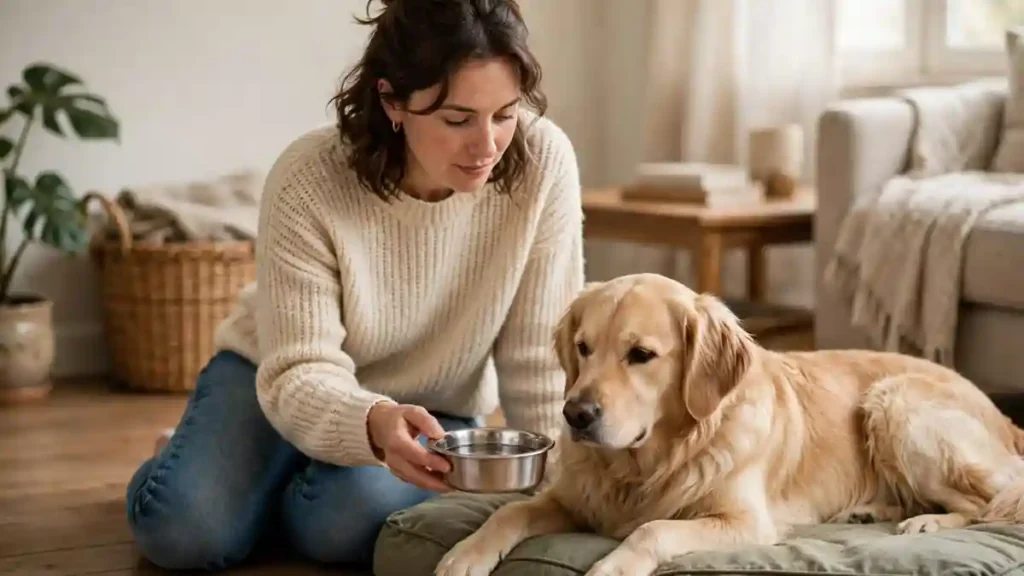
Home care for a mild respiratory illness is mainly supportive, and it should follow veterinary guidance for that dog.
General supportive care that a veterinarian may discuss includes:
- Rest: keep exercise gentle and avoid vigorous play, long runs, and excitement until your dog is improving. Short, calm walks for toileting are usually sufficient during illness.
- A comfortable, warm, draft-free resting place, with fresh water available at all times.
- Good air quality: avoid smoke, strong fragrances, and harsh cleaning products around a sick dog, and keep the room reasonably ventilated without creating a cold draft.
- Encouraging eating and drinking: offer your dog’s regular food, and contact a veterinarian if your dog refuses food or water for more than a short period, or if it cannot drink comfortably.
- Monitoring: note cough frequency, nasal discharge colour and amount, appetite, energy, and breathing. That record helps a veterinarian assess whether the illness is improving.
Steam from a warm shower can be soothing for some dogs, and some veterinarians suggest it as supportive care, but it should only be used if your veterinarian recommends it for your dog, and a dog should never be left unattended in a steamy room or exposed to very hot water.
What Not to Give a Sick Dog
Do not give a sick dog human cold or flu medicine unless a veterinarian specifically directs it for that dog. Those products can contain ingredients that are unsafe for dogs, including acetaminophen and decongestants. Also avoid essential oils, vapor rubs, and humidifier additives unless a veterinarian approves them.

There is no home treatment protocol in this guide, and no human cold medicine should be given to a dog unless a veterinarian specifically directs it for that dog. Human cold and flu products can contain ingredients that are unsafe for dogs, including acetaminophen and decongestants, and they should never be given on the basis of an article. Do not use essential oils, vapour rubs, or humidifier additives around a sick dog unless a veterinarian approves them, because some products irritate canine airways or are toxic if ingested.
Warning Signs: When to See a Veterinarian Promptly
Contact a veterinarian promptly, or an emergency service if your clinic is closed, if your dog has breathing difficulty, rapid breathing, wheezing, blue or pale gums, coughing up blood, thick nasal discharge, refusal to eat or drink, marked lethargy, fever, or collapse. Do not wait for breathing difficulty to improve alone.
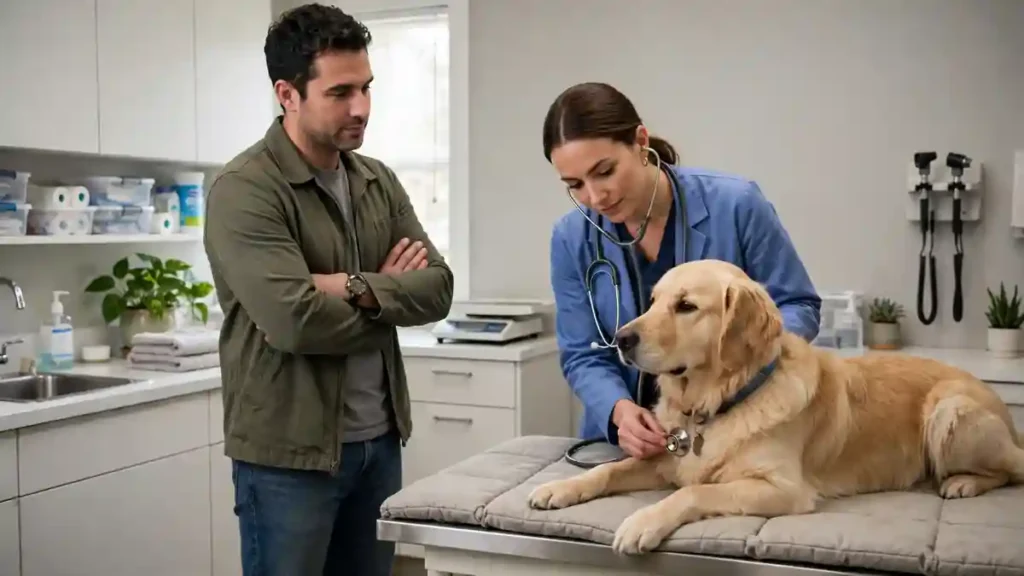
Contact your veterinarian promptly, or an emergency veterinary service if your clinic is closed, if your dog shows any of the following:
| Warning sign | Why it matters |
|---|---|
| Difficulty breathing, rapid breathing, wheezing, or blue or pale gums | Breathing problems are always urgent |
| Persistent coughing that worsens, or coughing up blood | May indicate a more serious lung or airway problem |
| Thick, yellow or green nasal discharge, or discharge from one nostril only | Can suggest a bacterial infection or a nasal problem |
| Refusal to eat or drink, vomiting, or marked lethargy | A dog that will not eat or drink can deteriorate quickly |
| Fever, shivering, or collapse | Signs of more serious illness needing assessment |
| Symptoms in a puppy, senior dog, or dog with heart, lung, or immune problems | These dogs are at higher risk of complications |
| No improvement after several days, or symptoms that improve then worsen | The cause may need further investigation |
Do not wait for a dog with breathing difficulty to improve on its own. Early veterinary assessment is safer, and a veterinarian can listen to the lungs, check temperature and hydration, and decide whether further testing or treatment is needed.
Can Colds in Dogs Be Prevented?
Colds in dogs cannot be prevented entirely, but risk can be reduced. Your veterinarian can advise which vaccines fit your dog’s lifestyle, age, and local risks, although vaccination does not prevent every respiratory illness. Avoiding ill dogs, cleaning shared bowls and toys, and improving ventilation also help.

Not entirely, but some steps reduce risk. Vaccination is an important part of prevention for certain canine respiratory agents, and your veterinarian can advise which vaccines are appropriate for your dog’s lifestyle, age, and local risks. Vaccination does not prevent every respiratory illness, because many different agents can cause similar symptoms, but it can reduce the severity or likelihood of some infections.
Other preventive steps include avoiding close contact with visibly ill dogs, keeping shared bowls and toys clean, ensuring good ventilation in indoor spaces, and avoiding smoke and strong chemical irritants around dogs. Regular veterinary check-ups also help, because a veterinarian can identify health problems that make a dog more vulnerable to respiratory illness.
Boarding, Daycare and Training Classes
If your dog attends boarding, daycare, or training classes, ask about the facility’s illness policies and vaccination requirements. A facility that asks ill dogs to stay home helps protect all the dogs in its care, and keeping your own ill dog home is part of the same responsibility.
If your dog is in boarding, daycare, or training classes, ask about their illness policies and vaccination requirements. A facility that asks ill dogs to stay home is helping to protect all the dogs in its care, and keeping your own dog home when it is ill is part of the same responsibility.
FAQs About Dogs and Colds
The answers below cover the questions owners ask most often about dogs and colds, including human colds, kennel cough, and human medicine. They summarize the guidance in this article in short form, and they do not replace veterinary advice for an individual dog. When in doubt, call your veterinarian.
Can dogs get colds from humans?
Dogs do not typically catch human cold viruses. A dog with cold-like symptoms usually has a canine respiratory illness, allergies, or airway irritation, not a human cold.
Can dogs give colds to humans?
Most canine respiratory infections are not passed to people. However, respiratory illness can spread easily between dogs, so an ill dog should be kept away from other dogs until a veterinarian advises otherwise.
Is kennel cough the same as a dog cold?
Kennel cough is a type of contagious respiratory illness in dogs, often with a persistent cough. It overlaps with what owners call a “cold,” but it has its own causes and patterns, and a veterinarian can distinguish it from other conditions.
Should I give my dog human cold medicine?
No, not unless a veterinarian specifically directs it for that dog. Many human cold and flu products contain ingredients that are unsafe for dogs.
How can I tell if my dog’s cough is serious?
A cough with breathing difficulty, blood, marked lethargy, refusal to eat or drink, or no improvement over several days should be assessed by a veterinarian promptly. A mild, occasional cough in an otherwise bright dog is less concerning, but still worth monitoring.
When should my dog see a vet for a cold?
See a veterinarian if symptoms worsen, do not improve, involve breathing difficulty, or affect a puppy, senior dog, or dog with other health problems. When in doubt, calling your veterinarian for advice is the safest step.
Related Guides
Sources and Further Reading
- AKC (cited by name)
- ASPCA (cited by name)
- PetMD (cited by name)
- VCA Animal Hospitals (cited by name)
Disclaimer
This article is for general information only and is not veterinary advice. It does not diagnose or treat any individual dog. If your dog has difficulty breathing, persistent coughing, or any concerning symptoms, contact your veterinarian or an emergency veterinary service promptly.


