
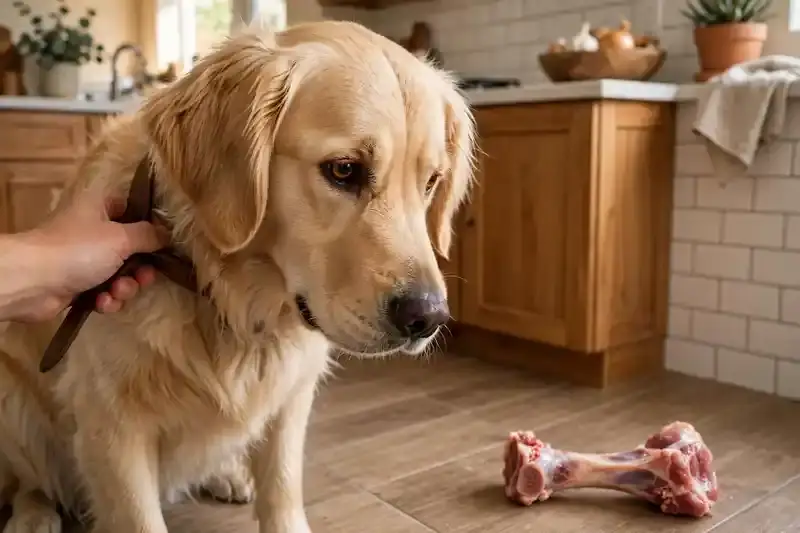
No, dogs should not have pork bones. Cooked pork bones are the most dangerous because they splinter easily, but raw pork bones are not a safe choice either — they can still crack, carry bacteria, and cause choking or a gut blockage.
If you have just finished a pork dinner and your dog is staring hopefully at the leftover bone, this is one treat that is better kept off the menu. Below you will find exactly why pork bones are risky, how cooked and raw bones differ, what to do if your dog has already eaten one, and the safer chews dogs actually enjoy.
Short Answer: Can Dogs Have Pork Bones?
No. The American Kennel Club (AKC) is clear on this one: when you finish a pork chop, it is not okay to give your dog the bone, because a pork bone may be dangerous for your dog to eat. PetMD gives the same advice in its guide to bones, noting that dogs should not have pork rib bones, whether cooked or raw.
That does not mean pork itself is always off limits. Plain, fully cooked, boneless pork meat in a small amount can be fine for many healthy dogs as an occasional treat. It is the bone — not the meat — that creates the problem here.
Why Pork Bones Are Risky
They splinter into sharp pieces
Cooking dries a bone out and makes it brittle. When a dog bites down, a cooked pork bone can snap into sharp shards instead of crumbling safely. Those shards can cut the mouth, throat, or gums, scratch the esophagus, or puncture the stomach or intestines. PetMD warns that cooked bones splinter more easily than raw bones and can pierce the digestive tract.
Raw pork bones are less brittle, but they are not splinter-proof. A strong chewer can still crack one, and a broken piece can be swallowed before you have time to take it away.
They can choke a dog or block the gut
Pork bones are relatively small compared with, say, a large beef bone. The AKC points out that because pork bones are relatively small, big dogs might attempt to swallow them whole — which is also very dangerous. A bone or fragment can lodge in the throat, or it can get stuck further down and cause an intestinal blockage. A blockage is an emergency and may need endoscopy or surgery.
They can break teeth
Hard bones put a lot of force on teeth. PetMD lists dental trauma — chips, fractures, and cuts in the mouth or cheeks — among the serious risks of giving dogs bones. A broken tooth is painful for the dog and expensive to fix.
Raw bones carry bacteria
PetMD also warns that raw bones can carry bacteria such as Salmonella, and that germs can spread around the home and make people sick too, not just the dog. Raw pork carries the same kind of food-safety concern as any raw meat: it must be handled and stored carefully, and it is never a risk-free option.
Fatty meat on the bone can upset the stomach
Pork bones often still have fatty meat attached. A sudden fatty meal can cause vomiting or diarrhea, and in some dogs it can trigger pancreatitis — a painful inflammation of the pancreas. Dogs that are prone to pancreatitis, or that already have sensitive stomachs, are at higher risk.

Cooked vs Raw Pork Bones: What Is the Difference?
| Bone type | Risk level | Why |
|---|---|---|
| Cooked pork bones (chop, rib, ham, roast leftovers) | Highest — never give these | Heat makes the bone dry and brittle, so it splinters into sharp shards |
| Raw pork bones | Still risky — not recommended | Less brittle than cooked, but can still crack, choke, or carry bacteria |
| Smoked, dried, or store-bought “bone treats” | Risky — check with your vet first | Processing can make bones brittle too, and small pieces can still break off |
The honest bottom line from the veterinary sources is simple: cooking makes pork bones worse, but “raw” does not make them safe. If you want to give your dog something to chew, a product made for dogs is a far better bet than any leftover bone from your plate.
Pork Bones by Type: Ribs, Chops, Ham, and Neck Bones
- Pork rib bones: No. Rib bones — pork, beef, or otherwise — are prone to splintering, and PetMD specifically says dogs should not have pork rib bones.
- Pork chop bones: No. These are small, brittle when cooked, and easy to swallow in pieces.
- Ham bones: No. Cooked ham bones are soft and prone to splintering, and ham itself is very salty and fatty, which adds stomach upset and pancreatitis risk on top of the bone risk.
- Pork neck bones or femur bones: Still not recommended. A bigger bone is not automatically a safe bone, especially once it has been cooked, smoked, or dried. Size helps only in the sense that a dog is less likely to swallow a very large bone whole — it does not remove the splintering, tooth, or bacteria risks.
- Pork shoulder bones: Same rule as every other pork bone — no. Shoulder bones are often cooked, smoked, or served with fatty meat attached, which adds splintering risk on top of stomach upset and pancreatitis risk.
- Pork bones from the pet store: Do not assume these are safe just because they are sold for dogs. Some are cooked or smoked and can still splinter. If you buy a chew, choose one sized for your dog, supervise every session, and throw it away once it starts breaking into pieces.
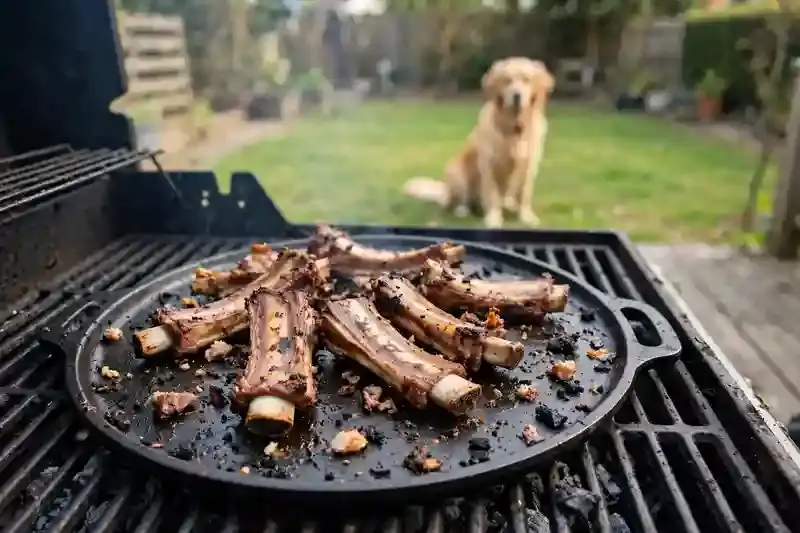
How to Serve Pork Safely (Without the Bone)
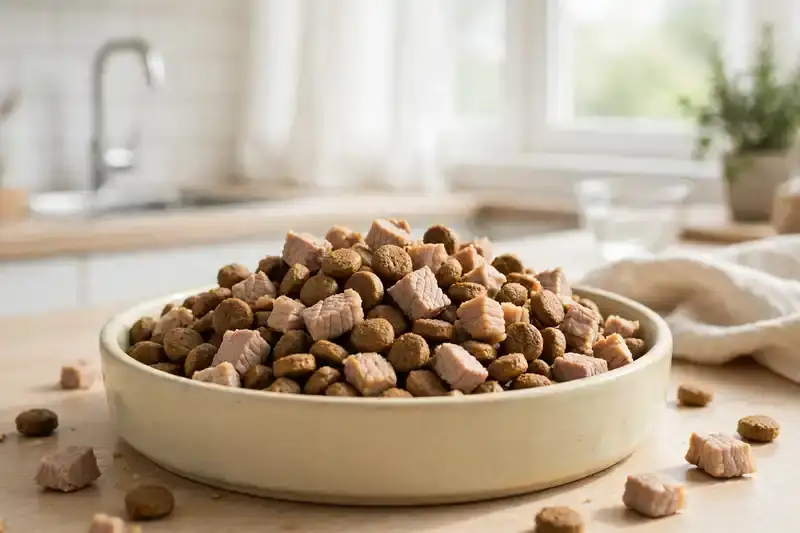
You do not have to ban pork from your dog’s life completely — just serve the meat, not the bone:
- Use plain, lean, boneless pork only. Trim off all visible fat and remove every bit of bone.
- Cook it fully, with no seasoning. No salt, garlic, onion, BBQ sauce, marinade, or rub — garlic and onion are toxic to dogs, and sauces add salt, sugar, and fat.
- Let it cool, then cut it small. Small, bite-sized pieces are easier to chew and less likely to cause trouble.
- Keep it a rare treat, not a meal. Treats of all kinds should stay within about 10% of your dog’s daily calories. A few small pieces once in a while is plenty.
- Watch the first time. The first time you offer any new food, give a tiny amount and watch for vomiting, diarrhea, or itching over the next day before offering more.
Dogs with pancreatitis, kidney disease, obesity, or a sensitive stomach should not get fatty pork at all — ask your vet first. And never give your dog pork that is raw or undercooked.
What to Avoid
- Cooked pork bones of any kind — including leftovers from roasts, ribs, chops, and ham
- Raw pork bones, even from a trusted butcher
- Bones with seasoning, sauce, or marinade still on them
- Small bones your dog could swallow whole, and round bones that can get stuck around the lower jaw
- Giving a bone and walking away — unsupervised chewing is when most accidents happen
- Cooked bones from other meats too, for the same splintering reason — chicken, turkey, and rib bones are also on the no list
- Processed pork around the bone: bacon, sausage, and salty ham are high in fat and salt and can trigger pancreatitis on their own
Safer Alternatives Dogs Actually Love
If your dog just loves to chew, these options give them the same satisfaction without the pork-bone risks:
- VOHC-accepted dental chews. PetMD recommends looking for the Veterinary Oral Health Council (VOHC) seal of acceptance, which shows a dental chew is both safe and effective.
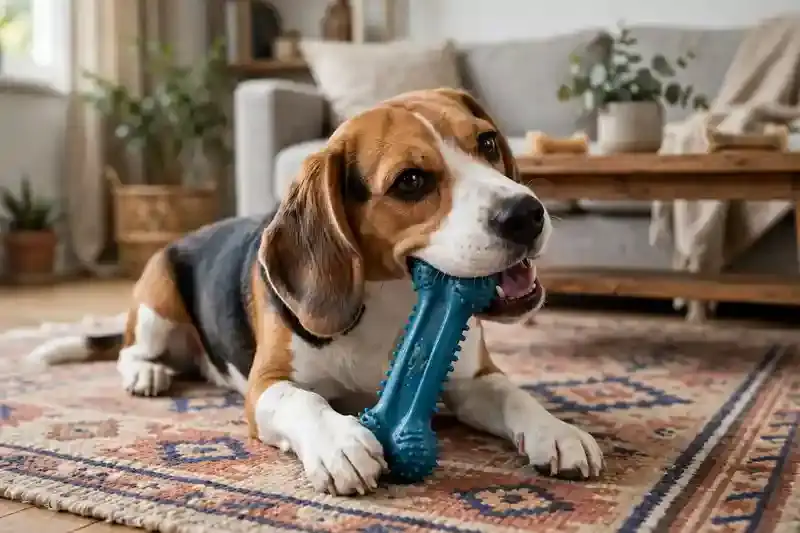
- Durable rubber chew toys. A sturdy chew toy sized for your dog’s jaw can be stuffed with a little plain kibble or dog-safe peanut butter (xylitol-free) for a longer-lasting chew.
- Frozen enrichment toys. A frozen Kong-style toy or a lick mat with plain pumpkin or plain yogurt keeps a keen chewer busy without any bone at all.
- Vet-approved edible chews. Bully sticks and similar single-ingredient chews made for dogs are softer than bone, but still supervise your dog and remove the chew once it gets small enough to swallow.
- Plain, dog-safe snacks for flavor. A few small pieces of plain cooked boneless pork, carrot sticks, or apple slices (no seeds) can satisfy the “I want what you’re eating” moment far more safely than a bone.
Whatever you choose, supervise your dog while they chew, pick a size that matches your dog, and take the chew away if it starts breaking into pieces or your dog tries to swallow chunks.
My Dog Ate a Pork Bone — What Should I Do?
Stay calm, but act quickly. This is the step-by-step approach the AKC recommends:
- Take the bone away if you safely can. If your dog still has the bone or a piece of it, remove it calmly — do not chase or wrestle, which can make a dog swallow faster.
- Do NOT try to make your dog vomit. Vomiting can push sharp fragments back up through the throat and cause more damage. Only induce vomiting if your vet specifically tells you to.
- Check your dog’s mouth. Look (gently) for pieces stuck between teeth, on the roof of the mouth, or around the jaw — but keep your fingers out of the way of a stressed dog’s teeth.
- Call your vet, even if your dog seems fine. Tell them what kind of bone it was, whether it was cooked or raw, roughly how much was eaten, and your dog’s size and breed. Your vet may advise watchful waiting, or may want to see your dog straight away.
- Watch closely for the next 24 to 72 hours. Many dogs pass small pieces without trouble, but problems can show up hours later.
Symptoms: When to Call a Vet Right Away
Call your vet immediately — or go to an emergency vet clinic — if you see any of these:
- Choking, gagging, coughing, or trouble breathing
- Excessive drooling or pawing at the mouth
- Vomiting, retching, or repeated attempts to vomit
- Loss of appetite or refusal to drink
- Abdominal pain: whining, hunching, restlessness, or reluctance to move or lie down
- Bloody stool, black tarry stool, constipation, or straining without passing anything
- Lethargy, weakness, or collapse
- Swollen or tender belly
The AKC notes that vomiting, excessive drooling, abnormal bowel movements, and lack of appetite are all symptoms of an intestinal blockage, and if you see them, take your dog to the vet right away. Your vet will decide whether the best course is waiting and watching, endoscopy, or surgery. Do not wait for symptoms to “pass on their own” if your dog is in distress — a perforation or blockage can become life-threatening fast.
Puppies and Small Dogs Need Extra Care
Puppies, small breeds, and dogs that gulp their food are at higher risk: a bone that a large dog might crunch up can be a choking-sized object for a small dog, and a puppy’s teeth and gut are more easily damaged. If a puppy or small dog has eaten a pork bone, call your vet sooner rather than later, even if they look okay.

What About Bone Broth?
If you do not want the bones to go to waste, the AKC suggests one safe use: make a broth from them for yourself, and mix a little plain, low-salt broth into your dog’s food for extra flavor. Check with your vet first if your dog has intestinal or dietary issues, and never give the cooked bones themselves to your dog — strain them out completely, and skip any broth made with onion, garlic, or heavy salt.
Frequently Asked Questions
Q1: Can dogs have pork bones at all?
A: No, dogs should not have pork bones. Cooked pork bones splinter easily and can cause choking, tooth damage, or internal injury, and raw pork bones can still crack or carry bacteria. The AKC and PetMD both advise against them.
Q2: Can dogs eat cooked pork bones?
A: No. Cooked pork bones are the most dangerous kind. Heat dries the bone out and makes it brittle, so it snaps into sharp shards that can cut the mouth and throat or puncture the stomach and intestines.
Q3: Can dogs eat raw pork bones?
A: Raw pork bones are less brittle than cooked ones, but they are still not recommended. They can crack into sharp pieces, pose a choking risk, and carry bacteria such as Salmonella. If your dog loves to chew, a vet-approved dental chew is a safer choice.
Q4: Can dogs eat pork rib bones or pork chop bones?
A: No. Pork rib bones and pork chop bones are small, brittle when cooked, and especially likely to splinter or be swallowed in pieces. PetMD specifically warns against pork rib bones.
Q5: What should I do if my dog eats a pork bone?
A: Remove any remaining bone if you can do so safely, do not try to make your dog vomit, and call your vet. Watch for vomiting, drooling, loss of appetite, abdominal pain, or blood in the stool over the next 24 to 72 hours, and go to an emergency vet at once if your dog is choking, in pain, or cannot pass stool.
Q6: What can I give my dog instead of a pork bone?
A: VOHC-accepted dental chews, a durable rubber chew toy sized for your dog, a frozen enrichment toy, or a vet-approved edible chew. Supervise every chew session and remove the chew once it starts breaking into pieces or gets small enough to swallow.
Q7: What kind of bones can dogs eat?
A: None from the dinner table — no pork, chicken, turkey, or rib bones, cooked or raw. The safe substitutes are chews made for dogs: VOHC-accepted dental chews, durable rubber toys, and vet-approved edible chews. If your vet ever approves a raw bone, it must be large and size-appropriate, given only under supervision, and taken away the moment it starts to crack or gets small enough to swallow.
Vet Disclaimer
This article is for general information only and is not a substitute for veterinary advice. Every dog is different — age, size, breed, health history, and diet all matter. If your dog has eaten a pork bone, has a health condition, or you are unsure about any food or chew, contact your veterinarian or an emergency veterinary clinic promptly. If you think your dog is choking or in severe distress, seek emergency care immediately rather than waiting for symptoms to develop.


