

Short Answer
Yes, dogs can eat beef jerky — but only the right kind, and only in small amounts. Plain, unseasoned jerky made for dogs, or plain dried beef with nothing added, is generally fine as an occasional treat. Most beef jerky made for people, on the other hand, is not safe for dogs, because it is loaded with salt and seasonings that dogs should never eat.
That distinction is the whole story. The beef itself is not the problem. It is everything that gets added to human jerky — garlic powder, onion powder, sugar, soy sauce, chili, and preservatives — that turns a simple snack into a risky one. If you remember one rule, make it this: if the jerky was made for humans, do not share it with your dog.
Why Most Human Beef Jerky Is Unsafe for Dogs
Walk down any snack aisle and read a bag of beef jerky. The ingredient list is usually long: beef, salt, sugar, soy sauce, garlic powder, onion powder, black pepper, smoke flavoring, and sodium nitrite. Several of those are genuine problems for dogs.
Garlic and onion are toxic to dogs. The American Kennel Club (AKC) lists onions and garlic among the foods dogs should never eat, because compounds in them damage a dog’s red blood cells and can cause anemia. This applies in every form — fresh, cooked, dried, or powdered — so “just a little garlic powder” on jerky is not a safe exception. PetMD likewise warns that onion and garlic toxicity can take a day or more to show up, with signs like weakness, pale gums, and dark urine.
Salt is the quieter danger. Dogs are far more sensitive to salt than people are. A few strips of human jerky can pack more sodium than a dog should get in an entire day, and too much salt can cause excessive thirst, vomiting, diarrhea, and in severe cases salt poisoning. VCA Hospitals notes that signs of salt toxicity include vomiting, diarrhea, tremors, and seizures, and it should always be treated as an emergency.
Sugar and sweeteners make it worse. Many jerky flavors — teriyaki, honey, barbecue, sweet chili — are sweetened. Sugar adds empty calories and feeds dental problems, and some sugar-free products use xylitol (also listed as birch sugar), which is extremely toxic to dogs even in tiny amounts. The ASPCA’s poison control guidance treats xylitol ingestion as an emergency.
Preservatives and flavorings add no benefit. Nitrates and nitrites, liquid smoke, MSG, and hot spices like chili powder can irritate your dog’s stomach and, over time, add risk without adding nutrition. None of them belong in a dog treat.

The Kind of Beef Jerky That IS Safe
Safe jerky for dogs is boring — and that is exactly the point. Look for:
- One ingredient: beef, and nothing else. “Single-ingredient” or “100% beef” on the label is what you want.
- Made for dogs: jerky treats manufactured for dogs are made without the seasonings and salt levels of human snacks.
- Low sodium: if the label lists salt, it should be near the end of the list or absent entirely.
- No onion, garlic, sugar, xylitol, nitrates, or soy sauce anywhere on the label.
- Reputable sourcing: the FDA has investigated illnesses linked to jerky treats in the past, particularly imported products, so buy from brands that are transparent about where their meat comes from.
If you cannot find a jerky that meets all of that, plain cooked beef or a single-ingredient freeze-dried beef treat is a simpler, safer swap.
Benefits of Safe Beef Jerky for Dogs
When it is plain and dog-appropriate, beef jerky does have real upsides:
- High in protein, which supports muscle maintenance and energy.
- Low in carbohydrates, so it suits dogs on grain-free or low-carb diets.
- A long-lasting chew, which keeps dogs occupied and can help clean teeth through chewing action.
- Great for training, because most dogs find it extremely motivating — a tiny piece goes a long way as a reward.
None of this makes jerky a health food, though. It is a treat, not a meal, and it should never replace balanced dog food.
How to Serve Beef Jerky Safely
Portion sizes
Treats — jerky included — should stay within 10% of your dog’s daily calories. As a practical guide:
- Small dogs (under 10 kg / 22 lbs): a piece about the size of your thumbnail, once or twice a week at most.
- Medium dogs (10–25 kg / 22–55 lbs): one small strip, torn into pieces, a few times a week.
- Large dogs (over 25 kg / 55 lbs): one strip, torn into pieces so they chew rather than gulp.
Always tear jerky into small, bite-sized pieces. Whole tough strips are a choking hazard, especially for small dogs and dogs that gulp their food, and swallowed chunks can cause a blockage.
First time? Introduce it slowly
Give a tiny piece first and watch your dog for 24 hours before offering more. Some dogs are sensitive to beef itself, and a new protein can cause a soft stomach even when the jerky is perfectly plain.
Supervise chewing
Never leave your dog alone with a tough jerky strip. Take the last small piece away before they can try to swallow it whole.

Homemade Beef Jerky for Dogs
Making your own is the cheapest way to know exactly what your dog is eating, and it is simple:
- Choose lean beef — round, sirloin, or flank steak — and trim off visible fat.
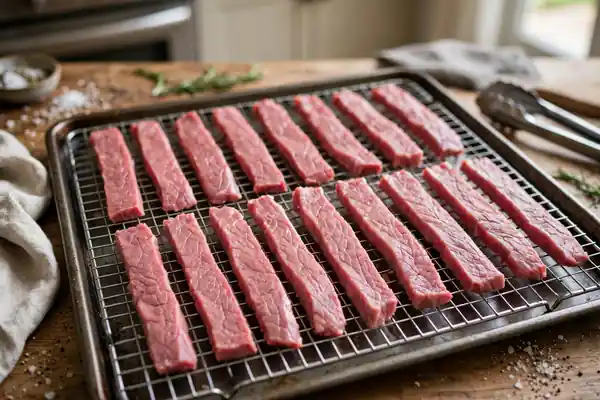
- Pop it in the freezer for 20–30 minutes so it firms up, then slice it thin, about 6 mm (1/4 inch) thick, against the grain.
- Lay the strips on a wire rack over a baking tray. No seasoning, no marinade, no oil.
- Dry in a dehydrator or an oven at around 70–75°C (160–170°F) for 6–8 hours, flipping halfway, until the strips are dry and bend without snapping.
- Let them cool completely, then store in an airtight container in the fridge for up to two weeks, or freeze for up to three months.
Throw away any batch that smells off or feels slimy — homemade jerky has no preservatives, so it does not last like shop-bought jerky.
What to Avoid — Quick Checklist
- Human beef jerky of any flavor: original, peppered, teriyaki, barbecue, honey, spicy
- Any jerky listing garlic, onion, chives, or leeks in any form
- Jerky with xylitol, birch sugar, or any sugar alcohol
- High-salt jerky, soy sauce marinades, and liquid smoke
- Jerky with nitrates, nitrites, MSG, or artificial colors
- Jerky of unknown origin with no sourcing information
- Raw or under-dried homemade jerky (a food-safety risk)
- Giving jerky to puppies under six months old — their digestive systems are sensitive and the choking risk is higher
If Your Dog Already Ate Human Beef Jerky
Do not panic over one small piece — but do act sensibly:
- Check the bag. Note the brand, flavor, ingredients, and roughly how much your dog ate. This is exactly what your vet will ask.
- Watch for symptoms over the next 24–72 hours: vomiting, diarrhea, excessive thirst or urination, drooling, lethargy, weakness, pale gums, tremors, or dark urine. Note that garlic and onion effects can be delayed by a day or more.
- Offer fresh water and keep it available — salt makes dogs thirsty, and dehydration makes everything worse.
- Call your vet promptly if your dog ate a large amount, the jerky contained xylitol, or you see any symptom at all. For xylitol, treat it as an emergency and call immediately — do not wait for symptoms. The ASPCA Poison Control helpline (888-426-4435) is also available for urgent advice.
- Do not try to make your dog vomit unless your vet specifically tells you to.
A single small piece of plain-ish jerky will often cause nothing worse than a mild stomach upset. A whole bag, or jerky with xylitol, is a different story — that is a vet visit, not a wait-and-see.

Puppies, Seniors, and Dogs With Health Problems
- Puppies: skip jerky until at least six months old, and even then stick to soft, small, dog-specific treats.
- Senior dogs: tough jerky can be hard on worn teeth — choose softer treats or soak jerky briefly.
- Dogs with kidney disease, heart disease, or pancreatitis: avoid jerky altogether unless your vet approves it, because of the salt and fat.
- Overweight dogs: jerky is calorie-dense; count it in their daily allowance.
- Dogs with beef allergies: skip it entirely and use another single-protein treat.
Safer Alternatives to Beef Jerky
If you would rather not deal with labels at all, these give your dog the same chewy satisfaction:
- Single-ingredient freeze-dried beef or liver treats
- Dehydrated sweet potato chews
- Carrot sticks, cucumber slices, or green beans for crunch
- Dental chews made for dogs
- Small pieces of plain cooked chicken or beef
The Bottom Line
Dogs can eat beef jerky, but the safe version looks very different from the bag in your snack drawer. Plain, unseasoned, dog-specific jerky in small amounts is a fine occasional treat. Human jerky — salty, seasoned, and often containing garlic or onion — is not worth the risk, no matter how hard your dog stares at you. When in doubt, read the label, and if it lists anything beyond beef, keep it for yourself.

FAQ
Q: Can dogs eat beef jerky?
A: Yes, but only plain, unseasoned jerky made for dogs (or plain dried beef with nothing added), in small amounts as an occasional treat. Most human beef jerky is unsafe because of salt, garlic, onion, sugar, and preservatives.
Q: Can dogs eat Jack Link’s beef jerky or other human brands?
A: No. Popular human brands typically contain garlic powder, onion powder, high levels of salt, and sugar. Even the “original” flavor is seasoned for human taste and is not suitable for dogs.
Q: What happens if my dog eats beef jerky?
A: A small piece of plain jerky usually causes no harm. Human jerky can cause vomiting, diarrhea, excessive thirst, and stomach upset, and larger amounts — or jerky containing xylitol, garlic, or onion — can cause salt poisoning or anemia and need a vet.
Q: How much beef jerky can I give my dog?
A: Keep all treats, jerky included, within 10% of daily calories. In practice that means a thumbnail-sized piece for small dogs and one torn-up strip for large dogs, a few times a week at most — never a whole bag.
Q: Can puppies eat beef jerky?
A: It is best to wait until a puppy is at least six months old, and even then choose soft, small, dog-specific treats. Tough jerky is a choking hazard and hard on young digestive systems.
Q: Is homemade beef jerky safe for dogs?
A: Yes, when it is made from lean beef with no seasoning, salt, or marinade, dried thoroughly at low heat, and stored in the fridge or freezer. Homemade jerky has no preservatives, so use it within two weeks refrigerated or freeze it for up to three months.
Q: Is it okay for dogs to eat Slim Jims?
A: No. Slim Jims and similar processed meat sticks are made for people: they are high in salt and fat and usually contain spices, garlic or onion powder, and preservatives. Treat them exactly like other human jerky — do not share them, and reach for a plain, dog-specific jerky treat instead.
Vet Disclaimer
This article is for general information only and is not a substitute for veterinary advice. Every dog is different, and dogs with kidney, heart, or digestive conditions may need stricter limits. If your dog eats something you are unsure about, or shows any worrying symptom, contact your veterinarian promptly.


