
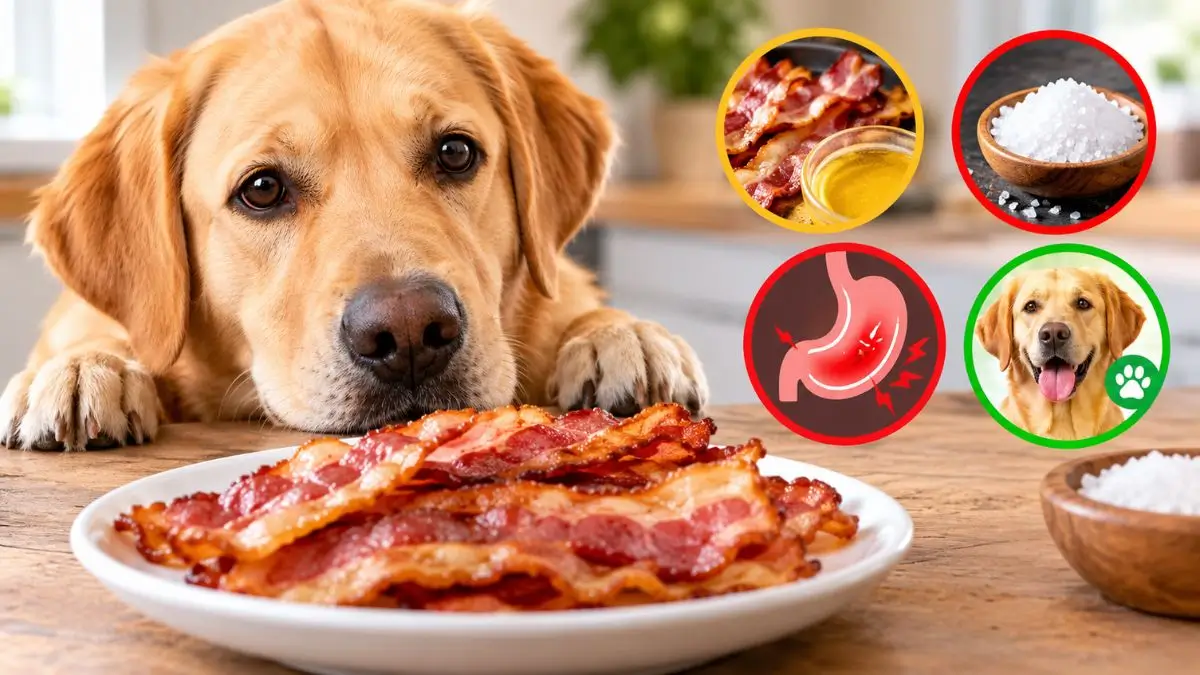
Can dogs eat bacon? Not as a regular food or treat. A small bite of cooked bacon is unlikely to hurt a healthy adult dog, but bacon is very high in fat and salt, which can trigger stomach upset and, in some dogs, pancreatitis.
Bacon is one of the foods dogs beg for hardest. It ends up on the floor or gets stolen off a breakfast plate next to the pancakes. Whether that stolen slice matters depends on how much your dog ate, how big your dog is, and what kind of bacon it was.
How we checked this guide: we took nutrition figures from USDA FoodData Central, checked toxic doses and breed risks in the Merck Veterinary Manual, followed current Pet Poison Helpline advice, and read real owner cases answered by vets on JustAnswer. Last reviewed September 2026. This article is general information and does not replace advice from your own vet.
Why is bacon bad for dogs?
Bacon is bad for dogs because each strip packs heavy fat and salt, carries curing chemicals, and is sometimes flavored with onion or garlic powder. Fat is the biggest danger, since a single greasy meal can trigger pancreatitis in some dogs.
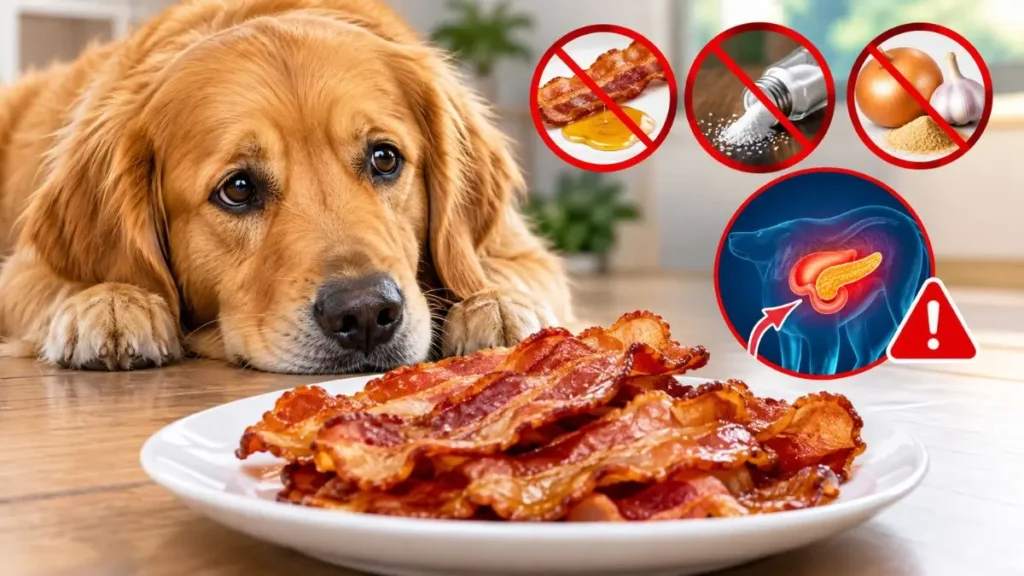
Fat is the main problem. USDA data shows cooked, pan-fried bacon is about 35 percent fat by weight (USDA FoodData Central via MyFoodData). A big dose of grease pushes the pancreas to release digestive enzymes such as lipase, and in some dogs the organ becomes inflamed. The Merck Veterinary Manual lists eating large amounts of table scraps as a common risk factor for pancreatitis in dogs.
Vets see this pattern every holiday season. The day after Thanksgiving is nicknamed “Pancreatitis Friday” in veterinary circles because so many dogs come in sick after rich leftovers (Vetster).
Salt comes second. One cooked slice carries about 200 mg of sodium. That will not poison a healthy dog, but it adds up fast, and dogs with heart or kidney disease often need their sodium kept low. Bacon sits in the same group as pretzels: a salty human snack your dog does not need.
Curing agents worry owners most, yet they matter least for one stolen slice. US rules cap added sodium nitrite at 120 ppm in pumped bacon and 200 ppm in dry-cured bacon (Healthline, citing USDA FSIS). Bacon sold as “uncured” is usually cured with celery powder, a natural source of nitrite, so that label does not make it dog friendly. The same goes for other cured meats such as ham and salami.
Flavored bacon brings a separate risk. Maple, peppered, and specialty varieties can contain onion or garlic powder, and both are toxic to dogs.
Can dogs eat bacon in small amounts?
A small amount is usually fine, but size changes the risk. One cooked slice has about 56 calories and 4 grams of fat, which can use up a small dog’s entire daily treat allowance while taking about a third of a large dog’s.
So how much bacon is too much? Vets advise keeping treats and table food under 10 percent of a dog’s daily calories (UC Davis Veterinary Medical Teaching Hospital). One cooked slice (about 12 g) holds roughly 56 calories, 4.2 g of fat, and 202 mg of sodium, based on USDA figures. The table shows how much of the daily treat allowance that single slice uses, with allowances taken from a vet-written guide by Dr. Jennifer Coates.
| Dog size | Treat calories allowed per day | Share of that budget one slice uses |
|---|---|---|
| Extra-small (2 to 10 lb) | 10 to 35 | 160% to 560% |
| Small (11 to 20 lb) | 35 to 60 | 93% to 160% |
| Medium (21 to 50 lb) | 60 to 115 | 49% to 93% |
| Large (51 to 90 lb) | 115 to 180 | 31% to 49% |
| Extra-large (91 lb and up) | 180 or more | 31% or less |
Salt poisoning is less likely than many articles suggest. The Merck Veterinary Manual says signs of salt toxicosis can appear after 2 to 3 g of salt per kg of body weight. One slice holds roughly half a gram of salt, so a 10 lb dog would need about 18 cooked slices to reach that range and a 50 lb dog close to 90. For most dogs, the fat causes trouble long before the salt does. A toy breed that raids a whole package is the exception.
My dog ate bacon: what should I do?
If your dog ate a bite or one slice, watch them closely for the next few days and keep water available. If they ate several slices, grease, or a whole pack, or they are a small or high-risk breed, call your vet now.
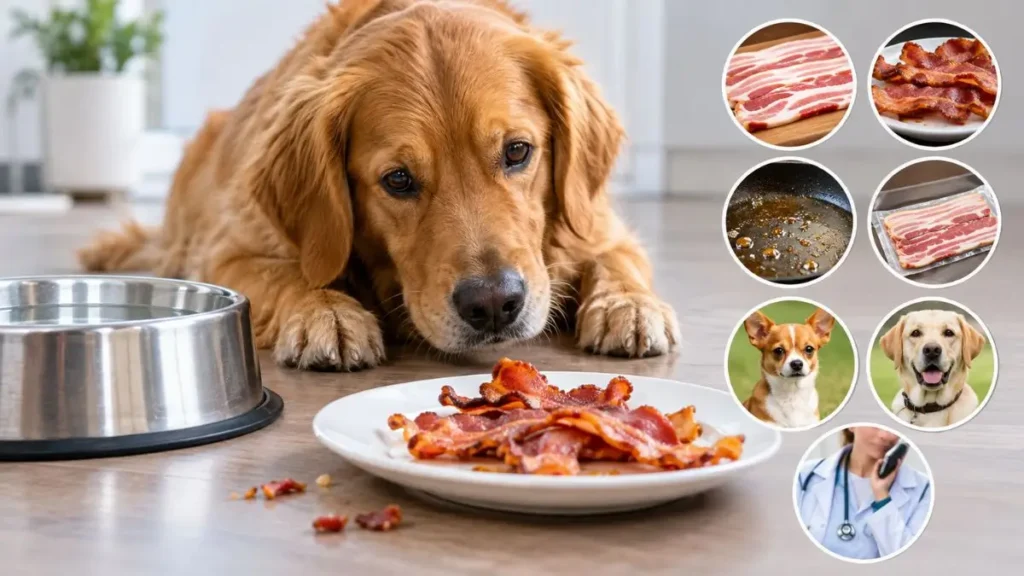
Go through these steps in order.
- Take away what is left and work out what was eaten: cooked or raw, how many slices, any grease or packaging, and whether it was flavored.
- Check your dog’s size and history. A small dog, an overweight dog, or a dog that has had pancreatitis before needs a call to the vet even for a small amount.
- Call your vet or Pet Poison Helpline (855-764-7661, a fee applies) if your dog ate several slices, grease, packaging, or seasoned bacon. Do not make your dog vomit at home unless a vet or poison line tells you to.
- Keep fresh water out and feed a lighter next meal. Fetch Pet Insurance quotes a veterinary technician who suggests boiled chicken and white rice, with your vet’s approval.
- Watch for the warning signs in the next section for at least two days.
Two real cases from JustAnswer show why timing matters. A vet told the owner of a 5-year-old pit bull that had eaten half a pound of bacon more than two hours earlier that making her vomit was unlikely to help, because the food had probably left the stomach. In another case, a 35 lb dog that ate about 16 ounces of bacon bits became very thirsty within hours. Calling early gives your vet the most options.
Older forum answers sometimes coach owners through giving hydrogen peroxide at home. Current advice is different. Pet Poison Helpline warns that too much peroxide can damage the esophagus, stomach, and intestines, and that it should never be tried without professional guidance.
Signs your dog needs a vet after eating bacon
Call your vet if your dog vomits more than once, has diarrhea that lasts, refuses food, seems painful or hunched, or turns lethargic. Pancreatitis signs can be delayed by one to two days, so a dog that seems fine tonight still needs watching.
Pancreatitis timing below comes from VEG ER for Pets and salt timing from the American College of Veterinary Pharmacists.
| Problem | Common signs | When signs tend to show |
|---|---|---|
| Mild stomach upset | Gas, soft stool, a single vomit, then back to normal | Within hours |
| Pancreatitis | Repeated vomiting, belly pain, hunched or “praying” posture, no appetite, lethargy, diarrhea | Can appear 1 to 2 days after the fatty meal |
| Salt overload | Extreme thirst, vomiting, diarrhea, tremors, disorientation, seizures in severe cases | Reported within about 3 hours |
Pancreatitis is the one to take seriously. Merck notes that mild cases may show only vague signs such as poor appetite and tiredness, while severe cases bring vomiting, weakness, belly pain, and dehydration and may need hospital care. It cannot be treated at home.
Go straight to an emergency clinic if your dog cannot keep water down, collapses, has a swollen or very painful belly, or has a seizure.
Raw bacon, bacon grease, turkey bacon and other bacon products
No form of bacon is a good dog treat, but the risks differ. Raw bacon adds germ risk, grease is almost pure fat, bacon bits are salty, turkey bacon is leaner but still cured, and bacon-flavored dog treats are the safer option.

| Product | Safe for dogs? | Main concern |
|---|---|---|
| Cooked bacon | Not recommended, though a bite is usually fine | Fat and salt |
| Raw bacon | No | Bacteria, plus more fat because none has cooked off |
| Bacon grease | No | Nearly 100% fat, about 250 calories per ounce |
| Bacon bits | No | Concentrated salt and preservatives |
| Turkey bacon | Only a small plain piece, rarely | Leaner, but still cured and salty |
| Bacon-wrapped or bacon-topped food | No | Toothpicks, skewers, onion, garlic, and extra fat |
| Bacon-flavored dog treats | Yes, within the daily treat allowance | Made for dogs, but calories still count |
Bacon grease is the product owners underestimate most. USDA data shows rendered bacon fat is about 99.7 percent fat, with roughly 251 calories in one ounce, which is about two tablespoons (USDA via MyFoodData). That is most of a 10 lb dog’s calories for a whole day. Pouring it over kibble to tempt a picky eater or “shine the coat” only adds fat, so skip it.
Raw bacon is riskier than cooked, because uncooked pork can carry bacteria and it still holds all the fat that frying would melt away. Parasite risk from commercial pork, mainly Trichinella, has dropped sharply in the United States, according to CDC surveillance. Our guide on raw bacon for dogs covers what to do if your dog ate some uncooked.
Turkey bacon is lower in fat but is still cured and salty. Plain roast turkey is a far better choice. If you do share turkey bacon, pick a plain, low-sodium brand with no onion or garlic and keep it to a small piece on rare occasions.
Dogs that should never eat bacon
Some dogs should never get bacon at all. That includes breeds prone to pancreatitis such as Miniature Schnauzers and Yorkshire Terriers, dogs that have had pancreatitis before, overweight dogs, and dogs with heart, kidney, or liver disease or on a vet-prescribed diet.
Breed changes the risk a lot. The Merck Veterinary Manual reports that Miniature Schnauzers are dramatically overrepresented among dogs with pancreatitis, with higher rates also seen in Yorkshire Terriers, Cocker Spaniels, Dachshunds, Poodles, and sled dogs. Many Schnauzers also have high blood fat levels (hypertriglyceridemia), which raises the risk further.
A dog that has already had pancreatitis is often kept on a low-fat diet long term, and one strip of bacon can undo that work. Puppies, seniors, and dogs on a prescription diet are poor candidates too. If your dog is in any of these groups, treat bacon as off limits and ask your vet which treats fit the plan.
Safer alternatives to bacon for dogs
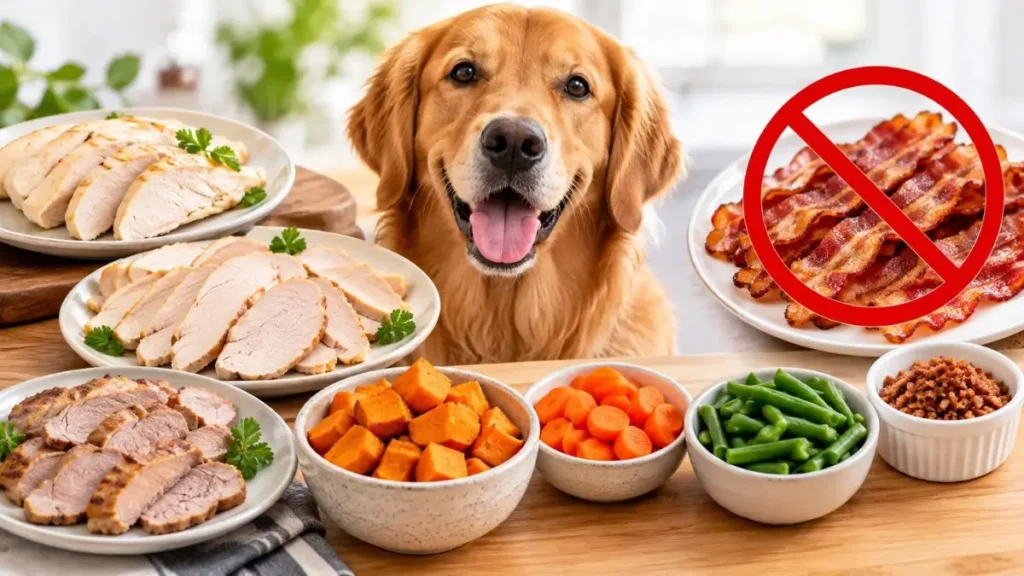
Swap bacon for lean, plain protein such as boiled chicken breast, lean turkey, or cooked lean pork, or use a bacon-flavored treat made for dogs. If you still share real bacon, give a crisp, blotted, unseasoned crumb, not a strip.
What your dog really wants is the smell of meat, and you can give that without the grease. Small pieces of plain boiled chicken, roast turkey, or well-cooked lean pork with no seasoning all work. For dogs watching their weight, baked sweet potato cubes, carrots, or green beans are good swaps, and UC Davis notes that fruits and vegetables are usually low in fat and sodium.
Owners who like to cook can start with our homemade dog food recipe instead.
If you do share real bacon, do it carefully. Cook it until crisp so more fat renders out, blot it on a paper towel, and skip maple, pepper, or garlic varieties. Offer a crumb about the size of your fingernail for a small dog, count it toward the day’s treats, and never make it a habit.
Watch: a vet explains the risks of bacon for dogs
In the short video “Can Dogs Eat Bacon? A Vet Explains The Risks”, Pet Circle veterinarian Dr Liv explains why bacon is a poor choice for dogs. It is a quick way to convince family members who keep slipping scraps under the table.
Frequently asked questions about dogs and bacon
Is bacon toxic to dogs?
Bacon is not toxic to dogs the way chocolate or raisins are, so one bite will not poison a healthy dog. It is still unhealthy, because its fat can trigger pancreatitis and seasoned versions may contain toxic onion or garlic powder.
Can a little bit of bacon kill a dog?
A small piece of bacon is very unlikely to kill a healthy dog. The serious cases involve large amounts, which can trigger severe pancreatitis, or a tiny dog eating enough to risk salt poisoning. Quick veterinary care gives the best chance of recovery.
Can dogs eat bacon every day?
No. Daily bacon adds fat and salt that a complete dog food does not need, pushes a small dog far past its treat allowance, and raises the risk of weight gain and pancreatitis over time. Keep bacon off the daily menu entirely.
Can bacon give dogs diarrhea?
Yes. Bacon’s grease can easily cause diarrhea, gas, and vomiting, especially in dogs not used to rich food. One soft stool is common, but call your vet if diarrhea lasts more than 24 hours, contains blood, or comes with repeated vomiting.
Can puppies eat bacon?
Puppies should not eat bacon. Their stomachs are more sensitive, they are small enough that one slice is a big dose, and they need a balanced puppy food to grow properly. Use small pieces of their own kibble or puppy training treats as rewards instead.
Can dogs eat bacon and eggs?
Plain cooked eggs can be a healthy treat for dogs, but the bacon is the problem part of that breakfast. Share a little plain scrambled egg cooked without butter, salt, or bacon grease, and keep the bacon strips on your own plate.
Can dogs eat bacon bits?
No. Bacon bits carry the same salt and fat as bacon in a small, easy-to-gobble form, and imitation versions add flavorings and preservatives. A few that drop on the floor are fine, but a whole bag needs a call to your vet.
How long after eating bacon will a dog get sick?
Mild stomach upset from bacon usually shows within hours as gas, soft stool, or a single vomit. Pancreatitis can take longer, sometimes appearing one to two days after the fatty meal, so keep watching your dog for at least two days.
So, can dogs eat bacon?
Dogs can usually survive a stolen bite of bacon, but they should not eat it on purpose. The fat is the real threat because it can set off pancreatitis, and the salt and curing agents add nothing your dog needs.
If your dog has just grabbed a slice, stay calm, keep fresh water out, and watch closely for the next two days. If they ate several slices, a pool of grease, the packaging, or seasoned bacon, or if they are a small dog or a breed prone to pancreatitis, call your vet or a pet poison line right away rather than waiting for symptoms.
For everyday rewards, reach for plain chicken, lean turkey, crunchy vegetables, or a bacon-flavored treat made for dogs, and keep all extras under 10 percent of daily calories. Your dog still gets something meaty to look forward to, without the risk that comes with the real thing.
Thanks for reading! Yes, this is accurate. A healthy dog produces roughly 1 to 2 ml of urine per kilogram of body weight per hour, which works out to about 10 to 20 ml per pound per day. So a 60-pound Labrador makes around 600 to 1,200 ml daily. Salty foods like ham or pretzels raise sodium levels, which makes a dog thirsty, so they drink more and need to pee more often. If your dog suddenly starts drinking and peeing a lot without any change in diet, it’s worth a vet check.