

Can dogs eat raw bacon? No. Dogs should not eat raw bacon. It is not toxic the way chocolate or xylitol is, and one small piece stolen off a plate will usually pass without drama. The real problem is fat and salt in a concentrated form, plus the bacteria that live on any uncooked pork. Most dogs get away with a bite. Some end up with pancreatitis.
If your dog already ate some raw bacon, start with the next section.
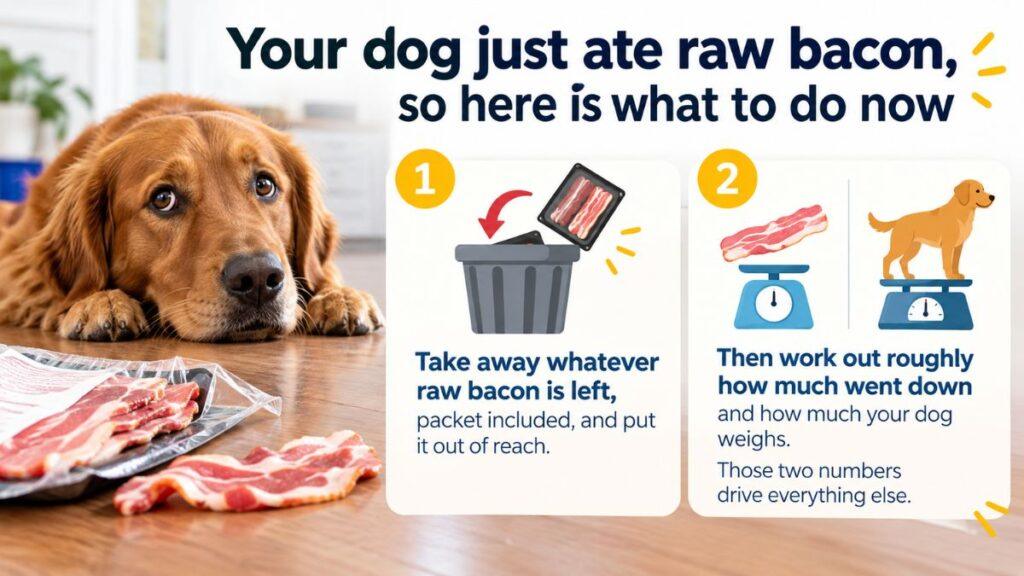
Your dog just ate raw bacon, so here is what to do now
Take away whatever raw bacon is left, packet included, and put it out of reach. Then work out roughly how much went down and how much your dog weighs. Those two numbers drive everything else.
Do not make your dog vomit at home. Hydrogen peroxide gets recommended on forums constantly and it causes real damage, including stomach ulceration and aspiration pneumonia if the dog inhales what comes back up. Only induce vomiting if a vet or poison control tells you to.
Leave fresh water down and let your dog drink normally. Do not restrict water, because salty food makes dogs thirsty for a reason and blocking that makes things worse.
Skip the next meal if your dog seems fine but ate a decent amount. A few hours of rest for the gut is sensible. The old advice to fast a dog for a full 24 to 48 hours has fallen out of favor in veterinary practice, and long fasts are actively discouraged now without a vet’s say so. Puppies should never be fasted. After that short break, feed something small and low in fat, such as plain boiled chicken breast with white rice, in small portions across the day rather than one big bowl.
Then watch. Most of what matters shows up in the first three days.
When to call the vet after your dog eats raw bacon
Call a vet straight away if your dog is under about 11 pounds (5 kg), ate a large amount, has a history of pancreatitis, is diabetic, or has kidney or heart disease. Call straight away if any packaging went down with the bacon. Also call if you see repeated vomiting, blood in vomit or stool, a hunched or stretched posture with the front end down and the rear up, a hard or painful belly, refusal to drink, weakness, or collapse.
Monitoring at home is reasonable for a healthy adult dog of decent size that ate one or two strips and is behaving normally. Keep your vet’s number and the ASPCA Animal Poison Control Center line, which runs 24 hours and charges a consultation fee, somewhere you can find fast.
The thing owners usually get wrong is waiting for something dramatic. Pancreatitis rarely announces itself in the first hour. It builds.
How much raw bacon is actually too much for your dog
Almost nobody answering can dogs eat raw bacon gives numbers, which is odd, because the numbers are the whole answer.
USDA figures put a cooked slice of pork bacon at roughly 178 to 194 mg of sodium, 3 to 4 grams of fat and about 43 to 54 calories. A raw strip weighs more because nothing has rendered out, so the fat runs higher while the sodium stays similar, since it comes from the cure.
Now compare that to the dog. Treats of any kind should stay under about 10 percent of daily calories. A 22 pound (10 kg) dog eats somewhere near 550 calories a day, so its entire treat allowance is around 55 calories. One raw strip of bacon can eat the whole allowance by itself, and it does it with fat rather than anything useful.
Salt is the risk most articles exaggerate. The Merck Veterinary Manual puts the point where dogs start showing salt toxicosis signs at about 2 to 3 grams of salt per kilogram of body weight. For a 22 pound dog that is 20 to 30 grams of salt, and a whole 1 pound pack of bacon contains nowhere near that. For a 7 pound dog, though, a full pack gets uncomfortably close. So salt poisoning is a genuine concern for very small dogs and a mostly theoretical one for a Labrador.
Fat is the risk most articles undersell. That same pack carries somewhere around 150 grams of fat and well over a thousand calories. For a medium dog that is several days of fat delivered in five minutes, which is exactly the pattern that triggers pancreatitis.
As rough guidance rather than permission: under 11 pounds, one strip is already a meaningful load and two is worth a phone call. Between 11 and 33 pounds, one or two strips usually means an upset stomach at worst, while half a pack needs a vet. Over 55 pounds, a single strip rarely causes much, but a whole pack still warrants a call. Overweight, older or previously pancreatic dogs sit one category higher than their weight suggests.
Can dogs eat raw bacon more safely than cooked bacon?
No, and here is where most pet sites get sloppy in one direction or the other. One says raw bacon is technically safe. Another says it is deadly. Neither is right.
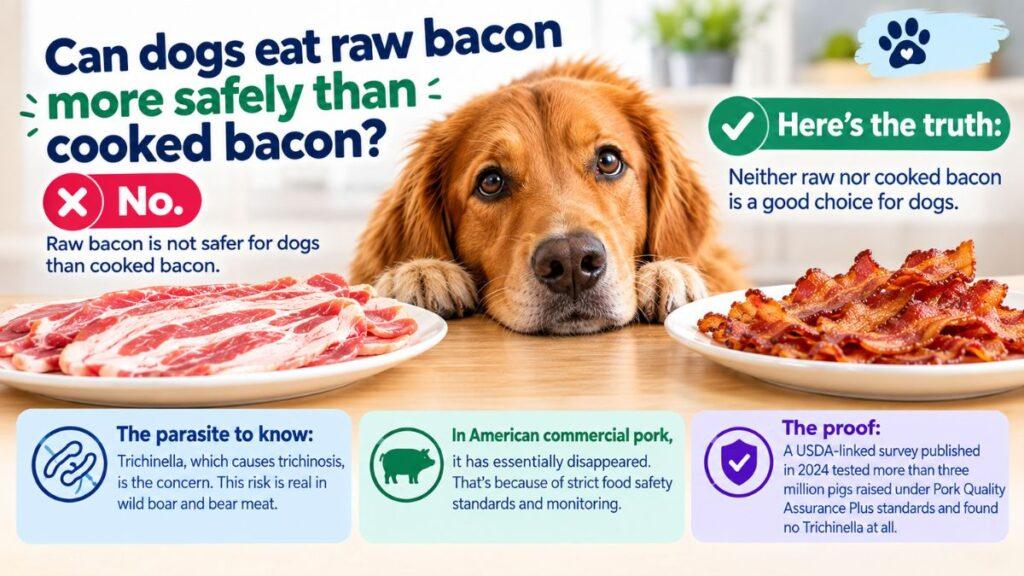
The parasite everyone names is Trichinella, which causes trichinosis. That risk is real in wild boar and bear meat. In American commercial pork it has essentially disappeared. A USDA linked survey published in 2024 tested more than three million pigs raised under Pork Quality Assurance Plus standards and found no Trichinella at all, which meets the international definition of negligible risk. The CDC records roughly 15 human cases a year nationally, and most trace back to wild game rather than supermarket pork. If your bacon came from a normal shop, Trichinella is not the thing to lose sleep over. Meat from a backyard pig, a hunted hog, or an unregulated source is a different conversation.
What is left is bacteria. Raw pork can carry Salmonella, Listeria and E. coli, and curing is not cooking. Salt and nitrite slow bacterial growth and they do not sterilize anything. Freezing does not fix it either. Long enough at a low enough temperature kills most Trichinella larvae, but Salmonella just goes dormant and wakes up when the meat thaws.
So the honest version is this. Raw bacon is worse than cooked bacon because of bacteria, not because of worms, and both versions carry the same fat and salt problem.
What to expect hour by hour after raw bacon
In the first 6 hours you might see drooling, lip licking, restlessness, heavy thirst, or vomiting. This is usually the stomach objecting to a sudden slug of grease.
Between 6 and 24 hours, diarrhea is common and often looks greasy or pale. Gas, gurgling and a dog that keeps asking to go outside all fit here. A bacterial infection, if there is one, usually shows in this window.
Between 24 and 72 hours is the pancreatitis window and the one people miss. Watch for vomiting that keeps coming back, a dog that goes off food entirely, belly pain, lethargy, or fever. Vets flag the stretched praying posture as a classic sign of abdominal pain in dogs. A retrospective study cited by Today’s Veterinary Practice found dogs that raided the bin were around 13 times more likely to present with pancreatitis, which tells you how strongly vets associate a sudden unusual fatty meal with the disease.
Mild stomach upset that clears in a day is the normal outcome. Something that gets worse on day two is not.
The dogs that should never eat raw bacon
Some dogs carry far more risk than the average healthy adult. Puppies have less reserve and dehydrate quickly. Senior and overweight dogs handle a fat load poorly. Any dog with a previous pancreatitis episode is likely to relapse, which is why vets put those dogs on a permanently low fat diet. Diabetic dogs, dogs with Cushing’s disease and dogs with high blood triglycerides sit higher again, because their fat metabolism is already compromised.
Kidney and heart patients are the ones for whom sodium genuinely matters, since they cannot clear excess salt the way a healthy dog does. Miniature Schnauzers, Yorkshire Terriers and Cocker Spaniels come up repeatedly in the pancreatitis literature. Pregnant and nursing dogs need steady, balanced nutrition rather than a grease spike.
If your dog is in any of those groups, treat raw bacon as a vet call rather than a wait and see.
Can dogs eat raw bacon on a raw diet?
No. Raw feeders often assume bacon fits the diet. It does not. Bacon is cured pork belly, which means salt, usually nitrite, often sugar and smoke. A balanced raw meat ration is built around muscle meat, bone and organ at controlled fat levels. Bacon is one of the fattiest cuts on the pig, salted heavily, with none of the balance. Feeding raw chicken necks does not make raw bacon a reasonable ingredient, and a dog used to raw meat is no better protected against a fat load than any other dog.
Raw bacon fat, rind, grease, turkey bacon and the rest
Raw bacon fat and rind are the worst version of the problem. They drop the little protein there was and leave the part that triggers pancreatitis. Bacon grease over food is the same issue in liquid form.
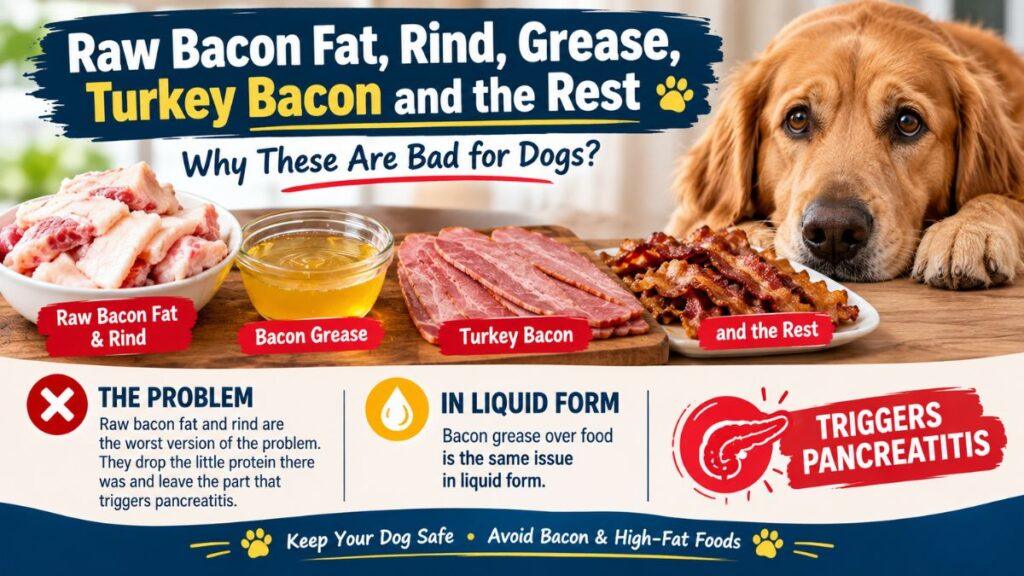
Raw turkey bacon is not a safe swap. It is still cured and salted at similar sodium, and raw poultry adds its own Salmonella risk. Cooked, unseasoned, low sodium turkey bacon in a tiny amount is the least bad option here, and still a treat food.
Uncured or nitrate free bacon is mostly marketing. Those products are usually cured with celery powder, which supplies nitrate anyway, and the salt and fat barely move.
Bacon bits deserve a separate warning. Imitation bits often contain onion and garlic powder, both of which damage red blood cells in dogs and are a real toxicity concern rather than a fat one. Read the label before you assume it is harmless.
Bacon bones, hocks and any cooked bone can splinter and cause obstruction or perforation. Skip them.
Do not forget what the raw bacon was wrapped in
This is the part that lands dogs in surgery. Supermarket raw bacon comes with plastic film and an absorbent soaker pad, and a dog that swallows a pack whole usually swallows those too. Film and pads cause blockages, and pads swell as they absorb fluid. String from a rolled joint is a linear foreign body and its own emergency.
If you cannot account for the wrapping, call the vet even if the dog looks perfectly happy. Blockages announce themselves late.
Wash your hands after your dog eats raw bacon
Almost every article on can dogs eat raw bacon skips this part, and it should not. A dog that has eaten raw pork can shed Salmonella in its stool for days, sick or not. Wash your hands after handling the dog, its bowls, bedding and waste, and keep face licking to a minimum for a few days. This matters most in homes with babies, elderly relatives, pregnant women or anyone on immune suppressing medication.
What to give instead of raw bacon
Plain cooked chicken or turkey breast with no salt, oil or seasoning gives the same high value reward without the grease. Single ingredient freeze dried liver treats are strong smelling, tiny and easy to portion. Carrot sticks and green beans work for dogs that just want something to crunch. Commercial bacon flavored dog treats give the flavor with controlled fat and salt levels, and a handful of your dog’s own kibble saved back for training often works better than owners expect.
Once one of those is in the treat jar, can dogs eat raw bacon stops being a question you need to answer. Keep treats under 10 percent of daily calories and cut the main meal to match.
Can dogs eat raw bacon? Frequently asked questions
Is raw bacon toxic to dogs?
No, it is not toxic, but it is high risk because of fat, salt and bacteria.
Can dogs eat raw bacon in small amounts?
One strip rarely harms a healthy medium dog, but it still costs a whole day’s treat allowance in fat.
My dog ate one strip and seems fine, should I worry?
Usually not, though you should watch for vomiting or appetite loss over the next three days.
Can puppies eat raw bacon?
No, puppies have far less reserve and should be seen by a vet after anything more than a scrap.
Does freezing raw bacon make it safe for dogs?
No, freezing may kill parasites but it does not kill Salmonella.
Can dogs eat raw bacon fat or rind?
No, the fat and rind are the worst part and the most likely to trigger pancreatitis.
How long after eating bacon does pancreatitis appear?
Most cases show between 24 and 72 hours, though it can be sooner.
Can dogs eat raw bacon grease or drippings?
No, that is close to pure fat and one of the triggers vets name most often.
Can dogs eat raw bacon that is past its date?
No, spoiled pork stacks a bacterial load on top of everything else.
Should I make my dog vomit?
No, not unless a vet or poison control tells you to.
Is cooked bacon safer than raw?
Slightly, because cooking kills bacteria, but the fat and salt problem stays the same.
So, can dogs eat raw bacon? The short version
Raw bacon is not poison and it is not harmless either. One stolen strip from a healthy, medium sized dog is usually a story rather than an emergency. A whole pack, a tiny dog, an older dog, or a dog with any history of pancreatitis changes that completely, and so does swallowed packaging.
The part worth remembering is the timing. Stomach upset shows up fast and settles. Pancreatitis takes a day or three and looks like a dog that will not eat and will not move. If you see that after a fatty meal, do not wait for morning.
Push the raw bacon to the back of the counter, keep the bin lid shut, and hand your dog plain cooked chicken instead. It costs less, it works just as well as a reward, and you never spend day two watching the clock.
Sources
Merck Veterinary Manual, Salt Toxicosis in Animals
CDC, About Trichinellosis
Surveillance for Trichinella infection in US pigs raised under controlled management, 2024
USDA FoodData Central, pork, cured, bacon, cooked
Today’s Veterinary Practice, nutritional management of pancreatitis
dvm360, canine pancreatitis overview
ASPCA Animal Poison Control Center
1 thought on “Can Dogs Eat Raw Bacon? 7 Dangerous Risks Every Owner Should Know”