

Short answer
Can dogs get poison ivy? Yes, but it is much less common than in people because their fur shields most of their skin. Reactions usually show up where the skin is exposed or the fur is thin, such as the belly, groin, ears, nose, and paws, and a dog can also carry the plant’s oil on its coat and pass it to you.
The culprit is urushiol, the oil found in the leaves, stems, and roots of poison ivy. When that oil touches skin, it triggers an allergic-type reaction. Most dogs that brush against the plant never develop a rash at all, but short-haired breeds, puppies, and dogs with thin coats are more likely to react.
How dogs come into contact with poison ivy
Poison ivy grows along riverbanks, roadsides, fields, wooded areas, and sometimes right in backyards. Dogs usually pick it up by running through brush, sniffing around plants, or lying down in weedy patches. The classic way to spot the plant is “leaves of three” — clusters of three leaflets, with the middle leaflet usually a little larger than the other two. The edges can be smooth or notched, and the leaves may be green in summer or reddish in fall.
It is worth knowing that a dog does not have to eat the plant to have a problem. Skin contact alone is enough. And even if your dog shows no rash, the oil can sit on its fur for a long time, which is how many owners end up with a rash after petting a dog that has been in the woods.

Symptoms of poison ivy in dogs
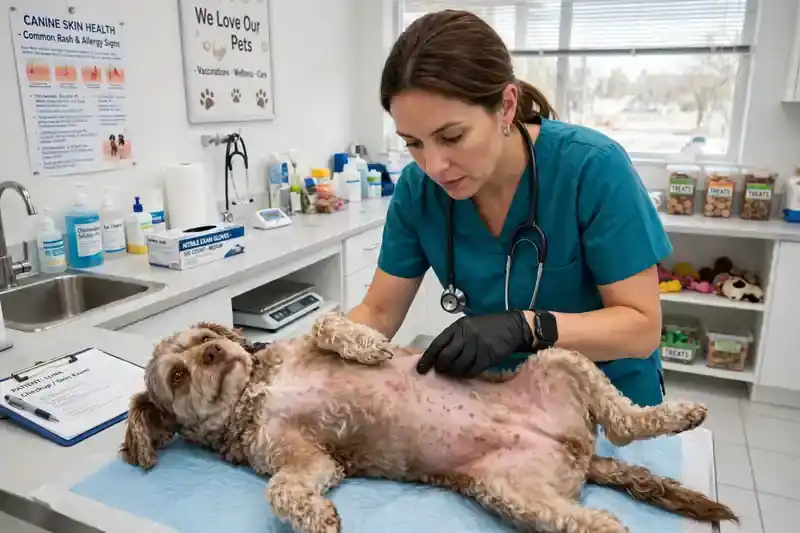
Symptoms often appear within a day or two of exposure. PetMD lists the typical signs of a poison ivy skin reaction in dogs as:
- Red bumps or a rash on exposed skin
- Itching and scratching
- Swelling of the affected area
- Blisters in more serious reactions
- Excessive licking of the skin and fur
If a dog actually chews or eats part of the plant, the signs are different. PetMD notes that ingestion can cause vomiting, drooling, and nausea, and diarrhea is also possible. If leaves rub against your dog’s eyes, you may see itchiness and swelling around the eyes.
One thing that trips owners up is that a poison ivy rash looks a lot like other skin problems. Flea bites, food allergies, and other types of contact dermatitis can all cause similar itching and redness. Since true poison ivy reactions are uncommon in dogs, a vet will often want to rule out those more common causes first.
What to do if your dog touches poison ivy
Act fast, because the sooner the oil comes off, the less reaction there will be.
- Put on gloves before you touch your dog. The oil transfers easily to your own skin.
- Wipe your dog down right away with a damp cloth if you cannot bathe it immediately.
- Give a bath with a mild pet shampoo. An oatmeal-based shampoo can help soothe irritated skin. PetMD notes that shampoos made for poison ivy cleansing, or anti-seborrheic shampoos, can help minimize exposure when used promptly.
- Wash everything the dog touched — collars, leashes, bedding, towels, and your own clothes — because the oil can linger on fabric.
- Stop your dog from scratching. An e-collar (cone) helps while the skin heals, since scratching can break the skin and lead to a secondary bacterial infection.
If your dog develops a rash, or if it ate part of the plant, call your veterinarian or the Pet Poison Helpline at 855-764-7661. Depending on how bad the reaction is, your vet may prescribe steroid medication, antibiotics if infection has set in, a medicated shampoo, or a skin ointment to calm the allergic reaction.

When to call the vet right away
Most poison ivy reactions are uncomfortable rather than dangerous, but get veterinary help promptly if you notice any of these:
- Swelling around the face, muzzle, or eyes
- Blisters that are oozing, or skin that smells bad or shows pus (signs of infection)
- A rash that keeps spreading or is not improving after a couple of days
- Vomiting or diarrhea after eating the plant
- Trouble breathing, or sudden swelling of the face (a rare severe allergic reaction)
Do not apply human creams such as calamine or hydrocortisone to your dog unless your vet specifically approves them. Dogs lick treated skin, and products meant for people are not always safe when ingested.
How to prevent poison ivy problems
Prevention is far easier than treatment:
- Learn to recognize poison ivy in your area before hiking season starts.
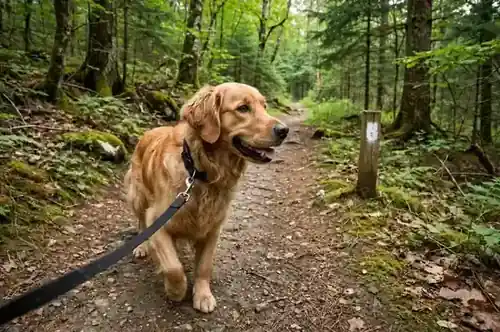
- Keep your dog on marked trails and out of dense brush.
- Check your yard regularly and pull up any poison ivy you find (wear gloves and long sleeves).
- Carry gloves and cleaning wipes on walks in areas where poison ivy grows.
- Bathe or at least wipe down your dog after walks in wooded or weedy areas, even if you saw no rash.
- Remember the same oil is found in poison oak and poison sumac, so treat those plants with exactly the same caution.
- Do not assume time alone made gear safe — urushiol can stay active on unwashed fur, fabric, and tools for months, and in some cases years, so wash anything that may have been exposed even if the walk was days ago.

FAQ
Can my dog catch it just from walking through it?
Yes. The oil on the leaves transfers to fur and skin on contact. Dogs with long, thick coats are partly protected, but the oil still ends up on their fur and can reach their skin or yours.
Can I catch poison ivy from my dog?
Yes. If you are one of the many people sensitive to urushiol, petting a dog that has the oil on its coat can give you a rash. Always bathe or wipe down your dog after exposure, even if the dog itself looks fine.
How long does a poison ivy rash last on a dog?
Mild reactions usually settle within one to two weeks if the skin is kept clean and the dog cannot keep scratching it. If the rash is worsening or not improving after a few days, have your vet take a look.
What should I do if my dog ate poison ivy?
Watch for drooling, vomiting, nausea, or diarrhea, and call your vet or the Pet Poison Helpline at 855-764-7661. Most cases need monitoring and supportive care, but a vet should decide that, especially if symptoms are strong.
Can I use calamine lotion or hydrocortisone on my dog?
Only if your veterinarian says so. Dogs lick creams off their skin, and human products can cause stomach upset or worse when swallowed. Stick to vet-approved shampoos and ointments.
How do I tell poison ivy apart from other plants?
Look for the “leaves of three” pattern, with the center leaflet slightly larger. Poison ivy can grow as a ground vine or a shrub, and its leaves may be smooth-edged or toothed. When in doubt, keep your dog away from any unfamiliar three-leafed plant.
How do I know if my dog has poison ivy?
Look for a red, bumpy rash on skin with little fur cover — the belly, groin, ears, nose, or paws — along with itching, scratching, swelling, or blisters. Signs usually show up within a day or two of contact. A poison ivy rash looks a lot like flea bites or allergies, so if you are unsure, your vet can check and rule out the more common causes.
Can my dog get poison ivy from a person?
Not from the rash itself — a rash is not contagious. But the urushiol oil can transfer: if a person has the oil on their skin, clothes, shoes, or gear after walking through poison ivy, a dog that rubs against them can pick it up on its coat or skin. Wash hands, clothes, and gear after walks in areas where poison ivy grows.
Vet disclaimer
This article is for general information only and is not a substitute for professional veterinary advice, diagnosis, or treatment. If your dog shows signs of a rash, swelling, or illness after possible poison ivy exposure, contact your veterinarian.


