

Quick answer: For most dogs, yes, as long as the amount is small and properly diluted. The growing plant, dried flowers, and dog-specific lavender products cause few problems. Undiluted essential oil is a different matter, and so is a diffuser running all day in a closed room. Puppies, pregnant dogs, and dogs already on sedatives need more care than the average adult dog.
Lavender turns up in dog shampoos, calming sprays, treats, and half the diffusers on the market. Plenty of owners reach for it when a storm rolls in or the car keys come out. The plant also contains compounds strong enough to irritate skin or upset a stomach when the concentration is wrong, which is where most of the confusion starts.
Is Lavender Safe for Dogs?
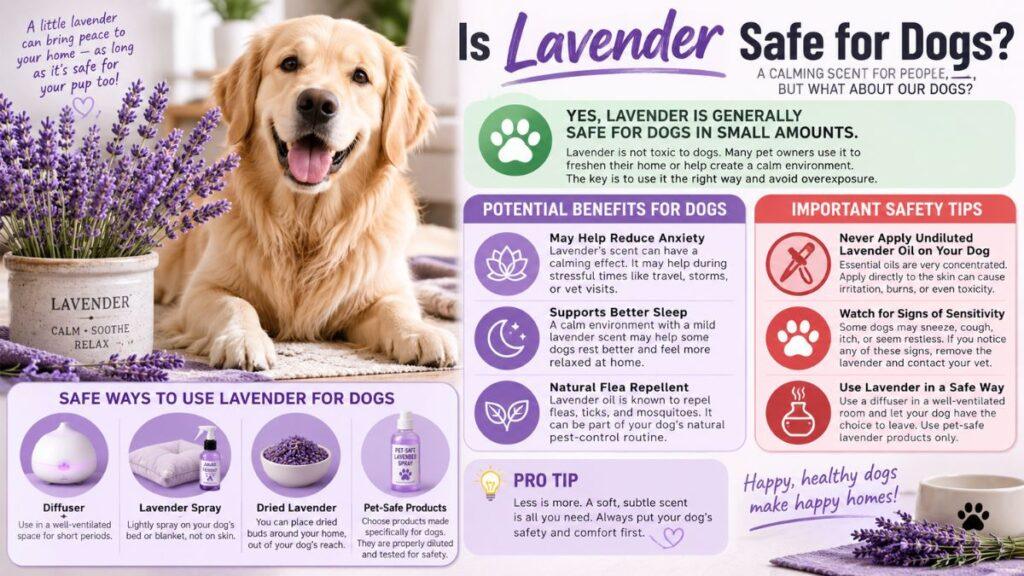
Usually. It helps to know that the ASPCA does list lavender (Lavandula angustifolia) as toxic to dogs, cats, and horses, naming linalool and linalyl acetate as the compounds responsible. The clinical signs on that listing are nausea, vomiting, and loss of appetite, which tells you how the toxicity actually behaves in practice. A dog has to eat a fair amount of the plant, or absorb concentrated oil, before those compounds cause real trouble. At the concentrations found in dog shampoos, treats, and ambient diffuser scent, most dogs handle lavender without incident.
So the risk sits on a sliding scale rather than a yes or no. Three things move it: the form the lavender comes in, how much of it reaches your dog, and how sensitive that particular dog happens to be. A dog sniffing lavender in the garden is fine. A dog that licks a puddle of undiluted essential oil is not.
Lavender by Exposure Method
Every form carries its own risk profile.
| Exposure Method | General Safety | Main Risk |
| Diffused in a room | Safe in moderation | Respiratory irritation if overused or room is unventilated |
| Topical (diluted shampoo, spray) | Safe when properly diluted | Skin irritation from undiluted or low-quality products |
| Essential oil directly on skin | Risky | Chemical burns, irritation, absorption of concentrated oil |
| Eating the plant or dried flowers | Usually mild | Stomach upset if a large amount is eaten |
| Treats and edible products | Safe when dog-specific | Upset stomach if dog eats too many at once |
Diffused or aromatherapy use
Diffusing is the best studied use and the easiest to get right. A light ambient scent in a room with decent airflow poses little risk and may genuinely settle an anxious dog. Trouble starts when the diffuser runs nonstop in a small closed space, or when the dog has no way to walk out of the room if the smell bothers them.
Topical use: shampoo, sprays, balms
Dog-specific products already contain lavender at tested concentrations, formulated to sit on coat and skin safely. Human lavender shampoo is not a substitute. Dog skin runs at a different pH to ours, and human formulas tend to strip natural oils and leave the coat dry and itchy.
Ingestion: chewing the plant or licking oil
A dog nibbling lavender in the yard will almost certainly be fine, though a big mouthful can bring on vomiting or diarrhea. Essential oil is the real concern, since it concentrates the plant’s compounds many times over. A few licks of diluted shampoo usually means mild stomach upset and nothing more. Swallowed undiluted oil means calling your vet.
Treats and oral products
Lavender-infused dog treats use food-safe, low concentrations, and the manufacturer has already sorted the dosage for you. That makes them the most predictable way to give a dog the calming effect. Overfeeding them still causes an upset stomach, the same as overfeeding any treat.
Benefits of Lavender for Dogs
Used correctly, lavender does a few things well.
Anxiety and stress relief. This is the one with real evidence behind it. Deborah Wells ran a clinical trial on 32 dogs with a history of getting worked up in the car, published in the Journal of the American Veterinary Medical Association in 2006. Each dog made the same journey over six days, three with ambient lavender and three with no added scent. During the lavender rides the dogs spent significantly more time resting and sitting, and significantly less time moving and vocalising. Sex, neuter status, and the order of the conditions made no difference to the result.
Sleep support. The same effect that helps in the car plausibly helps a restless dog settle at night, though this has not been tested the way the travel study was.
Skin soothing. Lavender is often described as anti-inflammatory, and it may calm minor irritation, hot spots, or insect bites in a properly diluted product. The evidence here comes mostly from human and laboratory work rather than canine trials.
Mild insect deterrent. The scent discourages fleas, ticks, and mosquitoes to some degree. Treat that as a small bonus, not a substitute for proper flea and tick prevention.
Every one of these works at safe concentrations. None of them call for undiluted essential oil on your dog’s skin.
Natural Lavender vs Synthetic Fragrance
A product labelled lavender may contain no lavender whatsoever. Plenty of mass-market pet shampoos and sprays use synthetic fragrance oils built to smell like the plant without any extract in them.

That distinction does real work. Synthetic fragrance blends cause a lot of the skin reactions that get blamed on lavender, so if your dog breaks out after a “lavender scented” product, the artificial fragrance is the more likely suspect. Synthetics also skip the calming effect entirely, because that comes from the plant’s chemistry rather than the smell alone.
Check the ingredient list, not the front of the bottle. Real products name it: lavandula angustifolia oil, or lavender extract. A label that only says “fragrance” or “parfum” is almost always synthetic. Going with genuine, properly diluted lavender extract lowers your irritation risk and actually delivers the calming effect you paid for.
Dosage and Dilution Guide
No official veterinary dosage chart exists for lavender in dogs, mainly because most products arrive pre-diluted. The ratios below come from grooming and aromatherapy practice rather than from veterinary trials, so treat them as convention rather than established science. The working figure is roughly one drop of lavender essential oil per 20 to 50 drops of a carrier oil such as coconut or olive. Small dogs belong at the diluted end of that range.
| Dog Size | Approximate Weight | Suggested Approach |
| Small | Under 20 lbs | Use only pre-diluted, dog-specific products. Avoid home essential oil mixing. |
| Medium | 20 to 50 lbs | Dog-specific products preferred. If diluting at home, use the higher ratio (closer to 1:50) and patch test first. |
| Large | Over 50 lbs | Dog-specific products are still safest. Home dilution can run closer to 1:20, always with a patch test. |
Start smaller than you think you need to. Give it a full 24 hours and watch how your dog responds before using any more. If mixing your own oil feels like guesswork, a ready-made dog-safe product takes the decision off your hands.
Dogs Who Should Avoid Lavender
Most healthy adult dogs handle it without a problem. A few groups deserve more caution.
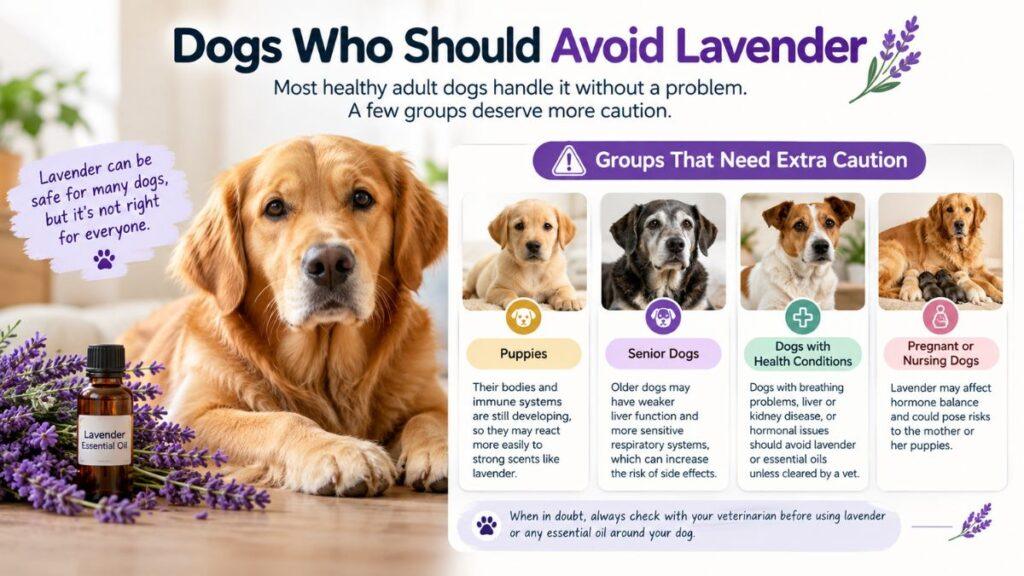
Puppies. Thinner, more absorbent skin and a body still developing. Check with a vet before using any lavender product on a puppy.
Pregnant or nursing dogs. Research on lavender during pregnancy is thin, which is reason enough to hold off.
Dogs on sedatives or anti-anxiety medication. Lavender can stack on top of the sedative effect and leave a dog groggier than intended. Ask your vet before combining the two.
Brachycephalic breeds. Bulldogs, Pugs, and Boxers already work harder to breathe, and diffused scents of any kind irritate those airways more easily.
Dogs with a history of allergies. If scented products have caused a reaction before, patch test first.
Signs of Lavender Toxicity or Allergic Reaction
Reactions range from trivial to urgent, and telling them apart decides how fast you need to move.
Mild signs, monitor at home:
Slight redness or itching where a topical product was applied
Sneezing after exposure to a diffuser
Mild drooling after licking a small amount of shampoo
More serious signs, contact your vet:
Vomiting or diarrhea
Drooling that will not stop
Lethargy or unusual weakness
Difficulty breathing or a persistent cough
Swelling around the face, lips, or paws
Skin that stays red, swollen, or irritated past a day
Breathing difficulty and facial swelling are emergencies. It does not matter how small the exposure looked.
What to Do If Your Dog Has a Bad Reaction
Remove the source. Move your dog away from the diffuser, wipe off any topical product, get them into fresh air.
Rinse if needed. Oil or shampoo on skin or in the mouth comes off with lukewarm water.
Watch for 24 hours. Mild symptoms usually fade once the source is gone.
Call for advice if symptoms go beyond mild. In the United States, the ASPCA Animal Poison Control Center is on (888) 426-4435 and the Pet Poison Helpline on (855) 764-7661. Both are staffed by people who can advise based on your dog’s size, symptoms, and exposure.
Take the packaging with you to any vet visit, so the team can see the exact concentration involved.
How to Safely Diffuse Lavender Around Dogs
Pick a large, ventilated room. Crate areas and small bathrooms are the wrong place for it.
Leave the door open. Your dog needs the option to walk away.
Keep sessions short. Thirty to sixty minutes beats running the thing all day.
Watch for early discomfort. Pawing at the face, repeated sneezing, or heading for the door all mean turn it off.
Put the diffuser out of reach. A knocked-over diffuser puts concentrated oil straight onto fur and skin.
Frequently Asked Questions
Is lavender essential oil toxic to dogs?
Undiluted lavender essential oil can irritate skin or upset the stomach if a dog licks or absorbs much of it. Properly diluted lavender, at the concentrations used in dog-specific products, is considered safe for most dogs.
Can I use human lavender shampoo on my dog?
Better not to. Human skin is more acidic than a dog’s, so human shampoo strips natural oils and leaves the skin dry or irritated, regardless of what the lavender itself is doing.
Is lavender safe for puppies? In very small, well-diluted amounts it is generally considered safe, but puppies are far more sensitive than adult dogs. Run it past your vet before introducing anything.
Can dogs be allergic to lavender?
Yes. Itching, redness, sneezing, and swelling all show up in sensitive dogs. A patch test catches it before you have a full-body reaction to deal with.
Does lavender actually calm dogs down?
For car travel, the evidence is reasonable. Wells’s 2006 JAVMA trial followed 32 travel-excitable dogs and found significantly more resting and sitting, and less moving and vocalising, on the journeys with ambient lavender. It is a behavioural study rather than a toxicity study, and it used ambient scent, not topical or undiluted oil.
What should I do if my dog eats lavender treats or licks lavender shampoo?
A small amount of a dog-specific, properly diluted product rarely causes more than mild stomach upset. Keep an eye out, and call your vet if vomiting, diarrhea, or lethargy follows.
Can lavender interact with my dog’s medication?
It can add to the effect of sedatives and anti-anxiety drugs, leaving a dog unusually drowsy. Check with your vet if your dog is on any prescription.
Is it safe to diffuse lavender if I also have a cat at home?
Cats are considerably more sensitive to essential oils than dogs. With both in the house, keep sessions short, ventilate well, and make sure neither animal is stuck in the room.
How much lavender is too much for a dog?
There is no universal figure, since it turns on the dog’s size and the product’s concentration. As a working rule, undiluted essential oil beyond a few drops in a large carrier mix, or hours of continuous unventilated diffusing, is where the risk starts climbing.
Can lavender help with a dog’s anxiety long term?
It works best as one piece of a wider plan that includes training, exercise, and a routine your dog can rely on. On its own it will not fix an anxious dog, but it can take the edge off storms and car journeys.
Before You Start
Match the method to the situation. Dog-specific shampoos and treats cover everyday use. Home dilution needs care and a patch test. Diffusing needs a big room, an open door, and a timer.
Watch how your own dog responds rather than assuming the general advice fits. Keep puppies, pregnant dogs, and short-nosed breeds on the cautious side of every recommendation here. And if your dog takes any prescription medication, especially a sedative, the conversation starts with your vet rather than with a bottle of oil.
Sources
ASPCA Animal Poison Control. Toxic and Non-Toxic Plants: Lavender (Lavandula angustifolia).
Wells DL. Aromatherapy for travel-induced excitement in dogs. Journal of the American Veterinary Medical Association, 2006;229(6):964-967.
Graham L, Wells DL, Hepper PG. The influence of olfactory stimulation on the behaviour of dogs housed in a rescue shelter. Applied Animal Behaviour Science, 2005;91:143-153.
ASPCA Animal Poison Control Center: (888) 426-4435.
Pet Poison Helpline: (855) 764-7661.
This article is for information only and does not replace advice from your veterinarian.