
Can dogs eat plantains? Yes — but only when they are peeled, cooked plain, and served in a small amount. Raw plantains, the tough peel, fried plantains, and seasoned plantain chips are not a safe way to share this fruit with your dog.
If you have ever stood in the kitchen holding that starchy, banana-looking fruit and wondered whether your dog can have a bite, you are asking the right question. Plantains look like bananas, but they are not the same food — and for dogs, that difference matters a lot.
The short answer
Plantains are not toxic to dogs. The ASPCA lists plantain (Musa paradisiaca, also listed under Musa acuminata, the banana family) as non-toxic to dogs. That is reassuring, but “non-toxic” does not mean “serve it any way you like.”
The safe version is simple: ripe plantain, peel removed, cooked plain by boiling, steaming, baking, or roasting, cut into small pieces, and given as an occasional treat. The unsafe versions are the ones most people actually have on the table — raw, fried in oil, salted, spiced, or served as packaged chips.
Think of it as an occasional extra, not a regular part of your dog’s diet. A complete dog food already covers what your dog needs each day. This fruit can add a little fiber and variety, but your dog will not miss out on anything important if you skip it.

Plantains vs. bananas: why the difference matters
Plantains and bananas belong to the same family, but they are handled very differently in the kitchen, and dogs feel that difference too.
- Bananas are soft, sweet, and easy to eat raw once peeled.
- Plantains are much starchier and firmer. They are usually picked less ripe, have thicker skin, and are meant to be cooked.
- Raw plantain is hard to chew and hard to digest, even for people. For a dog, that can mean stomach upset, gas, or vomiting.
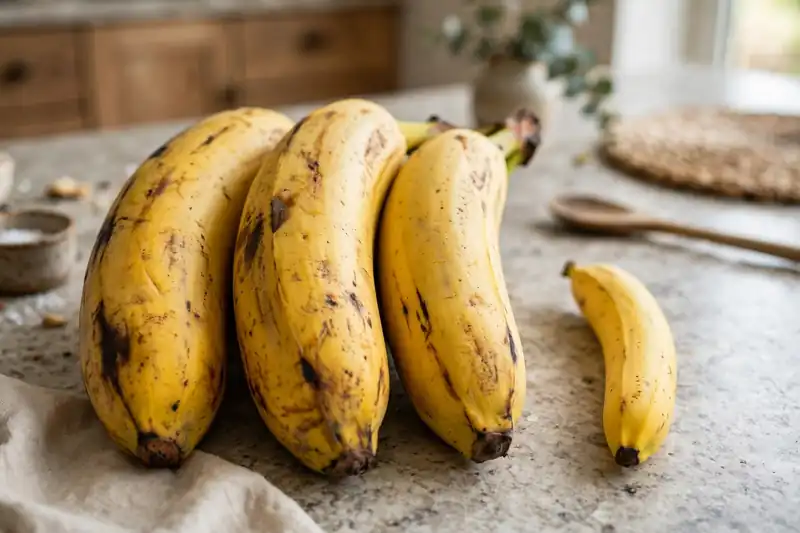
- Ripe plantain (yellow, or yellow with a few dark spots) is softer and sweeter than green plantain, and it is the better choice if you are going to share any at all. Green, unripe plantain is even starchier and harder on the stomach.
The American Kennel Club (AKC) notes that bananas, plantain’s close relative, are a low-calorie treat in moderation that provide potassium, vitamins, fiber, and copper, but should be given as a treat rather than as part of a dog’s main diet because of their sugar content. The same logic applies even more strongly here: small, occasional, and never instead of proper dog food.
Benefits of plantains for dogs
Cooked plain and served in small amounts, plantains can offer a few modest benefits:
- Fiber for digestion. Plantains are a good source of dietary fiber, which can support normal bowel movements. In small amounts, that fiber may help firm up loose stool or keep things moving. In large amounts, the same fiber can cause the opposite problem — gas, bloating, and diarrhea.
- Potassium and magnesium. Plantains provide potassium, which supports normal muscle and nerve function, and magnesium. PetMD notes that potassium helps maintain proper muscle and nerve activity in dogs. Most complete dog foods already supply these minerals, so this fruit is a bonus, not a necessity.
- Vitamins. Plantains contain vitamins A, B6, and C, along with antioxidants. Dogs make their own vitamin C, and a balanced diet already covers these vitamins, so treat this as a tasty extra rather than a health supplement.
- A soft, easy treat for some dogs. Plain cooked plantain is soft, naturally sweet when ripe, and easy to cut into training-sized pieces. Mashed, it can also be mixed into regular food as a topper.
Be honest about the limits here: no single treat will transform your dog’s health. If your dog eats a balanced diet, plantain adds variety and a little fiber — nothing more, and nothing less.
Risks of plantains for dogs
Most problems come from how it is served, or how much is served, not from the fruit itself.
- Raw plantain. Tough, starchy, and hard to digest. It can cause vomiting, diarrhea, gas, and stomach pain, and large hard pieces can be a choking hazard.
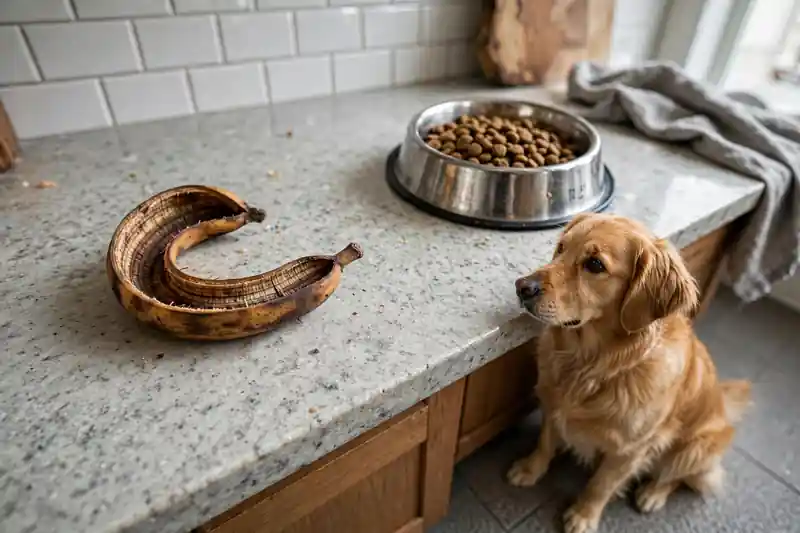
- The peel. Never give your dog the peel. It is tough, fibrous, and hard to digest, and pieces can cause choking or a gut blockage, especially in small dogs. Always peel it yourself and put the peel out of reach.
- Too much at once. Plantains are starchy and, when ripe, fairly sugary. Too much can mean an upset stomach, loose stool, weight gain over time, and trouble for dogs who need to watch their blood sugar.
- Fried plantains and plantain chips. Frying adds fat and oil that can upset the stomach and, over time, contribute to weight gain and pancreatitis risk in sensitive dogs. Packaged chips usually add salt and seasonings too.
- Seasonings. Salt, garlic, onion, chili, and sugar coatings are all wrong for dogs. Garlic and onion in particular can damage a dog’s red blood cells, so any seasoned plantain dish should stay off your dog’s plate.
- Dogs with diabetes or weight problems. Ripe plantains contain natural sugars and starch, so they are a poor choice for diabetic dogs or dogs that need to lose weight. Ask your vet before offering plantain to a dog with either condition.
- Plantain lily confusion. Do not confuse edible plantain fruit with plantain lily (hosta), a garden plant that is a different thing entirely and is not dog food. If your dog has chewed a garden plant rather than a fruit from the kitchen, call your vet and describe the plant.
How to serve plantains safely
Follow these steps every time, and plantain stays a safe occasional treat.
- Pick a ripe one. Choose a yellow plantain, ideally with a few dark spots, rather than a hard green one. Throw away any moldy or rotting fruit.
- Peel it fully. Remove all of the thick peel and discard it where your dog cannot get to it.
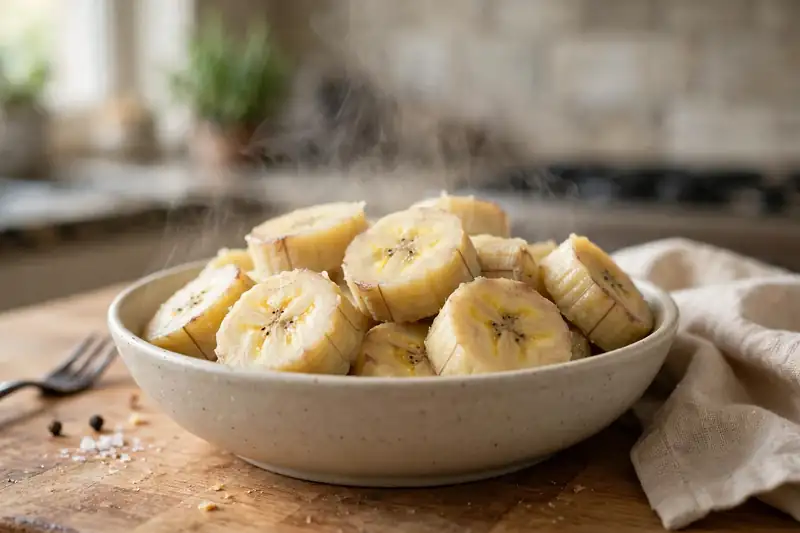
- Cook it plain. Boil, steam, bake, or roast the plantain until it is soft all the way through. Use no oil, butter, salt, sugar, or spices. Let it cool completely before serving.
- Cut it small. Slice it into small, bite-sized pieces for your dog’s size. Small dogs and puppies need especially small pieces.
- Start tiny. The first time, offer one small piece and wait a day to see how your dog’s stomach handles it. If there is vomiting, diarrhea, or unusual gas, skip plantain and try something else.
- Keep it occasional. Once or twice a week at most is plenty. Plantain should stay well within the treat allowance the AKC recommends — treats and human foods should not exceed about 10 percent of your dog’s daily calories.

How much plantain can a dog eat?
There is no official plantain portion chart for dogs, so use these conservative starting points and stay inside the 10 percent treat rule. These are occasional servings, not daily amounts.
| Dog size | Occasional serving of plain cooked plantain |
|---|---|
| Small (under 20 lb) | 1–2 small pieces |
| Medium (20–50 lb) | 2–3 small pieces |
| Large (over 50 lb) | Up to about a quarter of a medium plantain, cut into small pieces |
If your dog is overweight, diabetic, on a prescription diet, or has a sensitive stomach, check with your vet first. Dogs on a prescription diet should generally not get extras unless their vet approves them, a point PetMD also stresses for prescription diets.

What to avoid
- Raw plantain, in any amount
- The peel, stem, or any tough outer skin
- Fried plantains, tostones, or plantain chips
- Plantain cooked with oil, butter, salt, sugar, garlic, onion, chili, or any spice blend
- Sweetened, canned, or packaged plantain products — always read the label
- Sharing your whole portion, or feeding plantain every day
- Letting a dog chew a plantain plant or plantain lily from the garden
What if my dog already ate plantain?
Stay calm and work out what exactly your dog ate — that decides what to do next.
- A small piece of plain cooked plantain: Usually no cause for worry. Skip other treats for the day, keep fresh water available, and watch for stomach upset over the next day.
- A small piece of raw plantain: Watch for vomiting, diarrhea, gas, or belly discomfort. A tiny taste in a healthy adult dog often passes without trouble, but call your vet if symptoms appear or your dog seems uncomfortable.
- Fried or seasoned plantain: Watch closely for vomiting, diarrhea, or lethargy. The fat, salt, and seasonings are the bigger concern here, especially garlic or onion. Call your vet if symptoms appear or if your dog ate a large amount.
- The peel, or a large amount of any kind: Call your vet. A swallowed peel or a large hard piece can cause choking or a blockage, and blockage signs can take time to show.
Symptoms to watch for, and when to call a vet
Watch for vomiting, diarrhea, gas, bloating, belly pain, loss of appetite, or unusual tiredness after your dog eats plantain. Mild, one-off stomach upset after a new food sometimes settles on its own, but do not wait it out if you see any of the following:
- Repeated vomiting or diarrhea
- Diarrhea lasting more than two days — VCA Animal Hospitals advises veterinary care when loose stools persist beyond two days
- Blood in vomit or stool, or black, tarry stool
- A swollen or painful belly, straining without passing stool, or refusing food
- Lethargy, weakness, or collapse
- Signs of choking or trouble breathing
- A swallowed peel, pit-like hard piece, or any suspected blockage
- Your dog has diabetes, pancreatitis, kidney disease, or is a puppy, a senior, or already unwell
Call your vet or an emergency clinic right away in those cases, and have your dog’s weight, what they ate, and roughly how much ready to share. Do not try to make your dog vomit at home unless a vet tells you to.
The bottom line
Yes, in short: peeled, cooked plain, cut small, and served as a small occasional treat. That is the whole secret, and it is also where most people go wrong: raw, fried, seasoned, or peel-on plantain turns a safe fruit into a stomach problem.
If your dog is healthy, has no diabetes or weight issues, and handles the first tiny piece well, plain cooked plantain is a fine treat once in a while. If in doubt, skip it. Your dog’s regular food already gives them everything they need, and there are plenty of simpler treats that carry no guesswork at all.
FAQ
Q: Can dogs eat them raw?
A: No. Raw plantains are hard, starchy, and difficult for dogs to digest. They can cause vomiting, diarrhea, and gas, and hard pieces can be a choking hazard. Always cook them plain until soft before offering any to your dog.
Q: Are plantain peels safe for dogs?
A: No. The peel is tough and fibrous, hard to digest, and can cause choking or a gut blockage. Peel the plantain fully yourself and keep the peel out of your dog’s reach.
Q: What about fried plantains or plantain chips?
A: Not a good choice. Frying adds fat that can upset the stomach, and packaged chips usually add salt and seasonings. Stick to plain boiled, steamed, baked, or roasted plantain with nothing added.
Q: Are green plantains okay?
A: Green plantains are not a good choice. They are even starchier and firmer than ripe ones and harder to digest. If you share this fruit at all, use a ripe yellow plantain, cooked plain, in a small amount.
Q: Can puppies have plantain?
A: It is best to wait. Puppies have sensitive stomachs, are still growing on a puppy-formulated diet, and are more likely to gulp pieces whole. If you do offer any later, make it one tiny piece of plain cooked plantain and watch for stomach upset. Ask your vet first if your puppy has any health issues.
Q: Is plantain the same as banana for dogs?
A: Not quite. They are related fruits, but plantains are starchier, firmer, and must be cooked, while bananas can be eaten raw once peeled. Both should only be occasional treats, kept within about 10 percent of your dog’s daily calories, as the AKC recommends for treats.
Q: Are plantains healthier than bananas for dogs?
A: Not really — the two are similar in nutrients like potassium and fiber, but plantains are starchier and higher in calories, and they must be cooked. Bananas are the lighter, easier choice; plantains are fine as an occasional cooked treat, not an upgrade.
Q: How unhealthy are fried plantains?
A: Frying adds a lot of fat, so fried plantains are a poor treat choice even when plain. A small piece of plain fried plantain is not poisonous, but it brings stomach-upset risk with little benefit — and packaged chips are worse, with added salt and seasonings.
Q: How many plantains can a dog eat?
A: A few small pieces of cooked ripe plantain, occasionally — not every day, and always inside the 10% treat rule. Start with one small piece the first time and watch for stomach upset before offering more.
Q: What fruit can’t a dog eat?
A: Grapes and raisins are the big one — they can cause kidney failure even in small amounts. Also skip fruit pits and seeds, citrus peels, and any fruit served with added sugar or xylitol. When in doubt about a new fruit, check with your vet first.
Q: How do I cook plantains for my dog?
A: Peel a ripe yellow plantain fully, then boil, steam, bake, or roast it plain until soft. Let it cool, cut it into small pieces, and serve with nothing added — no salt, butter, oil, or seasoning.
Vet Disclaimer
This article is for general information only and is not a substitute for veterinary advice. Every dog is different, and dogs with diabetes, pancreatitis, kidney disease, allergies, or any ongoing health condition should only try new foods after checking with their vet. If your dog shows worrying symptoms after eating plantain, contact your vet or an emergency clinic promptly.


