

Can dogs eat cabbage? Yes, they can. Plain cabbage is not toxic to dogs, and a small amount of cooked, chopped cabbage is a safe low-calorie snack or food topper for most healthy adult dogs. The problem is quantity. Cabbage is full of fiber and sugar dogs cannot digest on their own, so a big helping usually ends in gas, loose stool or a sore belly. Cabbage cooked with onion, garlic, butter or a lot of salt is a different food altogether and should never go in the bowl.
Is cabbage good for dogs?
Cabbage is a member of the Brassica oleracea family, the same plant group as broccoli, cauliflower, kale and Brussels sprouts. What it gives a dog is fairly simple. It is mostly water, very low in calories, and a reasonable source of fiber, vitamin C and vitamin K. Red cabbage adds anthocyanins, the same purple pigments found in blueberries for dogs, which work as antioxidants.
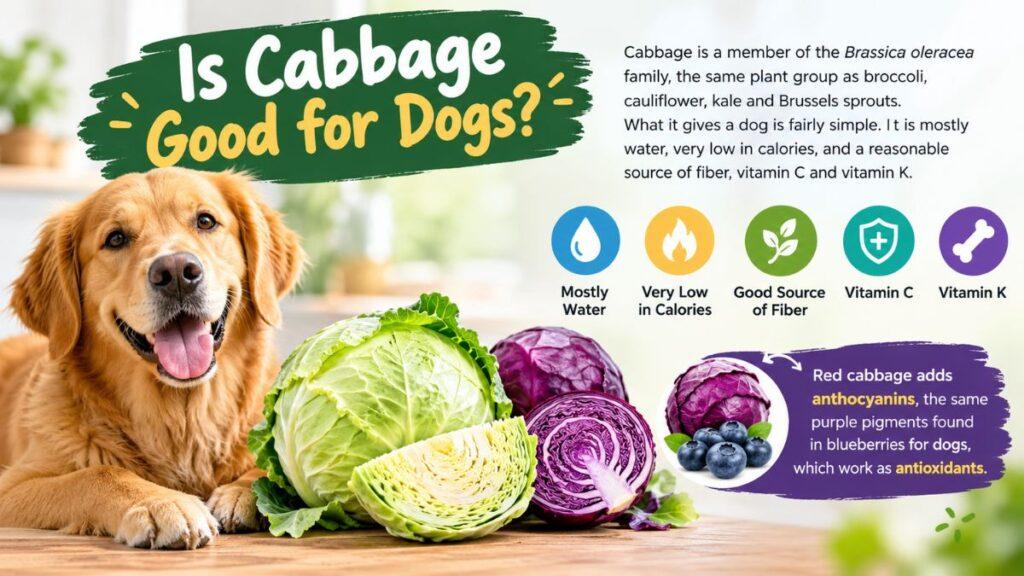
Dogs make their own vitamin C, and a complete dog food already covers their vitamin needs, so cabbage is not fixing a deficiency. Its real value is as a crunchy, filling extra with almost no calories, which suits dogs on a weight loss plan who still expect something when you open the fridge.
Here is how green and red cabbage compare, based on USDA FoodData Central figures for raw cabbage.
| Per 100 g, raw | Green cabbage | Red cabbage |
| Calories | 25 kcal | 31 kcal |
| Fiber | 2.5 g | 2.1 g |
| Vitamin C | 36.6 mg | 57 mg |
| Vitamin K | 76 mcg | 38 mcg |
| Vitamin A (RAE) | 5 mcg | 56 mcg |
| Potassium | 170 mg | 243 mg |
You will see pet sites repeat that red cabbage has “10 times more vitamins” than green. The data does not back that up. Red cabbage has roughly eleven times the vitamin A and about half again as much vitamin C, but only half the vitamin K. Both are fine choices.
A 2005 Purdue University study of 175 Scottish Terriers found that dogs eating vegetables at least three times a week had a lower bladder cancer risk. It was observational and limited to one breed, and cabbage-family vegetables on their own did not reach statistical significance. Vegetables in general look helpful, but nobody has shown that cabbage prevents cancer in dogs.
Can dogs eat cabbage raw or cooked?
Both are safe, but cooked cabbage is the better everyday choice. Heat softens the tough fiber, so cabbage is easier to chew and gentler on the gut.
Cooking has a second benefit. Cabbage contains glucosinolates, natural plant compounds that break down into goitrogens, substances that can interfere with the thyroid in large amounts. Food research on brassica vegetables shows that moist cooking methods such as blanching, steaming and boiling lower these compounds. The trade off is vitamin C, which leaches into the cooking water when you boil. Steaming until soft keeps more of the vitamins while still taming the fiber and goitrogens, so that is the method we recommend.
Raw cabbage is not dangerous. A few small raw pieces make a decent crunchy treat for a dog that tolerates them. Just chop them small. Whole leaves, thick ribs and chunks of core can be a choking hazard for small dogs and for dogs that swallow food without chewing.
Can dogs eat red, purple, savoy, napa or bok choy cabbage?
Red cabbage and purple cabbage are the same vegetable. The color depends on soil pH, and the name depends on who is selling it. Both are safe for dogs. Green and white cabbage are safe too.
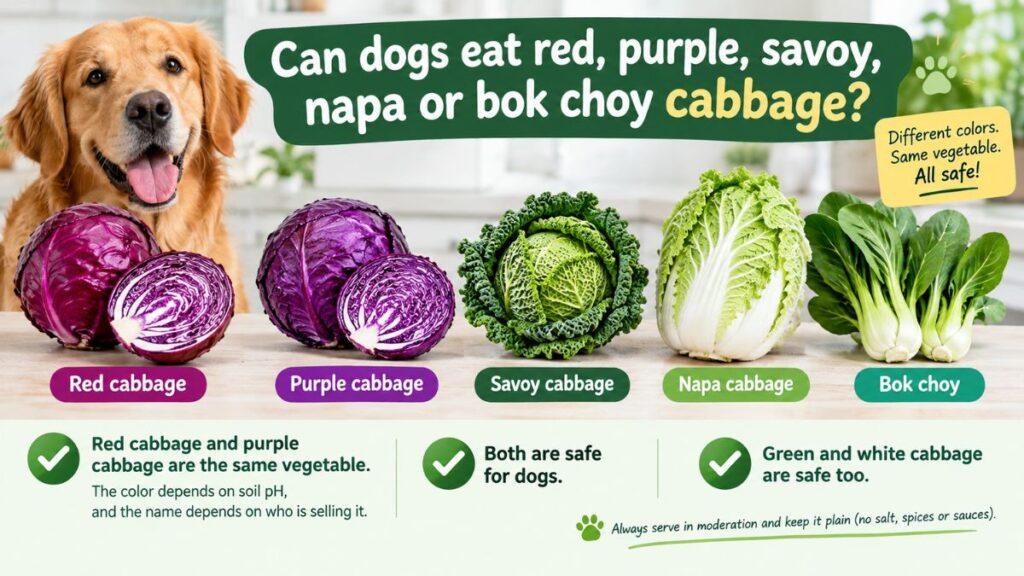
Savoy cabbage has softer, crinkled leaves and is the easiest variety to serve raw. Napa cabbage and bok choy are also safe. The AKC lists savoy, napa and bok choy as safe for dogs. A few pet blogs warn that napa and bok choy carry more goitrogens than regular cabbage, but published measurements point the other way. Chinese cabbage sits near the bottom of the brassica family for progoitrin, a key goitrogen, with some Russian kale varieties carrying around 150 times more.
Brussels sprouts are essentially mini cabbages. The same rules apply, although sprouts tend to cause even more gas. The one “cabbage” product to skip entirely is pickled red cabbage, which is packed in vinegar, sugar and salt.
How much cabbage can a dog eat?
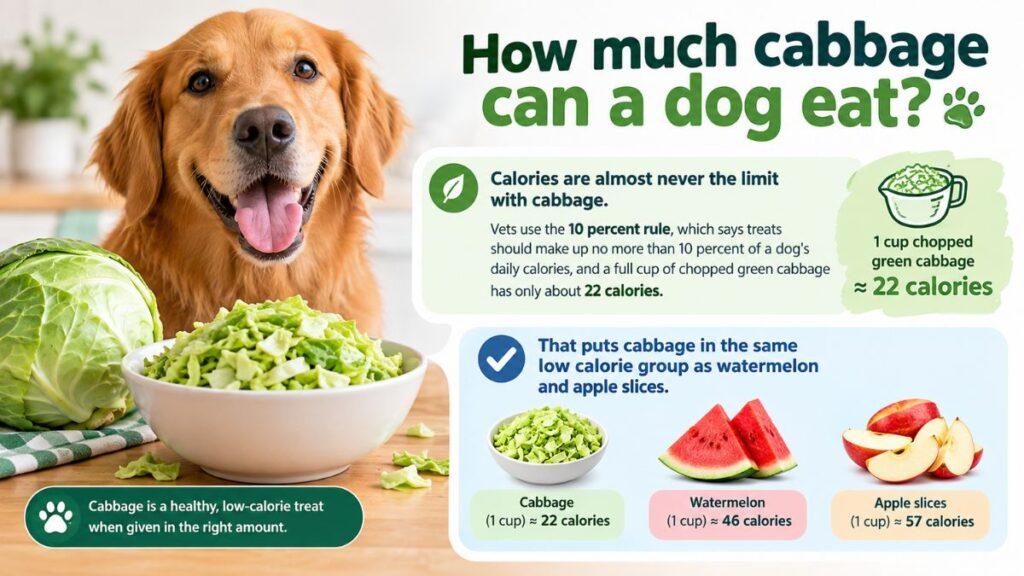
Calories are almost never the limit with cabbage. Vets use the 10 percent rule, which says treats should make up no more than 10 percent of a dog’s daily calories, and a full cup of chopped green cabbage has only about 22 calories. That puts cabbage in the same low calorie group as watermelon and apple slices.
The real limit is the gut, which reacts to fiber and fermentable sugar long before calories matter. That is why the amounts below are far smaller than the 10 percent rule would allow. They are starting points for healthy adult dogs, not a vet prescription, and they refer to cooked, finely chopped cabbage.
| Dog size | Example breeds | First serving | Maximum per serving once tolerated |
| Toy, under 5 kg | Chihuahua, Yorkie | 1 teaspoon | 2 teaspoons |
| Small, 5 to 10 kg | Shih Tzu, Pug | 2 teaspoons | 1 tablespoon |
| Medium, 10 to 25 kg | Beagle, Border Collie | 1 tablespoon | 2 to 3 tablespoons |
| Large, 25 to 40 kg | Labrador, Golden Retriever | 2 tablespoons | 1/4 cup |
| Giant, over 40 kg | Great Dane, Mastiff | 2 tablespoons | 1/3 cup |
<!– IMAGE 2: cabbage-portion-chart-for-dogs-by-weight.webp | ALT: Cabbage portion chart for dogs by body weight –>
Start with the first serving amount, then wait a full day and check your dog’s stool and comfort. If everything looks normal, you can work up toward the maximum over a week or two. Two or three servings a week is plenty. Daily cabbage offers no extra benefit and makes gas and thyroid concerns more likely.
Why cabbage makes dogs gassy
The main culprit is raffinose, a sugar found in cabbage and beans. Dogs, like people, lack the enzyme to break raffinose down in the small intestine. It travels on to the colon, where gut bacteria ferment it and produce gas. Cabbage also contains sulfur compounds, which is why cabbage gas smells worse than most.
Cooking the cabbage, keeping portions small and introducing it over several days all help.
Ordinary gas is not the same thing as bloat. Gastric dilatation and volvulus, often shortened to GDV, is an emergency in which the stomach fills with gas and can twist. Its exact cause is unknown, and it is seen most often in large, deep-chested dogs. If your dog has a swollen, tight belly, keeps trying to vomit without bringing anything up, or cannot settle, go to an emergency vet right away. Do not wait to see if it passes.
Cabbage and your dog’s thyroid
The thyroid warning you see on some pet sites is based on real chemistry, but the risk is usually overstated. The goitrogens that come from cabbage glucosinolates, such as thiocyanate and goitrin, can reduce how well the thyroid uses iodine. Over time, that could contribute to hypothyroidism, a condition where the thyroid produces too little hormone.
For a healthy dog eating a complete commercial diet with a spoonful of cooked cabbage a few times a week, this is very unlikely to matter. Human research suggests the effect shows up mostly when iodine intake is already low, and cooking lowers the goitrogen load further. The risk rises with large, frequent servings of raw cabbage, and with homemade diets that were not formulated by a veterinary nutritionist.
If your dog already has hypothyroidism, ask your vet before adding any brassica vegetables. Weight gain without eating more, low energy, a thinning coat and seeking out warm spots are all signs worth a vet check.
Which dogs should skip cabbage?
A growing puppy on complete puppy food does not need extra vegetables, and a young digestive tract reacts more strongly to fiber. A stolen piece is nothing to panic about, but it is best not to offer cabbage until your dog is fully grown.
Dogs with sensitive stomachs, inflammatory bowel disease or frequent diarrhea usually do better without cabbage. The same goes for dogs with diagnosed thyroid disease, as covered above. If your dog is on a prescription or therapeutic diet for any condition, check with your vet before adding any treat, cabbage included.
Plain cabbage is naturally low in fat, so it is not a pancreatitis risk on its own. Cabbage cooked in butter, bacon fat or oil is a different matter, and even a healthy fat like olive oil adds up fast. Fatty foods can trigger pancreatitis, so dogs with a history of it should only ever get plain, unseasoned cabbage.
My dog ate a lot of cabbage. What should I do?
First, work out what your dog actually ate, because that changes everything.
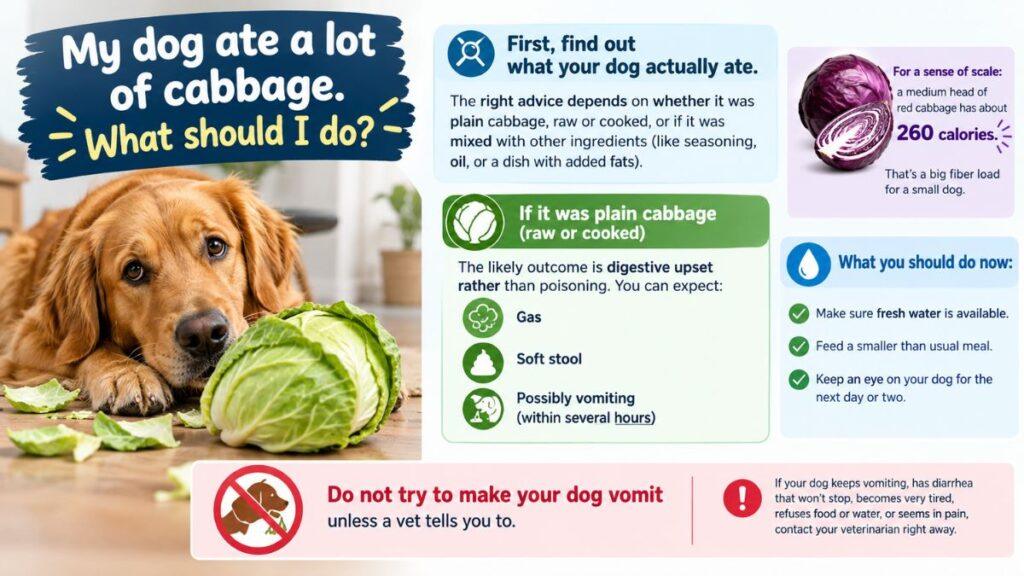
If it was plain cabbage, raw or cooked, the likely outcome is digestive upset rather than poisoning. Expect gas, soft stool, and possibly vomiting within several hours. For a sense of scale, a medium head of red cabbage has about 260 calories, which is a big fiber load for a small dog. Make sure fresh water is available, feed a smaller than usual meal, and keep an eye on your dog for the next day or two. Do not try to make your dog vomit unless a vet tells you to.
If the cabbage was cooked with onion, garlic, chives or leeks, call your vet or the ASPCA Animal Poison Control Center at (888) 426-4435 even if your dog seems perfectly fine. These ingredients damage red blood cells, and the most serious effects can take several days to appear. Garlic powder and onion powder are more concentrated than fresh versions, so a seasoned dish can carry more risk than it looks.
Red cabbage has a strong pigment, and a large helping may tint stool or vomit a reddish purple color that fades within a day or two. Black, tarry stool, fresh blood, pale gums or dark urine are different and need a vet the same day.
Call your vet promptly if your dog vomits more than twice, refuses food for more than a day, strains without passing stool for 48 hours, or seems weak or in pain. A swallowed chunk of core can occasionally cause a blockage in small dogs. Any sign of bloat, meaning a swollen belly with retching that brings nothing up, is an emergency.
Which cabbage dishes are unsafe for dogs?
Most cabbage problems come from the recipe, not the vegetable.
| Dish | Main problem | Safe for dogs? |
| Coleslaw | Mayonnaise or dressing, sugar, often raw onion | No |
| Sauerkraut | Very salty, around 660 mg sodium per 100 g canned | No, a stray lick is fine |
| Kimchi | Garlic, scallions, chili and salt | No |
| Cabbage rolls | Onion, garlic, seasoned meat, tomato sauce | No |
| Corned beef and cabbage | Salty, fatty meat and spiced broth soaked into the cabbage | No |
| Cabbage soup | Onion, garlic and salty stock | No |
| Fried cabbage or stir fry | Oil, butter, soy sauce, garlic | No |
| Egg rolls | Fried wrapper, garlic, onion, soy sauce | No |
| Pickled red cabbage | Vinegar, sugar and salt | No |
The simple rule is that if cabbage was cooked for people, it is not for your dog. Set aside a plain portion before you add anything else.
How to prepare cabbage for dogs
Start by rinsing the cabbage well and peeling off the outer leaves, which collect the most dirt and pesticide residue. Cut out the hard core and thick central ribs. Chop the leaves small, about pea sized for toy breeds and thumbnail sized for large dogs.
Steam the pieces for around five to eight minutes, until a fork slides through easily. Do not add salt, oil, butter or seasoning. Let the cabbage cool completely, then mix it into your dog’s regular food or hand it over as a treat.
Cooked cabbage keeps in a sealed container in the fridge for about three days. For easy portions, press cooled, chopped cabbage into an ice cube tray and freeze it. One cube is a ready serving for a medium dog, and a frozen cube makes a cooling chew on a hot day.
Where common cabbage advice disagrees
Search “can dogs eat cabbage” and the top guides contradict each other. One popular dog food brand says never to feed cabbage raw, while another says raw, cooked and air dried are all fine. Raw cabbage is not dangerous. Cooked is simply easier to digest. Advice on puppies ranges from a little cooked cabbage being fine to waiting until a dog is fully grown, and since puppies gain nothing from it, waiting is the easier choice. Some brand blogs also claim cabbage cleans teeth or has been proven to fight cancer in dogs. We found no good evidence for a dental benefit, and the canine cancer research covers vegetables in general, not cabbage.
Frequently asked questions
Is cabbage toxic to dogs?
No, plain cabbage is not toxic, though too much causes digestive upset.
Can dogs eat cabbage raw?
Yes, in small chopped pieces, but cooked cabbage is gentler on the stomach.
Can dogs eat cabbage every day?
It is better not to, because two or three small servings a week is enough.
Can puppies eat cabbage?
It is best to wait until your dog is fully grown.
Can dogs eat cabbage core or stems?
Remove them, as they are tough to digest and can be a choking hazard.
Can dogs eat frozen cabbage?
Yes, plain frozen cabbage in small pieces is safe.
Can dogs eat cabbage leaves?
Yes, once they are washed, chopped and ideally cooked.
Does cabbage help dogs lose weight?
It can help as a filling, very low calorie swap for higher calorie treats.
Why did my dog’s poop turn purple after cabbage?
Red cabbage pigment may tint stool, but see a vet if you notice black stool or blood.
Can dogs eat cabbage when they have diarrhea?
No, its fiber and fermentable sugar can make diarrhea worse.
Can dogs eat cabbage? The bottom line
Cabbage is a safe, low-calorie vegetable for most healthy adult dogs, as long as you keep it plain and keep it small. Steamed, chopped cabbage is the easiest form to digest, and cooking also lowers the compounds behind the thyroid warning. Green, red, purple, savoy, napa and bok choy are all fine. Start with a teaspoon or a tablespoon depending on your dog’s size, and stick to two or three servings a week.
The real dangers come from how cabbage is prepared for people. Coleslaw, kimchi, sauerkraut, cabbage rolls and anything cooked with onion or garlic should stay out of reach. If your dog does get into a large amount of plain cabbage, expect gas and a messy day or two, and watch for the warning signs that mean a vet visit. Puppies, dogs with sensitive stomachs and dogs with thyroid disease are better off skipping it. For everyone else, a little cabbage is a perfectly good way to add crunch to the bowl without adding weight.