

It’s a familiar scene: you turn away from the counter for two seconds, and the butter dish is empty. Or maybe a corner of toast slipped off your plate and your dog got there before you did. Either way, you’re now wondering the same thing every dog owner eventually googles: is this actually a problem?
The short version: butter isn’t toxic to dogs, but it isn’t good for them either. It’s almost pure fat with a side of dairy, and neither of those does your dog any favors. Whether it’s a real concern depends less on “is butter safe” as a yes/no question, and more on how much and which dog. Here’s how to think through it.
Why Butter Is a Problem, Even Though It Isn’t Poison
Butter contains no ingredient that’s dangerous the way chocolate or grapes are. The issue is what it’s made of:
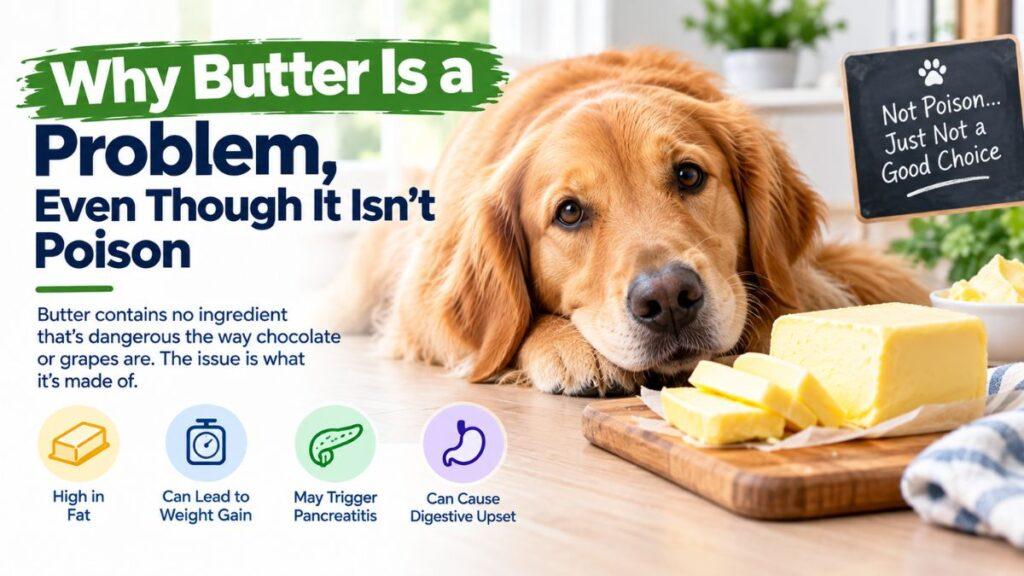
- It’s almost entirely fat. Roughly 80% of butter is fat, and about half of that is saturated fat, the kind most linked to digestive upset and, in higher amounts, to pancreatitis, a painful inflammation of the pancreas that can become a genuine emergency.
- It’s a diary. Most adult dogs lose much of their ability to digest lactose as puppies. Butter isn’t as lactose-heavy as milk, but it’s still dairy, and sensitive dogs can react to even small amounts with gas, loose stools, or vomiting.
- It brings nothing to the table. Unlike, say, a bit of plain cooked chicken, butter has no protein, fibre, or nutrient your dog actually needs. It’s calories with no upside.
None of this means one accidental lick is a crisis. It means there’s no good reason to make butter part of your dog’s routine.
Four Situations Dog Owners Actually Deal With
Rather than one generic answer, here’s how the risk changes depending on what actually happened:
Your dog licked a buttery plate or ate a dropped piece of buttered toast. Low risk for most healthy dogs. You might see a slightly upset stomach for a day, and that’s usually it. No need to panic, just don’t make it a habit.
Your dog raided a stick or tub of butter. This is the scenario that actually warrants concern. A large amount of fat all at once is the classic pancreatitis trigger. Watch your dog closely over the next 24–72 hours (see the symptom list below), and call your vet sooner rather than later, especially for small dogs or dogs with any history of stomach issues.
You’re thinking about giving butter on purpose as a treat, in cooking, or to help hide a pill. Don’t. This is the one case that’s entirely avoidable. Using butter to disguise medication is common, but a small piece of plain cooked meat, a bit of pill-pocket treat, or plain unsweetened pumpkin does the same job without adding unnecessary fat.
Your dog ate something cooked in a lot of butter garlic bread, pastries, buttery popcorn. This is usually more about the other ingredients than the butter itself. Garlic, onion, or high salt content in these foods can matter more than the butter does — but the combined fat load still adds risk on top.
Not Every Dog Handles Butter the Same Way
A “small amount is probably fine” answer doesn’t apply equally to every dog. A few groups should treat butter as an outright no, not an occasional yes:
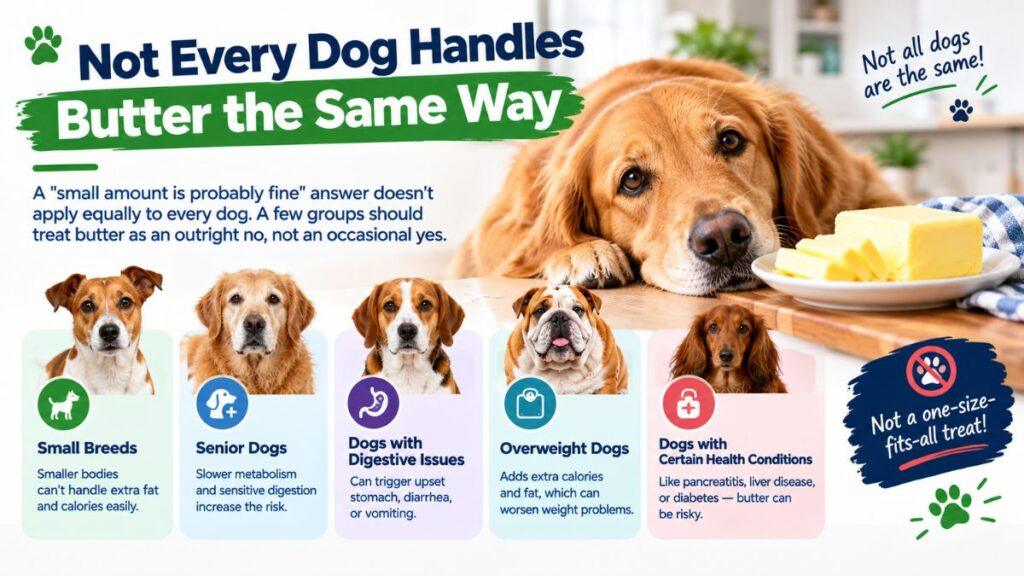
- Dogs that have had pancreatitis before. Even a small fat spike can bring on another episode.
- Certain breeds with a known higher risk of pancreatitis — Miniature Schnauzers, Yorkshire Terriers, and Cocker Spaniels are commonly cited examples.
- Overweight dogs. Extra body weight is itself a pancreatitis risk factor, and butter’s calories add up fast relative to a smaller daily calorie budget — a single tablespoon is around 100 calories, which can be a meaningful chunk of a small dog’s day. If your dog is carrying extra weight, this is a food to skip entirely rather than manage “in moderation.”
- Dogs with diagnosed lactose intolerance or a sensitive stomach.
- Puppies, whose digestive systems are still developing and handle rich, fatty foods poorly.
If your dog fits into any of these categories, the safest approach is simply not to feed butter at all accidental exposure is one thing, but there’s no reason to add it intentionally.
A Quick Word on Peanut Butter
Butter and peanut butter get lumped together in conversation, but they’re different foods with a different main risk. Dairy butter’s problem is fat and lactose. Peanut butter’s problem when there is one is xylitol, an artificial sweetener some “no added sugar” peanut butter brands use, which is genuinely toxic to dogs even in tiny amounts. If your dog enjoys peanut butter, the fat content is a smaller concern than checking the label for xylitol every time you buy it, since manufacturers change recipes without warning.
Ghee, margarine, and plant-based “butter” spreads aren’t automatically safer swaps either. Ghee still carries the same fat load. Margarine and vegan spreads can be just as fatty, and some diet or sugar-free versions carry the same xylitol risk as peanut butter. Always check the label rather than assuming.
Signs Something’s Wrong and When to Call the Vet
If your dog has eaten more than a lick or two, keep an eye out over the next day or two for:
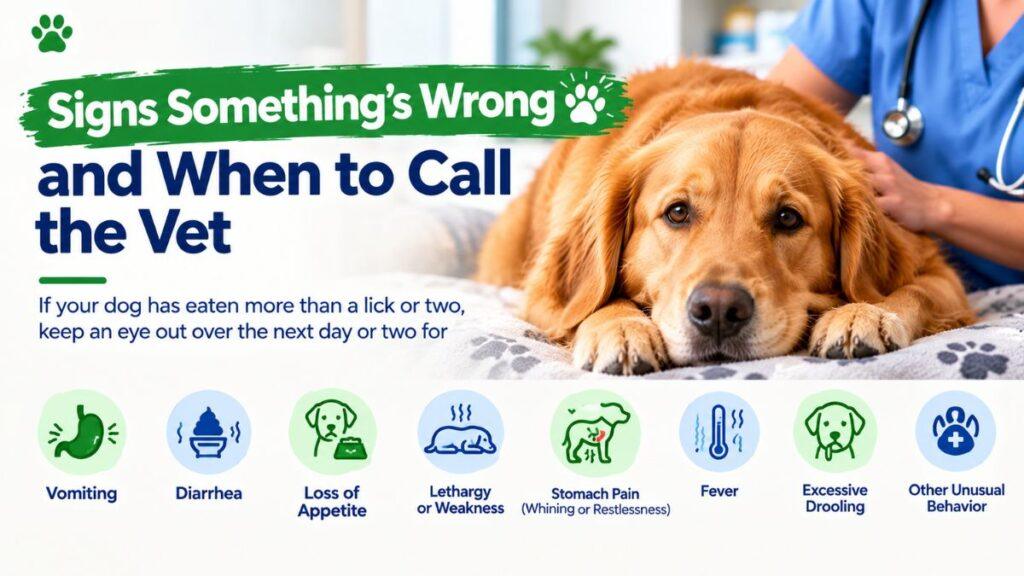
- Repeated vomiting or ongoing diarrhoea
- A hunched posture, or a “praying” stretch with the front end down
- A bloated, tense, or painful-feeling belly
- Loss of appetite or unusual lethargy
- Restlessness or whining that doesn’t settle
Any of these — call your vet. Don’t wait to see if it passes on its own, particularly with a small dog, a puppy, or a dog with a history of pancreatitis. If your dog seems completely normal after a small lick, there’s usually nothing to do beyond keeping an eye on them and maybe offering a plain, low-fat meal (boiled chicken and rice) at their next feeding.
The Bottom Line
Butter won’t poison your dog, but it also won’t help them. Treat an accidental lick as a non-event, treat intentional feeding as unnecessary, and treat a large amount eaten at once as a reason to call your vet — not tomorrow, but today.
Frequently Asked Questions
Is butter toxic to dogs?
No. The risk is digestive upset and, with larger amounts, pancreatitis not poisoning. The exception is if the butter is mixed with something that is toxic, like garlic, onion, or a xylitol-containing spread.
Can dogs have buttered toast?
An occasional small piece is unlikely to cause harm in a healthy dog, but there’s no benefit to it either, and dogs prone to pancreatitis, weight issues, or dairy sensitivity should skip the butter part.
Can overweight dogs eat butter?
It’s best avoided altogether. Overweight dogs already carry a higher baseline pancreatitis risk, and butter’s calorie density works against any weight management plan.
Can dogs be lactose intolerant?
Yes — most adult dogs have reduced ability to digest lactose, which is why dairy foods including butter can cause gas or loose stools even in small amounts.
Is there a safer treat than butter?
Plain cooked chicken or turkey, a spoon of xylitol-free peanut butter, or plain pumpkin all offer more nutritional value with far less fat.
3 thoughts on “Can Dogs Eat Butter? What Every Dog Owner Should Know”