

Quick answer: Yes, dogs can have brussel sprouts. Cooked, plain, and in small portions, they’re one of the safer “people foods” you can share with your dog. Raw sprouts, whole sprouts, and anything seasoned with garlic, onion, salt, or butter are where the real risks start.
Key takeaways
Cooked brussel sprouts are safe for most healthy dogs in small amounts.
Raw sprouts are harder to digest and a choking hazard, especially for small breeds.
The infamous “gas” side effect is real but it’s manageable if you keep portions small.
Dogs with thyroid, kidney, or digestive issues should get a vet’s okay first.
Are Brussel Sprouts Good for Dogs?
In small amounts, yes. Brussel sprouts are a low-calorie vegetable packed with nutrients that support a dog’s overall health:

Vitamin K – supports healthy blood clotting and bone strength
Vitamin C – supports the immune system
Vitamin A and B6 – support skin, coat, and nervous system health
Fiber – helps keep digestion regular
Antioxidants – help the body fight off cell damage
Potassium, manganese, and folate – support muscle and metabolic function
They’re also mostly water and low in calories, which makes a sprout or two a reasonable treat option for dogs who need to watch their weight as long as it’s plain and cooked.
Can Dogs Eat Raw Brussel Sprouts?
It’s best to avoid it. Raw brussel sprouts are dense, fibrous, and harder for a dog’s digestive system to break down than cooked ones. They can also be tough and slippery, which makes them a choking hazard particularly for small dogs or dogs that tend to gulp their food. If your dog does snatch a raw sprout off the counter, don’t panic; a single small piece usually isn’t dangerous, but it’s not something to make a habit of.
Can Dogs Eat Brussel Sprouts Stalks?
No, it’s best to skip the stalk. The thick central stalk is tough, fibrous, and much harder to digest than the sprouts themselves. It also poses a bigger choking and blockage risk, especially for smaller dogs. Stick to the sprouts (and the leaves, below) and leave the stalk out of your dog’s bowl.
Can Dogs Eat Brussel Sprouts Leaves?
Yes, the leaves are generally fine for dogs. They’re softer than the stalk and tend to produce less gas than a whole sprout. You can steam or lightly cook individual leaves and add them as a topper to your dog’s regular meal. It’s actually one of the easier ways to introduce this vegetable.
Can Dogs Eat Frozen Brussel Sprouts?
Only after cooking. Frozen brussel sprouts are fine to use as a starting ingredient, but they should always be thawed and cooked before your dog eats them. A rock-hard frozen sprout is a choking hazard and can be tough on teeth. Steam or boil frozen sprouts the same way you would fresh ones.
How to Prepare Brussel Sprouts for Your Dog
Getting the prep right matters just as much as the portion size.
Wash them well under cold running water to remove dirt and any pesticide residue.
Trim the stem and remove any yellow, wilted, or damaged outer leaves.
Cut them into small, bite-sized pieces — never serve a whole sprout, even to a large dog.
Cook them plain. Steaming or boiling until soft is the safest method. Avoid frying or roasting with oil, as too much fat can upset a dog’s stomach.
Skip the seasoning entirely. No salt, butter, garlic, or onion. Garlic and onion in particular are toxic to dogs, even in small amounts, so never feed your dog brussel sprouts that were cooked as part of a seasoned family dish.
Let them cool before serving.
How Many Brussel Sprouts Can Dogs Eat?
Portion size should scale with your dog’s size. As a general guideline for a healthy adult dog:
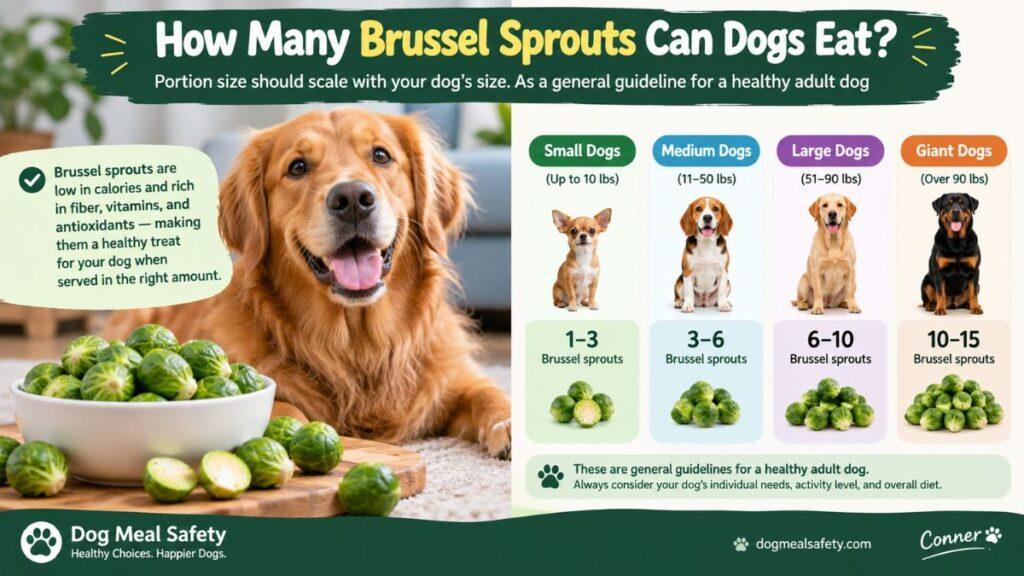
| Dog Size | Approximate Weight | Serving Size |
| Small | Up to 20 lbs | 1/2 to 1 small sprout |
| Medium | 20–50 lbs | 1 to 2 sprouts |
| Large | 50–90 lbs | 2 to 3 sprouts |
| Extra-large | 90+ lbs | 3 to 4 sprouts |
Start with less than this a bite or two the first time you introduce brussel sprouts, and watch your dog for 24 to 48 hours for any signs of an upset stomach. If all goes well, brussel sprouts can be offered as an occasional treat once or twice a week, not as a daily addition to meals.
Why Do Brussel Sprouts Make Dogs Gassy?
If you’ve heard that brussel sprouts cause gas, it’s true and there are two separate reasons why. First, they contain a sugar called raffinose that dogs (and humans) can’t fully break down in the small intestine. It travels further down the digestive tract, where gut bacteria ferment it, producing gas as a byproduct. Second, brussel sprouts contain sulfur compounds — the same ones responsible for their distinct smell which carry through digestion and add to the effect. Cooking the sprouts well and sticking to small portions helps limit both.
Risks and Who Should Avoid Brussel Sprouts
Brussel sprouts are generally safe, but a few groups of dogs should be more careful:
Dogs with sensitive stomachs may get gas, bloating, or diarrhea even from small amounts.
Dogs with thyroid conditions should be introduced to brussel sprouts cautiously, since compounds in cruciferous vegetables can interfere with iodine uptake in large amounts.
Dogs prone to bladder or kidney stones should have oxalate-containing foods limited, and brussel sprouts do contain a modest amount.
Dogs with diabetes can typically have small amounts, but any dietary change is worth running by your vet first.
Watch for allergic reactions, though rare — signs include itchy skin, rash, vomiting, or unusual lethargy after eating.
If your dog shows any of these signs, stop feeding brussel sprouts and check in with your veterinarian.
Can Puppies Eat Brussel Sprouts?
In very small amounts, yes but puppies have more sensitive digestive systems than adult dogs, so it’s worth being extra cautious. Offer a tiny piece, wait a day to see how your puppy’s stomach handles it, and check with your vet before making it a regular addition, especially if your puppy is already on a specific growth-formula diet.
Alternative Vegetables to Try
If brussel sprouts don’t agree with your dog, or you just want some variety, these are worth trying instead:
Carrots – crunchy, low-calorie, and good for the eyes and skin
Pumpkin – gentle on digestion and helps with regular bowel movements
Cucumber – hydrating and refreshing, especially in warm weather
Green beans – another low-calorie, fiber-rich option
Serve any of these plain, without oils, salt, or seasoning.
The Bottom Line
Brussel sprouts can be a healthy, low-calorie treat for most dogs when they’re cooked plain, cut small, and served in moderation. The main things to watch for are portion size, proper preparation, and your dog’s individual tolerance. When in doubt, check with your veterinarian before adding any new food to your dog’s diet especially if your dog has an existing health condition.
FAQs
Can dogs eat brussel sprouts stalks?
No. The stalk is tough and fibrous, and it’s more likely to cause digestive upset or a choking risk than the sprouts themselves.
Can dogs eat raw brussel sprouts?
It’s not recommended. Raw sprouts are harder to digest and a choking hazard. Cooked, plain sprouts are the safer choice.
Do brussel sprouts make dogs gassy?
Yes, due to a hard-to-digest sugar called raffinose and natural sulfur compounds in the vegetable. Small portions and thorough cooking help reduce this.
Can puppies eat brussel sprouts?
In tiny amounts, with a vet’s okay. Puppies have more sensitive stomachs than adult dogs.
Can dogs eat frozen brussel sprouts?
Only once they’ve been thawed and cooked. Never feed a dog a hard, frozen sprout.