

Many dog owners keep a carton of chicken broth in the kitchen. It smells good, dogs love it, and it seems harmless. But is chicken broth actually safe for dogs?
The short answer is yes. Dogs can have chicken broth, but only if it is plain and free of certain ingredients. Some store-bought broths contain onion, garlic, or too much salt. These can make your dog sick. This guide covers what makes chicken broth safe, how much to give, and what to avoid so you can add it to your dog’s bowl with confidence.
Is Chicken Broth Safe for Dogs?
Plain chicken broth made from real chicken and water is safe for most dogs. It should have no salt, no onion, no garlic, and no seasoning blends. This type of broth is gentle on the stomach and easy for dogs to digest.
The problem is not the chicken broth itself. The problem is what gets added to it. Many broths made for people contain onion powder, garlic powder, or high amounts of sodium. These ingredients are common in soups and gravies, but they are not safe for dogs.
If you are buying broth from a store, always read the label first. If you are making it at home, you control every ingredient, which makes it the safer option.
Health Benefits of Chicken Broth for Dogs
Chicken broth is more than a tasty topper. When made the right way, it can support your dog’s health in several ways.

Hydration. Some dogs do not drink enough water, especially picky drinkers. Broth adds moisture to their diet and can help dogs stay hydrated, especially in hot weather or after exercise.
Appetite support. Sick, aging, or picky dogs sometimes lose interest in food. Warm broth poured over kibble can make meals more appealing and encourage a dog to eat.
Joint support. Broth made by simmering chicken bones for a long time contains collagen and natural compounds like glucosamine. These can support joint health, which matters most for senior dogs or breeds prone to hip and joint problems.
Digestive support. Broth is gentle on the stomach. Vets often recommend bland foods like broth and rice for dogs recovering from an upset stomach or mild vomiting.
Extra nutrients. Homemade broth made with bones can provide small amounts of minerals and amino acids that support overall wellness.
These benefits only apply when the broth is free of salt, onion, and garlic. A broth loaded with sodium cancels out the good it could do.
Dangers and Ingredients to Avoid
Not all chicken broth is created equal. Before giving your dog any broth, check for these common dangers.
Onion and garlic. Onion, garlic, leeks, and chives belong to the allium family. All of them are toxic to dogs, even in small or powdered form. They damage red blood cells and can lead to a serious condition called hemolytic anemia. Many broths, soups, and bouillon cubes made for humans contain onion or garlic for flavor, so always check the ingredient label closely.
Salt. Store-bought broths are often high in sodium. Too much salt can cause excessive thirst, vomiting, diarrhea, and in severe cases, sodium poisoning. Dogs need far less sodium than humans, so even a broth labeled low sodium for people may still be too salty for a small dog.
Xylitol and other additives. Some flavored broths, especially ones with added spices or sweeteners, may contain xylitol. This artificial sweetener is highly toxic to dogs and can cause a dangerous drop in blood sugar. Always avoid broths with unfamiliar ingredients, natural flavors, or long ingredient lists you cannot recognize.
Bouillon cubes. Bouillon cubes are concentrated with salt and seasoning. They should never be used to make broth for dogs, no matter how diluted.
Onion and Garlic Toxicity: Symptoms to Watch For
Because onion and garlic toxicity can be serious, it helps to know the warning signs. Symptoms may not appear right away. They can take a day or two to show up after your dog eats something with onion or garlic in it.
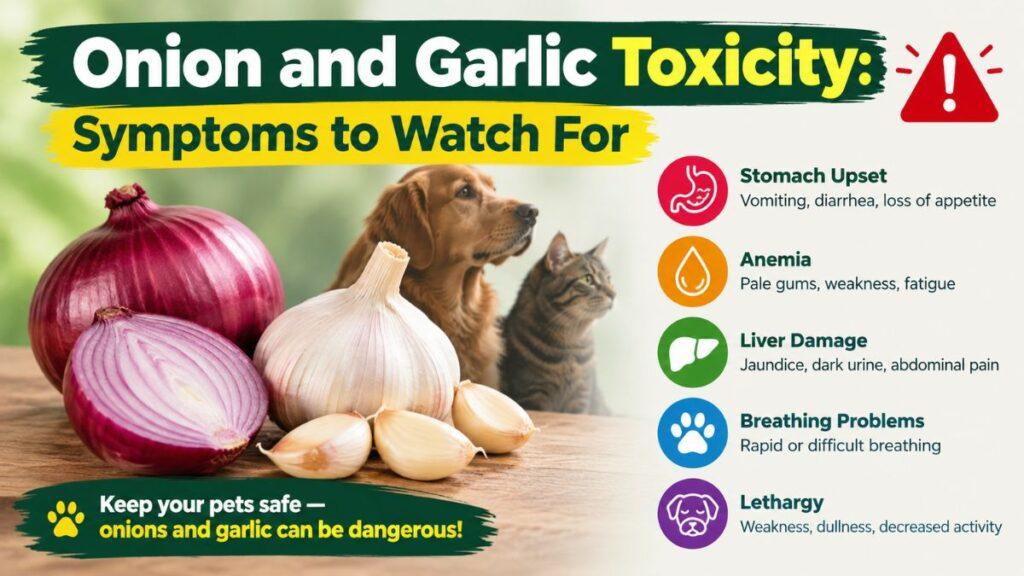
Watch for:
- Pale or yellow-tinted gums
- Weakness or unusual tiredness
- Rapid breathing or panting
- Reduced appetite
- Dark colored urine
- Vomiting or diarrhea
These signs can point to damage to red blood cells, which reduces how well your dog’s blood carries oxygen. If you notice any of these symptoms after your dog eats broth or any food containing onion or garlic, contact your vet right away. Do not wait to see if symptoms improve on their own.
Sodium Poisoning: Signs and Symptoms
Salt poisoning is less talked about but just as important to recognize. It usually happens when a dog eats something very high in sodium, like table scraps, bouillon, or a salty store-bought broth.
Signs of sodium poisoning include:
- Excessive thirst
- Frequent urination
- Vomiting
- Loss of coordination
- Tremors
- In severe cases, seizures
Small dogs are more at risk because it takes less sodium to affect their body weight. If your dog shows any of these signs, especially after drinking a lot of salty broth, call your vet immediately. Always have fresh water available if your dog has eaten anything salty.
How to Make Dog-Safe Chicken Broth at Home
Making broth at home is the safest option because you know exactly what goes into it.
Step 1: Choose your ingredients. Use plain chicken, with or without bones. Add dog-safe vegetables like carrots or celery if you like. Skip onion, garlic, salt, and any seasoning blend.
Step 2: Simmer. Place the chicken in a large pot and cover it with water. Bring it to a boil, then lower the heat and let it simmer. Regular broth needs about 2 to 3 hours. If you want a richer bone broth, simmer for 12 to 24 hours.
Step 3: Strain. Remove all the chicken, bones, and vegetables. This step matters a lot if you used bones, since cooked bones become brittle and can splinter.
Step 4: Cool and skim. Let the broth cool in the fridge. A layer of fat will rise to the top. Skim this off, since too much fat can upset your dog’s stomach or trigger pancreatitis in sensitive dogs.
Step 5: Store. Keep the broth in the fridge for up to five days, or freeze it in ice cube trays for longer storage. Frozen cubes make easy, pre-measured servings.
How Much Chicken Broth Can Dogs Have?
The right amount depends on your dog’s size. Start small and watch how your dog responds before increasing the amount.
| Dog Size | Approx. Weight | Broth Per Serving |
| Toy/Small | Up to 20 lbs | 1 to 2 tablespoons |
| Medium | 21 to 50 lbs | 2 to 4 tablespoons |
| Large | 51 to 90 lbs | 1/4 to 1/2 cup |
| Giant | Over 90 lbs | 1/2 to 3/4 cup |
These amounts work well as a topper poured over regular food. Broth should never replace a full meal or make up a large part of your dog’s daily calories. When introducing broth for the first time, offer half of the amount listed and watch for 24 hours. If your dog tolerates it well, you can work up to the full serving size. If your dog is on a special diet for a medical condition, check with your vet before adding broth.
How Often Can You Give Chicken Broth?
Chicken broth can be part of your dog’s routine, but it should not replace balanced meals. For healthy adult dogs, a few times a week is a safe starting point. Some owners give small amounts daily as a topper, which is fine as long as the broth is low in fat and completely free of salt, onion, and garlic.
If your dog is recovering from an illness or surgery, your vet may recommend broth more often for a short period to help with hydration and appetite. Once your dog is back to normal eating, you can return to a more moderate schedule. Watch your dog’s weight and stool over time, and cut back if you notice loose stools or weight gain.
Chicken Broth for Puppies
Puppies can have small amounts of plain chicken broth, but there are a few extra things to keep in mind. Puppies have small stomachs and specific nutritional needs for healthy growth. Broth should never replace puppy food, since it does not have the calories or nutrients puppies need to develop properly.
A tablespoon or less mixed into regular puppy food is usually enough to add flavor and moisture. Always use unsalted, onion-free broth for puppies. Because puppies are smaller and more sensitive to salt and toxins, mistakes in ingredients are riskier for them than for adult dogs. If you are unsure, ask your vet before adding broth to a puppy’s diet.
Dogs with Kidney, Heart, or Pancreatitis Conditions
Some dogs need extra caution with chicken broth because of existing health conditions.

Dogs with heart disease or kidney disease are often on a low sodium diet. Even homemade broth contains some natural sodium from the chicken itself, so these dogs may need broth in smaller amounts, or none at all, depending on how advanced their condition is.
Dogs with a history of pancreatitis need a low fat diet. Chicken broth, even after skimming, still contains some fat. For these dogs, extra care with fat content is necessary, and any new food should be introduced slowly and in small amounts.
If your dog has any ongoing health condition, talk to your vet before adding chicken broth to their diet. What works for a healthy dog is not always safe for a dog managing a chronic illness.
Using Broth to Help Dogs Take Medication
Many dogs refuse pills, and chicken broth can help. A small amount of broth poured over a pill, or a pill hidden in a broth-soaked treat, can make medication time much easier. The strong smell and taste of broth often masks the taste of medication that dogs would normally spit out.
Make sure the broth used for this purpose is plain and unsalted, just like any other broth you give your dog. This trick works especially well for dogs who need daily medication for chronic conditions.
When to Stop and Call the Vet
While chicken broth is safe for most dogs, watch for signs that something is wrong.
Stop giving broth and call your vet if your dog shows:
- Vomiting or diarrhea after having broth
- Signs of stomach pain, like a hunched posture or reluctance to move
- Sudden loss of appetite
- Lethargy that lasts more than a few hours
- Any of the onion, garlic, or sodium poisoning symptoms mentioned earlier in this article
These reactions could point to an ingredient sensitivity, too much fat, or a hidden toxic ingredient in the broth. It is always better to stop and check with a professional than to wait and see if your dog gets better on their own.
Store-Bought vs. Homemade Broth
| Type | Pros | Cons |
| Homemade | Full control over ingredients, no hidden salt or onion, low cost | Takes time to prepare and store |
| Pet-Specific Store-Bought | Convenient, formulated for dogs, usually free of onion and garlic | Can cost more than homemade |
| Human Store-Bought | Widely available, quick to buy | Often high in sodium, may contain onion or garlic |
| Bouillon Cubes | Not recommended for dogs | Extremely high in salt, unsafe for regular use |
If you want convenience without the risks, look for broths labeled specifically for pets. These are usually free of onion, garlic, and excess salt. If you choose a human-grade broth, always check the label for no salt added and confirm there is no onion or garlic anywhere in the ingredient list.
Final Thoughts
Chicken broth can be a simple, healthy addition to your dog’s diet when made the right way. Stick to plain, unsalted broth without onion, garlic, or seasoning, whether you make it at home or buy it from the store. Start with small amounts, watch how your dog responds, and adjust based on their size, age, and health.
When used correctly, chicken broth can support hydration, appetite, and joint health. When used carelessly, it can introduce real risks like onion toxicity or sodium poisoning. A little caution goes a long way toward keeping your dog safe and happy at mealtime.
Frequently Asked Questions
Can dogs have chicken broth every day?
Yes, as long as it is plain, unsalted, and free of onion and garlic. Daily use in small amounts as a topper is generally safe for healthy dogs.
Can puppies have chicken broth?
Yes, in small amounts. It should never replace puppy food and should always be unsalted and onion-free.
Is bone broth better than regular chicken broth for dogs?
Bone broth is simmered longer and contains more collagen, which can support joint health. Both types are safe as long as they follow the same safety rules.
Can chicken broth help a dog with an upset stomach?
Yes. Plain chicken broth is gentle and can help with hydration during mild digestive upset. If symptoms last more than a day, contact your vet.
What if my dog accidentally drank broth with onion in it?
Watch closely for symptoms like pale gums, weakness, or dark urine over the next 24 to 48 hours. Contact your vet right away, even if your dog seems fine at first.
2 thoughts on “Can Dogs Have Chicken Broth? What Every Owner Should Know”