

No, white chocolate is not a safe treat for dogs, even though it is far less dangerous than dark or milk chocolate. White chocolate has almost no theobromine, the chemical that makes regular chocolate toxic to dogs. But it is loaded with fat and sugar, and that alone can make a dog sick.
If your dog just ate white chocolate, you are probably wondering how worried you should be. The short answer depends on how much they ate, their size, and what else was mixed into it. This guide walks through the real risk, a weight based amount chart, the warning signs to watch for, and exactly what to do next.
Is White Chocolate Toxic to Dogs?
White chocolate is made mostly from cocoa butter, milk solids, and sugar. Unlike dark or milk chocolate, it does not contain cocoa solids, and cocoa solids are where theobromine comes from. This is the main reason white chocolate is treated differently from other chocolate types.
Theobromine is a stimulant that dogs cannot break down quickly. In large enough amounts it affects the heart and nervous system, causing symptoms like a racing heartbeat, tremors, and in severe cases seizures. Since white chocolate contains only trace amounts of theobromine, roughly 0.25 milligrams per ounce, it almost never causes this type of poisoning on its own.
That does not mean white chocolate gets a free pass. The fat and sugar content is high enough to cause real problems, especially if a dog eats a large amount in one sitting. So while white chocolate is technically the least toxic type of chocolate, it is still not something you should hand your dog as a treat.
White Chocolate vs Milk and Dark Chocolate
The danger level of chocolate comes down almost entirely to how much cocoa solid content it has. The darker the chocolate, the more theobromine it contains, and the more dangerous it is.
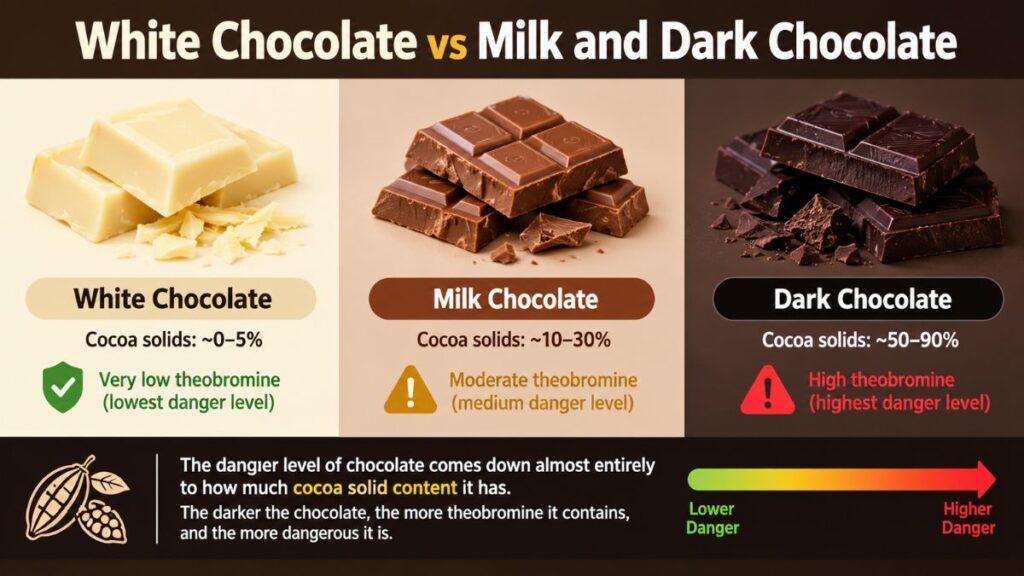
| Chocolate Type | Theobromine Level | Risk to Dogs |
| White chocolate | Trace amounts, about 0.25 mg per ounce | Low toxicity risk, but high fat and sugar |
| Milk chocolate | Moderate, about 44 to 60 mg per ounce | Can be harmful in larger amounts |
| Dark chocolate | High, about 130 to 450 mg per ounce | Dangerous even in small amounts |
| Baking chocolate or cocoa powder | Very high, up to 800 mg per ounce | Extremely dangerous, even a small taste is risky |
This table is a useful context if you are not sure what type of chocolate your dog actually ate. If there is any chance it was dark chocolate, baking chocolate, or cocoa powder, treat the situation as more urgent and call your vet right away.
How Much White Chocolate Can Hurt a Dog?
Because white chocolate barely contains theobromine, dogs would need to eat an extremely large amount, often described as pounds of it, before reaching a toxic theobromine dose. In practical terms, that means most dogs will get sick from the fat and sugar in white chocolate long before theobromine becomes a concern.
The table below gives a general idea of how much white chocolate might cause stomach upset by dog size. These are rough guidelines, not exact medical thresholds, since every dog’s tolerance is different.
| Dog Weight | Amount Likely to Cause Mild Stomach Upset | Amount That Raises Pancreatitis Concern |
| Under 15 lbs (small breeds) | A few small pieces or one small bar | A full bar or more in one sitting |
| 15 to 40 lbs (medium breeds) | Several pieces or half a bar | A full bar or a large handful of chips |
| Over 40 lbs (large breeds) | A full small bar | Multiple bars or a large quantity of baked goods made with white chocolate |
The key thing to understand is that the real risk driver here is not theobromine, it is fat and sugar volume relative to your dog’s size. A small dog that eats a large amount of white chocolate frosting or chips is at a real risk of pancreatitis, regardless of how little theobromine is involved.
Why White Chocolate Still Isn’t Safe for Dogs
Since theobromine is barely a factor, the actual risks from white chocolate come from three places: fat, sugar, and dairy.
Pancreatitis. This is the biggest concern. White chocolate is high in fat, and a sudden intake of fatty food can inflame a dog’s pancreas. Pancreatitis is painful, often requires veterinary treatment, and can become serious if left untreated. Some breeds are more prone to it than others, including Miniature Schnauzers, Yorkshire Terriers, and other small breeds with a genetic tendency toward high fat sensitivity. If you own one of these breeds, be extra cautious.
Digestive upset. Even a small amount of white chocolate can cause vomiting, diarrhea, or a mild upset stomach in dogs that are not used to rich, fatty foods.
Weight gain and dental issues. White chocolate is essentially sugar and fat with very little nutritional value. Repeated or frequent exposure can contribute to obesity, joint stress, and dental problems over time.
Dairy sensitivity. Many dogs are lactose intolerant to some degree. White chocolate’s milk solid content can trigger gas, bloating, or loose stools in sensitive dogs, separate from any chocolate-related concern.
None of this means one small bite will send your dog to the emergency room. But repeated exposure, or a large single dose, adds up to real health risk.
Symptoms to Watch For After Your Dog Eats White Chocolate
Most symptoms from white chocolate ingestion are digestive rather than neurological, since true theobromine poisoning is unlikely at typical exposure levels. Still, you should monitor your dog closely for the following signs over the next 24 hours.
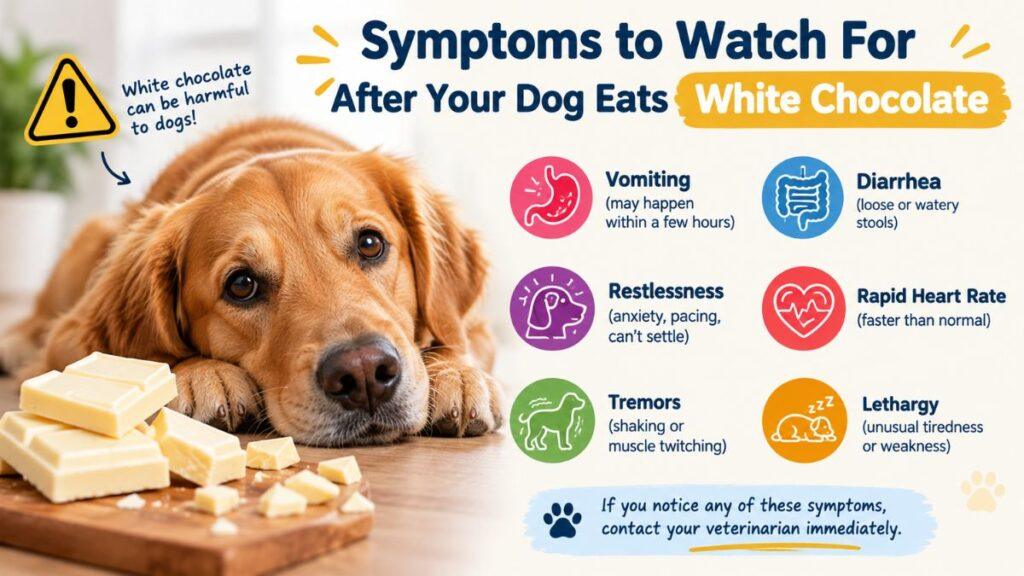
Common symptoms include vomiting, diarrhea, reduced appetite, mild lethargy, and stomach discomfort such as a hunched posture or restlessness. These usually show up within a few hours but can take longer to appear depending on how much was eaten and on an empty or full stomach.
If your dog ate a very large amount, or if the white chocolate was mixed with other ingredients, watch for more serious signs: repeated vomiting, abdominal pain, a swollen or tender belly, fever, or noticeable weakness. These can point to pancreatitis and need same-day veterinary attention.
One detail worth knowing: theobromine has a long half-life in a dog’s body, roughly 17 hours. This means that even with chocolate types that do carry meaningful theobromine, a dog can look completely normal for hours before symptoms build up. While this matters less for white chocolate specifically because the theobromine dose is so low, it is a good reason to keep monitoring your dog rather than assuming they are in the clear just because a few hours have passed without any reaction.
Watch Out for What Else Is in the White Chocolate
This is one of the most overlooked parts of white chocolate safety. It is rarely the white chocolate itself that causes a true emergency. It is what gets mixed into it.
Raisins. White chocolate covered raisins or trail mix are common, and raisins are highly toxic to dogs even in small quantities. They can cause sudden kidney failure. If your dog ate white chocolate that contained raisins, treat this as more urgent than the chocolate itself.
Macadamia nuts. White chocolate macadamia nut cookies are a classic baked good, and macadamia nuts are toxic to dogs on their own, causing weakness, tremors, and elevated body temperature. Combined with the fat content of both the nuts and the chocolate, this combination deserves a call to your vet.
Xylitol. Sugar free white chocolate, and many baked goods made with sugar substitutes, sometimes contain xylitol. Xylitol is far more dangerous to dogs than chocolate itself. It causes a rapid and severe drop in blood sugar and can lead to liver failure. Even a small amount can be life threatening, especially for small dogs. Always check the ingredient label if your dog got into a sugar free product.
Before you do anything else, check what was actually in the item your dog ate. A plain white chocolate bar is a very different situation than a white chocolate trail mix with raisins or a sugar free white chocolate treat with xylitol.
Common White Chocolate Products to Be Aware Of
White chocolate shows up in more places than a plain candy bar, and each form carries a slightly different level of risk depending on what else is mixed in.
White chocolate chips are common in baking and are easy for a dog to grab off a counter or out of a dropped bag. They are usually plain, so the main concern is fat and sugar volume if a dog eats a large handful.
White chocolate covered pretzels or strawberries add salt or fruit sugar on top of the fat and sugar already in the chocolate coating, which can make stomach upset more likely.
White chocolate frosting or cake often contains extra butter and sugar beyond the chocolate itself, so a dog that gets into a slice of cake is taking in more fat than the chocolate alone would suggest.
White chocolate macadamia nut cookies are one of the riskier combinations, since macadamia nuts are toxic to dogs independent of the chocolate.
Sugar free white chocolate is the one to treat with real caution, since sugar free products are often sweetened with xylitol, which is far more dangerous to dogs than chocolate itself.
If you are not sure what kind of white chocolate product your dog ate, check the packaging or the recipe before deciding how serious the situation is.
What to Do If Your Dog Eats White Chocolate
Follow these steps if your dog has eaten white chocolate or a product containing it.
Check the label or packaging. Look for xylitol, raisins, macadamia nuts, or any other toxic ingredient. This changes how urgent the situation is.
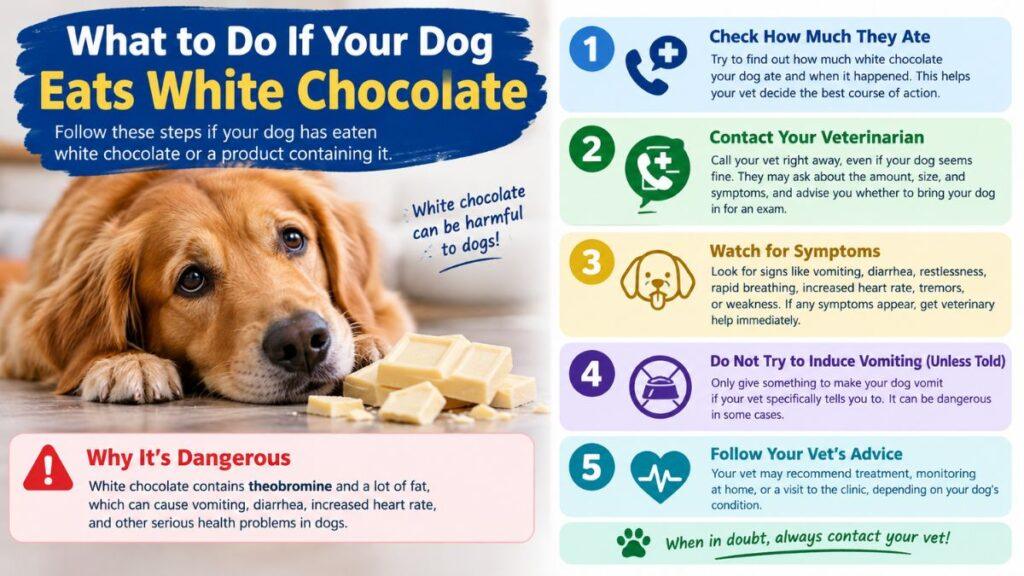
Estimate the amount eaten. Try to figure out roughly how much your dog consumed and compare it to your dog’s weight using the guidelines above.
Note the time. Write down when the ingestion happened so you and your vet can track how much time has passed if symptoms develop.
Watch for symptoms over the next 24 hours. Vomiting, diarrhea, lethargy, or abdominal discomfort are the main things to look for.
Call your vet if you’re unsure or if your dog ate a large amount. They can advise you based on your dog’s size, health history, and what exactly was eaten. If it is after hours, a pet poison helpline can help.
Do not induce vomiting unless a vet tells you to. This step can cause more harm than good if done incorrectly or at the wrong time.
Go to an emergency vet immediately if your dog shows severe symptoms such as repeated vomiting, a swollen abdomen, extreme lethargy, or collapse.
In most cases involving a small amount of plain white chocolate, monitoring at home with a call to your vet for guidance is enough. Larger amounts, sugar free products, or mixed ingredients call for a more urgent response.
Final Thoughts
White chocolate sits at the bottom of the danger scale when it comes to chocolate toxicity in dogs, but that does not make it a safe snack. The fat and sugar content can lead to an upset stomach or, in more serious cases, pancreatitis, and any mixed ingredients like raisins or xylitol can turn a minor incident into a real emergency.
If your dog gets into white chocolate, stay calm, check what was actually in it, watch them closely for the next day, and call your vet if anything seems off. For treat time, stick to dog safe options like small pieces of plain cooked chicken, carrot sticks, or treats made specifically for dogs. Your dog will not miss the white chocolate, and you will avoid an unnecessary trip to the vet.
Frequently Asked Questions
Is white chocolate poisonous to dogs?
White chocolate contains only trace amounts of theobromine, so it is far less toxic than dark or milk chocolate. It is not considered poisonous in typical amounts, but its high fat and sugar content can still make a dog sick, especially in large quantities.
How much white chocolate is safe for a dog to eat?
There is no truly “safe” amount, but a small bite is unlikely to cause serious harm in most healthy adult dogs. Larger amounts relative to your dog’s size raise the risk of digestive upset and pancreatitis, so it is best to avoid giving white chocolate as a treat altogether.
What are the symptoms of white chocolate poisoning in dogs?
The most common symptoms are vomiting, diarrhea, reduced appetite, and mild lethargy. Severe symptoms like abdominal pain, fever, or repeated vomiting can point to pancreatitis and need prompt veterinary care.
Is white chocolate safer than milk chocolate for dogs?
Yes, in terms of theobromine content, white chocolate is safer than milk or dark chocolate. However, it can be just as risky or riskier in terms of fat and sugar related problems like pancreatitis, so “safer” does not mean “safe.”
Should I take my dog to the vet after eating white chocolate?
If your dog ate a small amount of plain white chocolate and shows no symptoms, monitoring at home is usually fine, though calling your vet for guidance is still a good idea. If your dog ate a large amount, shows symptoms, or ate a product with xylitol, raisins, or nuts, contact your vet or an emergency clinic right away.
Can puppies eat white chocolate?
Puppies are more vulnerable to both the fat content and any theobromine present because of their smaller size and developing digestive systems. Even a small amount of white chocolate is more likely to cause symptoms in a puppy than in an adult dog, so it is best avoided entirely.