
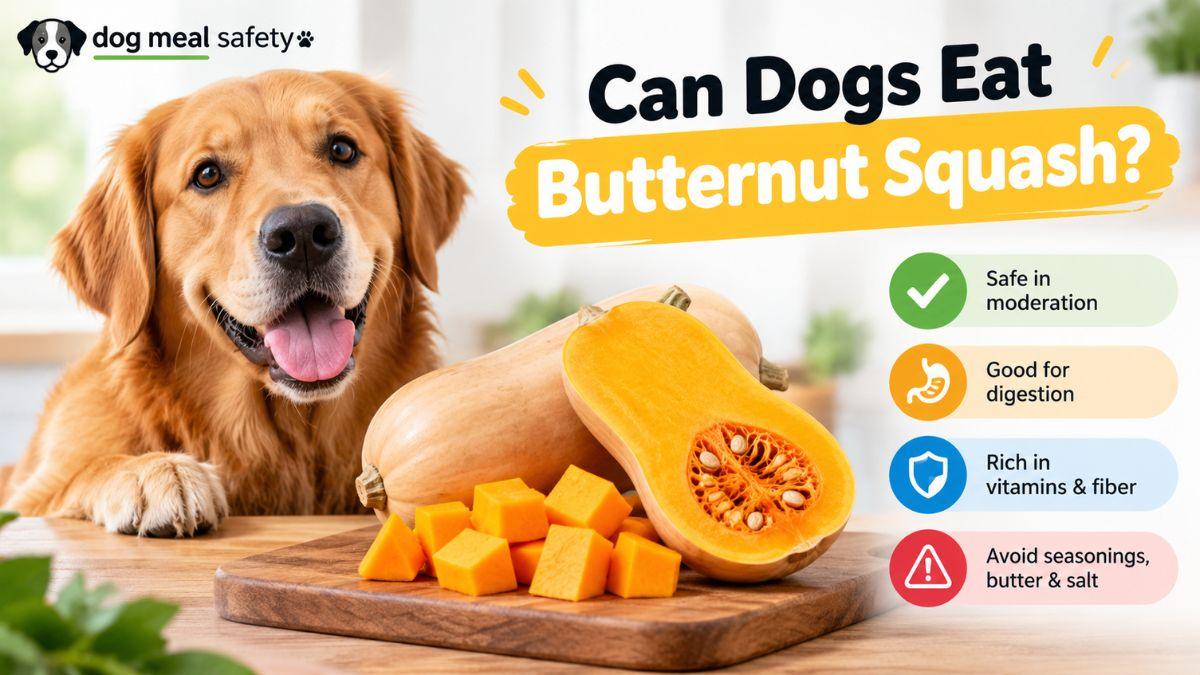
Yes, dogs can eat butternut squash. Cooked, unseasoned, and served in modest portions, it is safe for most healthy dogs and offers real fiber, vitamin A, and potassium. Raw squash, seasoned squash, and large amounts are where the actual risks sit, not the vegetable itself.
The short version: cook it, keep it plain, remove the skin and seeds, and treat it as an occasional addition rather than a meal replacement. The rest of this guide covers exact portion sizes by dog weight, how to prepare it safely, and one rare safety issue that almost nothing else written on this topic mentions.
What is butternut squash
Butternut squash is a winter squash from the same plant family as pumpkin, zucchini, and cucumber. It has a tan outer skin, orange flesh, and a mild, slightly sweet taste once cooked. It is botanically a fruit, though it is almost always prepared and eaten like a vegetable.
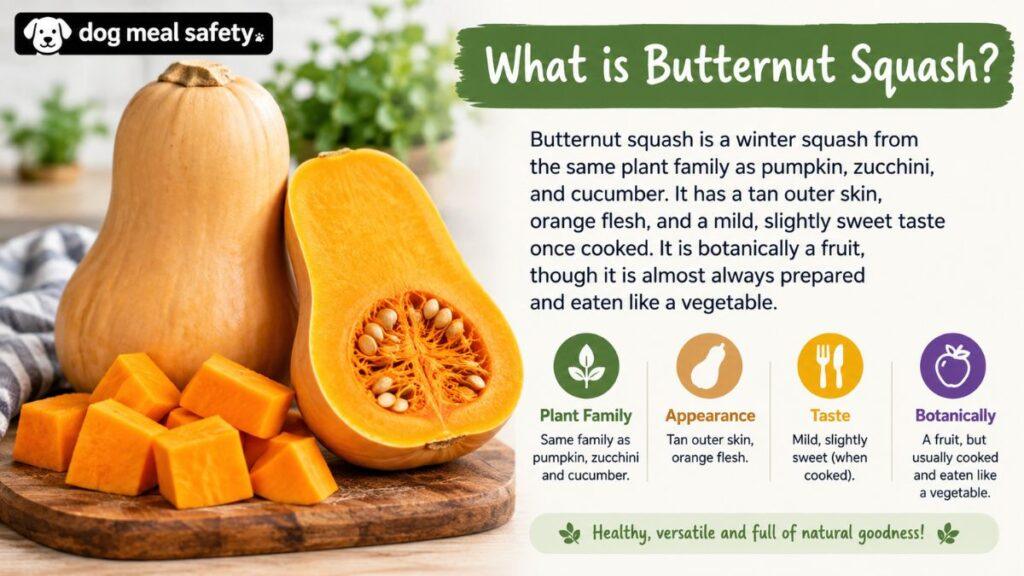
Its season runs from early autumn through winter, which is when it shows up most often on supermarket shelves and in dog treat recipes. The flesh is what matters for feeding purposes. The skin, stem, and seeds are the parts to set aside.
Health benefits of butternut squash for dogs
Butternut squash gives dogs real nutritional value, not just bulk. It is high in fiber, rich in beta carotene which becomes vitamin A, and supplies vitamin C, vitamin B6, potassium, and magnesium. It is also low in calories and mostly water, which makes it useful for weight management.
The fiber supports regular digestion and can help firm up occasional loose stools. The vitamin A supports eyesight, skin, and immune function, while the antioxidants help offset everyday cellular wear and tear. A spoonful mixed into kibble adds volume and nutrients without adding much to the day’s calorie count, and the natural sweetness tends to appeal to fussy eaters. None of this makes squash a replacement for a complete and balanced dog food, but as a supplement or treat, it earns its place.
Butternut squash nutrition facts
The nutrition numbers explain why so many owners reach for this vegetable as a treat. A 100 gram serving has about 40 to 45 calories, 2 grams of fiber, and roughly 320 to 490 milligrams of potassium, along with meaningful vitamin A and vitamin C, and almost no fat.
| Nutrient | Amount per 100g |
| Calories | About 40 to 45 kcal |
| Protein | About 1 g |
| Fat | About 0.1 to 0.2 g |
| Carbohydrates | About 10.5 to 12 g |
| Fiber | About 2 g |
| Sugar | About 2 to 3 g |
| Potassium | About 320 to 490 mg |
| Vitamin C | About 8 to 21 mg |
| Vitamin A | High, from beta carotene |
Figures are based on USDA FoodData Central. For context, a medium dog eating a tablespoon or two of squash a day takes in only a handful of calories, so the real benefit comes from the vitamins and fiber, not the calorie count.
Risks and side effects to know
Butternut squash carries some real risks. Raw squash is hard to chew and can cause choking or blockages. Overfeeding it can trigger loose stools or gas. Added salt, butter, onion, or garlic are unsafe for dogs, and none of these risks come from the plain, cooked vegetable itself.
Introduce it gradually and watch how your dog responds over the first day or two. Seasoned squash is a separate problem from unseasoned squash, since onion and garlic carry their own toxicity risk that has nothing to do with the squash. One claim worth correcting: some articles link squash to pancreatitis because of its carbohydrate content. That is not how pancreatitis works. The condition in dogs is most strongly associated with high dietary fat, not carbohydrates, and plain butternut squash is very low in fat. The real pancreatitis risk comes from butter, oil, or fatty drippings added to it, not the squash on its own.
The rare risk of toxic squash syndrome
In rare cases, squash, including butternut squash, can develop high levels of a bitter compound called cucurbitacin, which causes vomiting, diarrhea, and stomach pain in both people and dogs. Cooking does not destroy it. The rule is simple: never feed squash that tastes or smells unusually bitter.
Poison control centers call the resulting illness toxic squash syndrome, and it has been documented in people who ate unusually bitter squash, zucchini, or pumpkin, occasionally severe enough to need medical fluids and monitoring. Store-bought butternut squash from a reliable grocer is very unlikely to be affected, since commercial varieties are bred to keep cucurbitacin levels low. The risk rises with homegrown squash, squash grown near ornamental gourds it could have cross-pollinated with, and squash that has been stored a long time. Almost nothing else written about butternut squash for dogs mentions this, and it is worth knowing before you assume a bitter batch is just an off flavor.
How to prepare butternut squash for your dog
Peel the squash, remove the seeds and pulp, then cook the flesh by steaming, boiling, or roasting until soft. Never fry it, and never add salt, butter, oil, sugar, or seasoning of any kind, since onion and garlic in particular are genuinely toxic to dogs on their own.
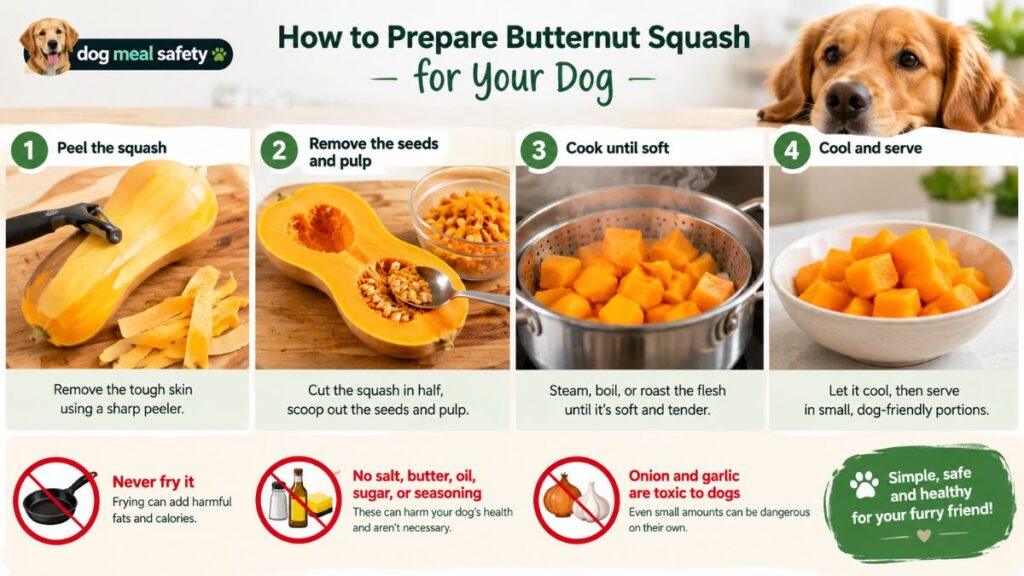
The skin is tough and difficult to digest, and while the seeds are not toxic, they are hard, easy to choke on, and simple enough to remove that there is little reason to keep them. Cut the flesh into cubes before cooking so it softens evenly. Frozen butternut squash is a reasonable shortcut and keeps most of the nutritional value, as long as it has no added seasoning. Canned puree works too, but read the label the way you would with canned pumpkin. Plain puree is fine, but squash pie filling is not, since it typically contains added sugar and spices. Plain butternut squash baby food pouches, the kind sold for human infants, are a convenient option as long as the ingredient list shows only squash and water. Let cooked squash cool fully before serving.
How much butternut squash can a dog eat
Treats like squash should stay under about 10 percent of a dog’s daily calories. In practice that is roughly a teaspoon or two for toy breeds, a couple of tablespoons for small and medium dogs, and up to half a cup for large and giant breeds.
| Dog size | Approximate daily amount |
| Toy, up to 10 lb | 1 to 2 teaspoons |
| Small, 10 to 25 lb | 1 to 2 tablespoons |
| Medium, 25 to 50 lb | 2 to 4 tablespoons |
| Large, 50 to 90 lb | 4 tablespoons to a third of a cup |
| Giant, over 90 lb | A third of a cup to half a cup |
Start on the lower end, especially the first few times you offer it, and adjust based on how your dog’s digestion handles it. Two or three servings a week is a reasonable frequency for most healthy adult dogs, rather than a daily addition to every meal. A vet can give a more precise number if your dog has a specific health condition. For related feeding questions, see our guide to [what dogs can and cannot eat](NEED URL – link to your dog food safety hub page).
Butternut squash vs pumpkin vs sweet potato vs acorn squash
Butternut squash, pumpkin, sweet potato, and acorn squash are all safe, nutritious choices for dogs, but they are not identical. Pumpkin is lower in potassium and gentle on the stomach. Sweet potato has more calories and sugar. Butternut and acorn squash fall in between.
| Vegetable | Calories per 100g, cooked | Fiber | Potassium | Notable point |
| Butternut squash | About 40 | Moderate | Moderate to high | Well rounded nutrient profile |
| Pumpkin, canned plain | About 35 | High | Lower | Common choice for firming loose stools, see our [can dogs eat pumpkin guide](NEED URL – link to your pumpkin article) |
| Sweet potato | About 90 | Moderate | High | Higher in calories and natural sugar, see our [can dogs eat sweet potato guide](NEED URL – link to your sweet potato article) |
| Acorn squash | About 55 | Moderate to high | Moderate | Slightly more magnesium and B vitamins |
Pumpkin’s comparatively lower potassium is one reason it shows up more often in recipes for dogs with kidney disease, where potassium intake needs watching. Sweet potato’s higher calorie and sugar content matters for diabetic or overweight dogs. None of these differences make butternut squash a poor choice. The right vegetable can depend on your dog’s individual health picture, which is worth discussing with a vet if your dog has an ongoing condition.
Butternut squash for puppies, seniors, and dogs with health conditions
Puppies can have small, cooked, mashed portions once weaned. Seniors generally tolerate it well. Dogs with diabetes or kidney disease need vet guidance and smaller amounts, since squash carries natural sugar and a fair amount of potassium. Dogs with a pancreatitis history can usually have it plain.
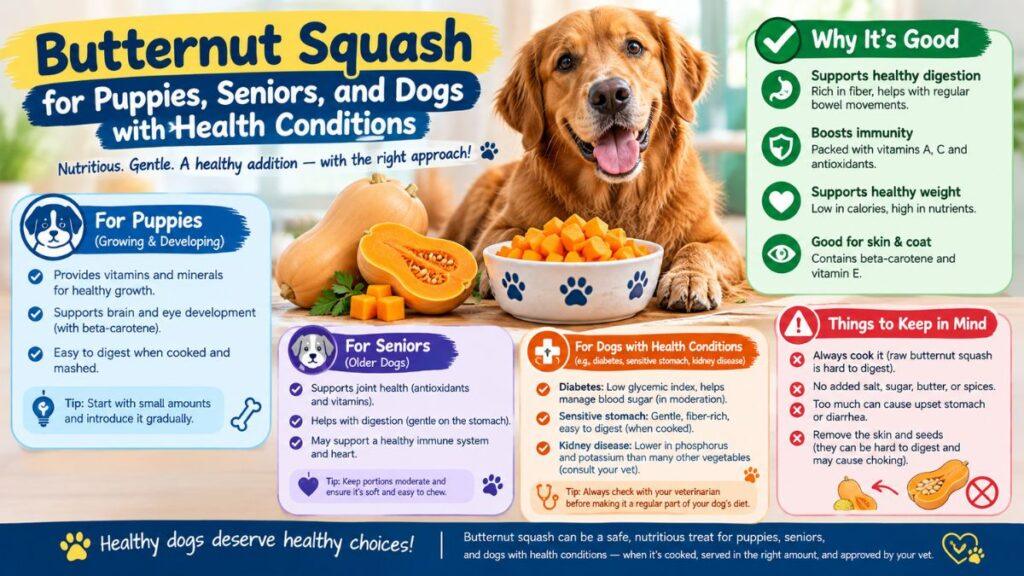
Puppies have smaller mouths and airways, which makes choking a bigger concern than it is for adult dogs, so mash portions well. Senior dogs often benefit from the fiber, particularly if age has slowed their digestion. For diabetic dogs, work with your vet to fit squash into the overall daily carbohydrate allowance rather than adding it freely. For dogs with kidney disease, the concern is the moderate to fairly high potassium content, and pumpkin may be the better fit if potassium needs to be watched closely. For dogs with a pancreatitis history, the concern is fat rather than the squash itself, and plain cooked squash is low enough in fat to generally be considered safe, as long as no butter or oil is added. Dogs on a weight loss plan often do particularly well with it, since it is filling, low in fat, and low in calories relative to its volume.
A simple recipe: roasted butternut squash dog bites
For a simple, dog-safe recipe: peel and cube butternut squash, toss lightly in plain olive oil with no seasoning, and roast at 200°C or 400°F for 20 to 25 minutes until soft. Cool completely before serving, and store extra portions in the fridge or freezer for later treats.
Cut the cubes to a size appropriate for your dog, smaller for toy breeds, larger for bigger dogs, so they double as bite-sized training treats. Mash leftovers into your dog’s regular food if you prefer not to serve them as standalone pieces. Frozen in an ice tray, portioned cubes keep for up to three months in the freezer, or about four days in the fridge.
Frequently asked questions: can dogs eat butternut squash
Quick answers to the most common related questions, covering puppies, raw squash, skin and seeds, and dogs with diabetes or kidney disease.
Can puppies eat butternut squash?
Yes, once weaned onto solid food, in small, cooked, well-mashed portions.
Can dogs eat raw butternut squash?
A small bite will not poison them, but raw squash is hard to digest and a choking risk, so cooked is safer.
Can dogs eat butternut squash skin?
No, the tough skin is difficult to digest and should be removed before serving.
Can dogs eat butternut squash seeds?
They are not toxic, but they are a choking hazard and hard to digest, so it is safest to remove them.
How often can dogs eat butternut squash?
Two to three times a week, in the portions listed above, suits most healthy adult dogs.
Can dogs eat butternut squash soup?
Only a plain homemade version with no onion, garlic, cream, salt, or stock cubes.
Does butternut squash help dog diarrhea?
The fiber can help firm up occasional loose stools, but diarrhea lasting more than a day or two needs a vet visit.
Can dogs with diabetes eat butternut squash?
Only in small, vet-approved amounts, since it still counts toward their daily carbohydrate intake.
Sources and further reading
This guide draws on the ASPCA’s Animal Poison Control plant toxicity listing for butternut squash, the American Kennel Club’s veterinary guidance on squash for dogs, USDA FoodData Central for the nutrition figures, and published poison control research on cucurbitacin and toxic squash syndrome. It is written and fact-checked by the [Your Site Name] editorial team using these public veterinary and food-safety sources. It has not been reviewed by a veterinarian, and it is not a substitute for one. If your dog shows signs of illness, or if your dog has an ongoing health condition, please talk to your vet before changing their diet.
The bottom line: can dogs eat butternut squash
The bottom line: can dogs eat butternut squash? Yes, when it is cooked, unseasoned, and portioned to your dog’s size. It offers real fiber, vitamins, and antioxidants for very few calories, and works well for weight management, occasional digestive upset, and as a simple, healthy treat.
Cook it, skip the skin and seeds, keep portions in line with your dog’s size, and check with your vet if your dog has diabetes, kidney disease, or a history of pancreatitis. Watch for squash that tastes or smells unusually bitter, since that rare case points to toxic squash syndrome, and no amount of cooking will make it safe. Handled this way, butternut squash is one of the easier vegetables to add to a dog’s routine, whether as an occasional treat, a topper for regular meals, or part of a plan to help a dog reach a healthier weight.
3 thoughts on “Can dogs eat butternut squash?”