

Yes. Plain fresh or frozen blueberries are safe for most dogs in moderation, and veterinarians generally treat them as one of the better fruit snacks you can offer. They provide antioxidants, fiber, and vitamins, and unlike grapes or cherries they carry no toxins known to harm dogs. The American Kennel Club lists them as a good source of vitamins, minerals, and antioxidants.
“Safe” still comes with conditions. A few rules hold no matter your dog’s size:
- Feed them plain, with no added sugar, syrup, chocolate coating, or artificial sweeteners.
- Wash them first to remove pesticide residue and dirt.
- Keep treats to about 10% of daily calories, blueberries included.
- Watch small dogs and fast eaters. A whole berry can slide down unchewed, so halve or mash them (see the choking section below)..
- Check with your vet first if your dog has diabetes, a prescription diet, or a sensitive stomach.
If your dog has never had blueberries, start with one or two and watch for any digestive reaction before making them a regular treat.
Are Blueberries Good for Dogs?
Blueberries pack real nutrition into a very low calorie package, which is what separates them from most “people food” snacks. They are low in calories and high in antioxidants, fiber, and vitamins, so a few berries add something useful rather than empty calories.
Nutritional Benefits
Here is the nutrient profile for two tablespoons of blueberries, about 18 grams or roughly a dozen berries. Note that this is more than the daily treat portion recommended further down, so read it as a picture of what the fruit contains rather than a serving size:
- Vitamin C: about 1.8 milligrams, which supports immune function and helps ease inflammation. Dogs make their own vitamin C, but a dietary boost still helps during stress or illness.
- Vitamin K: about 3.6 micrograms, a fat-soluble vitamin involved in blood clotting.
- Fiber: supports digestion and regular bowel movements, as long as portions stay small.
- Manganese and other trace minerals: contribute to normal metabolism.
- Water: blueberries are roughly 84% water, so they add a little hydration alongside the nutrients.

Potential Health Benefits
The berries are best known for anthocyanins, the antioxidant compounds behind their deep blue color. Antioxidants neutralize free radicals, the unstable molecules that damage cells in dogs and people alike. That leads to a few benefits worth knowing about:
- Cognitive support in older dogs. Some research suggests antioxidants like those in blueberries may slow brain aging in dogs, according to the AKC, which is why some owners add them to a senior dog’s routine with vet approval.
- Immune support. Vitamin C and antioxidant compounds back up the body’s normal defenses.
- Digestive health. The fiber helps keep things regular when berries are fed in sensible amounts.
- A weight-friendly treat. At roughly one calorie each, blueberries can stand in for a biscuit or a piece of jerky for a dog on a diet, without the fat.
- Hydration on hot days. The high water content makes them refreshing, especially frozen.
None of this replaces a complete, balanced diet. Blueberries are a nutrient-dense bonus, not a foundation, and veterinary nutritionists treat them as an occasional extra rather than a diet staple.
How Many Blueberries Can Dogs Eat?
There is no single official number, but portions scale with body weight, since blueberries supplement meals rather than replace them. As a rough guide, small dogs can have 1 to 3 berries, medium dogs 4 to 6, and large dogs 8 to 10.
| Dog Size | Typical Weight | Blueberries per Serving |
| Small | Under 20 lbs | 1 to 3 berries |
| Medium | 20 to 50 lbs | 4 to 6 berries |
| Large | Over 50 lbs | 8 to 10 berries |
These are starting points, not prescriptions. The right amount depends on your dog’s size, age, activity level, and health, so ask your vet for a tailored number if your dog is overweight, very active, or managing a medical condition.
How Often Can Dogs Eat Blueberries?
Blueberries can be a regular part of the treat rotation, as long as the total stays under the same ceiling as every other snack. Treats of all kinds should make up no more than 10% of daily calories, with the other 90% coming from complete dog food. Within that limit, daily or near-daily servings are fine for most healthy dogs, and two or three times a week is plenty if you would rather space them out.
Larger dogs have more room here simply because their calorie budget is bigger, so the same 10% allows a few more berries. A couple of practical notes:

- Even fed daily, blueberries should stay an occasional extra, not a significant part of the diet.
- If you use them as training rewards, count each berry toward the daily total. Small handouts add up fast over a session.
- Dogs with diabetes, obesity, or a prescription diet should only get blueberries with a vet’s go-ahead, since even natural fruit sugar can complicate those conditions.
Best Ways to Feed Blueberries
Fresh vs Frozen
Both fresh and frozen work, and the choice mostly comes down to season and your dog’s chewing habits. Either way, keep them plain, unsweetened, and washed to remove pesticide residue or dirt.
Frozen berries have a summer advantage: the cold can soothe a teething puppy and cool any dog down on a hot day. The tradeoff is texture. Frozen blueberries turn quite hard, which raises the choking risk covered below, so let them thaw for a few minutes or mash them first for small dogs, puppies, and any dog that gulps its food.
Fun Serving Ideas
Because blueberries are already bite-sized, they work in more than one format:
- Stirred into meals, where a few berries add flavor and nutrients without changing the bulk of the food.
- As training treats, since their size makes them a low-calorie reward (counted toward the daily limit).
- Frozen “pupsicles,” made by blending pureed blueberries with banana and a little plain, unsweetened yogurt, then freezing in a mold.
- Dropped into a puzzle feeder or treat-dispensing toy for a bit of mental work at snack time.
- Blended into a puree or mash, which suits small dogs, puppies, or seniors with dental issues.
Whatever the format, keep the ingredient list to plain blueberries and other dog-safe additions like plain yogurt or banana. Nothing with xylitol, added sugar, or artificial sweeteners.
Risks of Feeding Blueberries
Can Too Many Blueberries Hurt Dogs?
Overfeeding is far more likely to cause a temporary upset stomach than any lasting harm. Too many berries at once can bring on gas, loose stool, or diarrhea, simply because the sudden fiber and sugar are more than the gut is used to processing in one go. These symptoms are usually mild and settle within a day.
Sugar is the other thing to watch. Berries carry a fair amount of natural sugar, and too much fructose can add up to weight gain over time, which matters most for dogs already prone to it. Sticking to the portions above, and introducing blueberries gradually rather than in a big first serving, avoids most of these problems.
Choking Hazards
Whole blueberries can be a choking hazard for tiny breeds and fast eaters, since their smooth, round shape slides down easily without chewing. The risk is highest for:
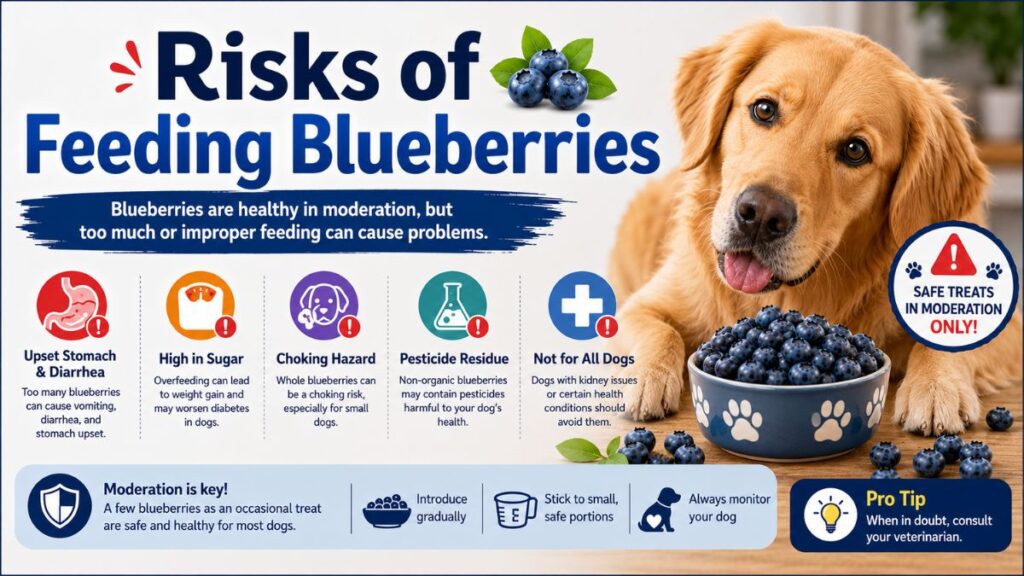
- Small and toy breeds, where a single berry is large relative to the airway.
- Puppies, who are still learning to chew before they swallow.
- Senior dogs, especially those with missing teeth or dental disease.
- Frozen berries, which are harder and less forgiving if swallowed whole.
Cutting berries in half or quarters, or mashing them into food, removes most of this risk and costs almost nothing in nutrition.
Allergic Reactions
True blueberry allergies are uncommon in dogs, but they do happen, so pay attention the first few times. Watch for itching, facial swelling, hives, vomiting, or diarrhea after a first serving. Introducing berries slowly, one or two rather than a full portion, makes a reaction easier to catch early. If you notice hives, facial swelling, or persistent vomiting or diarrhea, stop feeding blueberries and contact your vet before trying again.
Blueberry Products to Avoid
The fruit is healthy. The processed versions usually are not.
Blueberry Muffins
Skip them. Like most baked goods, muffins add unnecessary sugar and fat, and “sugar-free” versions may contain xylitol, which is toxic to dogs. Many recipes also include chocolate chips or nutmeg, both unsafe. A stray crumb probably will not hurt, but a whole muffin, especially one with xylitol or chocolate, is worth a call to your vet.
Blueberry Pie Filling
Avoid it. Pie filling sits in the same category as canned or syrup-packed berries: heavy on added sugar and often thickened with ingredients that do nothing for a dog. Plain fresh or frozen berries are the better choice.
Blueberry Jam
Do not give dogs jam. It carries high levels of sugar that can contribute to dental disease and weight gain, without the fiber or nutrient balance of whole berries.
Sweetened Dried Blueberries
Dried blueberries concentrate more sugar than fresh, and some packaged versions add corn syrup. Unsweetened, preservative-free dried berries are fine in small amounts, but fresh or frozen remain the better everyday option.
Blueberry Yogurt
Most flavored yogurts are off the list, since they often contain added sugar or sweeteners like xylitol. A safer version is plain, unsweetened, xylitol-free yogurt with a few fresh berries mixed in yourself, so you control what goes in.
Can Puppies Eat Blueberries?
Yes. Once a puppy is weaned and eating solid food reliably, usually around 12 weeks, blueberries are fine in moderation. Their mouths are small and their digestion is more delicate than an adult dog’s, so halve or mash the berries and start with one, not a handful. One or two mashed berries a day is plenty for a puppy under 20 pounds, and that portion still counts toward the 10% treat limit.

Most of a puppy’s calories should come from a complete puppy food built for growth, so treat blueberries as an occasional extra, not a building block. Puppies also have more delicate digestion than adult dogs, so check with your vet before adding any new food to the routine.
Blueberries vs Other Fruits for Dogs
Blueberries hold up well against other dog-safe fruits, though each has its own catch.
| Fruit | Safe? | Benefits | Watch out for |
| Blueberries | Yes | Low calorie; antioxidants, fiber, vitamins C and K | Choking risk whole; wash first |
| Strawberries | Yes | Vitamin C, fiber, antioxidants | Remove stems; moderate sugar |
| Bananas | Yes, in moderation | Potassium, fiber | High in sugar; treat only |
| Watermelon | Yes | Hydrating; vitamins A, B6, C | Remove rind and seeds |
| Apples | Yes | Fiber, vitamins A and C | Remove seeds and core (cyanide risk) |
| Raspberries | Yes, in moderation | Low sugar, high fiber, manganese | Trace natural xylitol; keep portions small |
| Grapes | No | None; toxic | Can cause kidney failure; never feed |
For most healthy dogs, blueberries, strawberries, and watermelon are among the safest, lowest-fuss options. Grapes and raisins stay strictly off-limits no matter the amount.
When Dogs Should Not Eat Blueberries
Some conditions call for extra caution before adding blueberries:

- Diabetes: blueberries are lower in sugar than many fruits, but a diabetic dog should only have them under veterinary guidance, since any sugar intake needs monitoring.
- Prescription diets: therapeutic diets work because of what they include and leave out, so do not add outside foods without your vet’s sign-off.
- Kidney disease: blueberries are low in phosphorus, which makes them a relatively safer fruit for dogs with kidney issues, though your vet should still confirm the portion.
- Digestive disorders: dogs with sensitive stomachs or existing GI problems may react even to safe fruits, so introduce very slowly if at all.
- Food allergies: any dog with a history of food sensitivities should start with a tiny amount and be watched closely.
When you are not sure, a quick call to your vet costs far less than treating a problem you could have avoided.
Final Verdict
Blueberries are one of the safer, more nutritious treats you can share with a dog. Keep them plain, wash them first, halve them for small dogs, and match the portion to your dog’s weight while staying inside the 10% treat limit. Skip the muffins, pie filling, jam, sweetened dried berries, and flavored yogurt.
Puppies, seniors, small breeds, and dogs with diabetes, kidney disease, or digestive trouble need extra care, so clear blueberries with your vet first. For every other dog, a few fresh or frozen berries are a low-calorie, antioxidant-rich reward that adds to a balanced diet rather than replacing it.
FAQs
Can dogs eat blueberries every day?
Yes, most dogs can have blueberries daily as long as portions stay small, generally a couple of berries for small dogs and up to about ten for large dogs, and the total fits inside the 10% daily treat limit. Space them out to two or three times a week if you prefer.
Can puppies have blueberries?
Yes, once they are weaned and eating solid food well, usually around 12 weeks or older. Start with one or two mashed or cut berries, watch for any digestive upset, and keep complete puppy food as the main calorie source.
Are frozen blueberries safe for dogs?
Yes, and they make a popular summer treat. Freezing makes them harder, so they carry a higher choking risk for small dogs. Let them thaw for a few minutes or mash them before serving.
Can dogs eat dried blueberries?
Only if they are unsweetened and free of added sugar or preservatives. Many store-bought dried blueberries contain corn syrup or extra sugar, so fresh or frozen berries are the safer everyday pick.
Can diabetic dogs eat blueberries?
Only with your vet’s guidance. Blueberries are lower in sugar than many fruits, but any sugar intake needs careful monitoring in a diabetic dog, so confirm the amount before offering even a few.
What happens if a dog eats too many blueberries?
Usually mild digestive upset: gas, soft stool, or diarrhea rather than anything serious. Symptoms tend to clear within a day. Contact your vet if vomiting or diarrhea persists or gets worse.
Are blueberry muffins safe for dogs?
No. A stolen bite of a plain muffin is usually fine, but a muffin with xylitol or chocolate is an emergency. Call your vet or the Pet Poison Helpline at (855) 764-7661 right away.
5 thoughts on “Can Dogs Have Blueberries? Safe Portions, Risks, and What to Avoid”