
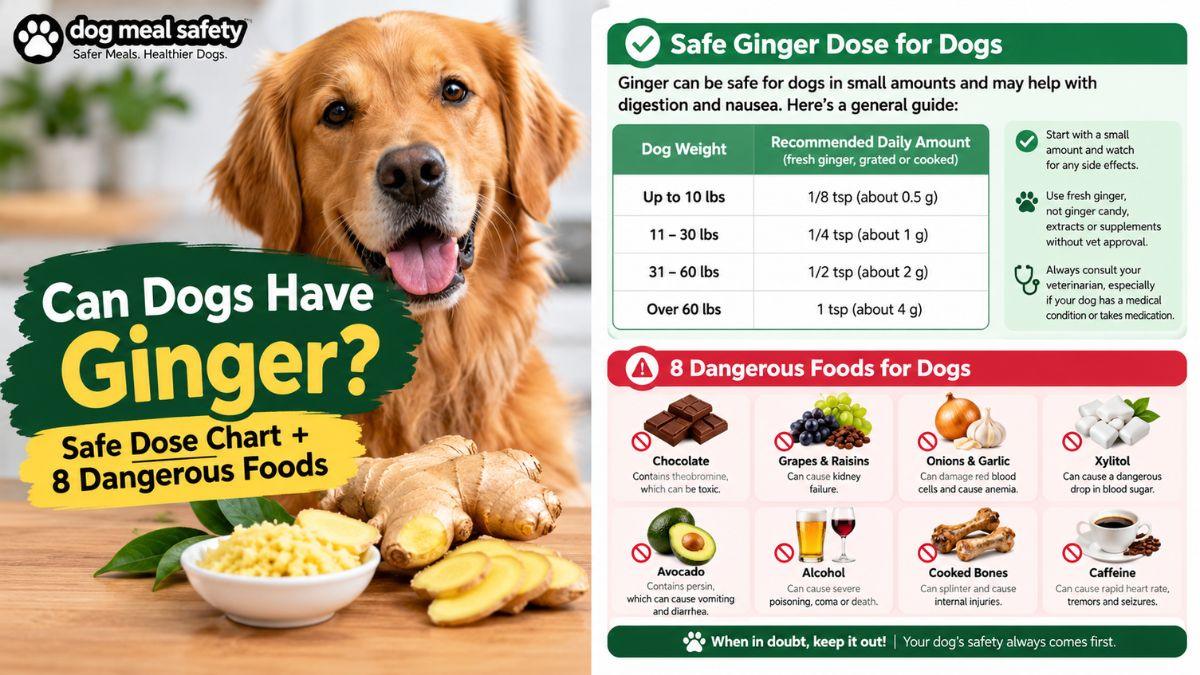
Can dogs have ginger? Yes, in small amounts. Plain fresh ginger, ground ginger, and weak ginger tea with nothing added are safe for most healthy adult dogs, and a little ginger can take the edge off nausea and car sickness. The ginger foods people eat are a different story. Gingerbread, ginger ale, and candied ginger should stay off your dog’s plate. If your dog has a bleeding disorder, gallbladder disease, or diabetes, or takes NSAIDs or blood thinners, check with your vet before you start.
| Question | Short answer |
| Is ginger toxic to dogs? | No. Plain ginger root is not toxic to dogs. |
| Can dogs have ginger root? | Yes, peeled and finely grated, in small amounts |
| Unsafe forms | Gingerbread, ginger snaps, ginger ale, candied or pickled ginger, ginger essential oil |
| How much | A pinch to ¾ teaspoon of ground ginger a day, based on weight |
| Best-supported use | Easing nausea and vomiting |
| Do not give to | Dogs with bleeding disorders or a ginger allergy |
| Ask your vet first | Pregnancy, gallbladder disease, diabetes, NSAIDs, blood thinners, upcoming surgery |
Is ginger good for dogs? What the research shows
Ginger is the root of Zingiber officinale. Its heat comes from gingerols and shogaols, the compounds researchers study for nausea and inflammation. According to VCA Animal Hospitals, pets are given ginger most often for nausea and vomiting, and also for motion sickness, chemotherapy side effects, and osteoarthritis.
Most of that research was done in people and lab rats, not dogs. So when owners ask can dogs have ginger for a specific problem, the answer depends on the problem.

For nausea, there is real dog data. A 1997 study gave ginger to dogs receiving cisplatin, a chemotherapy drug notorious for causing vomiting, and those dogs vomited less.
For inflammation, the evidence comes down to one small trial. In 2021, researchers spayed ten young female dogs and gave five of them ginger capsules, starting before surgery and continuing for ten days. Those five had lower inflammation markers in their blood than the five that got no ginger. Interesting, but ten dogs is not enough to call anything proven.
For motion sickness, stiff joints, gas, and digestion, the human studies look good but the dog studies are thin or missing. Ginger might make a mildly carsick or creaky dog a bit more comfortable, but it won’t stand in for arthritis treatment or for finding out why a dog keeps getting sick.
As food, ginger barely counts. A level teaspoon of the ground spice weighs about 1.8 grams and has roughly 6 calories, per USDA FoodData Central. Any benefit comes from its plant compounds, not vitamins.
How much ginger can a dog have?
Begin with the amount listed for your dog’s weight and keep it there for a few days. Mix it into food, split between two meals if that’s easier.
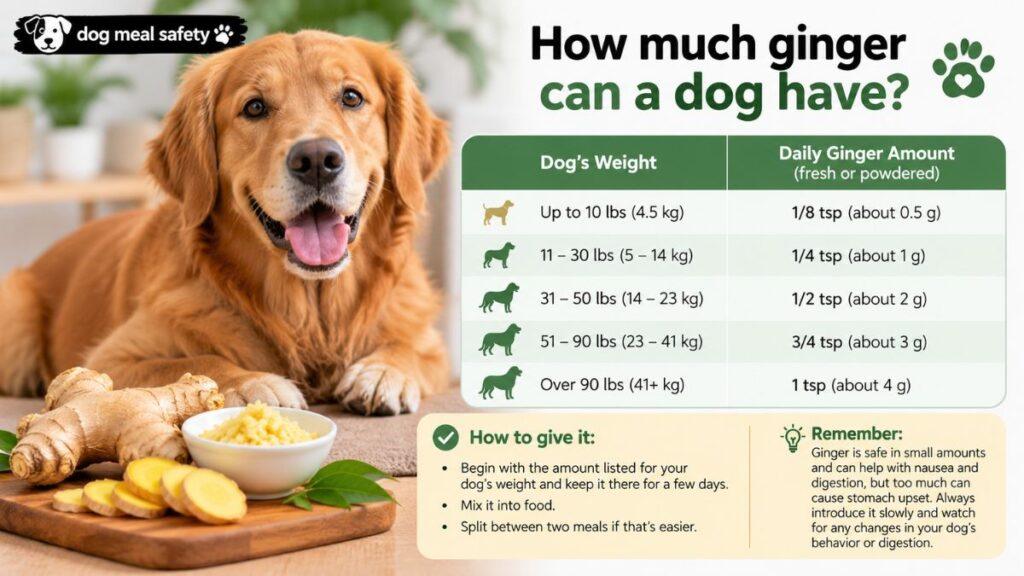
| Dog weight | Ground ginger per day | Approximate weight |
| Under 10 lb (under 4.5 kg) | A small pinch, up to ⅛ teaspoon | Up to 225 mg |
| 10 to 25 lb (4.5 to 11 kg) | ¼ teaspoon | About 450 mg |
| 26 to 55 lb (12 to 25 kg) | ½ teaspoon | About 900 mg |
| Over 55 lb (over 25 kg) | ¾ teaspoon | About 1,350 mg |
We converted each amount to milligrams and checked it against the range used in veterinary herbal medicine, 15 to 200 mg of dried ginger per kilogram of body weight per day. All four rows fall inside it, with large dogs near the bottom, which is where you should start anyway.
Fresh ginger is mostly water. A teaspoon of it grated is much weaker than a teaspoon of dried powder, so using the table’s amounts for fresh root keeps you on the cautious side.
Be careful with human ginger capsules. They’re dosed for adults and some mix in other herbs, so a supplement made for dogs, with dosing by weight on the label, is easier to get right.
Safe ways to give ginger to your dog
Fresh root is the easiest place to start. Scrape the brown skin off with the edge of a spoon, grate the pale flesh finely, and stir it into wet food. Don’t give your dog a chunk. It’s stringy and hot, and most dogs will spit it out or gulp it whole. Grated ginger freezes well in small portions.
Ground ginger works too, if the label says ginger and only ginger. Pumpkin pie spice, chai spice, and gingerbread spice usually include nutmeg, and nutmeg is something dogs should not eat.
Tea is handy for dogs that pick around anything new in their bowl. Steep one teaspoon of freshly grated ginger in a cup of just-boiled water for five minutes, strain it, and let it cool all the way. Pour 1 to 2 teaspoons over a small dog’s food, or up to ¼ cup for a large dog. Keep honey, lemon, and sugar out of it, and skip tea bags that blend ginger with black or green tea. Leftover tea freezes well in an ice cube tray for road trips.
Can dogs have ginger for car sickness?
Yes, though it works better with a bit of planning.
- Try it at home before the trip. A few days ahead, give half the usual amount with a meal and see how it sits.
- On the day you travel, give the ginger with a small, light meal 30 minutes to an hour before leaving. Dogs that ride on a full stomach get sicker.
- Make the ride easier on them with a secured crate or harness facing forward, a window cracked open, and stops on long drives.
- If your dog still throws up, ask your vet about maropitant (Cerenia). It’s a prescription drug approved to prevent motion sickness vomiting in dogs.
Not every dog that drools and pants in the car is queasy. Some are scared. Ginger does nothing for fear, so slow car training or a vet visit will help those dogs more.
Can dogs have ginger foods made for people?
No. Ginger isn’t what makes these foods a bad idea. The sugar, fat, salt, and occasional toxic add-in are.
| Food | Safe for dogs? | Why |
| Gingerbread and ginger snaps | No | High in sugar and fat, often contain nutmeg, and sugar-free versions may contain xylitol |
| Ginger ale | No | Mostly sugar and carbonation with little real ginger; diet versions use artificial sweeteners |
| Candied or crystallized ginger | No | Coated in sugar, and some versions are dipped in chocolate |
| Pickled sushi ginger | No | Made with salt, sugar, and vinegar, sometimes with added dye |
| Ginger chews and candies | No | Sugar-heavy, and sugar-free types may contain xylitol |
| Ginger shots and kombucha | No | Shots often add cayenne or honey; kombucha can contain traces of alcohol and caffeine |
| Ginger essential oil | No | Far too concentrated to give by mouth |
| Takeout ginger stir-fry | No | Usually cooked with garlic, onion, and soy sauce |
| Plain grated ginger in dog-safe food | Yes | Small amounts are fine for most healthy adult dogs |
Don’t mix up kitchen ginger with wild ginger (Asarum), a ground cover people plant in shady gardens. It’s a different plant, and it contains aristolochic acid, which has been linked to kidney damage. Keep dogs from chewing it.
Which dogs should not have ginger
VCA says not to give ginger to pets with a known bleeding disorder or a ginger allergy. Ginger can interfere with blood clotting, which is also why it needs care alongside some medications.
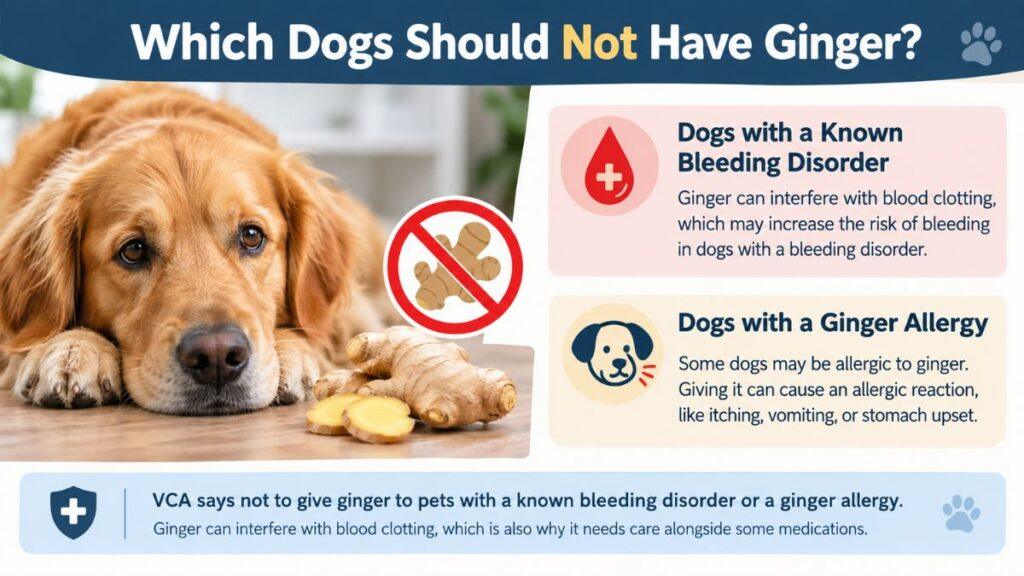
If your dog takes a blood thinner such as warfarin, or an NSAID such as carprofen (Rimadyl), meloxicam (Metacam), or robenacoxib (Onsior), talk to your vet before adding ginger. This comes up a lot, since older arthritic dogs are often on a daily NSAID and are exactly the dogs owners want to try ginger on. If your dog has surgery or a dental cleaning coming up, stop the ginger beforehand and ask your vet how far in advance.
Pregnant or nursing dogs should get ginger only if your vet agrees, since there’s little safety data for them. Dogs with gallbladder disease belong in the same group, because ginger increases the flow of bile.
In people, ginger may lower blood sugar. For a diabetic dog on insulin, a small change in blood sugar can matter a lot, so leave ginger out unless your vet says otherwise.
Nobody has studied ginger in young puppies, and their stomachs upset easily, so wait until your dog is fully grown. Senior dogs with liver or kidney disease may clear it more slowly. And if your dog has vomiting or diarrhea that keeps coming back, get it diagnosed first, since ginger can cover up signs of something that needs real treatment.
Side effects and signs of too much ginger
Small amounts rarely cause trouble. When they do, it’s usually a mild stomach upset: gas, a gurgling belly, lip licking, eating grass, loose stool, or vomiting once. Ginger can irritate skin too, so wash your hands after grating it.
VCA describes ginger as short acting, with effects that usually wear off within about 24 hours. For a mild reaction, stop giving it, offer fresh water, and watch your dog for the rest of the day.
Call your vet if your dog vomits more than twice, has diarrhea past a day, or seems unusually tired or won’t eat. Swelling around the face, hives, or trouble breathing can mean an allergic reaction, and that needs emergency care.
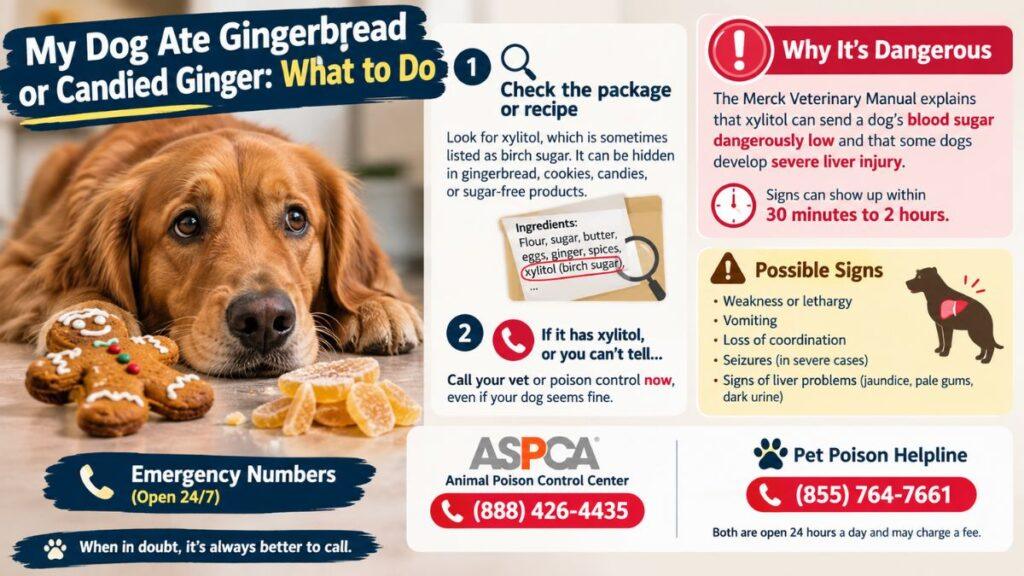
My dog ate gingerbread or candied ginger: what to do
Find the package or the recipe and check for xylitol, which is sometimes listed as birch sugar. The Merck Veterinary Manual explains that xylitol can send a dog’s blood sugar dangerously low and that some dogs develop severe liver injury. Signs can show up within 30 minutes to 2 hours. If it has xylitol, or you can’t tell, call your vet or poison control now, even if your dog seems fine. The ASPCA Animal Poison Control Center is at (888) 426-4435, and Pet Poison Helpline is at (855) 764-7661. Both are open 24 hours a day and may charge a fee.
Then think about nutmeg. A cookie or two usually holds too little to do more than upset a dog’s stomach. Actual poisoning takes a lot more, around a teaspoon of ground nutmeg or a couple of whole seeds. Signs include confusion, a racing heart, tremors, and seizures, and they can last up to 48 hours.
Look for chocolate and raisins as well. Both turn up in some ginger cakes and holiday bakes, and both are toxic to dogs.
Plain ginger root is much less worrying. Whatever your dog ate, don’t try to make them vomit unless a vet or poison control tells you to. Before you call, have your dog’s weight, the product name, how much they ate, and roughly when.
Where the advice on ginger for dogs conflicts
Other articles on this topic often disagree, mostly on four points.
Diabetes is the biggest one. Some sources say never give ginger to a diabetic dog, others say normal amounts are fine. The worry comes from human studies, not diabetic dogs, so a dog on insulin shouldn’t get ginger unless the vet knows about it.
Gallstones come up too. A few older holistic articles say ginger treats them. Lab research shows ginger increases bile secretion, and that’s the reason veterinary sources list gallbladder disease as a caution instead.
Digestion is confusing. Some Traditional Chinese Veterinary Medicine sources call ginger a “warming” herb to avoid in dogs with digestive problems, while others recommend it for digestion. It’s reasonable for the odd upset stomach, but long-term digestive disease needs a vet first.
Surgery is the last. Most sources say to stop ginger before an operation because of bleeding risk, but the 2021 study gave it right before spaying. That was a small, closely monitored study, so go with what your vet tells you.
Frequently asked questions
Can puppies have ginger?
Wait until your dog is fully grown, because no one has studied ginger in young puppies.
Can dogs have ginger tea?
Yes, as long as it’s plain, homemade, fully cooled, and free of sugar, honey, and caffeine.
Can dogs have ginger ale?
No, it’s mostly sugar or artificial sweetener, with very little real ginger in it.
Can dogs have ginger snaps or gingerbread?
No, they’re high in sugar and fat and can contain nutmeg or xylitol.
Can dogs have ginger for an upset stomach?
A little can ease mild nausea, but repeated vomiting, blood in the vomit, or lethargy means a trip to the vet.
Can dogs have ginger if they are diabetic?
Only if your vet approves, since ginger may lower blood sugar and affect how a dog responds to insulin.
Can dogs have ginger if they are pregnant?
Ask your vet first, because there’s very little safety data on pregnant or nursing dogs.
How long does ginger take to work in dogs?
It usually kicks in within a few hours and wears off in about 24.
Is ginger good for dogs with arthritis?
It may help a little alongside treatment, but it won’t replace arthritis medication, and it can interact with NSAIDs.
Can dogs have ginger and turmeric together?
Small amounts of each are usually fine for healthy dogs, but both can affect clotting, so check with your vet if your dog is on medication. See our guide to turmeric for dogs.
Can dogs have ginger every day?
A short daily course is fine for most healthy dogs, but talk to your vet before making it a long-term habit.
Conclusion
So, can dogs have ginger? Most healthy adult dogs can, as long as you keep it plain and keep the amount small. That means a pinch to ¾ teaspoon of ground ginger a day, depending on size, or the same in grated fresh root or cooled homemade tea. Its best support is for nausea, so it’s worth a try before a car trip. What it does for joints, digestion, and inflammation in dogs is still unproven and based mostly on human and lab studies.
The gingerbread, ginger ale, candied ginger, and pickled ginger are for people. Read the label on anything sugar-free, because xylitol is the real danger here. Get your vet’s okay before giving ginger to a dog that’s pregnant, diabetic, on NSAIDs or blood thinners, or heading into surgery, and don’t give it at all to a dog with a bleeding disorder. If your dog gets into a ginger treat, check the ingredients and call for help if you see xylitol, chocolate, or raisins.
Sources
- VCA Animal Hospitals: Ginger
- Sharma SS et al. Antiemetic efficacy of ginger against cisplatin-induced emesis in dogs. J Ethnopharmacol. 1997
- Javdani M et al. Oral administration of ginger rhizome powder and postoperative inflammation indices in ovariohysterectomized dogs. Iranian Journal of Veterinary Surgery. 2021
- Wynn SG, Fougere B. Veterinary Herbal Medicine. Mosby Elsevier; 2007
- USDA FoodData Central: Spices, ginger, ground
- Merck Veterinary Manual: Xylitol Toxicosis in Dogs
- VCA Animal Hospitals: Xylitol Poisoning in Dogs
- Pet Poison Helpline: Nutmeg and Cinnamon Toxicity
- PetMD: Can Dogs Have Nutmeg?