
The short answer
So, can dogs eat persimmons? Yes — but only the ripe flesh, with every seed and pit removed, and only in small amounts as an occasional treat. If the fruit is unripe, or if your dog gets hold of the seeds, pit, stem, or leaves, the answer changes fast: those parts can cause choking, stomach upset, or a dangerous intestinal blockage.
That distinction is really the whole story here. The soft orange flesh itself is not toxic to dogs. Everything risky about this fruit comes from the parts around it and from overdoing the portion.

What are persimmons?
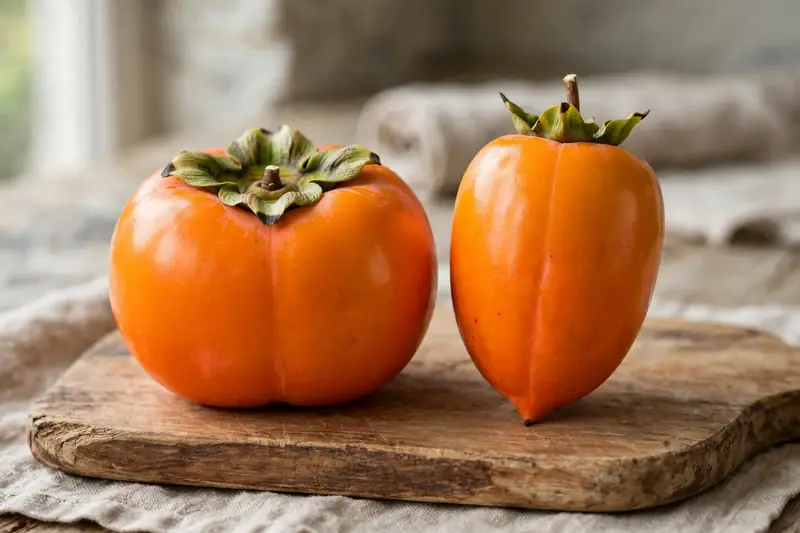
Persimmons are soft, orange, tomato-shaped fruits that taste sweet and honey-like when fully ripe. The two types you will see in shops are Fuyu and Hachiya, and telling them apart matters for your dog:
- Fuyu persimmons are squat and tomato-shaped. They are non-astringent, which means they taste sweet even when still fairly firm, and they are the easier, safer choice for dogs. In some shops, Fuyu-type persimmons are sold under the name Sharon fruit.
- Hachiya persimmons are taller and acorn-shaped. They are astringent and must be eaten only when completely soft and jelly-like. A firm Hachiya is full of tannins, the compounds that make your mouth pucker, and those same tannins are what upset a dog’s stomach.
Not sure which kind you have bought? Wait until the fruit is very soft and sweet before sharing any of it — and when in doubt, stick with Fuyu.
Benefits of persimmons for dogs
Your dog does not actually need persimmons — a complete dog food already covers their nutrition — but as a rare treat, the ripe flesh does offer a few genuine upsides:
- Fiber for digestion. A small amount of fiber supports normal bowel movements. This is a modest benefit, though, because too much fiber from fruit has the opposite effect and loosens stools.
- Antioxidants, including beta-carotene. Persimmons are rich in beta-carotene, the pigment behind their orange colour, which the body converts to vitamin A. VCA Hospitals notes that antioxidants help protect cells from everyday damage, and this is one reason orange fruits and vegetables show up in dog nutrition guidance.
- Vitamins and minerals. Ripe persimmon flesh contains vitamin A, vitamin C, potassium, and manganese. Dogs make their own vitamin C, so this is a bonus rather than a need, but it does no harm in the small amounts involved here.
- Low fat and hydrating. Unlike many human snacks, plain persimmon flesh is low in fat and has a high water content, so a few small pieces are a lighter treat than a biscuit or a piece of cheese.
So keep those benefits in proportion. Persimmons are a nice occasional extra, not a health food your dog is missing out on.
Risks: seeds, pits, tannins, and sugar
Seeds and pits can block the gut
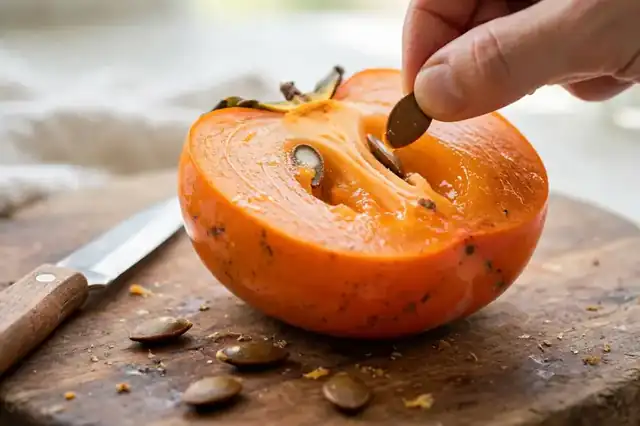
This is the one to take seriously, and it is why the American Kennel Club (AKC) and PetMD both warn dog owners about fruit pits and seeds in general. Persimmon seeds are hard, smooth, and indigestible. A swallowed seed can choke a small dog, or lodge in the stomach or intestines and cause a blockage that may need surgery. The risk is greatest in small breeds, whose digestive tracts are narrower.
There is a second, less well-known danger with persimmons in particular. The tannins in unripe persimmon can react with stomach acid and bind with fiber to form a hard lump, sometimes called a persimmon bezoar. That lump can obstruct the gut and irritate or damage the intestinal lining. This is one more reason unripe fruit should never be offered to a dog.
Unripe fruit upsets the stomach
Unripe or firm Hachiya persimmons are high in tannins. In dogs, tannins can cause vomiting, diarrhea, and belly pain. Only fully ripe, sweet flesh should ever be shared.
Sugar adds up
Persimmons are naturally sweet. A few pieces are fine for a healthy dog, but regular or large servings can contribute to weight gain and loose stools, and they are a poor choice for dogs with diabetes. Dogs with diabetes, obesity, or a sensitive stomach should skip persimmons unless their vet says otherwise.
Allergies are possible but uncommon
Like any new food, this one can disagree with a few dogs, showing up as itching, red skin, or stomach upset. That is why the first taste should always be tiny, with a watchful day afterwards.
How to serve persimmons safely
Follow these steps every time:
- Choose a fully ripe fruit. It should feel soft and smell sweet. For Hachiya, wait until it is almost jelly-like. Throw away any fruit that is mouldy, leaking, or smells sour or fermented.
- Wash it well under running water.
- Peel it. The skin is not the main danger, but peeling removes a tough, hard-to-digest layer and is the safer choice, especially for small dogs and dogs with sensitive stomachs.
- Remove every seed and the pit. Cut the fruit open and check the whole cavity — some persimmons hide small seeds inside the flesh. Remove the leafy top and stem too.
- Cut the flesh into small, dog-sized pieces. Small cubes for small dogs, slightly larger pieces for big dogs, but never a whole fruit or a large wedge a dog could gulp down.
- Start with one small piece. Wait 24 hours before offering a full portion, and watch for vomiting, loose stool, or itching.
- Serve it plain. No sugar, syrup, cream, or spice, and never as part of a fruit salad that might contain grapes, which are toxic to dogs.
How much persimmon can a dog eat?
Treats of all kinds — persimmons included — should stay within 10% of your dog’s daily calories, the treat rule used by the AKC and PetMD. In practice, persimmons should be far below that ceiling, and only once or twice a week at most:
| Dog size | Sensible portion per treat day |
|---|---|
| Small (under 10 kg / 22 lb) | 1–2 small pieces, about 1–2 teaspoons |
| Medium (10–25 kg / 22–55 lb) | A few small pieces, about 1 tablespoon |
| Large (over 25 kg / 55 lb) | Up to about 2 tablespoons |
These are starting points, not daily allowances. If your dog has had other treats that day, skip the persimmon. Puppies should only get a tiny taste, if at all, and only after a vet says it is fine — their stomachs are more sensitive, and they are more likely to swallow things whole.

What to avoid
- Seeds, pits, stems, and leaves. Never feed these, and keep whole persimmons out of your dog’s reach — a dog that steals a whole fruit from the counter can swallow seeds before you notice.
- Unripe persimmons. Especially firm Hachiya fruit.
- Dried persimmons. Drying concentrates the sugar, and shop-bought dried fruit often contains added sugar or preservatives. Fresh, ripe flesh is the only form worth sharing.
- Persimmon desserts and baked goods. Cakes, puddings, and jams add sugar, fat, and sometimes ingredients that are unsafe for dogs, such as xylitol or chocolate.
- Persimmon plants and leaves. Leaves and stems can upset a dog’s stomach, so keep dogs away from persimmon trees’ fallen leaves and prunings too.
- Persimmons for diabetic, overweight, or pancreatitis-prone dogs. The sugar and fiber make this a treat to skip for these dogs unless a vet approves it.

Symptoms to watch for, and when to call a vet
After eating plain ripe flesh
A little too much flesh usually causes only mild, short-lived trouble: soft stool, a bit of gas, or one episode of vomiting. Offer water, skip treats for the day, and call your vet if vomiting repeats or diarrhea lasts more than a day.
After eating seeds, a pit, or a whole persimmon
Take this seriously, even if your dog seems fine at first. Blockage signs can take hours or even days to appear. Watch for:
- Vomiting or retching, especially repeated vomiting
- Belly pain, bloating, or a hunched posture
- Loss of appetite or lethargy
- Straining to pass stool, or not passing stool at all
- Weakness or dehydration
If you see any of these, call your vet or an emergency clinic right away — do not wait until morning. If you know your dog swallowed several seeds or a pit, it is worth calling your vet even before symptoms appear, so they can advise whether your dog should be examined. Note down what was eaten, how much, and when, and take that information with you.
Do not try to make your dog vomit at home unless a vet tells you to. And if you ever suspect poisoning from something else your dog ate at the same time, the ASPCA Animal Poison Control Center is available at (888) 426-4435.

Safer fruit alternatives
If this fruit feels like more fuss than it is worth, your dog will be just as happy with simpler fruit treats, served plain and in small pieces: blueberries, sliced strawberries, apple flesh with the seeds and core removed, or banana. Each of these carries far less risk than a seeded fruit, and none of them needs the careful seed-checking this one demands.
The bottom line
Yes — a few small pieces of ripe, peeled, seedless flesh, once or twice a week, as part of their treat allowance. That is the safe version, and it is a pleasant one. The unsafe version is the one most accidents come from: a whole fruit, an unripe Hachiya, or a handful of seeds swallowed by a dog that got to the fruit bowl first. Get the preparation right, keep the portion small, and this fruit can be a harmless seasonal treat. Get it wrong, and the same fruit can mean a vet emergency — so when in doubt, leave it out and offer something simpler instead.
FAQ
Q1: Are persimmons safe for dogs?
Yes, in small amounts. Only the flesh of a fully ripe persimmon is safe, with all seeds, pits, stems, and leaves removed. Serve it peeled, cut into small pieces, and only as an occasional treat.
Q2: Are persimmon seeds toxic to dogs?
The seeds are not poisonous in the way some fruit pits are, but they are a real physical danger. PetMD’s guidance on stone fruits warns that pits and seeds can cause choking and intestinal blockage, and persimmon seeds carry exactly that risk, especially for small dogs. Always remove every seed before serving.
Q3: Can dogs eat persimmon skin?
It is better to peel it. The skin is tough and hard to digest, and it adds nothing your dog needs. Dogs with sensitive stomachs are the most likely to be bothered by it, so peeling is the safer habit for every dog.
Q4: Can puppies eat persimmons?
It is best to wait. Puppies have sensitive stomachs and are quick to swallow things whole, which makes seeds and large pieces more dangerous for them. If you do offer a taste, make it one tiny piece of ripe, seedless flesh, and check with your vet first.
Q5: Can dogs eat dried persimmons?
No, it is best to skip them. Drying concentrates the sugar, and shop-bought dried persimmons often contain added sugar or preservatives. Fresh, ripe flesh is the only form recommended for dogs.
Q6: What should I do if my dog ate a whole persimmon or swallowed seeds?
Stay calm, remove any fruit left within reach, and note what and how much was eaten and when. Watch closely for vomiting, belly pain, bloating, loss of appetite, lethargy, or straining to pass stool. Call your vet right away if any of those signs appear — or sooner if several seeds or a pit were swallowed. Do not induce vomiting at home unless a vet tells you to.
Q7: Can dogs eat Fuyu persimmons?
A: Yes — Fuyu is the easier variety. As a non-astringent type it can be eaten firm or soft, as long as it is peeled, seedless, and cut small. Hachiya is the stricter one: it must be jelly-soft and fully ripe, or its tannins will upset your dog’s stomach. Unripe Hachiya should never be offered.
Vet disclaimer
This article is for general information only and is not a substitute for professional veterinary advice, diagnosis, or treatment. Every dog is different, and dogs with diabetes, digestive disease, pancreatitis, food allergies, or any ongoing health condition should only try new foods with their vet’s approval. If your dog shows worrying symptoms after eating persimmons — especially after swallowing seeds or a pit — contact your veterinarian or an emergency animal clinic promptly.


