

Short Answer
Can dogs eat sausage? In short, no — it is not a safe or sensible treat. Most sausages are packed with fat and salt, and plenty are seasoned with garlic or onion, both of which are toxic to dogs.
That said, one tiny nibble of plain sausage will not automatically make a healthy adult dog seriously ill — PetMD says much the same. Still, there is no good reason to offer it when far safer meaty treats are sitting right there in your fridge.

Why Sausage Is a Problem for Dogs
Sausage might look like just meat, but it is not. It is processed meat — ground meat mixed with extra fat, salt, spices and other additives. That mix is exactly why it is a poor choice for a dog, as PetMD explains in its guide to sausage for dogs.
1. High fat — and the risk of pancreatitis
It carries far more fat than plain cooked chicken or lean ground beef. Too much of it can turn a dog’s stomach, bring on vomiting and diarrhoea, and pile on weight over time.
More seriously, a sudden fatty meal can trigger pancreatitis, a painful inflammation of the pancreas. The American Kennel Club (AKC) warns that fatty human foods are a particular danger around holidays and celebrations, when well-meaning guests may slip a dog a fatty treat. Dogs with a history of pancreatitis, overweight dogs, and some breeds are at higher risk, so for them sausage is an even worse idea.
2. High salt
It is made to taste salty to us — and that salt load is far more than a dog needs. Too much salt brings on excessive thirst and urination, vomiting and dehydration, and in severe cases it can strain the kidneys and lead to sodium ion poisoning. For dogs with heart or kidney disease, salty food is an even bigger worry.
3. Garlic, onion and other seasonings
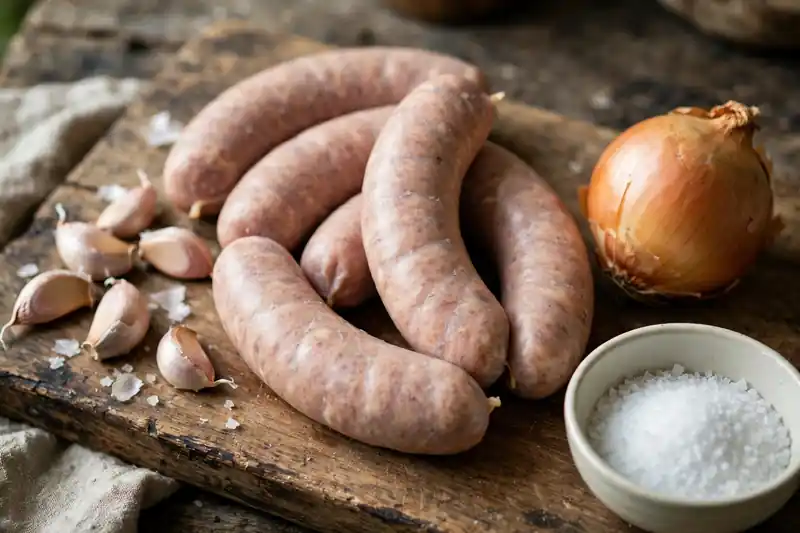
This is the hidden danger, and the one that catches a lot of owners out. Sausage often contains garlic, onion, or onion and garlic powder, along with chilli, black pepper and other spicy additives. The ASPCA lists onions, garlic and chives among the people foods to keep away from pets, because they damage a dog’s red blood cells and can cause anaemia.
Cooking does not make onion or garlic safe, and powdered forms are especially concentrated — a small amount of powder can carry far more of the harmful compounds than the same weight of fresh onion or garlic. The Merck Veterinary Manual notes that garlic is several times more potent than onion in this respect, and that the damage to red blood cells can show up days after eating, not straight away.
4. Casings, preservatives and raw sausage
The casing can cause trouble too. Synthetic ones in particular do not digest well, and they can choke a dog or cause a blockage if a whole link is gulped down. Preservatives such as sodium nitrite add nothing a dog needs.
Raw sausage carries an extra risk: raw pork and raw meat in general can carry bacteria such as Salmonella and E. coli, and raw pork can carry the parasite that causes trichinosis. Never give your dog raw sausage.
What About Different Types of Sausage?
Whether it is the sausage on a breakfast plate or the one sizzling at a barbecue, PetMD is clear: breakfast sausage, Vienna sausage, and sausage in all forms — links, patties and crumbles — are all no-goes for dogs. The same logic applies across the board:
- Breakfast sausage: Usually very fatty and salty, often with sage and other seasonings. Not safe.
- Pork sausage: The most common kind, and still high in fat and salt. Not safe.
- Chicken or turkey sausage: The meat may be leaner, but commercial chicken and turkey sausages are still processed, salty and usually seasoned. They are not a safe swap.
- Bratwurst: PetMD specifically says bratwurst should be avoided, because it contains added spices such as onion or garlic as well as high fat.
- Italian sausage, chorizo and kielbasa: Typically heavily seasoned and often spicy. Not safe.
- Vienna sausages: Small, soft and very salty, often eaten straight from the tin. Not safe.
- Hot dogs: Very similar to sausage — processed, salty and seasoned. Not a healthy choice for dogs.
- Plant-based or meat-free sausages: Not a safe loophole either. They are usually still high in salt and often contain garlic or onion powder, and they are not formulated for a dog’s nutritional needs.
- Sausage rolls, sausage on pizza, and sausage and peppers: These add more problems — pastry and fat, cheese and salty crust, and sauces or peppers cooked with onion and garlic. If the dish contains onion or garlic, the whole dish is unsafe to share.
The pattern is simple: changing the meat does not fix the salt, the fat or the seasoning. That is why “turkey sausage” or “chicken sausage” is not the answer.
Can Dogs Eat Sausage in Small Amounts?
This is the question most owners really want answered, so here is the honest version.
A tiny piece of truly plain, fully cooked sausage — no garlic, no onion, no chilli, no added salt — is unlikely to cause serious harm to a healthy adult dog, as PetMD notes. But “unlikely to cause serious harm” is a long way from “safe” or “recommended.”
There is no portion of ordinary shop-bought sausage that makes it a sensible food for a dog, for three reasons:
- You usually cannot be sure what is in it. Seasonings are often listed vaguely as “spices” or “flavouring.”
- Even plain sausage is high in fat and salt, so it eats into your dog’s treat allowance for no benefit.
- A small piece today easily becomes a regular habit, and regular fatty, salty treats are what lead to obesity, stomach problems and pancreatitis over time.
If you want to give your dog a meaty reward, plain cooked chicken or turkey is a far better choice, and it costs no more effort.
How to Serve a Safe Meaty Treat Instead
If what you really want is a high-value treat — for training, say — you do not need sausage at all. PetMD recommends the alternatives below, and the 10% rule applies to all of them: treats should make up no more than about 10% of your dog’s daily calories, with the rest coming from a complete and balanced dog food.
- Plain cooked chicken or turkey: Boiled or baked, with the skin and bones removed and no seasoning, oil or butter. Cut into small cubes for training.
- Plain cooked lean beef or lamb: Fully cooked, fat drained off, no seasoning.
- Cooked vegetables: Carrots or green beans, raw or steamed, give crunch without the fat and salt.
- Dog treats made for dogs: There are sausage-style dog treats formulated for dogs. Check the label for garlic, onion and added salt before buying, and keep portions within the 10% rule.
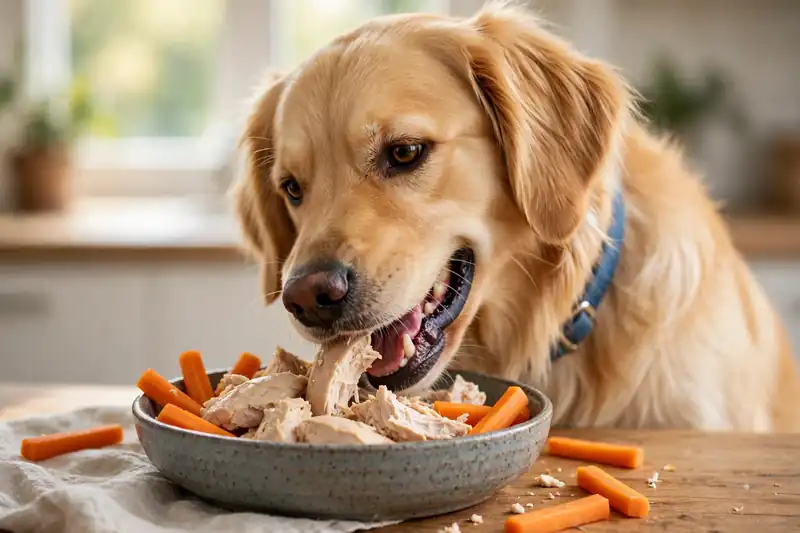
Serve new treats in small amounts first, watch for stomach upset over the next day, and skip any treat that causes vomiting, diarrhoea or itching.

Dogs That Should Never Have Sausage
For some dogs, even a nibble is not worth the risk — and if one of them does get a bite by accident, that is all the more reason to call your vet:
- Puppies, whose digestive systems are still developing
- Small dogs, for whom the same bite is a much larger dose per pound
- Overweight dogs and dogs on a weight-loss plan
- Dogs with pancreatitis, heart disease or kidney disease
- Dogs with sensitive stomachs or food allergies
- Senior dogs, who handle fat and salt less well
If your dog is in one of these groups, keep sausage completely out of reach and tell guests and children not to share.
My Dog Ate Sausage — What Do I Do?
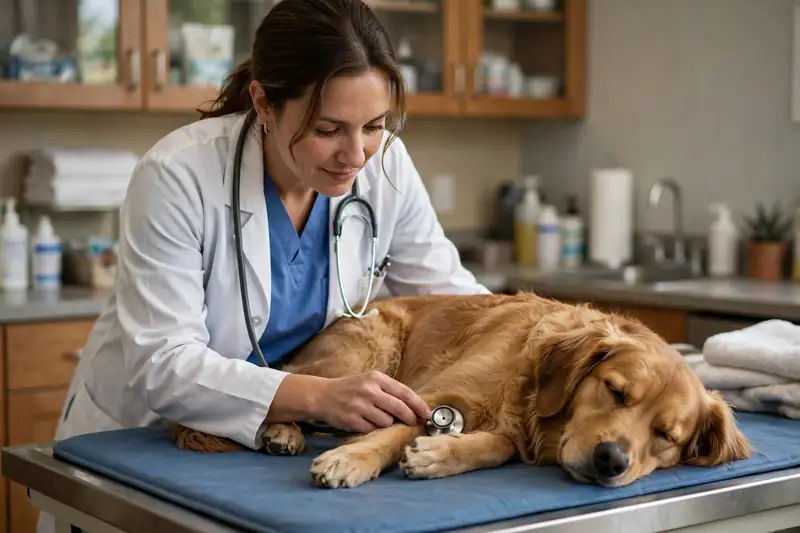
First, do not panic. Most cases, especially a small amount of plain sausage, end with mild stomach upset or nothing at all. But do not just wait and hope — take these steps instead.
1. Work out what and how much
Remove any remaining sausage so your dog cannot eat more. Note the type (pork, breakfast, Italian, Vienna, and so on), roughly how much is missing, and whether the label lists garlic, onion, chilli or other seasonings. Keep the packet if you can.
2. Watch for symptoms — and for how long
PetMD advises watching for vomiting, diarrhoea, lack of appetite and lethargy, and calling your vet for guidance if any appear.
Watch on two timelines, because not all problems show up at once:
- First few hours: Vomiting, diarrhoea, drooling, heavy thirst and frequent urination. Salt-related vomiting often starts within a few hours.
- Next 24 to 72 hours: Belly pain, a hunched posture, refusing food and lethargy can point to pancreatitis. Weakness, pale gums, fast breathing or dark urine can point to anaemia from garlic or onion, and these signs may appear days later. A calm first day does not rule out a problem.
3. Call your vet promptly if:
- Your dog ate a large amount, a whole sausage or several links
- The sausage contained garlic or onion
- Your dog is a puppy, very small, or has pancreatitis, heart or kidney disease
- Vomiting or diarrhoea keeps happening, or your dog seems in pain, very tired or refuses food
- You see pale gums, weakness, or dark or bloody urine
Have your dog’s weight, what was eaten, how much and when ready when you call. Do not try to make your dog vomit at home unless your veterinarian specifically tells you to.
In the United States, you can also call ASPCA Animal Poison Control on (888) 426-4435 or the Pet Poison Helpline on (855) 764-7661. Both may charge a consultation fee.
4. While you wait
Keep fresh water available, offer a small bland meal (such as plain boiled chicken and white rice) only if your dog is otherwise bright and your vet agrees, and do not give human medicines, antacids or painkillers without veterinary advice.
How to Stop It Happening Again
Most sausage incidents happen at breakfast, barbecues and parties, when food is within a dog’s reach and guests want to share. A few habits prevent most of them:
- Keep sausages, breakfast plates and barbecue food out of reach, and close bin lids tightly.
- Teach a reliable “leave it” cue and use it at mealtimes.
- Tell guests, especially children, not to feed your dog from their plate.
- Keep a jar of safe treats (plain chicken cubes, carrots) by the table so guests can offer those instead.
- On walks, stop your dog from eating anything it finds on the ground.
The Bottom Line
So, is sausage ever worth sharing? No — not as a treat, not as a regular food, and not in any of its common forms. It is high in fat and salt, often seasoned with garlic or onion, and it gives your dog nothing that plain cooked meat does not already offer, far more safely.
If your dog steals a tiny piece of plain sausage, do not panic — watch them closely for the next few days and call your vet if anything seems off. But do not make it a habit, and do not buy sausage as a dog treat. Your dog will be just as happy with plain chicken, and their stomach, pancreas and red blood cells will be far safer.
FAQ
Q1: Can dogs eat cooked sausage?
A: Still not recommended. Cooking kills bacteria, but it will not remove the fat, salt, garlic or onion. A small piece of truly plain, fully cooked sausage is unlikely to seriously harm a healthy adult dog, but ordinary seasoned sausage is still a poor choice, cooked or not.
Q2: Can dogs eat raw sausage?
A: No. Raw sausage adds bacterial and parasite risks to all the usual fat, salt and seasoning problems. Never give your dog raw sausage, and keep raw sausages out of reach while you cook.
Q3: Can dogs eat chicken sausage or turkey sausage?
A: No, not as a safe alternative. Commercial chicken and turkey sausages are still processed, salty and usually seasoned with garlic or onion. Plain cooked chicken or turkey breast, with no seasoning, is the safe version.
Q4: Can puppies eat sausage?
A: No. Puppies have sensitive digestive systems and small bodies, so the same bite delivers more fat and salt per pound than it would to an adult dog. If a puppy eats sausage, call your vet rather than waiting to see what happens.
Q5: What happens if my dog eats sausage?
A: Most dogs that eat a small amount show mild stomach upset, or nothing at all. Larger amounts can bring on vomiting, diarrhoea, heavy thirst and belly pain within hours, while pancreatitis signs often show up within one to three days and anaemia signs from garlic or onion may take a few days. Keep an eye on your dog for at least 72 hours and call your vet if any symptoms appear.
Q6: What can I give my dog instead of sausage?
A: Plain cooked chicken or turkey (skin and bones removed, no seasoning), lean cooked beef, carrots, green beans, or dog treats made for dogs. Keep all treats within about 10% of your dog’s daily calories, as PetMD advises.
Q7: What three meats should dogs avoid?
A: There is no official list of three meats, but three categories are worth avoiding: raw or undercooked meat (bacteria and parasites), heavily processed, salty, seasoned meats like sausages, bacon, ham, and pepperoni, and any meat served with splintering bones or cooked with onion or garlic.
Q8: What type of sausage can dogs eat?
A: Honestly, none is a good choice. The least-bad option is a tiny piece of plain, fully cooked, unseasoned sausage — but even that brings fat and salt with no benefit, so plain cooked chicken, turkey, or beef is always the better treat.
Q9: What about Vienna or Italian sausages?
A: Skip both. Vienna sausages are canned, salty, and often made with garlic or onion powder and preservatives. Italian sausages are seasoned with fennel and garlic and are high in fat and salt. Neither is a safe version of an already poor treat.
Vet Disclaimer
This article is general information only and is not a substitute for veterinary advice. Every dog is different, and dogs with pancreatitis, heart disease, kidney disease, allergies or other health conditions need individual guidance. If your dog has eaten sausage and seems unwell, or if you are unsure whether a food is safe for your dog, contact your veterinarian promptly.


