

Short answer
Can dogs eat graham crackers? A small piece of a plain one will not poison a healthy dog, but graham crackers are not a good treat. They are high in sugar and refined carbohydrates, offer almost no nutrition, and some varieties can be genuinely dangerous. If you share one, keep it plain, keep it tiny, and keep it rare.
What is actually in a graham cracker?
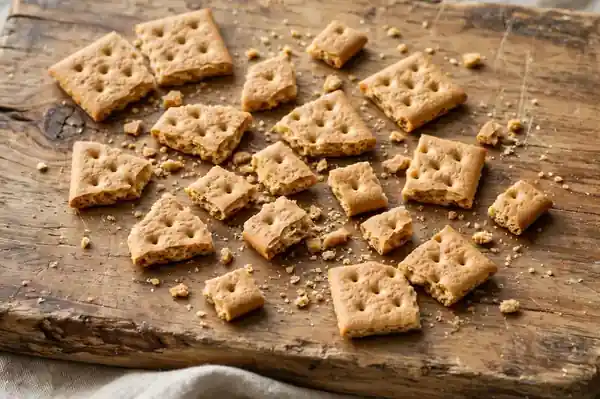
The main ingredients of a plain graham cracker are enriched wheat flour, sugar, honey, cinnamon, and molasses. In small amounts, none of these is toxic to dogs. Honey is safe in small quantities, and cinnamon is non-toxic in the small amounts used in crackers, though large amounts of cinnamon can irritate a dog’s mouth and stomach.
The problem is not one poisonous ingredient — it is the overall profile. Graham crackers are processed, calorie-dense, and sugary, which is a poor combination for an animal that gets all its real nutrition from its regular food.
The risks of graham crackers for dogs
- Weight gain. The sugar and simple carbs add calories fast, especially in small breeds where a single cracker is a big share of the daily intake.
- Blood sugar spikes. The refined carbohydrates can raise blood glucose quickly. Dogs with diabetes should not eat graham crackers at all.
- Dental problems. Sticky, sugary crumbs cling to teeth and feed the bacteria that cause dental disease.
- Digestive upset. Too many crackers can cause vomiting, diarrhea, or loose stools, and dogs sensitive to wheat or lactose may react more strongly.
- Sensitive stomachs. A sudden sugary load can upset dogs with delicate digestion. Dogs prone to pancreatitis should stick to vet-approved treats, since rich, fatty foods are the usual trigger there — not crackers alone.
- Choking. Always break crackers into bite-sized pieces, especially for small dogs.
Varieties to avoid completely
Plain is one thing. These versions are another:
- Chocolate-covered graham crackers. Chocolate contains theobromine, which is toxic to dogs. The darker the chocolate, the greater the risk.
- Sugar-free graham crackers. Sugar-free products may use xylitol as the sweetener, and xylitol is extremely toxic to dogs — it can cause a dangerous drop in blood sugar and liver damage. The ASPCA warns that even small amounts are an emergency.
- Raisin or fruit-filled crackers. Raisins and grapes are toxic to dogs and can cause kidney failure.
- Nutmeg-heavy flavored crackers. Nutmeg can be dangerous for dogs in larger amounts, and some spiced or flavored crackers include it.
- Frosted or filled crackers. These add even more sugar and fat, and sometimes chocolate or other risky fillings.
Always read the ingredient label before sharing, even if the box looks familiar. Recipes and sweeteners change, and “sugar-free” on the front is the warning sign to check for xylitol.


How to serve graham crackers safely
If you do share a plain graham cracker, follow these rules:
- Plain only. No chocolate, no frosting, no filling, no sugar-free versions.
- A tiny piece, occasionally. Think a small broken-off corner, not a whole cracker, and not every day.
- Break it up. Small pieces reduce choking risk.
- Count it as a treat. All treats together should stay under about 10% of your dog’s daily calories.
- Watch afterwards. If your dog vomits, has diarrhea, or seems lethargic, stop and offer water and bland food until its stomach settles. Call your vet if symptoms persist.
- Skip them for at-risk dogs. Puppies, small dogs, and dogs with diabetes, obesity, pancreatitis, or sensitive stomachs are more likely to have problems.
If your dog grabbed a chocolate-covered or sugar-free cracker, or ate a large amount, call your veterinarian promptly — do not wait to see if symptoms appear, especially with xylitol.
Healthier swaps your dog will like more
Your dog does not need graham crackers, and these alternatives are genuinely better:
- Crunchy carrot sticks
- Apple slices with the seeds removed
- Cucumber slices
- Blueberries
- Plain, purpose-made dog biscuits
All of these give crunch and flavor without the sugar load, and most add a little real nutrition too.

FAQ
Are Honey Maid graham crackers safe for dogs?
The plain variety follows the same rules as any plain graham cracker: a tiny piece occasionally is unlikely to harm a healthy dog, but it is still sugary and low in nutrition. Check the label every time, and avoid any chocolate, frosted, or sugar-free version.
Can puppies eat graham crackers?
It is better to avoid them. Puppies have sensitive stomachs and small calorie budgets, and a sugary cracker offers nothing they need. Stick to puppy-appropriate treats.
Are cinnamon graham crackers safe?
In small amounts, yes — cinnamon itself is not toxic to dogs. But cinnamon crackers are still sugary, and some flavored crackers add nutmeg, which can be harmful in larger amounts. Plain is always the safer choice.
Are honey graham crackers safe for dogs?
A small amount of honey graham cracker is fine for most healthy dogs, since honey is safe in small quantities. The same portion rules apply: tiny, occasional, and never the chocolate or sugar-free kind.
How many graham crackers can a dog eat?
As few as possible. A small piece once in a while is the limit, not a whole cracker daily. If graham crackers are becoming a regular treat, switch to one of the healthier swaps above.
What if my dog ate a whole box of graham crackers?
Watch for vomiting, diarrhea, and lethargy, and offer water. If the crackers contained chocolate, raisins, or xylitol, call your vet or the ASPCA Animal Poison Control Center at (888) 426-4435 right away, even if your dog seems fine.
What kind of crackers can dogs eat?
No cracker is a good treat for a dog, so the honest answer is that purpose-made dog biscuits are the better choice. If you do share a cracker, it should be a plain, unflavored, low-sugar one in a tiny piece only — and never a chocolate, frosted, filled, raisin, or sugar-free variety.
Can I give my dog a Scooby Snack graham cracker?
If you mean Scooby Snacks made for dogs, those are formulated dog treats, so a few as an occasional treat within the 10% treat rule are fine. Just do not confuse them with human graham crackers — the human ones are the sugary, low-nutrition crackers this article warns about.
Vet disclaimer
This article is for general information only and is not a substitute for professional veterinary advice, diagnosis, or treatment. If your dog shows signs of illness after eating graham crackers, or ate a variety containing chocolate, raisins, or xylitol, contact your veterinarian immediately.


