

Yes, dogs can get hiccups, and in most cases they are harmless and short-lived. A hiccup is a sudden, involuntary contraction of the diaphragm, the muscle that helps a dog breathe, followed by a quick closure of the vocal cords. That combination creates the familiar “hic” sound, although in dogs it can also look like a small abdominal jerk, a soft cough-like sound, or a brief spasm in the chest and belly.
Puppies tend to get hiccups more often than adult dogs, and many owners first notice them when a puppy is excited, has just eaten, or has just woken up. For most dogs, hiccups stop on their own within a few minutes, and no treatment is needed. The important skill for an owner is knowing the difference between ordinary, brief hiccups and a pattern that deserves veterinary attention. This guide explains common causes, what normal hiccups look like, warning signs to watch for, and how to respond calmly without trying home remedies that could be unsafe.
What Do Hiccups Look Like in Dogs?
In dogs, hiccups usually appear as rhythmic jerks in the chest or belly, sometimes with a soft hic sound or a gulp like noise. The dog often stays comfortable between jerks and may keep walking, sniffing, or wagging. Watching briefly helps you notice whether breathing stays normal.
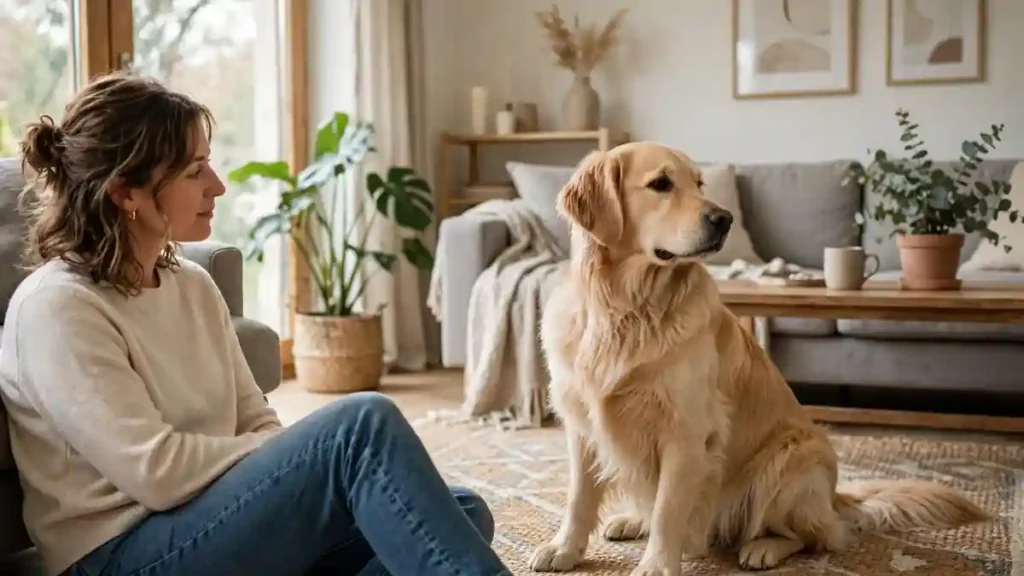
Hiccups in dogs do not always sound exactly like human hiccups. Some dogs make a clear, rhythmic “hic” sound. Others show a repeated twitch in the abdomen, a small jump in the chest, or a sound that is closer to a soft gulp. The episodes are usually rhythmic, meaning the jerks or sounds repeat at fairly regular intervals, and they usually fade gradually rather than stopping abruptly.
It can help to watch, rather than immediately intervening, for a short time. Note when the hiccups started, what your dog was doing just before, and whether your dog seems comfortable, playful, and able to breathe normally between jerks. A dog with ordinary hiccups will usually continue to walk, sniff, wag, and respond to you, even if the hiccups are a little distracting. If your dog seems distressed, is struggling to breathe, or cannot settle, that is different from a typical brief episode, and veterinary advice is the safer step.
Puppies are especially prone to hiccups, and veterinary sources often link this to their developing diaphragm and nervous system, as well as their tendency to eat quickly, get excited, and swallow air. As puppies grow, many owners notice hiccups become less frequent. That helps explain why hiccups are so commonly reported in young dogs.
Common Causes of Hiccups in Dogs
Most dog hiccups follow irritation of the diaphragm or its controlling nerves, often after eating or drinking too quickly, excitement, gas, or a full stomach. Puppies hiccup more often because their breathing control is still maturing. In many cases no single clear trigger is found, and the episode passes on its own.
Hiccups usually happen when something irritates the diaphragm or the nerves that control it. Several everyday situations can trigger that irritation, and in many cases the exact trigger is not obvious. The causes below are the ones most often discussed by veterinary sources, and they are best understood as possible explanations, not as a checklist for diagnosing your own dog.
Eating or drinking too quickly
Dogs that eat very fast, or drink large amounts of water in a hurry, can swallow air along with food or water. That air can irritate the stomach and diaphragm and set off hiccups. This is a common pattern after meals, especially in excited dogs, dogs that compete for food, and puppies that are still learning to pace themselves. Using a slower feeding routine, such as spreading food out or using a puzzle feeder if your veterinarian or a qualified trainer recommends one, may help some dogs eat more calmly, but it should not be treated as a medical treatment for hiccups.
Excitement, stress, or a sudden change
Excitement, play, visitors, a new environment, or a sudden change in routine can change how a dog breathes. Rapid, shallow breathing and swallowed air during excitement can trigger hiccups in some dogs. Similarly, stress or anxiety can affect breathing patterns. If hiccups often follow exciting events, keeping greetings calm and giving your dog a quiet moment to settle may help, but persistent stress-related behaviour should be discussed with a veterinarian or a qualified behaviour professional rather than managed with home remedies.
Gas, an upset stomach, or a full stomach
Gas, a large meal, or a mildly upset stomach can put pressure on the diaphragm. In those cases, hiccups may occur alongside burping, restlessness, or a desire to go outside. Most such episodes pass quickly. However, hiccups combined with vomiting, retching, a swollen or hard abdomen, drooling, or obvious pain are not ordinary hiccups and need prompt veterinary attention.
Normal development in puppies
Puppies often hiccup for reasons that seem to have no clear trigger. Their diaphragms and the nerves that control breathing are still maturing, and they are more likely to eat quickly, play hard, and breathe irregularly. Brief, frequent hiccups in an otherwise healthy, growing puppy are often part of normal development, but a puppy that is also lethargic, not eating, vomiting, coughing, or struggling to breathe should be seen by a veterinarian promptly.
How Long Do Dog Hiccups Usually Last?
Most hiccup episodes in dogs last only a few minutes, and some come and go briefly before settling. An episode lasting for hours, returning very frequently, or happening almost every day is a different pattern. Note the duration and frequency, since that history helps a veterinarian decide whether an examination is needed.
Most hiccup episodes in dogs last only a few minutes. Some last a little longer, and a few may come and go over a short period before settling. An episode that lasts for hours, keeps returning throughout the day, or happens almost every day is a different pattern from an occasional brief bout, and it is worth discussing with a veterinarian.
Duration alone does not diagnose a problem, but it is useful information for a veterinary visit. If you can, note how long the episode lasted, how often it has happened in recent days, and whether it was linked to meals, excitement, or another event. That history helps a veterinarian decide whether an examination is needed and what to check, without the owner having to guess at a cause.
What to Do When Your Dog Has Hiccups
For ordinary, brief hiccups, stay calm and let your dog settle in a quiet place, with fresh water available and no vigorous play until the episode passes. Avoid startling your dog, and avoid human folk remedies. There is no safe proven home trick, so calm waiting is usually the best response.
For ordinary, brief hiccups, the safest response is usually the simplest: stay calm, let your dog settle, and avoid startling or scaring your dog. There is no safe, proven home trick for stopping hiccups in dogs, and many human folk remedies are not appropriate for animals.
A calm environment can help. Offer your dog a quiet place to rest, avoid vigorous play until the hiccups pass, and make sure fresh water is available. If your dog wants to walk slowly, sniff, or lie down, that is fine.
If hiccups follow a meal, it may help to check whether your dog ate unusually quickly or swallowed a lot of air, and to consider a calmer feeding routine in future. That is a general care adjustment, not a treatment, and it does not replace veterinary advice if hiccups are frequent or accompanied by other symptoms.
What Not to Do When Your Dog Has Hiccups
Do not hold your dog’s mouth closed, press on its chest or belly, force it to hold its breath, or give human medicines, supplements, or foods meant to stop hiccups. These actions can increase stress or cause harm, and they are not proven treatments. If you are unsure, seek veterinary advice instead of trying a home remedy.
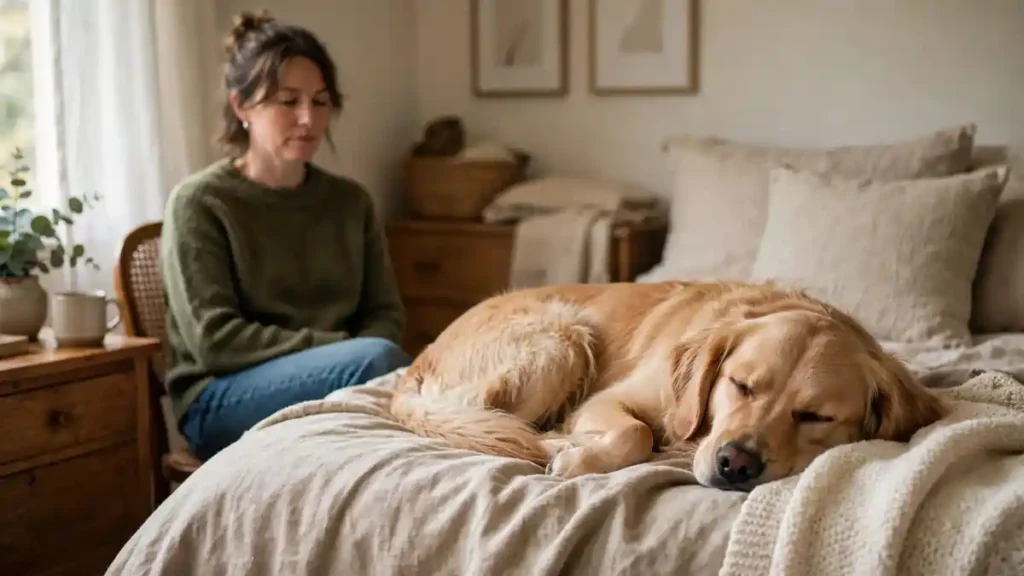
Do not hold your dog’s mouth closed, press on its chest or abdomen, or try to force it to hold its breath. Do not give your dog human medicines, supplements, or foods intended to “stop” hiccups unless a veterinarian specifically directs you to do so for that dog.
Warning Signs: When to Call a Veterinarian
Most hiccups are harmless, but call a veterinarian promptly if hiccups last for hours, return very frequently, or occur with breathing difficulty, coughing, vomiting, lethargy, loss of appetite, a swollen belly, or distress. Breathing problems are always urgent, so do not wait for them to improve on their own.
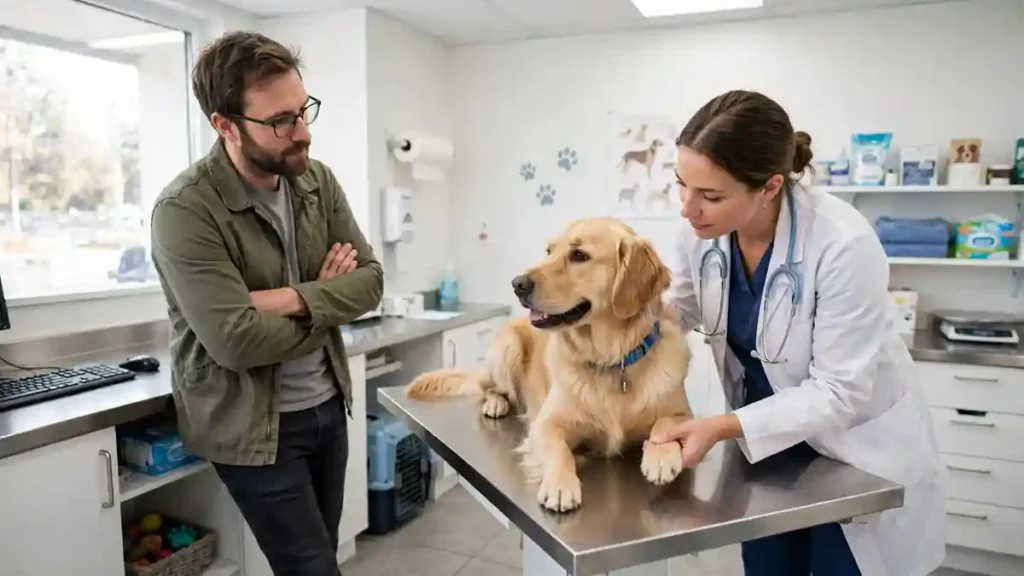
Most hiccups are harmless, but some patterns should prompt a call to a veterinarian, and some need urgent care. Contact your veterinarian promptly, or an emergency veterinary service if your regular clinic is closed, if you notice any of the following alongside or instead of ordinary hiccups:
| Warning sign | Why it matters |
|---|---|
| Hiccups lasting for hours, or returning very frequently | A persistent pattern is different from an occasional brief episode |
| Difficulty breathing, wheezing, or blue or pale gums | Breathing problems are always urgent in dogs |
| Coughing, gagging, or choking that does not stop | The problem may not be hiccups at all |
| Vomiting, retching, drooling, or a swollen, hard abdomen | These can signal a more serious stomach or digestive problem |
| Lethargy, weakness, loss of appetite, or collapse | General illness signs need veterinary assessment |
| Hiccups after eating something unusual, a medicine, or a foreign object | Ingestion of a foreign object or medicine needs professional advice |
Do not wait to see whether warning signs improve on their own if breathing is affected or your dog is in obvious distress. Early veterinary advice is safer than delayed advice, and a veterinarian can examine your dog, listen to its chest and abdomen, and decide whether further testing is needed. This guide does not diagnose your dog, and it does not replace that examination.
Are Hiccups Ever a Sign of Something More Serious?
Occasionally, persistent or recurring hiccups can be linked with irritation or disease affecting the diaphragm, nerves, stomach, or chest, so a long lasting pattern deserves veterinary investigation. That does not mean every long episode has a serious cause, and owners should not try to diagnose the cause at home.
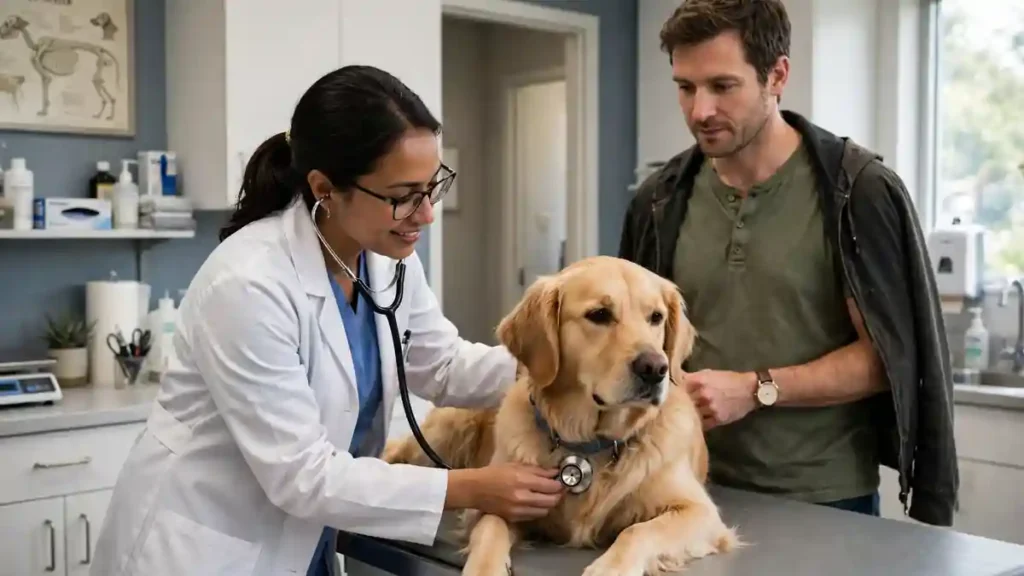
Occasionally, persistent hiccups can be associated with irritation or disease affecting the diaphragm, nerves, stomach, or chest, and veterinary sources note that long-lasting or recurring hiccups deserve investigation. That does not mean every long episode has a serious cause, and it does not mean an owner should try to identify a serious cause at home. It means the pattern itself is the reason to seek veterinary input.
A veterinarian may ask about your dog’s age, diet, recent meals, exercise, exposure to new foods or objects, and any other symptoms. An examination, and sometimes further tests, may be needed to rule out other problems. The owner’s role is to provide a clear history, describe the hiccups accurately, and follow the veterinarian’s plan, not to start a home treatment protocol based on an article.
Hiccups Versus Coughing, Reverse Sneezing, and Choking
Hiccups are usually rhythmic, gentle jerks or sounds, and the dog stays comfortable between jerks. A cough is a forceful expulsion of air, reverse sneezing sounds like rapid snorting with the neck extended, and choking involves distress, pawing at the mouth, and breathing difficulty, which is an emergency.
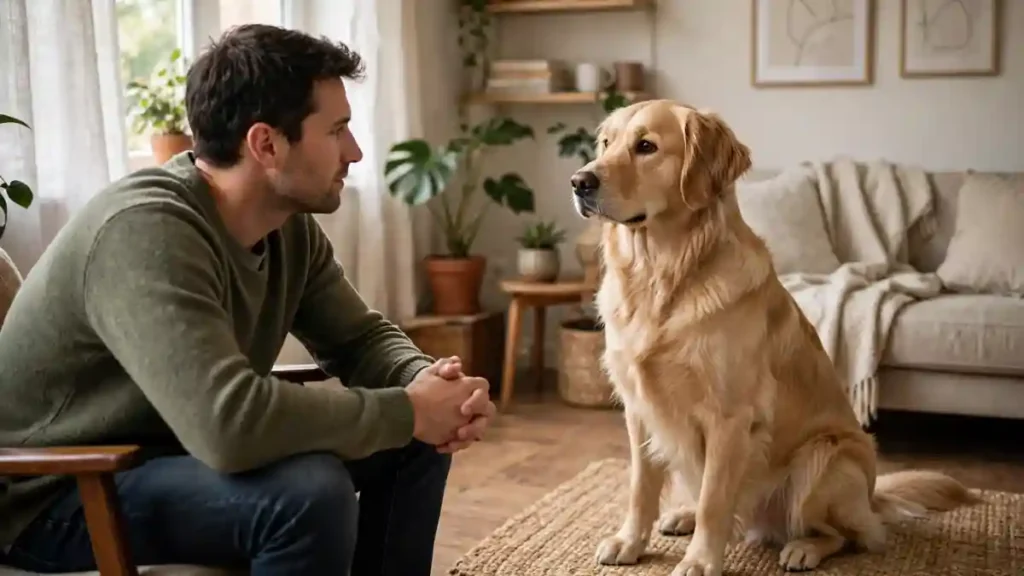
Owners sometimes confuse hiccups with other sounds and movements, and the distinction matters. A cough is usually a forceful expulsion of air, often with a harsh sound, and may be linked to throat or lung irritation. Reverse sneezing, which is common in some small and flat-faced breeds, sounds like rapid, repeated snorting or inhaling, and the dog often stands still with its neck extended. Choking involves distress, pawing at the mouth, gagging, and difficulty breathing, and it is an emergency.
Hiccups, by contrast, are usually rhythmic, relatively gentle jerks or sounds, and the dog usually remains comfortable between jerks. If you are unsure which one you are seeing, or if your dog is distressed, treat it as a reason to seek veterinary advice rather than trying to label it yourself.
What to Tell Your Vet About Hiccups
When you call, be ready to describe the hiccups clearly: when they started, how long they lasted, how often they return, and whether your dog also had coughing, vomiting, lethargy, or breathing difficulty. A veterinarian may also ask about age, diet, recent meals, exercise, and exposure to new foods or objects.

A clear history helps a veterinarian assess the pattern: note when the episode started, what happened just before it, such as a meal, play, excitement, or waking up, and any other symptoms you noticed. Describe the hiccups as accurately as you can, follow the veterinarian’s plan, and do not start a home treatment protocol based on an article.
FAQs About Dogs and Hiccups
The answers below cover the questions owners ask most often about dog hiccups, including puppies, duration, and when to seek help. They summarize the guidance in this article in short form, and they do not replace veterinary advice for an individual dog. If your dog shows warning signs, contact a veterinarian promptly.

Can dogs get hiccups?
Yes. Dogs, including puppies, can get hiccups. Most episodes are brief and harmless, and they usually stop on their own within a few minutes.
Do puppies get hiccups more than adult dogs?
Puppies tend to get hiccups more often, often because they eat quickly, get excited easily, and are still developing. Frequency usually decreases as they grow, but any puppy with additional symptoms should still be checked by a veterinarian.
How long should dog hiccups last?
Most episodes last a few minutes. Hiccups that last for hours, happen very frequently, or occur almost every day should be discussed with a veterinarian.
Should I try to scare my dog to stop hiccups?
No. Startling or scaring a dog is not a safe or reliable way to stop hiccups, and it can increase stress. Let your dog settle calmly and seek veterinary advice if the pattern is concerning.
Can I give my dog medicine for hiccups?
Do not give human medicines or supplements for hiccups unless a veterinarian specifically directs you to do so for that dog. Most hiccups need no medicine at all.
When should I call a vet about hiccups?
Call a veterinarian if hiccups are persistent, frequent, or accompanied by difficulty breathing, coughing, vomiting, lethargy, loss of appetite, a swollen abdomen, or any sign of distress.
Related Guides
Sources and Further Reading
- AKC (cited by name)
- ASPCA (cited by name)
- PetMD (cited by name)
- VCA Animal Hospitals (cited by name)
Disclaimer
This article is for general information only and is not veterinary advice. It does not diagnose or treat any individual dog. If your dog has persistent hiccups, difficulty breathing, or any concerning symptoms, contact your veterinarian or an emergency veterinary service promptly.


