

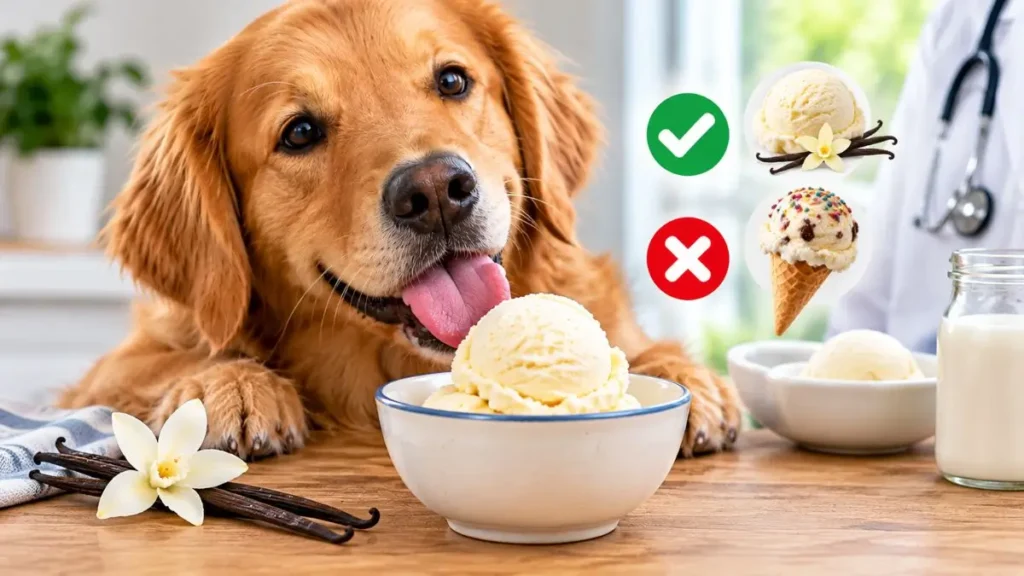
Yes, most healthy adult dogs can have a small taste of plain vanilla ice cream now and then. Plan on about 1 teaspoon for dogs under 10 lb and 1 tablespoon for 25 to 50 lb dogs. Never share sugar-free tubs, which can contain xylitol.
Vanilla is the least risky ice cream flavor because it has no chocolate, coffee, nuts or raisins. That still doesn’t make it good for dogs. The real issues are lactose, sugar and fat, plus the chance of a hidden sweetener in “light” or “skinny” versions. This guide is built on published advice from the American Kennel Club, PetMD, the FDA, the ASPCA and the Merck Veterinary Manual.
Key takeaways
- Plain vanilla ice cream isn’t toxic in a small amount, but it gives a dog no health benefit.
- Many adult dogs make less lactase after puppyhood, so dairy can cause gas, bloating or diarrhea.
- Sugar-free, “light” and “skinny” ice creams may contain xylitol, also listed as birch sugar. Eating it is an emergency.
- A teaspoon to a couple of tablespoons, depending on size, once every week or two is a sensible limit.
- A dog-specific frozen treat or a homemade banana and yogurt cube is a better summer habit.
Is vanilla the safest ice cream flavor for dogs?
Vanilla is the least risky flavor to share, but “least risky” is not the same as healthy. Plain vanilla skips the chocolate, coffee, nuts and raisins found in other flavors. Its problems are milder ones for most dogs: lactose, sugar and fat.
| Flavor | Risk level | Why |
|---|---|---|
| Plain vanilla | Lowest | No toxic add-ins. The concerns are lactose, sugar and fat |
| Strawberry | Low | Fruit-based, with the same sugar and dairy load as vanilla |
| Peanut butter | Low to moderate | Fine only if the peanut butter has no xylitol, so check the label |
| Cookies and cream or cookie dough | Moderate | Usually contains chocolate cookies or chocolate chips |
| Butter pecan | Moderate | Very high in fat, and the ASPCA warns that nuts like pecans can cause vomiting and diarrhea |
| Mint chocolate chip | High | Contains chocolate |
| Rocky road | High | Chocolate, plus marshmallows and nuts |
| Coffee or mocha | High | Caffeine, and often chocolate as well |
| Sugar-free or “skinny” vanilla | Highest | May contain xylitol |
| Rum raisin | Highest | Raisins can cause kidney damage, and some versions contain alcohol |
| Macadamia nut | Highest | Macadamia nuts can cause weakness, vomiting and tremors |
A dog that licks a spoonful of plain vanilla is in a very different spot from one that eats rocky road or rum raisin. Raisins can damage a dog’s kidneys, and the marshmallows in rocky road add even more sugar. White chocolate swirls are the least toxic chocolate, but they still pile on fat, which we cover in can dogs have white chocolate. If you’re unsure about a flavor or mix-in, look it up in our free dog food safety checker, which lists vanilla ice cream as “a lick only.”
Not all vanilla ice cream is the same
The word “vanilla” covers several very different products. Regular scooped vanilla is the most predictable. French vanilla is richer, soft serve is sugary, and sugar-free versions carry the biggest risk because some use xylitol. Always check the label before you share a spoonful.
Regular vanilla ice cream
Standard supermarket vanilla is made from cream, milk, sugar and vanilla flavoring. In a small amount it is the least likely type to cause more than a mild upset stomach, as long as the label lists no sugar substitutes or artificial sweeteners.
USDA data puts regular vanilla ice cream at about 207 calories per 100 grams, with roughly 11 grams of fat and 21 grams of sugar. That is a dense snack for an animal a fraction of your size.
French vanilla
French vanilla uses egg yolks for a custard-style base. Cooked eggs are fine for dogs, but the extra fat matters. Rich, fatty food is a common risk factor for pancreatitis, so skip French vanilla for dogs with a sensitive stomach or a pancreatitis history.
Vanilla soft serve
Soft serve has more air whipped in, so a scoop can feel lighter, but it is still mostly milk, sugar and fat. It is also the version dogs meet most often, through drive-thru pup cups at places like Dairy Queen and Sonic.
Sugar-free, light or “skinny” vanilla
This is the one to avoid. Some sugar-free and “skinny” ice creams contain xylitol, which the FDA warns can drop a dog’s blood sugar dangerously within 10 to 60 minutes. On labels, xylitol may also appear as birch sugar or wood sugar.
The FDA’s xylitol warning names sugar-free “skinny” ice cream as one of the products reported to it. So with ice cream, “sugar-free” or “diet” on the tub is a reason for more caution, not less.
Vanilla frozen yogurt
Frozen yogurt with live cultures may contain somewhat less lactose than ice cream, but it isn’t lactose-free, and store-bought versions are often just as sugary. Plain, unsweetened yogurt that you freeze at home is the smarter choice for most dogs who handle dairy.
Why vanilla ice cream still isn’t a healthy treat
Even plain vanilla brings three problems a dog’s body doesn’t need: lactose that many adult dogs can’t digest well, sugar that adds empty calories, and fat that can trigger pancreatitis in prone dogs. None of these is toxic in a small lick.
Lactose
Puppies make plenty of lactase, the enzyme that digests milk sugar, but many dogs make much less after weaning. In a lactose-intolerant dog, dairy can cause gas, bloating, vomiting or diarrhea, usually within 30 minutes to a couple of hours of eating it.
The ASPCA notes that pets don’t have much lactase, which is why milk-based foods so often upset their stomachs. If you want the wider picture, our guide on whether dogs can have milk ranks 15 types of milk from safe to dangerous.
Sugar and fat
A half-cup scoop of vanilla has about 137 calories, 7 grams of fat and 14 grams of sugar. Frequent sugary treats add weight and make diabetes harder to manage, while a sudden fatty treat can set off pancreatitis in dogs prone to it.
Pancreatitis is painful and can need hospital care. The Merck Veterinary Manual lists eating something rich or unusual as a common risk factor, and says Miniature Schnauzers show up far more often than other breeds. Yorkshire Terriers, Cocker Spaniels, Dachshunds and Poodles also have higher rates.
What about the alcohol in vanilla extract?
Pure vanilla extract must be at least 35% alcohol by volume under US food rules, so never let a dog lick the bottle. The tiny amount used to flavor commercial ice cream is not the real concern; sugar, fat, lactose and xylitol are.
That 35% minimum matters more in your own kitchen. Raw cake batter, frosting or a homemade recipe with a generous splash of extract can carry enough alcohol to upset a small dog. The ASPCA says foods containing alcohol can cause vomiting, diarrhea, poor coordination and depression in pets.
How much vanilla ice cream can a dog have?
Keep it tiny: about 1 teaspoon for dogs under 10 lb, 1 to 2 teaspoons for 10 to 25 lb dogs, and 1 tablespoon for 25 to 50 lb dogs. Treat it as an occasional taste, once every week or two.
Vets suggest that all treats together stay under 10% of a dog’s daily calories, a rule VCA Animal Hospitals spells out in its treat guide. These amounts fit well inside that limit for a healthy adult dog:
| Dog weight | Occasional amount | Approximate calories |
|---|---|---|
| Under 10 lb | 1 teaspoon | About 6 |
| 10 to 25 lb | 1 to 2 teaspoons | About 6 to 12 |
| 25 to 50 lb | 1 tablespoon | About 17 |
| 50 to 90 lb | 1 to 2 tablespoons | About 17 to 34 |
| Over 90 lb | 2 to 3 tablespoons | About 34 to 51 |
Calories are based on USDA figures for regular vanilla ice cream, which work out to about 17 calories per level tablespoon.
Now compare that with a normal scoop. Using the Merck Veterinary Manual’s energy formula, a 10 lb adult dog needs roughly 300 to 390 calories a day, so its whole treat allowance is about 30 to 39 calories. A half-cup scoop at about 137 calories is roughly 3.5 to 4.5 times that allowance.
For a number based on your own dog, our dog treat calculator works out a daily treat allowance from weight, life stage and activity level. Give less, or none at all, to a dog with diabetes, obesity, pancreatitis or a touchy stomach.
How to tell if your dog is lactose intolerant
Try a small dairy test before you ever offer ice cream. Give a teaspoon of plain milk or plain yogurt, then watch for gas, bloating, vomiting or loose stool. No reaction usually means a tiny amount of dairy now and then is fine.
- Offer about a teaspoon of plain milk or plain, unsweetened yogurt to a small dog, or up to a tablespoon to a large dog.
- Watch closely for the next few hours. Most dairy reactions show up within 30 minutes to 2 hours, but keep an eye out for a full day.
- If nothing happens, your dog can probably handle a little dairy on occasion.
- If you see gas, bloating, vomiting or diarrhea, treat your dog as lactose intolerant and skip dairy treats of every kind, not only ice cream.
This is a practical check, not a diagnosis. Dogs with food allergies, ongoing gut problems or a history of pancreatitis should see a vet before you try new foods.
Puppies, senior dogs and pregnant dogs
Skip ice cream for puppies, and check with your vet first for seniors and pregnant or nursing dogs. Young puppies have sensitive stomachs, older dogs often have conditions that sugar and fat make worse, and pregnant dogs need nutrient-dense food instead.
Puppies: a bout of vomiting or diarrhea dehydrates a small, young body faster than an adult one. It’s simplest to wait until your dog is fully grown.
Senior dogs: older dogs are more likely to be managing diabetes, kidney disease or a past bout of pancreatitis. For them, sugar and fat are a bigger gamble, so ask your vet before offering even a taste.
Pregnant or nursing dogs: they do need extra calories, but those should come from a complete, balanced diet. A small lick is unlikely to cause harm, but ice cream is the wrong tool for helping a pregnant dog gain weight.
Are pup cups safe? Dairy Queen, Starbucks and McDonald’s
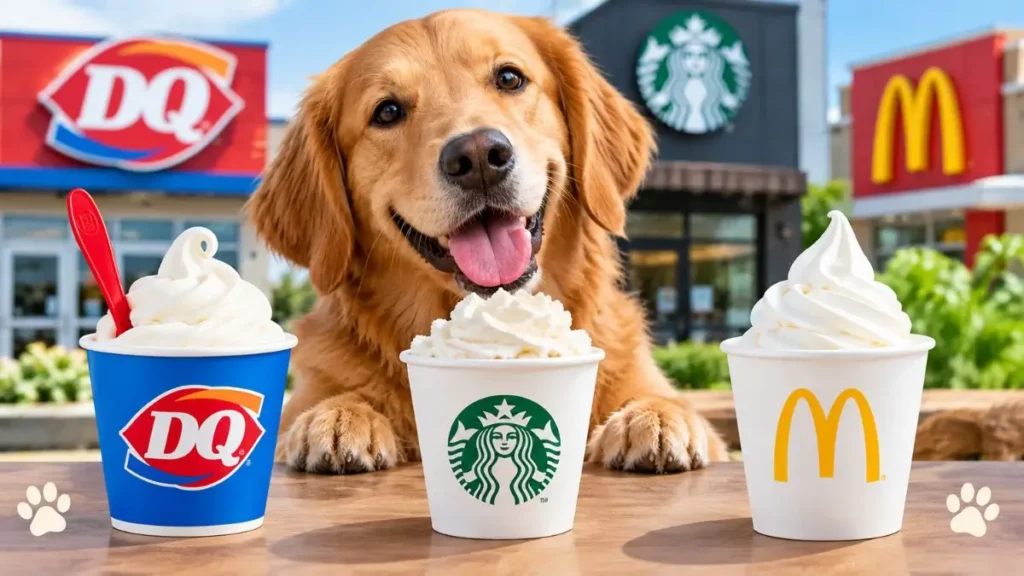
A pup cup is usually fine as a rare treat for a healthy dog that handles dairy. Dairy Queen’s is vanilla soft serve, Starbucks’ Puppuccino is whipped cream, and McDonald’s soft serve contains no xylitol, according to the company. What you get varies by store.
Is Dairy Queen vanilla ice cream safe for dogs?
Yes, in a small amount for most healthy dogs. The Dairy Queen pup cup is plain vanilla soft serve, sometimes topped with a dog biscuit. It carries more sugar than a whipped-cream pup cup, so go easy with diabetic or sensitive dogs.
A vet-reviewed comparison from Sploot Vets makes the same point about the extra sugar in soft-serve cups. A full cup is a lot for a small dog, so ask for a smaller portion or share a few licks and toss the rest.
Is a Starbucks Puppuccino the same as ice cream?
No. A Puppuccino is a small cup of plain whipped cream with no coffee in it. It is lower in sugar than soft serve, but it is still dairy and fat, so the same lactose and pancreatitis cautions apply here too.
We go through the details, including how much is reasonable, in our guide to whipped cream for dogs.
Is McDonald’s vanilla ice cream safe for dogs?
A lick of McDonald’s vanilla soft serve isn’t toxic to dogs. A 2022 viral post claimed it contained xylitol, but McDonald’s told FactCheck.org it does not. It is still sugary dairy, so keep it to a few licks and skip McFlurry mix-ins.
You can read the FactCheck.org report on the rumor. Cones, sundaes and anything with candy pieces or chocolate sauce are a different story and should stay away from your dog.
Before you accept any pup cup:
- Ask what’s on top. Some come with a biscuit, extra whipped cream or a drizzle of sauce.
- Treat it as a road-trip extra, not a weekly stop.
- Feel free to decline. For a lactose-intolerant dog or one with a health condition, ask for a spoonful or skip it.
My dog ate vanilla ice cream: what to do
Check the label first. If the ice cream had xylitol, chocolate, raisins or macadamia nuts, call your vet or a pet poison line now. If it was plain vanilla, watch for vomiting, diarrhea or lethargy over the next 24 hours and keep fresh water nearby.
- Usually mild: gas, a softer stool or a single vomit. These tend to settle within a day with fresh water and a normal next meal.
- Call your vet: repeated vomiting, diarrhea lasting more than 24 hours, lethargy, a hunched or painful belly, refusing food, or heavy thirst and urination.
- Emergency: any amount of a product containing xylitol, chocolate, raisins or macadamia nuts. Xylitol can drop blood sugar within 10 to 60 minutes, and larger doses can cause liver failure, so call before symptoms start. Signs include vomiting, weakness, staggering and seizures.
After a large amount of plain ice cream, keep watching for a few days. PetMD lists vomiting, belly pain, loss of appetite and lethargy as signs that the fat has triggered pancreatitis.
For poisoning questions, call the ASPCA Animal Poison Control Center at (888) 426-4435 or the Pet Poison Helpline at (855) 764-7661. Both answer 24 hours a day, and both may charge a consultation fee.
Dog-safe vanilla “ice cream” recipe
You can make a frozen treat that tastes like vanilla ice cream without the sugar load. Blend ripe banana with plain unsweetened Greek yogurt or coconut milk, add a drop of alcohol-free vanilla, then freeze it in small cubes for your dog.
Ingredients
- 2 ripe bananas
- 1/2 cup plain, unsweetened Greek yogurt, or 1/2 cup plain coconut milk for dogs that don’t handle dairy
- 2 to 3 drops of alcohol-free vanilla (optional; check the label for xylitol)
- 1 teaspoon honey (optional; skip it for diabetic or overweight dogs, and never give raw honey to puppies)
Instructions
- Blend everything until smooth.
- Spoon the mixture into an ice cube tray or a small silicone mold.
- Freeze for at least 4 hours, until solid.
- Serve one cube to a small dog or two to a large dog, as an occasional treat.
The recipe leaves out regular vanilla extract on purpose, because of its alcohol content. Bananas are safe in moderation, though they do carry natural sugar. Coconut milk is fine in small amounts, but its oils can cause loose stools, so start with a single cube. Store the cubes in a sealed bag in the freezer and use them within two weeks.
Better frozen treats to buy or make
Pick treats made for dogs, not human desserts with a dog label. Purina Frosty Paws and Pooch Creamery are two dog-specific options. Frozen cubes of plain coconut water or low-sodium chicken broth are cheap homemade swaps that take five minutes to make.
When you shop, look for:
- A product formulated for dogs, with a feeding guide on the pack
- A short ingredient list you recognize
- No chocolate, xylitol or other artificial sweeteners
Frosty Paws is sold under the Purina brand, and Pooch Creamery is a lactose-free mix you stir with water and freeze. PetMD also names Pooch Creamery among its dog-safe ice cream picks.
For homemade cubes, freeze plain coconut water with nothing added, or low-sodium chicken broth made without onion or garlic. Both give your dog something cold to lick on a hot day for a fraction of the calories in ice cream.
The bottom line
Plain vanilla ice cream is safe enough as a rare, tiny taste for a healthy adult dog, and it is the least risky flavor. Keep portions small, check every label for xylitol, and lean on dog-specific frozen treats for regular use.
Treat the amounts in this guide as an upper limit. A teaspoon for a toy breed or a tablespoon for a Labrador, once every week or two, leaves plenty of room in the daily treat allowance. Anything more starts to crowd out real food and invites an upset stomach.
If your dog has diabetes, a history of pancreatitis or a sensitive gut, the safest amount is none. Puppies should wait too.
This article is general information, not veterinary advice. If your dog has a health condition or shows worrying symptoms after eating something unusual, call your vet.
FAQs
Can dogs have vanilla ice cream every day?
No. Even plain vanilla is high in sugar and fat for its size, and a daily habit leads to weight gain and more chances of stomach upset. Keep it to an occasional taste, roughly once every week or two at most.
Is vanilla ice cream toxic to dogs?
Plain vanilla ice cream is not toxic to dogs in small amounts. The danger comes from what else is in the tub: xylitol in sugar-free versions, chocolate, raisins or macadamia nuts. Always read the ingredient list before you share even a spoonful.
Will a little vanilla ice cream hurt my dog?
A little plain vanilla rarely hurts a healthy adult dog. The most likely result is mild gas or a soft stool in a lactose-sensitive dog. It becomes a problem when the portion is large or the product contains xylitol or chocolate.
Can puppies have vanilla ice cream?
It’s best to skip it. Puppies have sensitive stomachs, and a bout of vomiting or diarrhea can dehydrate a small, young dog quickly. Stick to treats made for puppies, and wait until your dog is fully grown before testing even small amounts of dairy.
What should I do if my dog ate a whole bowl of vanilla ice cream?
Check the ingredients. If it contained xylitol, chocolate, raisins or macadamia nuts, call your vet now. If it was plain vanilla, watch for vomiting, diarrhea, belly pain or lethargy over the next few days, since a big fatty meal can trigger pancreatitis.
Is frozen yogurt better than ice cream for dogs?
Only slightly, if at all. Frozen yogurt may have a little less lactose, but store-bought versions are usually just as sugary as ice cream. Plain, unsweetened yogurt frozen at home is the better option for a dog that tolerates dairy well.
Can dogs eat ice cream cones or vanilla wafers?
It’s better to skip them. Waffle cones, sugar cones and vanilla wafers add sugar and fat with no benefit for your dog, and dipped or coated cones can contain chocolate. If your dog grabs a bite of plain cone, it’s rarely a problem.
What ice cream is poisonous to dogs?
Any ice cream with xylitol, chocolate, coffee, raisins or macadamia nuts is dangerous for dogs. That includes some sugar-free and “skinny” tubs, mint chocolate chip, rocky road, mocha and rum raisin. Plain vanilla and plain strawberry carry the lowest risk for most dogs.


2 thoughts on “Can Dogs Have Vanilla Ice Cream? A Vet-Informed Safety Guide”