

You’ve probably scrolled past a pet food recall notice and thought, “I could just cook for my dog.” A lot of owners land in the same place. Cooking at home lets you see every ingredient in the bowl, tailor meals to allergies, and skip the mystery ingredients. It also gets tricky the moment you try to make it nutritionally complete.
This guide walks through the recipe most vets consider a safe starting point, plus the numbers, supplements, and safety checks that separate a healthy homemade diet from one that quietly causes deficiencies. It’s written for owners of healthy adult dogs. If your dog has a medical condition, work with a board-certified veterinary nutritionist before making the switch.
Why More Pet Owners Are Cooking Their Dog’s Food at Home

Trust in commercial pet food has thinned out. Between recurring recalls, opaque ingredient lists, and rising kibble prices, home cooking feels like the honest option. Owners of dogs with skin problems, gut issues, or protein sensitivities often try homemade first because they can control what actually goes in — chicken and pumpkin, no fillers, no dyes.
The other draw is freshness. A plate of gently cooked lean meat, brown rice, and vegetables looks more like food than a kibble pellet, and dogs eat it with obvious enthusiasm. Veterinary nutritionists don’t argue against home cooking as a category. What they push back on is winging it — pulling a recipe off Pinterest and feeding it for years without ever checking whether it delivers the nutrients a dog needs.
Is Homemade Dog Food Actually Healthy for Dogs?
Yes, but only when it’s built properly. The problem shows up when it isn’t.

A widely cited study by Stockman and colleagues, published in the Journal of the American Veterinary Medical Association in 2013, analyzed 200 homemade recipes from cookbooks, veterinary sources, and websites. Ninety-five percent were deficient in at least one essential nutrient, and 83 percent fell short on multiple. Only nine of the 200 met AAFCO nutrient standards for adult dogs. A newer study from researchers at Texas A&M and Virginia Tech, using data from the Dog Aging Project, looked at 1,726 owner-fed homemade diets and found only about 6 percent hit basic nutritional requirements.
The common shortfalls are calcium, phosphorus, vitamin D, zinc, choline, iron, and copper. None of those show up as a sick dog next week. They show up as brittle bones, a dull coat, liver stress, or a weakened immune system a year or two down the line.
The takeaway isn’t “don’t cook for your dog.” It’s that a home-cooked bowl is healthy only when the recipe follows established nutrient guidelines from the National Research Council or AAFCO, and includes the right supplements. Balance IT and PetDiets are two services vets use to formulate or verify a specific recipe for your dog.
The Essential Nutrients Every Homemade Meal Needs
A balanced dog meal isn’t just meat and rice. Six categories carry the weight.

Protein
Adult dogs need at least 18 percent of their diet from protein on a dry-matter basis, per AAFCO. In practice, that means lean meat should make up roughly half the bowl by weight — cooked chicken, turkey, lean ground beef, or white fish. Eggs are cheap and nearly perfect nutritionally, and cottage cheese works for dogs who tolerate dairy.
Fats and Omega-3s
Fat provides energy and keeps skin and coat healthy. Around 5 to 15 percent of the meal by weight is reasonable for a healthy adult. Small amounts of chicken fat or olive oil are fine. The bigger gap in most home-cooked diets is omega-3s. Adding a fish oil supplement or a spoonful of sardines a few times a week covers it.
Carbohydrates and Fiber
Dogs don’t need carbs the way we do, but cooked rice, oats, sweet potato, or barley add usable energy and fiber that keeps digestion regular. Aim for about a quarter to a third of the meal.
Calcium and Phosphorus
This is the deficiency that catches most people. Meat is high in phosphorus and low in calcium, so a meat-heavy meal without a calcium source throws the ratio off. Ground eggshell powder (roughly half a teaspoon per pound of finished food) or a calcium supplement from your vet fixes it. Ignored over months, this causes serious bone problems, especially in puppies and small breeds.
Vitamins and Trace Minerals
Zinc, iodine, vitamin E, and the B-vitamin group are hard to hit through whole food alone. A canine multivitamin formulated specifically for home-cooked diets — brands like Balance IT Canine or Rx Vitamins for Pets — is where you fill the gap. Your vet can tell you which one matches your recipe.
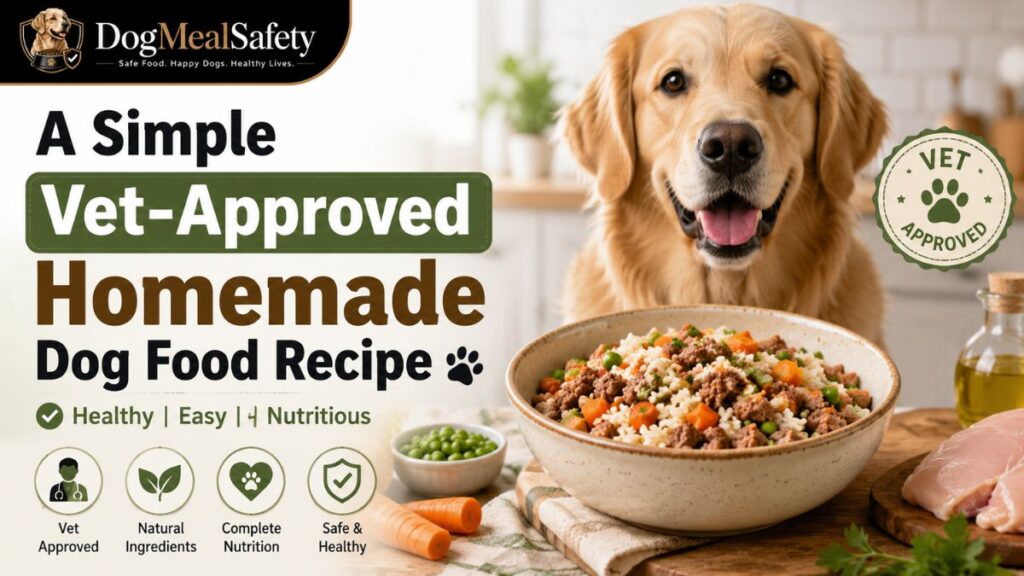
A Simple Vet-Approved Homemade Dog Food Recipe
This is a balanced base recipe for a healthy adult dog around 30 to 50 pounds. It makes about three days of food for a medium dog. Scale up or down proportionally, and confirm the exact portion with your vet.
Ingredients
- 1½ lb lean ground turkey (or skinless chicken thigh)
- 1½ cups cooked brown rice
- 1 cup cooked sweet potato, mashed
- 1 cup finely chopped carrots
- ½ cup chopped spinach or green beans
- 2 large eggs, with the shells ground into fine powder
- 1 tablespoon olive oil or fish oil
- 1 daily canine multivitamin (dosed for your dog’s weight)
How to prepare
Brown the turkey in a large pan over medium heat until fully cooked, with no pink remaining. Drain excess fat. Add the chopped vegetables and cook for four to five minutes until softened. Stir in the rice and sweet potato, then crack in the eggs and mix until the eggs are cooked through. Turn off the heat, drizzle in the oil, and mix in the ground eggshell powder. Let everything cool to room temperature before serving.
Portion it into daily servings and refrigerate. Add the multivitamin fresh at each meal so heat doesn’t break it down.
How Much Homemade Food to Feed Your Dog Each Day
Portion size depends on weight, age, activity, and whether your dog is spayed or neutered. Below is a starting point for healthy adult dogs. Split the daily amount into two meals.

| Dog’s weight | Daily amount of prepared food |
| 10 lb | About ¾ cup |
| 20 lb | About 1¼ cups |
| 30 lb | About 1¾ cups |
| 50 lb | About 2¾ cups |
| 70 lb | About 3½ cups |
| 90 lb | About 4½ cups |
Adjust up for active or working dogs, down for seniors and couch companions. Weigh your dog every two weeks for the first month. If he’s gaining or losing, tweak the portion by about 10 percent.
Human Foods You Should Never Feed Your Dog
The ASPCA Animal Poison Control Center tracks the calls it gets every year, and the same names keep repeating.

- Onions, garlic, chives, and leeks damage red blood cells and can cause anemia.
- Grapes and raisins can trigger sudden kidney failure, even in small amounts.
- Chocolate is dangerous, and the darker it is, the worse.
- Xylitol, a sweetener in some peanut butters, gum, and baked goods, causes low blood sugar and liver failure.
- Macadamia nuts cause weakness, tremors, and vomiting.
- Alcohol and raw yeast dough are both toxic; dough also expands inside the stomach.
- Caffeine — coffee grounds, tea bags, and energy drinks are all risks.
- Cooked bones splinter and can puncture the digestive tract.
- Avocado, heavy salt, and moldy food each cause problems in their own way.
If your dog eats any of these, call the ASPCA Animal Poison Control Center at 888-426-4435 or the Pet Poison Helpline at 855-764-7661.
Supplements That Turn a Good Meal into a Complete One

Whole ingredients cover most of what a dog needs. Three gaps usually need filling.
Calcium is non-negotiable in a home-cooked diet. Ground eggshell (about ½ teaspoon per pound of finished food) or a vet-recommended calcium supplement does the job.
Omega-3 fatty acids support joints, skin, and heart health. Fish oil dosed at roughly 20 mg of combined EPA and DHA per pound of body weight, or a serving of sardines two or three times a week, works well.
A canine multivitamin formulated for homemade diets fills in trace minerals and vitamins whole foods can’t consistently deliver.
Skip human vitamins. The doses and forms are wrong for dogs, and iron or vitamin D overdoses are genuinely dangerous.
How to Transition Your Dog to Homemade Food
Switching food overnight is a fast route to diarrhea. Stretch the change over seven days.
- Days 1–2: 25 percent homemade, 75 percent current food
- Days 3–4: 50/50
- Days 5–6: 75 percent homemade, 25 percent current food
- Day 7: 100 percent homemade
Watch for loose stools, gas, itching, or low energy. Mild digestive changes for a few days are normal. Anything lasting more than a week, check in with your vet.
Storage, Meal Prep, and What This Costs Compared to Kibble

Batch cooking makes the whole thing manageable. Cook two to three days’ worth at a time, refrigerate what you’ll use within four days, and freeze the rest in daily portions for up to three months. Thaw overnight in the fridge and warm slightly before serving so the food doesn’t hit the bowl fridge-cold.
On cost: a home-cooked diet for a 30-pound dog runs roughly $2 to $4 per day if you use grocery-store chicken thighs, rice, and seasonal vegetables. That’s more than mid-range kibble and roughly on par with premium fresh-delivery services like The Farmer’s Dog or Ollie. The trade-off is time in the kitchen — about an hour every three days once you have a system.
Final Thoughts
Cooking for your dog is a fair amount of work, and done right, it’s one of the most direct ways to look after his health. The recipes that go wrong aren’t wrong because they’re homemade. They’re wrong because they skip the math on calcium, omega-3s, and trace minerals a dog needs to stay healthy over years, not weeks. Start with a balanced recipe like the one above, add the right supplements, transition slowly, and get a vet’s eye on the plan every six to twelve months. Do that, and a home-cooked bowl becomes exactly what most owners hope it can be — real food, tailored to the dog in front of them.
Frequently Asked Questions
Can I feed my dog homemade food every day?
Yes, as long as the recipe is nutritionally balanced and includes the right supplements. Feeding an unbalanced recipe every day is what causes long-term problems.
Is chicken and rice good for dogs long-term?
Plain chicken and rice is fine for a few days when a dog has an upset stomach. As a permanent diet it’s incomplete — it lacks calcium, essential fatty acids, and several vitamins. Treat it as a base to build on, not a full meal.
Do homemade dog food recipes really need supplements?
For most recipes, yes. Calcium and a canine multivitamin are the two most common additions. The Stockman study is a reminder that even recipes written by vets often miss nutrients when supplements are left out.
Is raw or cooked homemade food better?
Cooked is safer. Raw diets carry salmonella and E. coli risks for both the dog and the humans handling the food, and the FDA and CDC advise against them. If you want to feed raw, work with a veterinary nutritionist to manage the risks.
How do I know my dog is doing well on the new diet?
Watch the basics — energy, coat quality, stool, weight, and appetite. Ask your vet to run a full bloodwork panel about six months in. That’s the clearest signal that the recipe is delivering what it should.
4 thoughts on “Homemade Dog Food Recipe: A Complete Vet-Friendly Guide to Preparing Healthy, Balanced Meals for Dogs at Home”