

Can dogs eat cantaloupe? Yes. Cantaloupe flesh is non-toxic and safe for most healthy dogs in small amounts, as long as the rind and seeds are removed. It is about 90 percent water, low in calories, and a good source of vitamins A and C.
Most problems come from how it is served. The rind can cause a blockage, the sugar adds up for small or diabetic dogs, and cantaloupe has been part of several U.S. food recalls, including one in April 2026. This guide covers the benefits and risks of cantaloupe for dogs, with portions by weight.
Is cantaloupe good for dogs? What the nutrition numbers show
Cantaloupe is a good occasional treat for dogs. According to USDA FoodData Central, 100 grams has 34 calories, about 90 grams of water, 7.9 grams of natural sugar, and useful amounts of vitamin A, vitamin C, and potassium, with almost no fat.
The orange color comes from beta-carotene, which a dog’s body turns into vitamin A for vision, skin, and immune health. Cantaloupe holds 169 micrograms per 100 grams, far more than watermelon or honeydew, much like other orange foods such as sweet potatoes and papaya. Dr. Tina Wismer, medical director of the ASPCA Animal Poison Control Center, lists cantaloupe among the safest fruits for dogs in Whole Dog Journal.
Two points most guides skip. Dogs make their own vitamin C in the liver, so the 36.7 milligrams in cantaloupe is a bonus, not a need. And a dog on a complete diet, commercial or a vet-approved homemade dog food recipe, already gets its vitamins. The real value of cantaloupe for dogs is as a swap: 34 calories per 100 grams, against 300 or more in many baked biscuits.
How much cantaloupe can a dog eat? Portions by weight
Keep cantaloupe inside the 10 percent treat rule, then go smaller for tolerance. A practical portion is one to two small cubes for toy breeds, about a quarter cup for a 25 to 50 pound dog, and up to half a cup for giant breeds.

| Dog weight | Cantaloupe per treat day | Approx. calories |
|---|---|---|
| Under 10 lb (4.5 kg) | 1 to 2 small cubes, about 1 tablespoon | 3 |
| 10 to 25 lb (4.5 to 11 kg) | 2 to 4 small cubes, about 2 tablespoons | 7 |
| 25 to 50 lb (11 to 23 kg) | About 1/4 cup | 14 |
| 50 to 90 lb (23 to 41 kg) | 1/3 to 1/2 cup | 18 to 27 |
| Over 90 lb (41 kg) | Up to 1/2 cup | 27 |
Here is the math for a 30 pound (13.6 kg) neutered adult dog. Its resting energy need is about 496 calories, from the formula vets use: 70 multiplied by body weight in kilograms raised to the 0.75 power. Daily needs run about 1.6 times that, or 793 calories, so the 10 percent treat budget is about 79 calories. A quarter cup of cubed cantaloupe, about 40 grams, supplies roughly 14 calories and 3 grams of sugar, under a fifth of that budget.
Calorie math alone would allow nearly a cup and a half, but that much water, fiber, and sugar at once often causes loose stool, so the table stays well below it. Offer one piece first, wait 24 hours, and shrink the portion on days with other treats.
Can dogs eat cantaloupe rind or skin?
No. Cantaloupe rind is tough, fibrous, and very hard for dogs to digest. A swallowed piece can cause choking, vomiting, or an intestinal blockage that may need surgery. Cut away all of the rind, including the firm pale green layer just underneath it.
Risk depends on piece size and dog size. A thin sliver chewed by a Labrador usually passes, while a palm-sized chunk gulped by a Dachshund can lodge in the small intestine. The netted rind also traps soil and bacteria, so put rinds straight into a lidded bin where dogs cannot reach them.
Can dogs eat cantaloupe seeds?
Cantaloupe seeds are not toxic to dogs, and a few swallowed by accident are rarely a problem. They offer no benefit, though, and a large mouthful can upset the stomach or add to blockage risk in small dogs, so scoop them out.
Sources disagree here. The American Kennel Club calls the seeds harmless, while others say to remove them. Melon seeds lack the cyanide-releasing compounds in apple seeds and cherry pits, but they are slippery, hard to chew, and pass mostly undigested, so scooping them out is the simpler habit. For seeds on purpose, plain roasted pumpkin seeds are a better choice.
7 easy rules for feeding cantaloupe to your dog safely
Safe feeding comes down to seven habits: check recalls, wash the melon, remove the rind, remove the seeds, cut dog-sized pieces, start small and stay within your dog’s portion, and serve it plain. Each step takes seconds and prevents the most common problems.
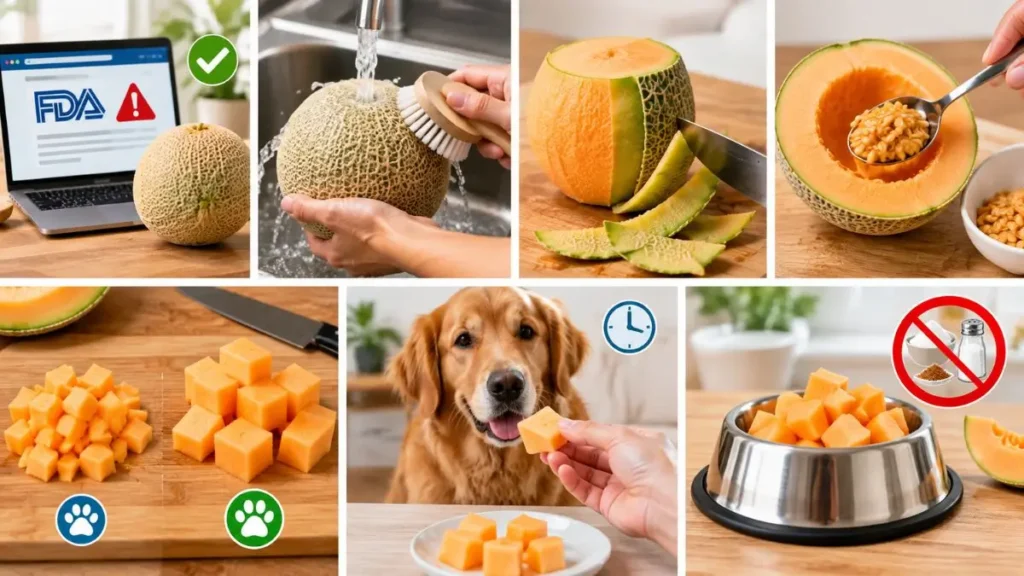
- Check for recalls. Before buying or cutting, look at the FDA recall list for any active cantaloupe notices.
- Wash and scrub the whole melon. Rinse it under running water and scrub the rind with a clean produce brush before the knife goes in.
- Remove all of the rind. Cut away the netted skin and the firm green layer beneath it.
- Scoop out every seed. A spoon clears the seed cavity in a few strokes.
- Cut pieces to fit your dog. Use about half-inch (1 cm) cubes for small dogs and puppies and one-inch (2.5 cm) cubes for large dogs.
- Start with one piece, then follow the portion table. Wait 24 hours after the first taste before offering a full portion.
- Serve it plain. Skip sugar, syrup, salt, and spice, and avoid canned, dried, or candied cantaloupe, for the same reason sweetened applesauce is a poor dog treat.
Easy ways to serve cantaloupe to dogs
Fresh cubes are the simplest option. Frozen cubes make a cooling summer treat, a plain puree works on a lick mat or in a rubber toy, and a spoonful mixed with plain yogurt makes a quick frozen snack for dogs that tolerate dairy.
Frozen cantaloupe beats vanilla ice cream on a hot day, since ice cream carries fat, sugar, and lactose that upset many stomachs. Cut pieces small before freezing, because a fast eater can choke on a hard frozen cube. For a longer-lasting treat, blend cantaloupe with unsweetened plain Greek yogurt, freeze it in an ice cube tray, and check the label for xylitol, which is toxic to dogs. A few cubes frozen with blueberries make a mixed fruit pop.
Cantaloupe vs honeydew vs watermelon for dogs
All three melons are safe for dogs when the rind and seeds are removed. Cantaloupe has the most vitamin A, vitamin C, and potassium. Watermelon has the least sugar and the most water. Honeydew has slightly more sugar per gram than cantaloupe.
| Per 100 g, raw (USDA) | Cantaloupe | Honeydew | Watermelon |
|---|---|---|---|
| Calories | 34 | 36 | 30 |
| Water | 90 g | 90 g | 91 g |
| Natural sugar | 7.9 g | 8.1 g | 6.2 g |
| Fiber | 0.9 g | 0.8 g | 0.4 g |
| Vitamin A | 169 mcg | 3 mcg | 28 mcg |
| Vitamin C | 36.7 mg | 18 mg | 8.1 mg |
| Potassium | 267 mg | 228 mg | 112 mg |
All three belong to the gourd family, Cucurbitaceae, with cucumber and zucchini. Cantaloupe and honeydew are even the same species, Cucumis melo, and the netted U.S. cantaloupe is technically a muskmelon. For a dog watching its weight or blood sugar, watermelon is the lighter pick. For a healthy dog, cantaloupe gives the most nutrition per bite.
Why cantaloupe keeps appearing in food recalls
Cantaloupe’s netted rind traps soil and bacteria, and a knife can drag those germs into the flesh. It is one reason cantaloupe has been tied to several U.S. outbreaks. Scrubbing the rind, checking recalls, and chilling cut melon protect dogs and people alike.
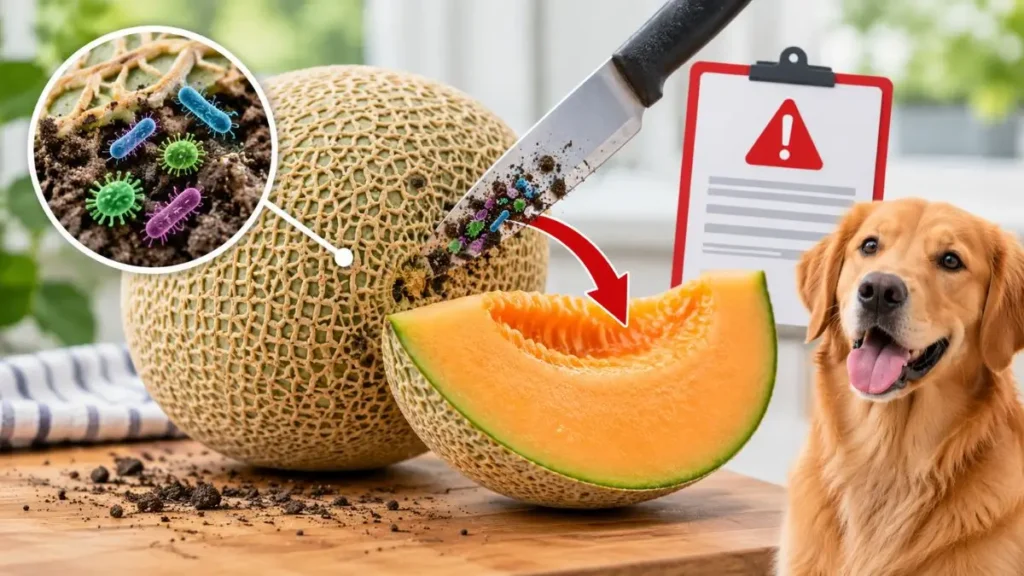
In 2011, Listeria in cantaloupes from Jensen Farms in Colorado caused 147 illnesses and 33 deaths across 28 states, one of the deadliest foodborne outbreaks in U.S. history. In late 2023, Salmonella in Malichita and Rudy brand cantaloupes sickened 407 people in 44 states, with 158 hospitalized and six deaths, according to the CDC. In April 2026, Ayco Farms recalled 8,302 cartons of whole cantaloupes sold in Florida, New York, Pennsylvania, and California over possible Salmonella contamination, as reported by Food Safety News.
Dogs can get sick from Salmonella too, with vomiting, diarrhea, or fever, and they can shed the bacteria in their feces while looking healthy, a risk for young children and older adults at home. Contaminated fruit looks and smells normal, so scrub the rind, refrigerate cut melon within two hours (one hour above 90 F or 32 C), and discard anything from a recalled lot.
Can dogs eat cantaloupe with diabetes, kidney disease, or pancreatitis?
Healthy adult and senior dogs can have small amounts. Dogs with diabetes, obesity, kidney disease, or a very sensitive stomach need a vet’s approval first, and puppies should start with one tiny piece. Cantaloupe is nearly fat-free, so pancreatitis is less of a concern.
For diabetic dogs, 7.9 grams of sugar per 100 grams is moderate, but insulin dosing depends on consistent meals, so clear any fruit with the vet. Strawberries have about 4.9 grams per 100 grams if a lower-sugar option is needed. Vets often monitor potassium in dogs with chronic kidney disease, and cantaloupe has 267 milligrams per 100 grams, so ask first. With under 0.2 grams of fat per 100 grams, cantaloupe lacks the fat that usually triggers pancreatitis, though dogs in recovery should eat only vet-approved foods. Its soft flesh also suits seniors with sore teeth.
What to do if your dog ate cantaloupe rind or too much cantaloupe
Remove any leftovers, estimate how much was eaten, and watch your dog for 24 to 72 hours. Loose stool from too much flesh usually passes within a day. Repeated vomiting, belly pain, straining, or refusing food after eating rind needs a vet the same day.
Call your vet right away, without waiting for symptoms, if a small dog swallowed a large piece of rind or a big mouthful of seeds. Do not induce vomiting at home unless a vet tells you to, since hydrogen peroxide can injure the stomach and esophagus. For mild upset from too much flesh, offer water and skip treats for a day. Your vet can decide whether an X-ray is needed to rule out a blockage.
Frequently asked questions about dogs and cantaloupe
In short, dogs can eat cantaloupe a few times a week but not every day. Too much can cause diarrhea, puppies and diabetic dogs need extra care, and frozen cubes are fine. Skip dried cantaloupe, store-bought juice, and fruit salads that contain grapes.
Can dogs eat cantaloupe every day?
It is better not to. Even small daily portions add up in sugar and calories over a week, and daily fruit can soften stools. Two or three times a week, within your dog’s weight-based portion, gives the hydration and vitamins without those downsides.
Is cantaloupe safe for dogs with sensitive stomachs?
Usually, in very small amounts. Start with one small cube and wait a full day, since the water and fiber can loosen stools. Dogs with chronic digestive disease or on a prescription diet should only get cantaloupe if their vet approves the addition.
Can cantaloupe give dogs diarrhea?
Yes, if a dog eats too much or is new to it. The water, fiber, and fruit sugar can loosen stools, often within several hours. It normally clears within a day. Diarrhea lasting longer than 24 hours, or with blood or vomiting, needs a vet.
Can puppies eat cantaloupe?
Yes, once they are weaned and eating solid puppy food. Start with one pea-sized piece of flesh, with no rind or seeds, and watch for loose stool over the next day. Puppies need their calories from complete puppy food, so keep fruit rare.
Can dogs eat cantaloupe that is overripe?
Slightly soft, sweet-smelling cantaloupe is fine. Throw it out if it smells sour or alcoholic, leaks liquid, or shows mold, because fermenting or moldy fruit can upset a dog’s stomach and mold can produce toxins. Never feed melon from the compost bin.
Can dogs eat frozen cantaloupe?
Yes. Frozen cantaloupe cubes make a cooling treat on hot days and slow down fast eaters. Cut them smaller than fresh pieces, since frozen cubes are hard, and let very small dogs or seniors with dental problems have them slightly thawed.
Can dogs eat cantaloupe and watermelon together?
Yes. Both melons follow the same rules: no rind, no seeds, small cubes. Count them as one combined treat portion rather than a full serving of each, since the water and sugar add up. A mixed melon cup works well frozen on warm days.
Can dogs be allergic to cantaloupe?
It is rare but possible. Watch for itching, hives, red skin, facial swelling, vomiting, or diarrhea after the first few tastes. Stop feeding it if you see any of these, and treat swelling around the face or throat, or trouble breathing, as an emergency.
Can dogs eat dried cantaloupe?
It is best to skip it. Drying removes the water and concentrates the sugar, so each piece carries more sugar than a fresh cube. Store-bought dried melon is often candied with added sugar or preserved with sulfites. Fresh or frozen cantaloupe is the better choice.
Can dogs eat cantaloupe from a fruit salad?
Only if you pick out plain cantaloupe cubes. Fruit salads often contain grapes, which can cause kidney failure in dogs, plus cherries or sweetened yogurt. Grapes and raisins are toxic even in small amounts, so never let your dog finish a mixed bowl.
What fruits can dogs not eat?
Grapes, raisins, and currants are the most dangerous because they can cause kidney failure. Cherries, peaches, and plums are risky because of their pits. Avocado is best avoided. Safe picks include kiwi and berries. For anything else, use our dog food safety checker.
Bottom line: can dogs eat cantaloupe safely?
Yes. Most dogs can enjoy cantaloupe as a hydrating, low-calorie treat a few times a week. Wash the melon, remove all rind and seeds, cut dog-sized cubes, and keep to the portion for your dog’s weight, inside the daily treat budget.
Dogs with diabetes, obesity, or kidney disease need a vet’s go-ahead before any fruit is added. Cantaloupe also has a real history of Salmonella and Listeria outbreaks, so checking the FDA recall list and scrubbing the rind are worth the extra minute.
If your dog steals a rind, watch for vomiting, belly pain, or straining over the next few days, and call your vet if any of those appear. Handled this way, cantaloupe is one of the easier fruits to share.
How this guide was researched
Nutrition figures come from USDA FoodData Central raw fruit entries. Outbreak and recall numbers come from CDC investigation notices and FDA recall reports. Portions use the standard resting energy formula veterinarians apply. Last reviewed September 30, 2026, and updated when new recalls or guidance appear.