

Yes, dogs can eat pomegranate, but only the arils, the small, juicy seed sacs inside the fruit, and only in small amounts as an occasional treat. Pomegranate is not toxic to dogs in the way that grapes or raisins are, but it is not an ideal dog food either. Its seeds, rind, and pith can cause stomach upset, and its juice is sugary and acidic, so it should not be given freely.
The safest approach is simple: a few plain arils, offered occasionally, with the rind, stem, and white pith removed. If a dog eats a large amount of pomegranate, or eats the rind or pith, watch for stomach upset and contact a veterinarian if symptoms are worrying or persistent.
This guide explains what part of a pomegranate is safe, what to avoid, how pomegranate compares with other fruits, and how to serve it in a way that suits most dogs.
What Is a Pomegranate?
A pomegranate is a round fruit with a tough, leathery rind and chambers filled with arils, small juicy sacs surrounding a seed. For dogs, only arils matter, because rind, pith, and stem are tough, bitter, or woody. Juice is sugary and acidic.
It has a crown-like calyx at one end and is divided into chambers filled with hundreds of arils. Each aril is a small, jewel-like sac of juice surrounding a seed. People eat the arils fresh, sprinkled over salads and desserts, or pressed into juice.
For dogs, the distinction between arils and the rest of the fruit is important. The arils are soft and juicy, while the rind is tough and bitter, the pith is fibrous and astringent, and the stem is woody. Dogs should not eat the rind, pith, or stem, and they should not be given pomegranate juice as a drink.
Pomegranate is rich in antioxidants and vitamin C in human nutrition, and it has a tart, sweet flavor that many people enjoy. Those qualities do not automatically make it a necessary food for dogs, whose nutritional needs are met by a complete dog food. Pomegranate can be an occasional extra, but it is not a required part of a dog’s diet.
Seen part by part, the distinction is simple: arils are the soft, juicy sacs around a seed and the only part treated as suitable for dogs, while the rind is tough and leathery, the pith is fibrous, and the stem is woody, so none of those parts should be offered. Juice is different because it is sugary and acidic and should not be given as a drink, even though it comes from the same fruit.
Parts of a pomegranate
| Part | Description and guidance from the article |
|---|---|
| Arils | Small, juicy sacs surrounding a seed; the part people eat; the only part that matters for dogs |
| Rind | Tough, leathery, bitter; dogs should not eat it |
| Pith | Fibrous and astringent; dogs should not eat it |
| Stem | Woody; dogs should not eat it |
| Juice | Sugary and acidic; dogs should not be given pomegranate juice as a drink |
| Human-nutrition note | A pomegranate is not a typical dog food. It is a sweet-tart, juicy fruit with a tart, sweet flavor and a chewy seed. |
Is Pomegranate Safe for Dogs?
Pomegranate arils are generally considered safe in small amounts, and pomegranate is not listed as toxic like grapes, raisins, or currants. Large amounts can still irritate the stomach, while rind and pith may cause stomach upset. Servings must stay small.
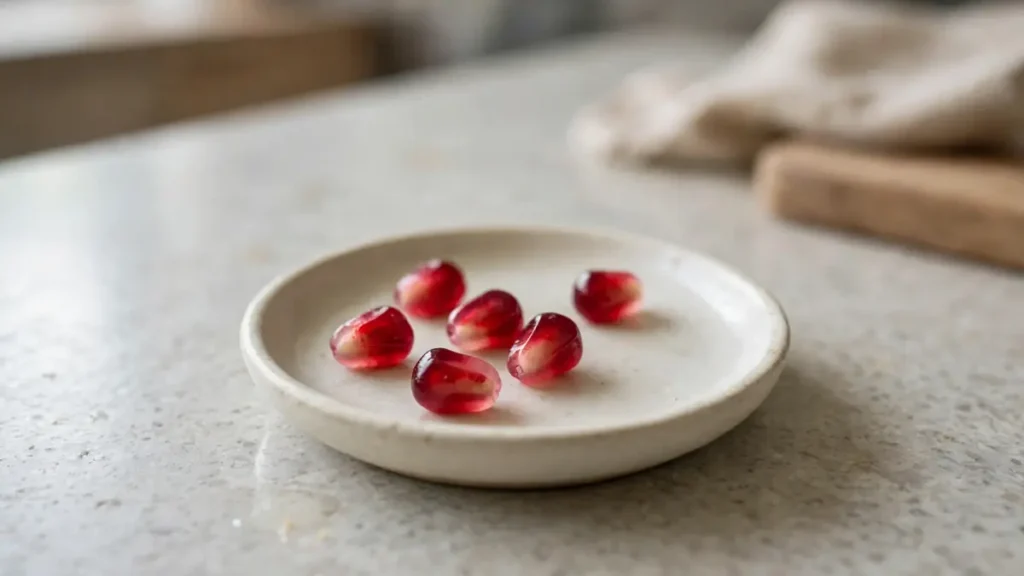
The main risks are digestive. Pomegranate arils contain seeds, and eating a large number of arils can irritate a dog’s stomach, leading to vomiting, diarrhea, or abdominal discomfort. Some dogs are more sensitive than others, and a dog that has never eaten pomegranate before may react more strongly on a first try.
The rind and pith are a greater concern. They are tough, hard to digest, and can cause stomach upset or, in larger amounts, a blockage risk, especially for small dogs. A dog that chews and swallows pieces of rind should be monitored, and a veterinarian should be contacted if the dog shows worrying symptoms such as repeated vomiting, abdominal pain, or difficulty passing stools.
Pomegranate juice should also be avoided as a dog drink. It is concentrated, sugary, and acidic, and commercial juices often contain added sugar or other ingredients. A few arils are a better choice than juice, and water remains the best drink for dogs.
Not all guidance agrees on fresh pomegranate. Some guidance describes a few plain arils as generally acceptable, while other guidance advises against raw fruit, so readers may see different advice on the same fruit. This guide does not settle that difference, and the cautious approach in this section, plain arils only, with rind and pith removed, still applies.
Pomegranate safety risks
| Risk | Detail from the article |
|---|---|
| Arils in small amounts | Generally considered safe; pomegranate is not listed as toxic like grapes, raisins, or currants |
| Large number of arils | Seeds can irritate the stomach: vomiting, diarrhea, or abdominal discomfort; first-time dogs may react more strongly |
| Rind and pith | Tough, hard to digest; stomach upset or, in larger amounts, blockage risk, especially for small dogs; contact a veterinarian for repeated vomiting, abdominal pain, or difficulty passing stools |
| Juice | Concentrated, sugary, acidic; commercial juices often contain added sugar or other ingredients; water remains the best drink for dogs |
Benefits of Pomegranate for Dogs
Pomegranate arils offer antioxidants, vitamin C, fiber, and hydration, and their juicy texture can add enrichment when sprinkled over food or offered as a training treat. These benefits should stay in proportion. Pomegranate treats no condition and is not needed with a complete diet.
They contain antioxidants, which help protect cells from damage, and vitamin C, which supports immune function and general health. They also contain fiber, which can support normal digestion in dogs that tolerate them well.
The arils are also hydrating, because they are mostly water and juice, and their bright color and juicy texture can make them an interesting enrichment food for some dogs. Sprinkling a few arils over a dog’s regular food, or offering them as a training treat, can add variety without adding a large amount of fat or calories, provided the amount stays small.
As with any fruit, these benefits should be kept in proportion. Pomegranate does not treat any condition, and it should not be used as a supplement for a dog with a health problem unless a veterinarian advises it. A dog that already eats a complete diet does not need pomegranate to be healthy, and the fruit’s value lies in being an occasional, enjoyable extra rather than a nutritional necessity.
How to Serve Pomegranate Safely
Cut the pomegranate open, remove a small number of arils, and discard rind, pith, stem, and damaged arils, serving them plain with no sugar, syrup, or other ingredients. Offer only a few arils first, and watch for stomach upset over the next day.
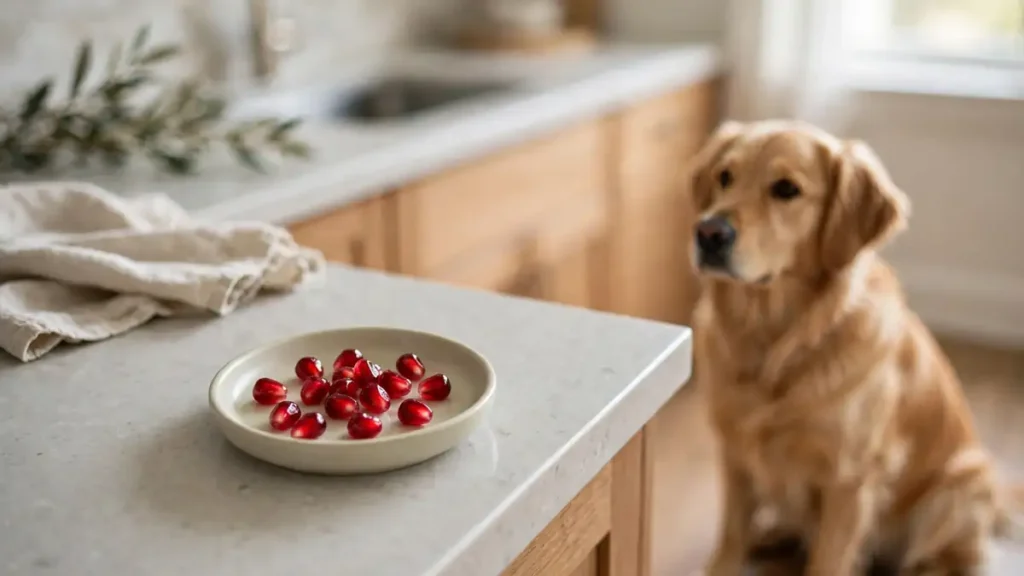
Cut the pomegranate open and discard the stem and any damaged arils. Rinse the arils lightly if they have come into contact with the rind.
Offer only a few arils at first, especially if the dog has never had pomegranate before. Watch for stomach upset over the next day or so. If the dog tolerates them well, a small amount can be offered occasionally, either on its own or mixed into the dog’s food. For small dogs, it can help to lightly crush the arils to reduce any choking risk, although arils are generally soft.
Do not offer pomegranate seeds that have been dried, candied, or coated in sugar or chocolate. Do not offer pomegranate juice, pomegranate-flavored drinks, or any pomegranate products with added sugar.
The risk picture changes with the form in which the fruit is eaten: a small serving of plain arils is a different matter from a dog eating a whole fruit including rind, because the rind and pith carry the greater concern described in this guide. That is why preparation that removes rind and pith and keeps the serving plain and small matters more than the fruit alone.
Serving pomegranate safely, step by step
| Step | Detail from the article |
|---|---|
| Prepare | Cut open, remove a small number of arils, discard rind, pith, stem, and damaged arils; rinse lightly if arils touched the rind; serve plain, no sugar, syrup, or other ingredients |
| First serving | A few arils only; watch for stomach upset over the next day or so |
| If tolerated | Small amount occasionally, on its own or mixed into the dog’s food |
| Small dogs | Lightly crush the arils to reduce choking risk, although arils are generally soft |
| Do not offer | Dried, candied, or sugar- or chocolate-coated seeds; pomegranate juice; pomegranate-flavored drinks |
Pomegranate and Special Diets
If a dog is on a special diet, has diabetes, a sensitive stomach, or another medical condition, check with a veterinarian before offering pomegranate. Fruit sugars, even in natural form, may not suit every dog. A veterinarian can advise on fit.
Pomegranate for Puppies, Older Dogs, and Sensitive Dogs
Puppies can try a small number of arils once eating solid food, but treats should stay minimal. Older dogs may enjoy arils, yet dental problems or diabetes call for caution. Start sensitive dogs with a few arils, followed by observation, and stop if problems appear.

Their diets are carefully balanced for growth. A veterinarian can advise on suitable treats for a puppy’s age and size, and on whether fruit is appropriate at that stage.
Older dogs may enjoy soft, juicy foods, and pomegranate arils can fit that description. However, older dogs are more likely to have dental problems, sensitive stomachs, or conditions such as diabetes that affect fruit intake. Any new food should be introduced cautiously, and a veterinarian should be consulted if the dog has a medical condition.
Dogs with sensitive stomachs should be introduced to pomegranate especially slowly. A few arils, followed by observation, is safer than a larger serving on the first try. If a dog shows vomiting, diarrhea, or loss of appetite after eating pomegranate, stop offering it and speak to a veterinarian, who can advise whether the fruit was the likely cause or whether another issue needs assessment.
Pomegranate Compared With Other Fruits
Unlike grapes and raisins, pomegranate is not listed as toxic, but unlike blueberries, strawberries, or banana, it is not usually a regular dog treat, because seeds and rind can cause more stomach upset. It is best as an occasional extra.
It can help to place pomegranate in context with other fruits that owners often ask about. Unlike grapes and raisins, pomegranate is not listed as toxic to dogs, but unlike blueberries, strawberries, or banana, it is not usually recommended as a regular dog treat, because its seeds and rind can cause more stomach upset.
Fruits that are often used as dog treats tend to be soft, easy to chew, and low in seeds or rind. Pomegranate arils are soft, but they do contain seeds, and the fruit as a whole requires more preparation than a simple berry or banana slice. That preparation, plus the need to keep amounts small, is why pomegranate is best treated as an occasional extra rather than a go-to treat.
Owners who want a regular fruit treat for their dog may find simpler options more practical, while keeping pomegranate for occasional variety. The key principle remains the same for all fruits: plain, fresh, and in a small amount, with any rind, pits, or seeds that pose a risk removed first.
Pomegranate compared with other fruits
| Fruit | Comparison stated in the article |
|---|---|
| Grapes and raisins | Listed as toxic to dogs and must be avoided entirely; pomegranate is not listed as toxic |
| Blueberries, strawberries, banana | Regular dog treats by comparison; pomegranate is not usually a regular treat because seeds and rind can cause more stomach upset |
| Berry or banana slice | Simpler and needs less preparation than a whole pomegranate |
| Regular fruit treats in general | Tend to be soft, easy to chew, and low in seeds or rind |
| Principle for all fruits | Plain, fresh, and in a small amount, with any rind, pits, or seeds that pose a risk removed first |
Pomegranate at a Glance
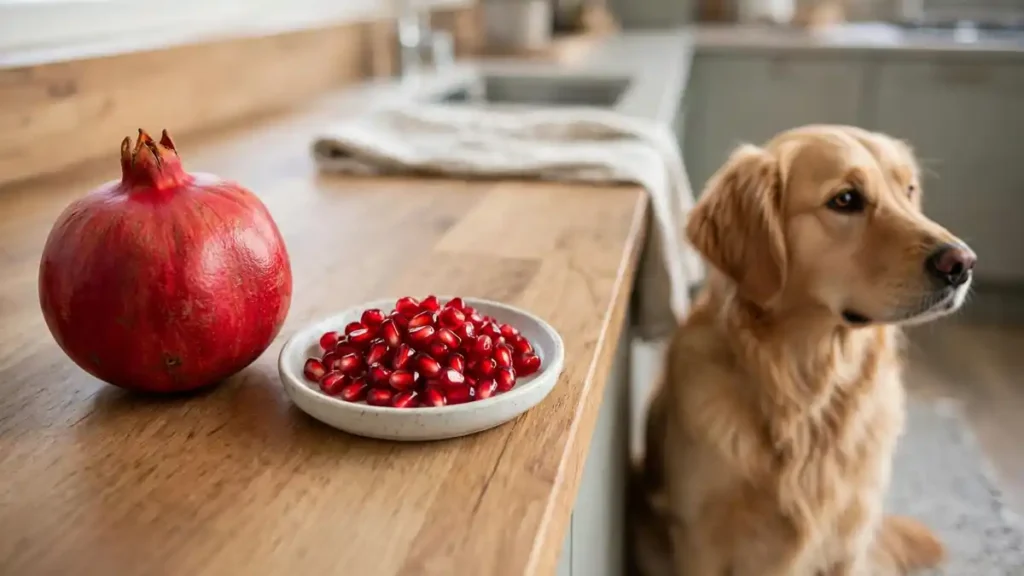
At a glance, fresh plain arils are suitable in small amounts occasionally, while rind, pith, and stem are not, and pomegranate-flavored drinks or products are not recommended.
| Part or product | Suitable for dogs? | Notes |
|---|---|---|
| Fresh pomegranate arils, plain | Yes, in small amounts, occasionally | Remove rind and pith first. Watch for stomach upset. |
| Pomegranate rind, pith, or stem | No | Tough, hard to digest, and can cause stomach upset or blockage risk. |
| Pomegranate juice | No, as a drink | Sugary, acidic, and often contains added ingredients. |
| Dried, candied, or chocolate-coated pomegranate | No | Added sugar and other ingredients make these unsuitable. |
| Pomegranate-flavored drinks or products | No | Assume added sugar or flavorings unless confirmed plain. |
Frequently Asked Questions
To summarize, dogs can eat pomegranate arils in small amounts. Rind and pith should always be removed, servings should stay small, and dogs with sensitive stomachs or medical conditions should avoid pomegranate or check with a veterinarian first. Plain arils are the only safe option.
Can dogs eat pomegranate?
Yes, dogs can eat plain pomegranate arils in small amounts as an occasional treat. Do not feed the rind, pith, or stem, and do not give pomegranate juice as a drink.
Is pomegranate toxic to dogs?
Pomegranate is not listed as toxic to dogs in the way grapes and raisins are, but large amounts, or the rind and pith, can cause stomach upset. Keep amounts small and watch for symptoms.
Can dogs eat pomegranate seeds?
The arils contain small seeds, and a few arils are generally fine for most dogs. A large number of arils, or seeds eaten in bulk, can irritate the stomach, so keep servings small.
Can puppies eat pomegranate?
Puppies can try a very small number of plain arils once they are eating solid food, but treats should be kept minimal during growth. Check with a veterinarian for age-appropriate treats.
What if my dog eats pomegranate rind?
Pomegranate is generally well tolerated in small amounts, but some dogs develop vomiting, diarrhea, or soft stools. A sensitive stomach, a large portion, or eating rind or pith can make symptoms more likely. If signs persist or worsen, stop offering pomegranate and contact a veterinarian.
Is pomegranate juice safe for dogs?
No, pomegranate juice is not recommended as a dog drink. It is sugary and acidic, and commercial juices often contain added ingredients. Water is the best drink for dogs.
How much pomegranate can a dog eat?
This guide does not set a fixed amount, because the right amount depends on the individual dog. A few plain arils, offered occasionally, is the safest approach, and a veterinarian can advise for a specific dog.
The Bottom Line
Yes, dogs can eat a few pomegranate arils, with rind and pith removed, as an occasional treat. Plain arils in small amounts are the safest option, while juice, pulp, and the peel should be avoided. Pomegranate is not toxic like grapes, but it is not a regular dog treat, because seeds and rind can cause stomach upset if eaten in larger amounts. Keep it plain and small, and watch how a dog responds.
Keep it plain, keep it small, and watch how your dog responds. If your dog has a medical condition, a sensitive stomach, or shows worrying symptoms after eating pomegranate, contact your veterinarian for advice.
Related guides
Sources
AKC, ASPCA, PetMD, and VCA Animal Hospitals, cited by name for general guidance on fruit safety and dog nutrition.
Disclaimer
This article is for general information only and is not veterinary advice for an individual dog. It does not diagnose, treat, or replace a veterinary examination. If your dog eats pomegranate rind, eats a large amount, or shows worrying symptoms, contact your veterinarian.


