

When your dog comes limping in from the yard with a fresh scrape on their paw, the first thing most of us do is head straight for the medicine cabinet. Neosporin is sitting right there, and it works on our own cuts and scrapes so it’s only natural to wonder whether it’s safe to dab some on your dog too.
The short answer isn’t a simple yes or no. Neosporin can be used on dogs in very specific situations, but it also carries real risks that every pet owner should understand before reaching for that little tube. This guide walks through exactly when it’s appropriate, when it isn’t, how to use it correctly if your vet gives the go-ahead, and what safer alternatives exist for treating your dog’s minor wounds.
Quick Answer
Neosporin is generally considered low-risk in small amounts on very minor, superficial wounds, but it isn’t formulated for dogs and can cause stomach upset if licked or ingested. It should never be used on deep wounds, puncture wounds, or anywhere near the eyes without your veterinarian’s input. When in doubt, a quick call to your vet is always the safer move.
What Is Neosporin, Exactly?
Neosporin is an over-the-counter triple-antibiotic ointment designed for human first aid. It combines three active ingredients:
- Neomycin – targets a broad range of bacteria
- Polymyxin B – works against gram-negative bacteria commonly found in soil and water
- Bacitracin – helps prevent infection and supports the skin’s healing environment
Together, these ingredients are effective at reducing the risk of bacterial infection in minor human cuts, scrapes, and burns. The formula itself isn’t inherently poisonous to dogs, but “made for humans” and “safe for dogs” aren’t the same thing which is where most of the confusion comes from.
Why Isn’t Neosporin Made for Dogs?
Dog skin and human skin aren’t identical. A dog’s skin has a different pH balance, is generally thinner in some areas and thicker in others (especially around the paw pads), and has a much lower sweat gland density than human skin. Dogs also have a strong instinct to lick anything applied to their body, which humans generally don’t do to a healing wound. That single behavioral difference is the main reason a product perfectly safe for people can turn into a problem for a dog. The risk usually isn’t the ointment sitting on the skin, it’s the ointment ending up in your dog’s stomach.
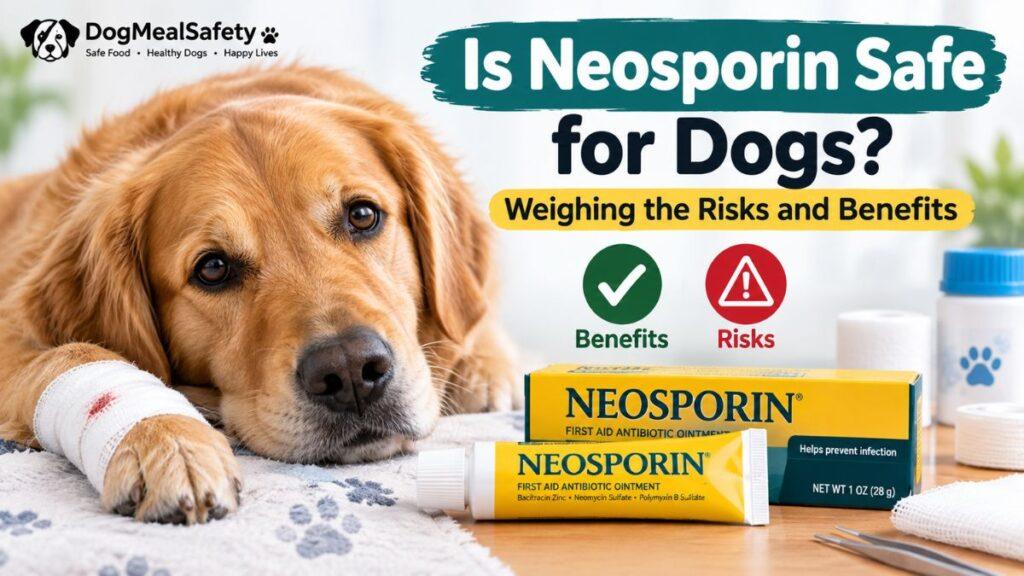
Is Neosporin Safe for Dogs? Weighing the Risks and Benefits
Potential Risks
- Ingestion issues – Dogs frequently lick wounds, and swallowing Neosporin can lead to vomiting, diarrhea, or loss of appetite. Large or repeated amounts of neomycin can, in rare cases, cause more serious intestinal irritation.
- Allergic reactions – Some dogs are sensitive to one or more of the three antibiotics, which can show up as redness, swelling, hives, or increased itching at the application site. In rare, severe cases, a dog can have an anaphylactic reaction that needs immediate emergency care.
- Delayed proper treatment – Applying Neosporin to a wound that actually needs stitches, drainage, or prescription antibiotics can create a false sense of security and push back the care your dog really needs.
- Pramoxine-containing formulas – Certain Neosporin variants add a topical pain reliever called pramoxine, which is more likely to cause adverse reactions in dogs than the standard triple-antibiotic formula.
Potential Benefits
Used correctly, on the right kind of wound, Neosporin’s antibacterial ingredients can help reduce infection risk and keep the area slightly moist, which supports healing. The benefit is real it’s just narrower than most people assume, and it only applies to minor, clean, superficial injuries.
Puppies vs. Adult Dogs
Age matters more than most pet owners realize. Puppies have less developed immune systems and a lower body weight, which means the same amount of Neosporin that might cause mild symptoms in an adult dog could affect a puppy more significantly if ingested. Puppies are also more likely to lick and chew at anything unfamiliar on their skin. If you have a puppy with a minor wound, it’s best to call your veterinarian before applying anything rather than assuming adult-dog guidance applies the same way.
How Much Neosporin Is Safe to Use?
This is where most articles on this topic fall short. “just a small amount” isn’t very useful guidance on its own. As a general rule of thumb, once your vet has approved topical use:
- Small dogs (under 20 lbs): A very thin film, roughly the size of a grain of rice, applied once.
- Medium dogs (20–50 lbs): A thin layer about pea-sized, applied once.
- Large dogs (50+ lbs): Slightly more coverage is fine for a larger wound area, but still a thin film rather than a visible glob.
In every size category, the goal is a thin, barely-there layer, never a thick coating. More ointment doesn’t mean more protection; it just means more product available for your dog to lick off.
How to Apply Neosporin to a Dog (Step by Step)
- Clean the wound first. Rinse gently with lukewarm water and, if recommended by your vet, a pet-safe antiseptic. Pat the area dry with a clean towel and don’t rub.
- Apply a thin layer. Use a cotton swab or clean fingertip to spread a small amount of the original (non-pain-relief) formula directly on the wound.
- Prevent licking immediately. Distract your dog with a walk, a puzzle toy, or a chew for the next 10–15 minutes so the ointment has a chance to absorb before they can reach it.
- Cover if possible. A light, breathable bandage or e-collar limits access without cutting off circulation or airflow to the wound.
- Monitor for 24–48 hours. Watch for increased redness, swelling, discharge, or signs your dog feels unwell.
Sensitive Areas: Paws, Nose, Eyes, and Ears
Paws and noses are high-risk zones simply because dogs lick and rub these areas constantly, making ingestion far more likely. If your dog has a cracked nose or a cut paw pad, ask your vet whether Neosporin is appropriate before applying it, and plan on covering the area if at all possible.
The eyes are a different matter entirely; the standard Neosporin ointment sold for skin should never go anywhere near a dog’s eyes. There is a separate product, Neosporin Ophthalmic, formulated specifically for eye use in humans, but it should still only be used on a dog under direct veterinary instruction, since eye tissue is far more delicate and prone to irritation. Ears fall into a similar category: the ear canal has its own sensitive lining, and topical skin ointments aren’t designed to be used inside it.
What Happens If a Dog Licks or Eats Neosporin?
A small lick here and there is unlikely to cause serious harm, but it’s still worth watching closely. Depending on the amount ingested, symptoms can include:
- Vomiting or diarrhea
- Loss of appetite
- Lethargy or unusual quietness
- Drooling or lip-smacking
- Signs of an allergic reaction, such as facial swelling or difficulty breathing (rare, but an emergency if it happens)
If your dog eats a significant amount of Neosporin, or shows any concerning symptoms, call your veterinarian or an animal poison control hotline right away:
- ASPCA Animal Poison Control Center: (888) 426-4435 (consultation fee may apply)
- Pet Poison Helpline: (855) 764-7661 (consultation fee may apply)
Both lines are staffed 24/7 by professionals who can tell you whether home monitoring is enough or whether your dog needs to be seen immediately.
A Note on Pain-Relief (Pramoxine) Formulas
Standard Neosporin and “Neosporin + Pain Relief” are not interchangeable when it comes to pets. The pain-relief version contains pramoxine, an ingredient more likely to cause adverse reactions in dogs. If a vet has approved topical Neosporin for your dog, stick strictly to the original triple-antibiotic formula, and avoid any pain-relief, itch-relief, or scar-treatment variants altogether.
Vet-Approved Alternatives to Neosporin
If you’d rather skip the guesswork, there are several pet-specific options designed with dogs in mind:

- Chlorhexidine solution (diluted) – a widely used antiseptic rinse for cleaning minor wounds
- Povidone-iodine solution (diluted) – another vet-recommended option for flushing out debris and reducing bacteria
- Pet-specific antimicrobial wound sprays or gels – several brands make wound care products formulated specifically to be safe even if licked
- Natural, vet-approved soothing options – small amounts of pure aloe vera gel or coconut oil are sometimes used for mild skin irritation, but always confirm with your vet first, since not all “natural” products are dog-safe
Cost Comparison
A tube of standard Neosporin typically runs $5–$8 at most drugstores. Pet-specific antiseptic sprays or wound gels usually cost somewhere between $12–$25, and a vet visit with a prescribed treatment can range higher depending on the wound. For truly minor scrapes, the cost difference is modest but for anything beyond a superficial scratch, the extra cost of a proper pet-formulated product (or a vet visit) is generally worth avoiding complications down the line.
Signs Your Dog Needs a Veterinarian, Not a Home Remedy
Call your vet promptly if you notice any of the following:
- The wound is deep, wide, or won’t stop bleeding
- There’s redness, swelling, warmth, discharge, or a foul smell
- Your dog is excessively licking, biting, or guarding the area
- The wound is near the eyes, ears, or a joint
- You’re not sure how the injury happened (possible bite wounds need special attention)
- Your dog is limping, lethargic, or seems to be in pain
Preventing Wounds and Stopping the Licking Cycle
- Elizabethan collars (e-collars) – the classic plastic cone, still one of the most reliable options
- Soft recovery collars – a more comfortable alternative that still blocks access
- Breathable bandages – protect the wound without trapping moisture, as long as they’re not wrapped too tightly
- Vet-approved bitter-tasting sprays – can discourage licking, but should only be used with your vet’s recommendation
- Regular grooming and yard checks – spotting hazards early (sharp objects, loose fencing) helps prevent injuries before they happen
The Bottom Line
Neosporin isn’t strictly off-limits for dogs, but it’s also not a universal fix for every scrape and cut. It works best as a short-term, vet-approved option for truly minor, superficial wounds and it should never replace professional care for anything deeper, infected, or located near sensitive areas like the eyes. When your dog gets hurt, a quick call to your veterinarian is always the safest first step, so you know exactly what your pup needs and how to help them heal properly.
Frequently Asked Questions
Can I put Neosporin on my dog’s cut?
Only for very minor, superficial cuts, and ideally after checking with your vet. Deeper or infected wounds need professional treatment.
Is Neosporin toxic if a dog licks it?
A small lick usually isn’t dangerous, but ingesting larger amounts can cause vomiting, diarrhea, or an allergic reaction. Contact your vet if you’re concerned.
Can you use Neosporin on a dog’s eye?
No standard Neosporin ointment should never be applied near the eyes. Only a vet-directed ophthalmic product is appropriate for eye-area issues.
How much Neosporin is safe for a dog?
A very thin layer is the general guideline roughly rice-grain to pea-sized depending on your dog’s size, never a thick application.
Is Neosporin safe for puppies?
Puppies are more sensitive due to their smaller size and developing immune systems. Always check with your vet before using Neosporin on a puppy.