

About one in twenty of the allergy patients seen by Cornell dermatologist Dr. Elizabeth Falk tested positive for cat dander in a strong way. It is a small share, and it still proves a dog can react to a cat in the same home.
Can Dogs Be Allergic to Cats?

Yes, dogs can be allergic to cats, but it is rare. The trigger is a protein called Fel d 1 in a cat’s dander, saliva, or urine, not the fur. Most itchy dogs have another cause, so a cat allergy is never the first guess.
A dog can be allergic to a cat, in the same way a dog can be allergic to pollen or a flea bite. The immune system treats a harmless protein as a threat and reacts to it, mostly as itch.
Timing tells you little. Some sources say signs show up quickly after contact, while vet Paola Cuevas notes a hypersensitivity can also build after a period of exposure to the same protein. Speed alone never proves or rules out a cat allergy.
AKC gives the same answer, and vet Dr. Robert Trimble notes he has heard of a dog being allergic to a cat and a cat to a dog. Our guide to why dogs eat cat poop covers another shared-home risk, the litter box habit.
What Causes a Cat Allergy in Dogs?

Fel d 1 is the protein behind cat allergy in dogs, and a cat sheds it in dander, saliva, or urine. It drifts through the air and settles on surfaces. The dog’s immune system mistakes it for a threat and overreacts, which brings the itch.
Fel d 1 is a protein that cats make in their saliva and skin glands. A cat spreads it every time it grooms, and the protein rides on tiny skin flakes called dander. Urine carries it too.
Dander is small enough to float. Once shed, the flakes hang in the air, then settle on carpets and furniture. A dog breathes it in and licks it off its paws, which is why the allergy can persist even when the cat sleeps in another room.
Not every cat sheds the same amount. Dr. Falk notes that the amount of dander and Fel d 1 differs from cat to cat, and Dr. Mitzi Clark, chief of dermatology at Cornell, adds that Fel d 1 is probably the cause, “but we don’t know exactly”.
| Fel d 1 source | Where it comes from | How it reaches the dog |
|---|---|---|
| Dander | Tiny skin flakes a cat sheds daily | Floats in air, settles on surfaces |
| Saliva | Spread on fur during grooming | Dog licks it off its coat or paws |
| Urine | Litter box and marked spots | Dried residue on floors |
| Skin secretions | Glands in the skin | Transfers by direct contact |
Signs Your Dog May Be Allergic to Your Cat

Itchy skin is the main sign, with paw licking and ear infections. Some dogs sneeze, cough, or get watery eyes, and a few have an upset stomach. The signs match other allergies, so they point to a problem but never name the cause.
Itch leads the list. A dog with a cat allergy scratches, licks, or chews its skin, and the skin turns red and sore. Paws get the worst of it, since a dog licks between its toes.
Ears tell the next part of the story. A dog that shakes its head, paws at an ear, or keeps getting ear infections may be dealing with an allergy rather than a one-off infection.
Some dogs show breathing or stomach signs. A dog allergic to cat dander may sneeze, cough, or get a runny nose after time near the cat, and a few dogs vomit or pass loose stools when an allergy flares. PetMD notes that skin allergies are the most common type of allergy in dogs. Its guide lists itching and redness among the signs to watch, along with hair loss and hot spots.
A cold can look similar at first, and our guide to can dogs get colds covers the difference, since a cold passes in days while an allergy keeps coming back.
| Body area | Common signs | What it looks like at home |
|---|---|---|
| Skin | Itching, redness, hair loss | Scratching, bald patches |
| Paws | Licking, chewing between toes | Stained fur, sore pads |
| Ears | Head shaking, repeat infections | Scratching at ears, smelly wax |
| Eyes and nose | Watery eyes, sneezing, coughing | Rubbing the face, runny nose |
| Stomach | Vomiting, loose stools | Upset stomach |
How Vets Test for a Cat Allergy

A vet confirms a cat allergy with a skin test or a blood test, after ruling out mange, ringworm, fleas, or food. The tests screen many allergens and show which ones the dog reacts to. No home test can give a certain answer.
Testing starts with a visit, not a kit. The vet looks at the skin and asks when the signs started and what makes them worse, since the pattern points the vet toward the right tests.
Before any allergy test, the vet rules out the lookalikes. A skin scrape checks for mange mites, and a fungal culture checks for ringworm. A vet may also check for fleas first, since a single bite can set off a strong reaction.
The two main allergy tests are intradermal skin testing and a blood test. In skin testing, the vet places small amounts of allergens under the skin and watches which spots react, and the panel can cover fifty to sixty regional allergens at once. The blood test, known as a RAST test, measures antibodies instead.
Food gets its own trial. The dog eats a special hypoallergenic diet for eight to twelve weeks, with nothing else on the menu. Our guide to can dogs eat chicken covers what plain chicken means for a dog that eats it often. VCA notes that most allergies appear after six months of age, with most affected dogs over one or two years.
| Test or step | What it finds | What it rules out |
|---|---|---|
| Skin scrape | Mange mites under the skin | Mange as the cause of itch |
| Fungal culture | Ringworm infection | Ringworm as the cause of hair loss |
| Flea check | Fleas or flea dirt on the coat | Flea allergy as the driver |
| Intradermal skin test | Allergens the skin reacts to | Guessing at the trigger |
| Blood test (RAST) | Antibodies to allergens | Triggers a skin test may miss |
| Food trial | Whether food drives the signs | Food allergy |
Why the Cat Is Rarely the First Suspect
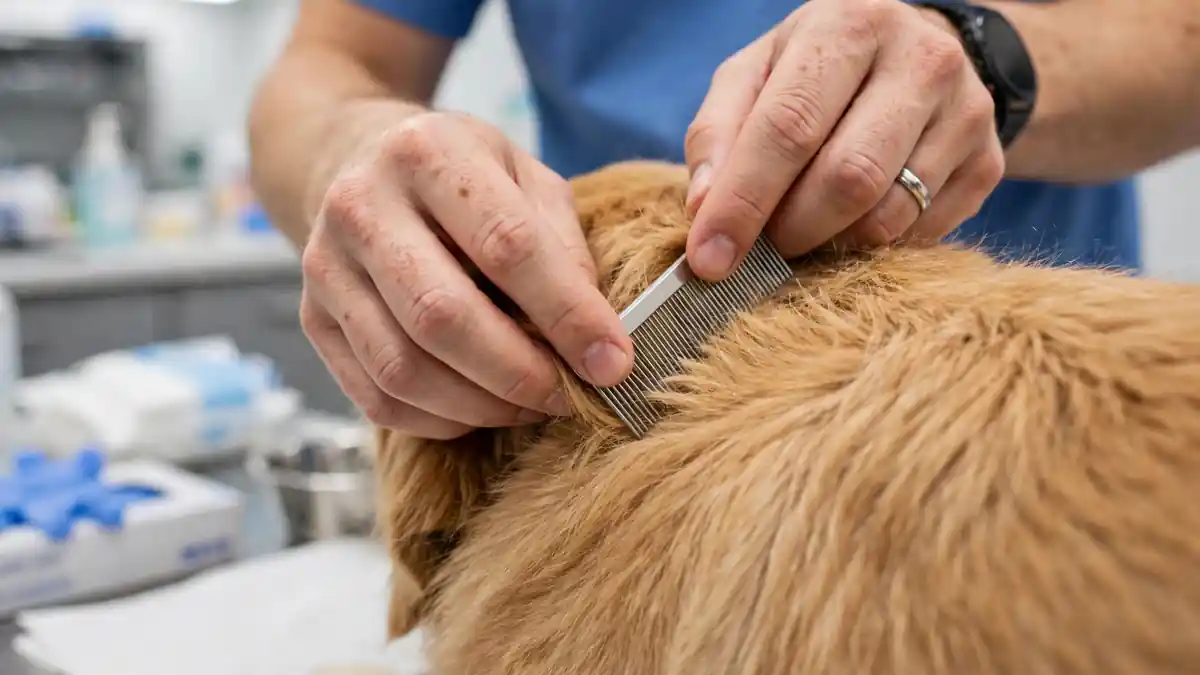
The cat sits near the bottom of the suspect list, because fleas, mites, skin infections, or food cause the same itch far more often. A vet works through those causes first, since fixing the wrong one wastes time. Blaming the cat first is the mistake.
Itch has a long list of causes, and a cat allergy sits near the very bottom of it. Fleas come first in most homes, since one bite can set off days of scratching. Mites and skin infections round out the usual suspects, along with food, and a vet starts with these because they are common and quick to check.
Blaming the cat first has a cost. A family that rehomes a cat over a wrong guess loses a pet and keeps the itch, since the real cause stays in the home. Separating the pets is no shortcut either, since Fel d 1 dander is airborne and settles on every soft surface, even in rooms the cat never enters.
| Suspect | How common | First check |
|---|---|---|
| Fleas | Very common | Coat check and flea prevention |
| Mites | Common | Skin scrape at the vet |
| Skin infection | Common | Skin exam and culture |
| Food | Common | Elimination diet trial |
| Cat allergy | Rare | Skin or blood test |
How to Lower Cat Dander at Home

Vacuuming and washing bedding cut the dander load in a home, and a HEPA air purifier helps too. Grooming the cat and wiping the dog’s coat after contact also help. These steps ease signs, but they cannot remove Fel d 1 from the air entirely.
Start with the floors. Vacuum carpets and rugs often with a HEPA filter vacuum, so the fine dust stays trapped. Hard floors need a damp mop, since a dry broom lifts dander into the air. Wash both animals’ bedding often.
Air cleaning helps with what vacuuming misses. A HEPA air purifier where the dog sleeps pulls floating dander out of the air, and it works best when it runs all day. Grooming the cat cuts the supply at the source, so brush the cat outside and wipe the dog’s coat and paws after the two animals spend time together.
The cat’s food bowl deserves a look as well. Dogs that steal from the cat’s bowl get food that was never meant for them, and our guide to can dogs eat cat food covers why that habit is a problem. Feed the cat up high or behind a gate. Cleaning lowers the amount of Fel d 1 in the home, but dander keeps coming as long as the cat lives there.
Treatment Options Your Vet May Offer
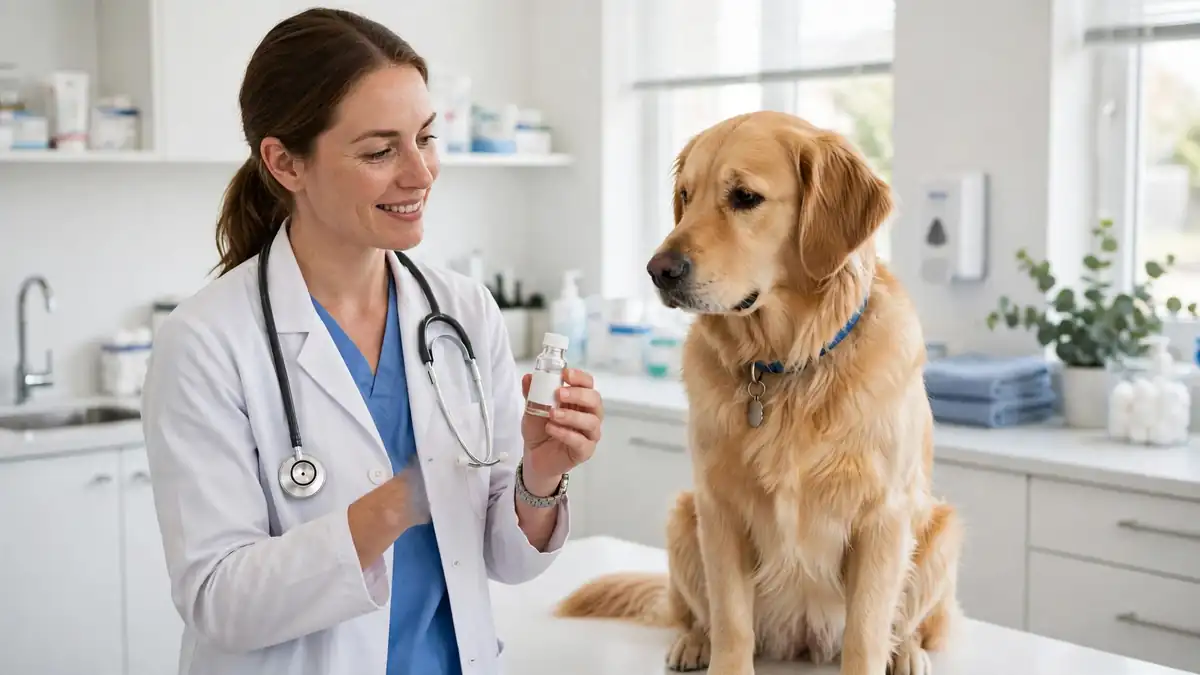
Treatment starts with the vet’s plan, which may mix immunotherapy and allergy medicine, plus medicated shampoo and skin care. Immunotherapy trains the immune system to react less, while medicine calms the itch. The right mix depends on the dog, so no fix fits every case.
Immunotherapy is the long game. The vet makes a serum from the allergens the dog reacts to, and the dog gets it as small injections or oral drops over time, training the immune system to react less. AKC notes that immunotherapy involves daily exposure to the specific allergens, by injection or by oral drops.
Allergy medicine calms the itch while the long-term plan works. Vets may use antihistamines or corticosteroids for short flares, and newer medicines such as oclacitinib (Apoquel) and lokivetmab (Cytopoint) block the itch signals in a more targeted way. Never reach for human pain medicine on your own, and our guide to can dogs have Tylenol explains why that shortcut is dangerous.
Medicated shampoo helps the skin from the outside. Regular baths with a shampoo the vet picks can soothe sore skin and wash allergens off the coat.
Food can play a supporting role too. Some diets made for dogs with skin trouble carry nutrients that support the skin. Treats stay a small part of a dog’s daily food, so ask your vet before you change it.
| Treatment | What it does | How fast it helps |
|---|---|---|
| Immunotherapy | Trains the immune system | Builds over months |
| Allergy medicine | Calms itch and swelling | Days to weeks |
| Medicated shampoo | Soothes skin, washes off allergens | Helps from the first baths |
| Skin care diet | Supports skin health from inside | Weeks of steady feeding |
| Home cleaning | Lowers dander in the air | Eases signs while it is kept up |
Living With a Dog and a Cat When the Allergy Stays

Most dogs and cats can keep sharing a home when the allergy is managed, with a vet plan and clean bedding, plus rest spots. The dog needs care, not a new home. Watch the itch each week, and return to the vet when signs flare.
A cat allergy rarely ends the household. Most dogs keep living with the same cat once the vet sets a plan.
Give each animal its own rest spot, so the dog spends less time lying in a pile of cat dander. Keep the litter box where the dog cannot reach it. A short note each week on scratching and ears shows the vet more than a memory does.
Shared play can stay on the schedule. A dog that plays with a catnip toy may pick up the scent on its coat, and our guide to can dogs have catnip covers whether that is safe. Keep play gentle and short when the dog’s skin is sore, and give the dog a plain bite of steak as a treat after a calm session.
Frequently Asked Questions
Most questions come back to one point, that a cat allergy is real but rare, and testing is the only way to prove it. The answers cover timing and breeds, plus food fixes and vet visits. Read them with the rest of the guide.
Can a dog develop a cat allergy later in life?
A dog can live with a cat for years and then develop a sensitivity, since a hypersensitivity can build after a period of exposure to the same protein. A dog that starts itching late still needs the same workup.
Are some dog breeds more likely to be allergic to cats?
Some guides name Golden Retrievers and Boxers as breeds that show allergies more often, along with Dalmatians. Breed is only a tendency, not a test result, so testing still decides the matter.
Can dogs be allergic to other animals too?
A dog can react to proteins from other animals, and a cat can be allergic to a dog as well. The same tests sort out which animal is the trigger.
Does feeding the cat a special diet help the dog?
It can help. Purina Pro Plan LiveClear is a diet fed to the cat that cuts the Fel d 1 allergen by 47 percent on average, according to Purina’s own research. Less allergen can mean milder signs, though it does not replace testing or the vet’s plan.
Can I give my dog allergy medicine without a vet visit?
Allergy medicine, even one sold over the counter, needs a vet’s say-so for your dog. Some human medicines are unsafe for dogs, and a wrong choice can mask the signs. Book the visit first.
Should I rehome my cat if my dog is allergic?
Almost never. A cat allergy is manageable in most homes with a vet plan and cleaning, plus separate rest spots. Rehoming should come only after testing proves the cat is the cause and every treatment has failed, so talk it through with your vet first.
The Bottom Line
A cat allergy is real but rare, and most itchy dogs have a different cause. Test before you blame the cat. Follow the vet’s plan and keep the home clean. That order saves time, and it gives the dog the best chance to feel better.
Book the vet visit this week, and start with the flea check before you mention the cat. The cat stays and the dog gets care, while the home keeps both animals in it.
Sources
- AKC: Can Dogs Be Allergic to Cats?
- PetMD: Dog Skin Allergies
- VCA Animal Hospitals: Allergies in Dogs
- Catster: Can Dogs Be Allergic to Cats?
- Puppies and Kitten: Can Dogs Be Allergic to Cats?
- Hepper: Can Dogs Be Allergic to Cats?
- ThePetTimes: Dog Allergic to Cat Dander (Fel d 1)
- Adopt-a-Pet: Can Dogs Be Allergic to Cats?
Disclaimer
This article shares general allergy information and does not replace advice from a vet who knows your dog. If your dog has trouble breathing or keeps scratching, contact your vet before you change food, medicine, or the home routine.