

Granola is not a straightforward yes-or-no food for dogs, because “granola” is not a single ingredient. It is a mix, and its safety depends entirely on what is in that particular mix. Plain rolled oats, the base of many granolas, are not generally considered toxic to dogs, but most shop-bought granola is not plain oats. It is usually coated in sugar, honey, or syrup, mixed with dried fruit, nuts, seeds, and sometimes chocolate, and baked until crisp. Several of those additions are unsafe for dogs, and some are dangerous.
That means the safest general answer is: do not assume granola is safe for your dog, and do not offer a shop-bought mix without checking every ingredient on the label. A granola with only dog-safe ingredients, offered only as an occasional treat, is less concerning, but it is still a human snack, not a balanced dog food, and it should not replace a dog’s regular diet. This guide explains which ingredients matter most, what to check on a label, and what safer treat options look like.
What Is Granola Usually Made From?
| Granola part | What the article says | Guidance in the article |
|---|---|---|
| Rolled oats base | Not generally considered toxic to dogs | Still not the same as plain oats once baked with sweetener and oil |
| Sweetener and oil coating | Common in most shop bought granola | Do not assume a mix is safe without checking every ingredient |
| Nuts, seeds, coconut and dried fruit | Vary by recipe | Check each addition, since two bags can be very different |
| Chocolate or toxic additions | Some additions are unsafe, and some are dangerous | Do not offer a mix containing a toxic ingredient |
Granola starts with rolled oats mixed with sweetener and oil, then baked with nuts, seeds, coconut, dried fruit, chocolate chips, or flavorings. Recipes vary widely, so two bags labeled granola can be different, and a natural label does not make a product safe for dogs.
Common additions include almonds, walnuts, cashews, peanuts, sunflower seeds, pumpkin seeds, coconut, dried cranberries, raisins, dried apricots, chocolate chips, and flavorings such as vanilla or cinnamon. A mix can be high in sugar and fat even if it is made with whole grains, and it can contain a toxic ingredient even if the packaging looks wholesome.
Because recipes vary so much, two bags labeled “granola” can be very different. One may contain mainly oats and seeds, while another may contain chocolate, raisins, and a sweetener that is toxic to dogs. That variation is the main reason this guide focuses on ingredients rather than giving a blanket yes or no.
Which Ingredients in Granola Are Unsafe for Dogs?
| Ingredient | Why the article says to avoid it | Action in the article |
|---|---|---|
| Xylitol, also listed as birch sugar or E967 | Highly toxic even in small amounts, can cause a dangerous drop in blood sugar and, in some cases, liver damage | Do not offer it, and contact a veterinarian immediately if eaten. |
| Raisins, grapes and currants | Toxic to dogs and can cause kidney damage in some dogs, with no safe amount to assume | Do not offer it, and contact a veterinarian or pet poison helpline right away. |
| Chocolate | Contains theobromine and caffeine, both toxic to dogs | Do not offer it, and contact a veterinarian promptly if eaten. |
| Macadamia nuts | Toxic to dogs and can cause weakness, vomiting and tremors | Do not offer any granola containing them. |
| Onion and garlic | Toxic to dogs and can damage red blood cells, in fresh, cooked, powdered or dried form | Do not offer it if listed. |
Some granola ingredients are clear reasons not to offer that product to a dog, including xylitol, raisins, grapes, currants, chocolate, macadamia nuts, onion, and garlic. If any appear on a label, do not give that granola to your dog, and keep it out of reach.
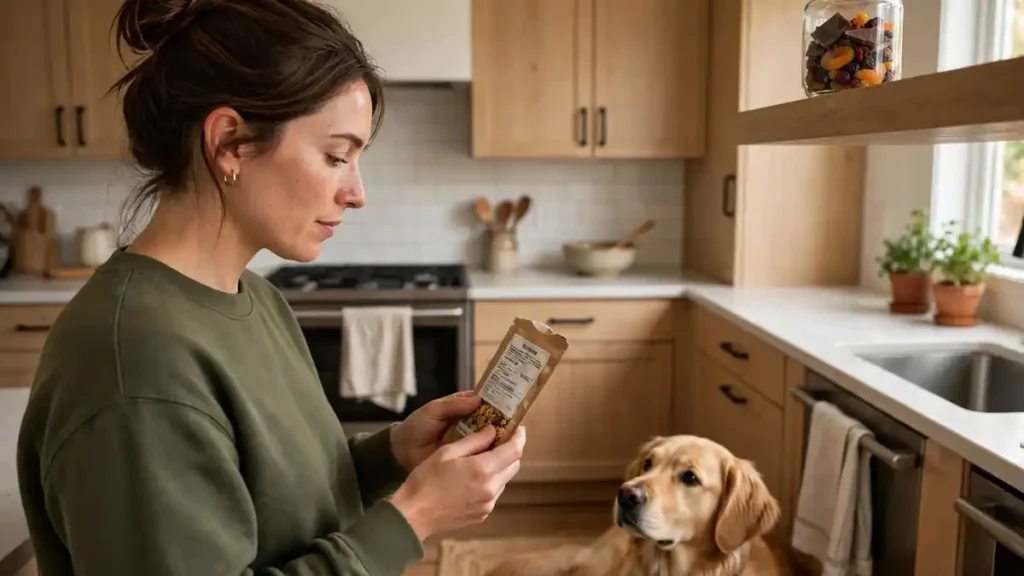
Granola bars are a separate form from loose granola, but the same caution applies. A bar can carry the same risky label ingredients already discussed here, including chocolate, raisins, xylitol and macadamia nuts, and a sugar coating can add a further reason not to offer it. The shape of the product does not make those ingredients safer, so a bar should be checked just as carefully as a loose mix before it is kept out of a dog’s reach.
Why Is Xylitol a Particular Danger?
Xylitol, also listed as birch sugar or E967, is highly toxic to dogs even in small amounts, and can cause a blood sugar drop and sometimes liver damage. It appears in some sugar free granola, so if a product lists it, do not offer it.
Xylitol is sometimes used in “sugar-free” or “low-sugar” granola, bars, and baked goods. A product listing xylitol, or a sugar-free product you are unsure about, should not be offered to your dog, and contact a veterinarian immediately if your dog eats it.
Other sugar alcohols, such as sorbitol or erythritol, are not the same as xylitol, but sugar-free products should still be checked carefully, because the label may be unclear and the product may contain other ingredients that are unsuitable for dogs.
Raisins, grapes, and currants
Raisins, grapes, and currants are toxic to dogs and can cause kidney damage in some dogs. The exact toxic dose varies between dogs and is not reliably predictable, so there is no safe amount to assume. Many granola mixes contain raisins, and some contain currants or dried grapes. If a granola contains any of these, it should not be given to a dog. If your dog eats raisins or grapes, contact a veterinarian or a pet poison helpline right away, even if your dog seems well.
Chocolate
Chocolate contains theobromine and caffeine, both of which are toxic to dogs. Dark chocolate and baking chocolate are more concentrated than milk chocolate, but no chocolate is a safe dog treat. Granola with chocolate chips, cocoa nibs, or chocolate coating should not be given to a dog. If your dog eats chocolate, contact a veterinarian promptly, and be ready to say what type of chocolate it was and roughly how much was eaten, if you know.
Macadamia nuts
Macadamia nuts are toxic to dogs and can cause weakness, vomiting, tremors, and other symptoms. They are less common in granola than almonds or walnuts, but they do appear in some premium mixes. Any granola containing macadamia nuts should not be given to a dog.
Onion, garlic, and savory flavorings
Savory or spiced granola mixes may contain onion or garlic powder, which are toxic to dogs and can damage red blood cells. Onion and garlic in any form, fresh, cooked, powdered, or dried, should be avoided for dogs. Spicy flavorings, chili, and heavy salt are also unsuitable. A savory, spiced, or unusually flavored granola needs a careful check of the ingredient list, and do not offer it if onion or garlic is listed.
Which Granola Ingredients Are Less Concerning, But Still Not Ideal?
Some granola ingredients are not specifically toxic, but they still make granola a poor regular treat. Plain oats, unsalted seeds, and coconut are examples, yet in granola they are often mixed with sugar, salt, and oil, and dried fruit is often sweetened.
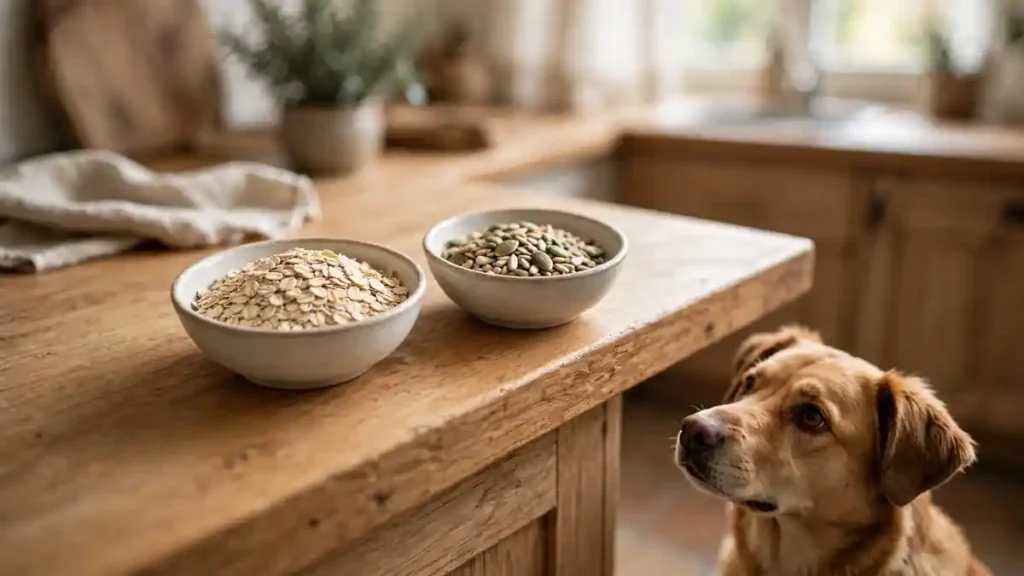
Understanding that distinction helps owners avoid both panic and complacency.
Rolled oats themselves are a common ingredient in dog foods and are not generally considered toxic. Plain, cooked oats can be part of some dogs’ diets when a veterinarian recommends them. However, granola oats are usually baked with oil and sweetener, so they are not the same as plain oats.
Sunflower seeds and pumpkin seeds, when unsalted and given in appropriate forms, are sometimes used in dog treats, but in granola they are often mixed with sugar, salt, and oil, which changes the picture. Coconut is not specifically toxic to dogs, but it is high in fat and can cause stomach upset. Dried fruit other than raisins, grapes, and currants, such as dried cranberries or apricots, may be less dangerous, but dried fruit is often sweetened, high in sugar, and sticky, which is not good for a dog’s teeth or digestion.
Sugar and Sweeteners in Granola
Sugar, honey, maple syrup, and other sweeteners are the most common problem in granola, even when no toxic ingredient is present. Dogs do not need added sugar, and a sweet crunchy snack can contribute to weight gain, dental problems, and stomach upset.
A granola that is mainly sugar and fat, even with oats as a base, is not a healthy treat, even if it is not immediately toxic.
How Do You Check a Granola Label for Your Dog?
Check the full label for sweeteners, dried fruit, chocolate, nuts, and savory ingredients before offering granola. Do not offer products with xylitol, raisins, grapes, currants, chocolate, macadamia nuts, onion, or garlic, and treat high sugar, high fat, heavily processed mixes as human snacks only.
A simple label check looks like this:
| Check | What to look for | If you find it |
|---|---|---|
| Sweeteners | Xylitol, birch sugar, sugar alcohols, honey, syrup, added sugar | Do not offer xylitol products at all; be cautious with high-sugar products |
| Dried fruit | Raisins, grapes, currants | Do not offer the product |
| Chocolate | Chocolate chips, cocoa, cocoa nibs | Do not offer the product |
| Nuts | Macadamia nuts, walnuts, large whole nuts | Do not offer macadamia products; avoid nut-heavy mixes |
| Savory ingredients | Onion, garlic, chili, heavy salt | Do not offer the product |
| Overall profile | High sugar, high fat, heavily processed | Treat as an occasional human snack only, not a dog treat |
An incomplete label, a homemade granola with unknown ingredients, or uncertainty about any ingredient makes not offering it the safest choice. When in doubt, ask your veterinarian about a treat that suits your dog’s age, size, and health.
When reading a label, work through the label ingredients in the same order every time, so nothing is missed. Start with sweeteners, looking for xylitol, birch sugar, sugar alcohols, honey, syrup and added sugar, then check dried fruit for raisins, grapes and currants, and chocolate for chocolate chips, cocoa and cocoa nibs. Next, check nuts for macadamia nuts and walnuts, and savoury ingredients for onion, garlic and chili, and treat an incomplete label, or an ingredient you do not recognise, as a reason not to offer the product.
What If Your Dog Eats Granola?
| Situation | What the article says to do |
|---|---|
| Plain granola with no toxic ingredient | Monitor your dog, make sure fresh water is available, and watch for stomach upset. |
| Vomiting or diarrhea persists, or your dog refuses food or water, seems lethargic, or shows another concerning sign | Contact a veterinarian. |
| Granola contained xylitol, raisins, grapes, currants, chocolate or macadamia nuts | Contact a veterinarian or poison helpline immediately, even if your dog seems well, and keep the packaging. |
| Temptation to treat at home | Do not induce vomiting or give home remedies unless a veterinarian specifically instructs you to do so for that dog. |
Plain granola with no toxic ingredient can still cause stomach upset, vomiting, diarrhea, or reduced appetite, especially after a large amount or an unfamiliar rich food. Provide fresh water, monitor your dog, and contact a veterinarian if symptoms persist.
Monitor your dog, make sure fresh water is available, and contact a veterinarian if vomiting or diarrhea persists, if your dog refuses food or water, seems lethargic, or shows any other concerning sign. Do not try to induce vomiting or give home remedies unless a veterinarian specifically instructs you to do so for that dog.
When Should You Contact a Vet Immediately?
Contact a veterinarian or a poison helpline immediately, even if your dog seems well, if the granola contained xylitol, raisins, grapes, currants, chocolate, or macadamia nuts. Keep the packaging, because it helps identify the ingredients and amounts, and follow veterinary guidance rather than guessing.
The right response depends on what was in the granola and how much your dog ate, and it should be guided by a veterinarian or a pet poison helpline, not by an article. If the granola contained xylitol, raisins, grapes, currants, chocolate, or macadamia nuts, contact a veterinarian or a poison helpline immediately, even if your dog seems well. Keep the packaging, because it helps a professional identify the ingredients and amounts.
What Are Safer Treat Alternatives to Granola?
| Alternative | Why the article presents it as safer | Note in the article |
|---|---|---|
| Commercial dog treats made specifically for dogs | Ingredients chosen for canine digestion, with feeding guidance on the packet | Your veterinarian can suggest treats suited to your dog’s health and weight. |
| Small pieces of vet approved fruit or vegetables, such as carrot, cucumber, or apple without seeds or core | Offered only as occasional treats, not as meals | Only if your veterinarian approves them for your dog. |
| Plain cooked oats, if a veterinarian recommends them | A much better base than sweetened granola | Only when a veterinarian recommends them. |
Safer alternatives include commercial dog treats made specifically for dogs, with feeding guidance on the packet, and your veterinarian can suggest treats suited to your dog’s health and weight. Small pieces of vet approved fruit or vegetables are also better than sweetened granola.
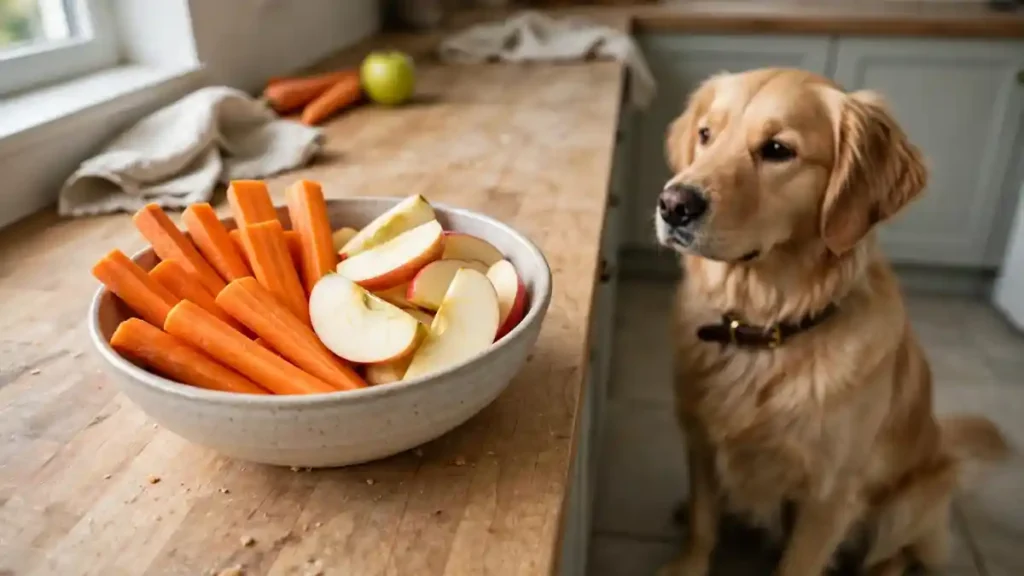
For a crunchy, oat-based treat for your dog, there are safer ways to offer it. Try plain cooked oats, if a veterinarian recommends them, and add no sweetener, chocolate, raisins, or nuts. Keep any extra small, and keep it separate from your dog’s main meal, so treats do not displace balanced food.
Other generally dog-friendly options, offered only as occasional treats and not as meals, include small pieces of dog-safe fruit or vegetables that your veterinarian approves for your dog, such as carrot, cucumber, or apple without seeds or core. Plain, cooked oats, if your veterinarian recommends them, are a much better base than sweetened granola. The key point is that a treat should complement a balanced dog diet, not replace it, and treats in general should remain a small part of a dog’s daily intake. If your dog has diabetes, pancreatitis, allergies, or another health condition, ask your veterinarian before introducing any new treat.
Granola is not a dog food replacement, and it should not take the place of a balanced meal. It is only an occasional extra, and plain oatmeal is the safer alternative already named in this guide, provided it is plain and a veterinarian recommends it for the dog.
Frequently Asked Questions
The answers below cover the questions owners ask most often about dogs and granola, including plain granola, granola bars, honey granola, and puppies. They summarize the guidance in this article and they do not replace veterinary advice. Seek help after a toxic ingredient is eaten.
Can dogs eat granola?
Granola safety depends on the ingredients. Plain oats are not generally toxic, but most shop-bought granola contains sugar, dried fruit, nuts, or chocolate, some of which are unsafe for dogs. Always check the full ingredient list, and do not offer granola containing xylitol, raisins, grapes, currants, chocolate, or macadamia nuts.
Is plain granola safe for dogs?
Plain, unsweetened, unflavored oats are less concerning than a sweetened mix, but most products labeled “granola” are not plain. Check the label, and ask your veterinarian if you are unsure.
Can dogs eat granola bars?
Granola bars raise the same concerns as loose granola, and some bars are specifically marketed as sugar-free, which can mean xylitol is present. Do not offer a granola bar to a dog without checking every ingredient, and never offer one containing xylitol, chocolate, or raisins.
What should I do if my dog eats granola with raisins?
Contact a veterinarian or a pet poison helpline immediately, even if your dog seems well. Keep the packaging and be ready to say what product it was and roughly how much was eaten, if you know.
Is honey granola safe for dogs?
Honey itself is not specifically toxic to dogs, but honey granola is usually high in sugar and may contain other unsafe ingredients. It is not a recommended dog treat, and dogs with diabetes or weight problems should not be given sweetened snacks without veterinary advice.
Can puppies eat granola?
Puppies have more sensitive digestion and smaller bodies, so rich, sugary, or nut-heavy foods are even less suitable for them. Do not offer granola to a puppy without veterinary advice, and choose treats made specifically for puppies.
The Bottom Line
The bottom line: granola is not a dog treat. Check label for xylitol, raisins, grapes, chocolate, macadamia nuts, onion, or garlic, and keep products out of reach. If your dog eats granola, watch for stomach upset and contact a veterinarian for toxic ingredients or symptoms.
Related Guides
Sources and Further Reading
- AKC (cited by name)
- ASPCA (cited by name)
- PetMD (cited by name)
- VCA Animal Hospitals (cited by name)
Disclaimer
The article is for general information only and is not veterinary advice. It does not diagnose or treat any condition, and it does not replace professional advice. If your dog eats granola containing a toxic ingredient, or shows concerning symptoms, contact your veterinarian or a pet poison helpline promptly.


