

Can dogs eat rice? Yes. Plain, fully cooked white or brown rice is non-toxic, easy on most stomachs, and already an ingredient in many complete dog foods. The details decide whether it helps or hurts: how much you serve, how you cook it, and what else went into the pot. A spoonful of plain basmati is fine. A plate of garlic fried rice is not.
How we researched this guide: We checked each claim against veterinary and government sources, including Cornell University’s Riney Canine Health Center, VCA Animal Hospitals, the FDA, peer-reviewed studies in JAVMA and PLOS One, and the Royal Veterinary College. We also compared the top-ranking rice guides and fixed the portion and food-safety mistakes we found in them. This guide is for information and does not replace advice from your own vet.
Can dogs eat rice safely?
Quick answer: Yes. Plain cooked rice is safe for healthy dogs because it is non-toxic, low in fat and easy to digest, which is why vets use it in bland diets. Problems start with butter, oil, salt, onion, garlic, raw grains or oversized portions.
Rice (Oryza sativa) is a starchy cereal grain. A cup of cooked long-grain white rice has about 205 calories, roughly 4 grams of protein and under half a gram of fat, according to USDA FoodData Central. That makes it a fast, gentle energy source. It is also naturally gluten-free, which helps dogs that react to wheat.
Two facts clear up common myths. Some raw-feeding sites claim dogs cannot digest grains, but a 2013 study in Nature found that dogs carry extra copies of AMY2B, the gene for the starch-digesting enzyme amylase, compared with wolves. Rice is also rarely an allergen. A 2016 review in BMC Veterinary Research found rice behind only about 2% of confirmed food allergies in dogs, far behind beef, dairy and chicken.
White rice vs brown rice for dogs: which is better?
Quick answer: White rice is better for a dog with an upset stomach because milling strips the bran, so it digests fast and adds little fiber. Brown rice suits healthy dogs as an occasional extra, with more fiber and minerals but also more arsenic.

| White rice | Brown rice | |
|---|---|---|
| Best for | Upset stomach, bland diet | Healthy dogs, occasional variety |
| Fiber per cooked cup | Under 1 gram | About 3 grams |
| Digestion | Very easy | Slower |
| Arsenic | Lower | About 50% higher |
| Blood sugar | Faster rise | Gentler rise |
The arsenic gap is the part most guides skip. Rice pulls arsenic from flooded paddy soil, and much of it collects in the bran, so the FDA estimates brown rice carries about 50% more than white. Origin matters too. Testing by Healthy Babies Bright Futures in 2025 found California white rice, Thai jasmine and Indian white basmati among the lower-arsenic options. No one has set an arsenic limit for dogs that eat rice, so follow the FDA’s advice for people: vary grains and cook rice in excess water.
Jasmine and basmati are white rices and are safe cooked plain. Parboiled rice is fine. Wild rice is the seed of an aquatic grass and behaves like brown rice. Sticky or glutinous rice contains no gluten despite the name, but seasoned sushi rice carries vinegar, sugar and salt.
How much rice can a dog eat?
Quick answer: Keep rice to about 10% of your dog’s daily calories when it is an extra. For a typical neutered adult, that means roughly 3 tablespoons of cooked white rice at 10 lb, 6 at 30 lb and 10 at 60 lb.
| Dog weight | Daily calories (typical neutered adult) | 10% budget | Cooked white rice |
|---|---|---|---|
| 10 lb (4.5 kg) | About 350 kcal | 35 kcal | About 3 tbsp |
| 30 lb (13.6 kg) | About 790 kcal | 80 kcal | About 6 tbsp |
| 60 lb (27 kg) | About 1,330 kcal | 135 kcal | About 10 tbsp (2/3 cup) |
| 90 lb (41 kg) | About 1,810 kcal | 180 kcal | About 14 tbsp (just under 1 cup) |
We built this table with the resting energy formula vets use, multiplied by 1.6 for a typical neutered adult, and counted cooked white rice at about 13 calories per tablespoon. A couch-loving senior needs less. A working collie needs more.
Take a 30 lb beagle mix. If she eats about 790 calories a day, her allowance for all extras is 80 calories. If she already gets two dental chews at 25 calories each, only about 2 tablespoons of rice fit. Some online guides suggest a full cup of rice for large dogs, but that cup is about 205 calories, or 15% of a 60 lb dog’s day before a single treat. The Association for Pet Obesity Prevention estimated in 2022 that 59% of US dogs are overweight or obese, so the math is worth doing.
Can dogs eat rice for diarrhea or an upset stomach?
Quick answer: For mild cases, yes. Plain white rice with boiled lean protein is the standard short-term bland diet. Feed small, frequent meals for two to three days, then switch back to normal food gradually. Rice eases symptoms but does not treat the cause.
Cornell University’s Riney Canine Health Center says mild diarrhea can be handled at home with boiled chicken or low-fat hamburger and white rice, and it warns that these meals are not balanced for long-term feeding. Lean ground turkey or white fish also work.
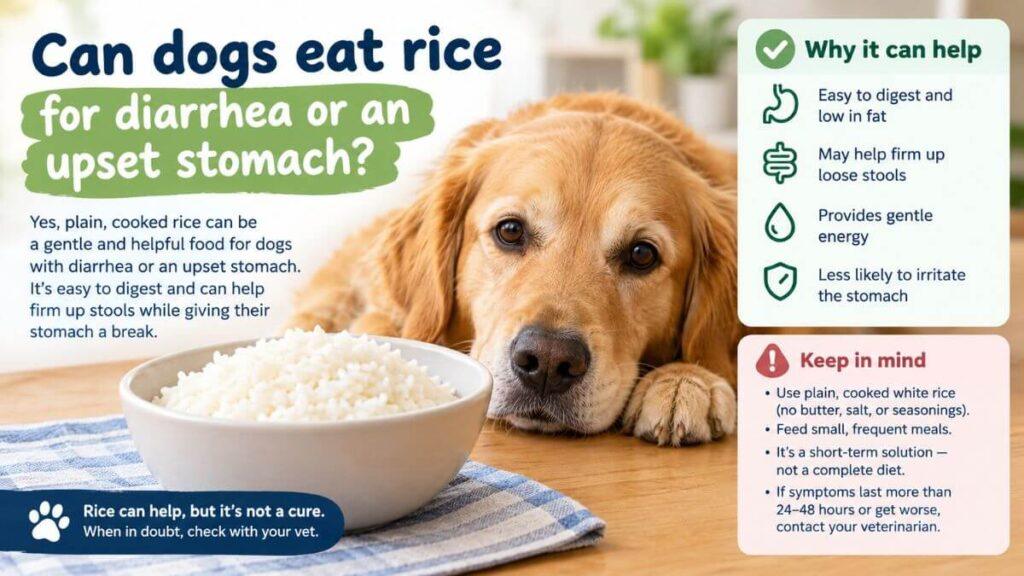
Sources disagree on the ratio. Some vets use equal parts rice and protein, others two parts rice to one part protein. More rice gives a lower-fat, more binding meal, while more protein adds nutrition. Either is reasonable for a few days.
The advice on fasting has changed. Older guides say to withhold food for 12 to 24 hours. VCA Animal Hospitals now explains that the gut needs nutrients to heal and that withholding food can slow recovery. Never fast a puppy, a toy breed or a diabetic dog without veterinary advice.
Research backs food-first care. In a 2022 randomized trial in JAVMA, dogs with acute colitis on an easily digestible diet reached remission in a median of 5 days, while dogs given the same diet plus the antibiotic metronidazole took 8.5 days. A 2025 Royal Veterinary College study of UK vet records found most acute diarrhea resolved within two days of treatment.
Real cases show why the time limit matters. In a Petco vet Q&A, a veterinarian told one owner to keep a dog on a bland diet until three days after the diarrhea stopped, and to book an exam if things did not improve. On a pet owners’ forum, another owner described an Australian shepherd still passing loose stool after five days of chicken and rice that started after a butcher bone. The replies pushed for a vet visit, and that was the right call. Five days is past the point where rice alone should be trusted.
Once stools are normal, mix regular food back in over two to three days: a quarter, then half, then three quarters, then all of it.
When should you call the vet instead of feeding rice?
Quick answer: Call your vet if diarrhea lasts more than 48 to 72 hours, contains blood or looks black and tarry, or if your dog vomits, stops eating or seems lethargic. Puppies under six months, seniors and dogs with health conditions need earlier care.
These warning signs follow Cornell’s guidance. Take a fresh stool sample to the appointment, since parasites are a common cause of diarrhea and are often invisible. Skip human medicines such as Pepto-Bismol or Imodium unless your vet approves them, because they can harm some dogs and clash with other drugs.
How do you cook rice for a dog?
Quick answer: Rinse the rice, boil it in plenty of plain water until very soft, drain the extra water and cool it before serving. Leave out salt, butter, oil, stock, onion and garlic. Draining excess cooking water also removes a good share of arsenic.
Use about 6 cups of water for every cup of raw rice, the way you would cook pasta. White rice takes 15 to 18 minutes and brown rice around 40. The FDA says this excess-water method cuts inorganic arsenic by roughly 40% to 60%.
Storage matters more than most guides admit. Raw rice can carry spores of Bacillus cereus, which survive boiling. If cooked rice sits warm, the spores grow and release toxins, and the UK Food Standards Agency says reheating will not get rid of them. Cool cooked rice within an hour, refrigerate it, and use it within a day. For a three-day bland diet, portion it into containers and freeze what you will not use tomorrow.
Can dogs eat rice every day?
Quick answer: Yes, if the rice is part of a complete and balanced dog food, since it is formulated in. As a homemade topper, daily rice is fine only inside the 10% calorie budget. Chicken and rice alone is not a complete long-term diet.
Chicken and rice lacks calcium, essential fatty acids and several vitamins and trace minerals. A few days will not hurt a healthy adult. A few months can. For long-term home cooking, use a recipe from a board-certified veterinary nutritionist. For daily toppers, rotating in plain oats, pumpkin or sweet potato also spreads out arsenic exposure.
When is rice bad for dogs?
Quick answer: Rice needs care with diabetic dogs, overweight dogs on a diet and dogs with kidney disease on homemade food. A few dogs are allergic to it. The bigger risk is usually what the rice was cooked with, especially fat, salt, onion and garlic.
White rice has a high glycemic index and raises blood sugar quickly. Diabetic dogs need consistent meals timed with insulin, so any new food should go through the vet first.
Vet nutritionists sometimes build kidney-disease recipes around white rice because it is low in phosphorus and protein, but those recipes include specific supplements. A guesswork version can do harm.
Pancreatitis is more about fat than rice. Plain rice often appears in recovery diets, while rice cooked in butter, ghee or oil is exactly what a sensitive pancreas does not need. Rice allergy is uncommon, but itchy skin, repeat ear infections or ongoing soft stool on a rice-based diet are worth raising with your vet.
Which rice dishes and products should dogs avoid?
Quick answer: Skip fried rice, biryani, pilaf, Spanish rice, risotto, garlic rice and rice cooked in stock, butter or oil. Sushi rice, rice pudding and sugary rice cereals add sugar and salt. Plain unsalted rice cakes are fine as a rare snack.
Onion and garlic are the main hazards. According to PetMD, compounds in these Allium plants damage red blood cells and can cause a type of anemia called Heinz body anemia. Powders and stock cubes count as much as fresh bulbs. Pilaf and biryani sometimes include raisins, which can cause kidney failure in dogs. A few spilled raw grains are harmless, but a mouthful of dry rice digests poorly and can cause vomiting.
My dog ate rice cooked in butter or fried rice. What should I do?
Quick answer: Check the ingredients first. Onion, garlic, chives or raisins mean you call your vet or a pet poison line right away. If it was only butter or oil, watch for three days for vomiting, diarrhea, belly pain, a hunched posture or lethargy.
Take a common example: a 25 lb terrier pulls a leftover box of vegetable fried rice off the counter. The rice is not the worry. The oil, soy sauce and scallions or garlic are. Check what went into the dish, estimate how much is gone, and call your vet with your dog’s weight. In the US, the ASPCA Animal Poison Control Center (888-426-4435) and Pet Poison Helpline (855-764-7661) answer around the clock for a fee. Do not make your dog vomit unless a vet tells you to.
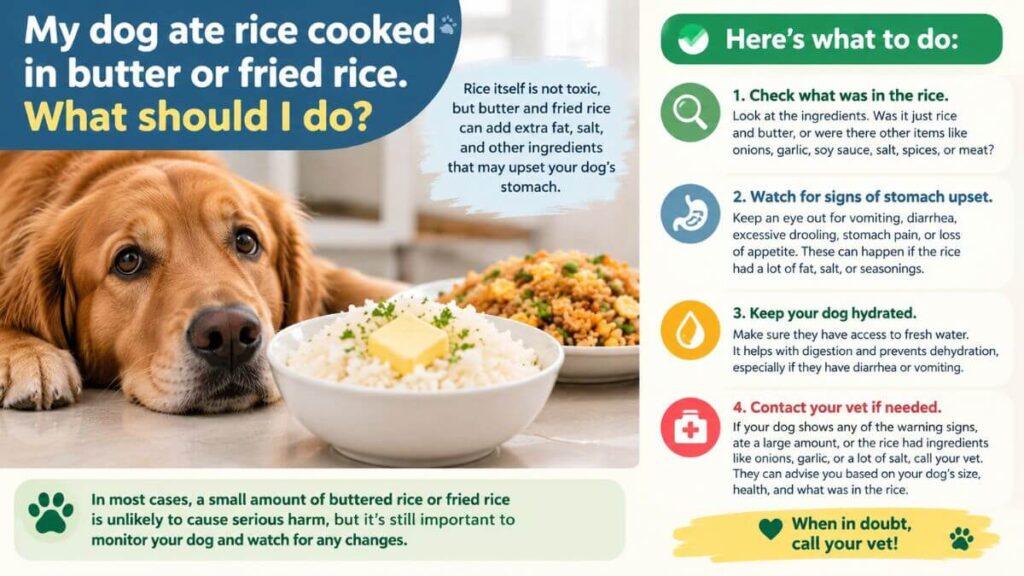
If the only extra was butter, most dogs get away with a soft stool or a single vomit. A large fatty meal can trigger pancreatitis, though, particularly in miniature schnauzers, Yorkshire terriers and dogs that have had it before. Repeated vomiting, a prayer-like stretch or refusing food means a same-day vet visit.
Can puppies eat rice?
Quick answer: Puppies can have a spoonful of plain cooked rice now and then, but it should never replace puppy food, which is balanced for growth. For puppy diarrhea, call the vet early, since young puppies dehydrate fast and parvovirus can start like ordinary tummy trouble.
Growing dogs need precise amounts of calcium and phosphorus, and large-breed puppies are especially sensitive to getting that balance wrong. Rice supplies neither mineral. The Royal Veterinary College data also showed dogs under three had a higher risk of acute diarrhea than middle-aged dogs, so keep any bland diet short and vet-guided.
Is rice in dog food just a cheap filler?
Quick answer: No. In a complete dog food, rice is a digestible energy source that rarely causes allergies. The full formula matters more than whether rice is on the label, and rice-based foods were not the focus of the FDA’s grain-free heart disease investigation.
“Filler” is a marketing word, not a regulated one. The FDA’s investigation into dilated cardiomyopathy, which began in 2018, focused on foods, many labeled grain-free, that listed peas, lentils or potatoes high in the ingredients. In December 2022 the agency said the reports did not establish cause. None of it points at rice. Judge a food by its “complete and balanced” AAFCO statement and whether the maker employs a veterinary nutritionist.
7 rules for feeding rice to your dog safely
Quick answer: Serve rice plain and fully cooked, pick white rice for sick days, keep it within 10% of calories, cook it in excess water, refrigerate leftovers fast, avoid seasoned dishes, and call the vet when symptoms last beyond two or three days.
- Serve it plain and fully cooked. No salt, butter, oil, stock, onion or garlic.
- Use white rice for stomach upsets. Save brown rice for healthy dogs.
- Stay inside the 10% rule. Use the portion table above and count other treats too.
- Cook it like pasta. Six parts water to one part rice, then drain to cut arsenic.
- Cool leftovers within an hour. Refrigerate for one day at most, or freeze.
- Keep bland diets short. Two to three days, then return to normal food over a few days.
- Know when rice is not enough. Blood, vomiting, lethargy or a sick puppy means a vet visit.
Can dogs eat rice? Frequently asked questions
Can I mix rice with my dog’s regular food?
Yes. Stir a few spoonfuls of plain cooked rice into the usual meal and trim the kibble slightly so total calories stay the same.
What kind of rice is best for dogs?
Plain white rice for upset stomachs and plain brown rice for healthy dogs. White basmati and jasmine are good everyday picks because they tend to test lower in arsenic.
Is rice or pasta better for dogs?
Both are safe served plain. Cornell lists cooked pasta as a bland diet option too, but white rice is the more common choice for loose stool.
Can dogs eat uncooked rice?
No. Dry rice digests poorly, and a large mouthful can cause vomiting or belly pain. A few spilled grains are not a concern.
Can dogs eat fried rice?
No. Fried rice is cooked in oil with soy sauce and usually contains onion, scallions or garlic, all of which can make dogs sick.
Can dogs eat jasmine rice?
Yes. Plain cooked jasmine rice is a white rice and is as safe as any other.
Can dogs eat basmati rice?
Yes. Plain basmati is safe and tends to test lower in arsenic than many other rice types.
Can dogs eat rice and chicken every day?
Only for a few days. Chicken and rice lacks calcium and other nutrients, so long-term use needs a recipe from a veterinary nutritionist.
Can dogs eat rice and eggs?
Yes. Plain boiled or scrambled egg without butter or salt pairs well with rice.
Can dogs eat rice cakes?
Plain, unsalted rice cakes are fine as an occasional crunchy snack. Skip flavored, salted or chocolate-coated versions.
Can dogs eat rice pudding?
It is best avoided. Rice pudding carries sugar and dairy, and some recipes include raisins, which are toxic to dogs.
Can dogs eat Rice Krispies?
A few pieces will not hurt, but the cereal is sugared and salted and adds nothing useful for a dog.
Does rice make dog poop firmer?
Usually, yes. White rice is low in fiber and binding, which is why it helps loose stool. Call your vet if your dog starts straining.
How much rice should I give my dog with diarrhea?
Mix one to two parts plain white rice with one part boiled lean protein and split it into three or four small meals. Start small and increase if your dog keeps food down.
How long can a dog stay on chicken and rice?
Usually two to three days. If stools are not improving by then, call your vet rather than stretching the diet.
Can I give my dog rice instead of dog food?
Only during a short bland-diet stretch. Rice lacks the protein, fat, vitamins and minerals that a complete dog food provides.
Can dogs eat cold rice from the fridge?
Yes, if it was cooled within an hour and refrigerated for no more than a day.
Is rice good for dogs with kidney disease?
It can be part of a vet-formulated kidney diet because it is low in phosphorus, but do not build that diet on your own.
Final verdict: can dogs eat rice?
Yes, and rice deserves its place in a dog’s life as a gentle, cheap, low-fat carbohydrate. Plain white rice with lean protein is still one of the most useful things you can cook for a dog with a mild stomach upset, and newer research supports feeding the gut rather than starving it. For everyday use, treat rice like any other extra. Keep it inside 10% of daily calories, cook it in plenty of water and drain it, cool leftovers quickly, and rotate in other grains now and then. White rice works best for sick days. Brown rice suits healthy dogs, with more fiber and more arsenic. Most of the danger sits in the pan with the rice: butter, oil, onion, garlic, salt and raisins. If your dog ate a seasoned rice dish, or diarrhea hangs on past two or three days, skip the home remedy and call your vet.
1 thought on “Can Dogs Eat Rice? 7 Proven Rules for Safe, Healthy Feeding”