

Can you use Neosporin on dogs? The short answer is: sometimes, in small amounts, on very minor wounds but it comes with real risks most pet owners don’t know about, from licking-related stomach upset to a lesser-known danger near the ears that most guides never mention. Before you reach for that tube in your medicine cabinet, here’s exactly when Neosporin on dogs is okay, when it isn’t, and what to do if your dog already got into it.
The Quick Answer: Can You Use Neosporin on Dogs?
Run through this checklist before applying anything:
The wound is small, shallow, and not bleeding heavily
You’re using plain Original Neosporin not the Pain Relief or Scar formulas
The wound isn’t near your dog’s eyes, ears, mouth, or a joint
You can stop your dog from licking it off (cone, bandage, or supervision)
There are no signs of infection yet no pus, heat, or spreading redness
If every box is checked, a thin layer of Neosporin on your dog’s wound is generally considered low-risk by most vets. If even one box is unchecked, skip it and call your veterinarian instead.
What Is Neosporin, and What’s Actually in It?
Neosporin is a human, over-the-counter triple-antibiotic ointment made of three active ingredients:

Neomycin — fights bacteria, but can be irritating and, in rare cases, is linked to hearing damage if it reaches the inner ear
Polymyxin B — targets a different class of bacteria
Bacitracin — helps prevent infection and supports the skin barrier
None of these were formulated with canine skin, canine metabolism, or canine licking habits in mind which is exactly why “can you use Neosporin on dogs” is such a common search.
Neosporin earned its spot in almost every human medicine cabinet because it’s cheap, effective on people, and easy to find. But “safe for humans” and “safe for dogs” aren’t the same claim. Dogs have thinner, more permeable skin in some areas, a stronger drive to lick or chew at anything unfamiliar, and a smaller body size that makes even modest ingestion a bigger relative dose than it would be for a person. That combination is why a product sitting harmlessly in your bathroom drawer needs a second look before it touches your dog.
Common Situations Where Dogs Get Minor Cuts and Scrapes
Before you even get to the “can you use Neosporin on dogs” question, it helps to know where these small injuries usually come from:
Rough play or running through brush — scrapes on the legs, belly, or paw pads are common after an energetic afternoon outside.
Insect bites and stings — warm-weather bites can look like a small irritated bump or scratch.
Nail trims gone slightly wrong — a quick or a nail trimmed too short can leave a small, bleeding nick.
Rubbing against fences, crates, or furniture — friction injuries are often shallow but can look alarming with even a small amount of blood.
Scratching at itchy skin — self-inflicted scrapes from allergies or hot spots need a different approach than a one-time scrape (see the infected-wound signs below).
Knowing the cause helps you judge severity — a fresh scrape from a nail trim is a very different situation than a raw, self-inflicted hot spot that keeps reopening.
Is It Safe to Put Neosporin on Dogs? The Real Risks
Dogs Lick — and That Changes Everything
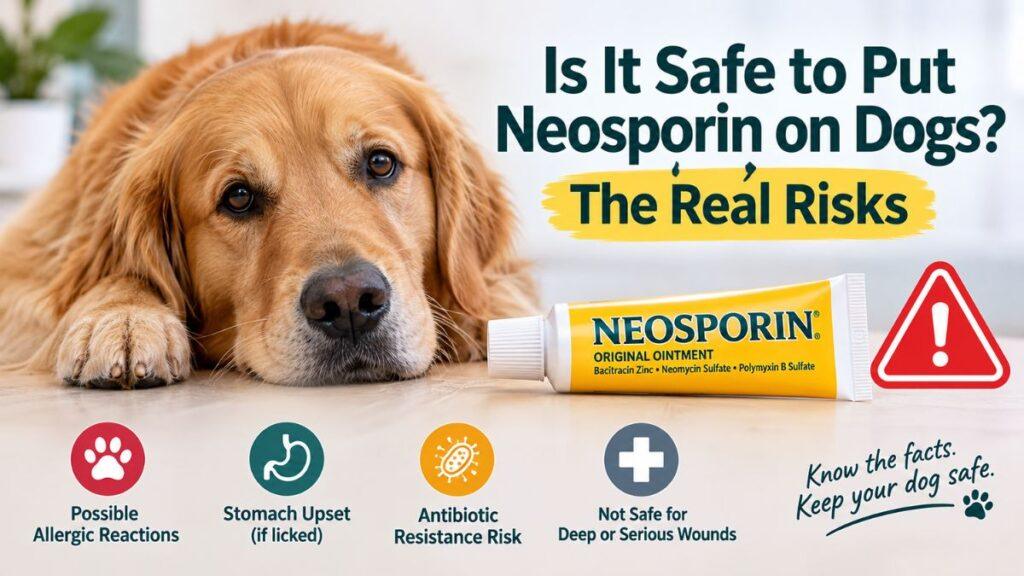
Unlike people, dogs won’t leave a wound alone. Licked-off Neosporin means swallowed neomycin and polymyxin B, which can cause vomiting, diarrhea, or a lost appetite. Constant licking also keeps the area damp, which slows healing and can drag out a simple scrape into a bigger, wetter problem. A lick or two is usually not an emergency; a dog that gets into a large amount is a different story (more on that below).
Allergic Reactions Happen
Some dogs develop redness, swelling, hives, or worsening irritation right at the site of a topical allergic reaction. This is easy to miss at first because it can look similar to normal wound inflammation. The difference is timing and direction: normal healing calms down day by day, while an allergic reaction tends to spread, itch more, or look worse a day or two after you started applying the ointment. Rarely, a reaction can escalate into a more serious, body-wide response: facial swelling, hives across the body, or trouble breathing that needs immediate veterinary care.
The “Pain Relief” Version Is the One to Avoid
Regular Neosporin and “Neosporin + Pain Relief” are not interchangeable, even though they sit side by side on the pharmacy shelf. The Pain Relief formula contains pramoxine, a topical anesthetic more likely to trigger adverse reactions in dogs — and considerably riskier for cats, so keep it away from multi-pet households entirely. If you use anything at all, stick to the plain, original triple-antibiotic formula, and check the label carefully before applying; the packaging often looks nearly identical.
4. The Overlooked Risk: Neosporin Near the Ears
This is the risk almost no other article about Neosporin on dogs mentions: neomycin is ototoxic, meaning it can damage hearing structures if it passes a ruptured or compromised eardrum. You often can’t tell from the outside whether an ear wound involves a damaged eardrum, which is exactly the problem — guessing wrong isn’t reversible. If your dog has a wound near the ear canal, a head shake that suggests ear pain, or any drainage from the ear itself, don’t apply Neosporin there. This is one spot where “just try it” home care can cause lasting harm — see your vet instead.
Neosporin Original vs. Pain Relief vs. Scar Formula: Which Is Riskiest for Dogs?
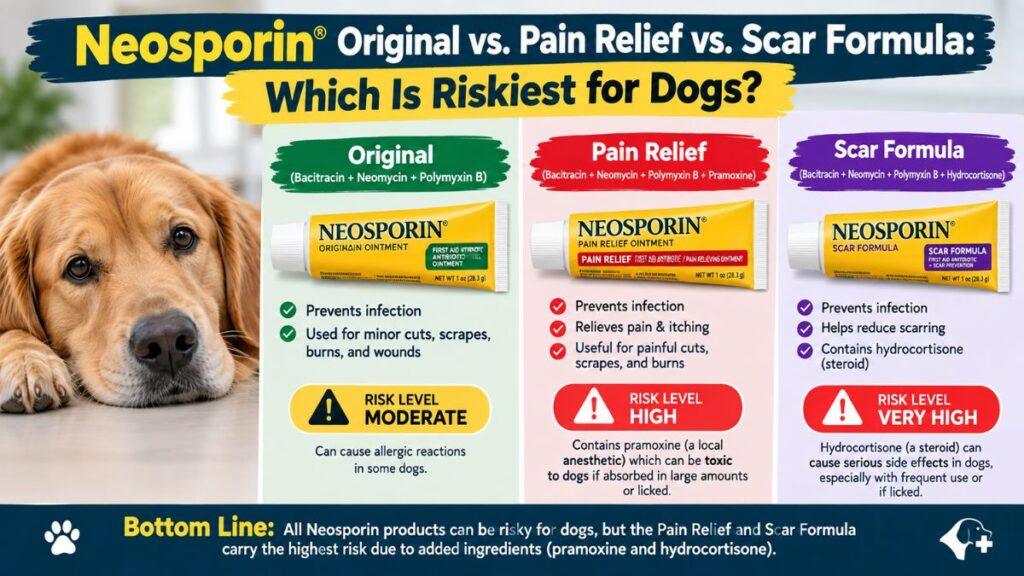
| Formula | Contains | Risk Level for Dogs |
| Original Triple Antibiotic | Neomycin, polymyxin B, bacitracin | Lowest of the three, in small amounts on minor wounds |
| + Pain Relief | Above ingredients plus pramoxine | Higher — added anesthetic increases reaction risk |
| + Scar Formula | Varies by product, often extra additives | Higher — not tested or intended for animal use |
Where on Your Dog’s Body Matters
Paws and nose — high-lick-risk zones; plan on a cone or bootie right after applying.
Near the eyes — never apply; ask your vet for an eye-safe product instead.
Near or inside the ears — avoid entirely, due to the ototoxicity risk above.
Near the mouth — higher ingestion risk; use only the thinnest layer, if at all.
Surgical sites or stitches — never apply anything without your vet’s explicit go-ahead.
What Kind of Wound Can You Use Neosporin On?
Not every cut is the same, and this is where a lot of generic advice falls short:
Minor scrape or abrasion: A reasonable candidate for a thin layer of Neosporin.
Small, shallow cut with clean edges: Usually fine once cleaned.
Puncture wound or bite: Skip it. These trap bacteria deep under the skin, and a thick ointment can seal contamination in rather than help.
Deep, gaping, or heavily bleeding wound: This needs a vet, not a home remedy.
Hot, oozing, or already-infected skin: Neosporin won’t fix an active infection that needs a veterinary diagnosis.
How to Apply Neosporin to a Dog Safely
Clean the wound first. Rinse with lukewarm water or a vet-approved saline rinse, then gently pat dry.
Apply a very thin layer. A pea-sized amount is plenty — more product just means more for your dog to lick off.
Cover it if you can. A light, breathable bandage cuts down both licking and contamination.
Prevent access. Use an E-collar, soft recovery collar, or supervise closely for at least 15–20 minutes after applying. [Internal link opportunity: link to your post on recovery cones/E-collars here]
Watch it daily. If it isn’t visibly improving within 2–3 days, or looks worse, stop and call your vet.
How Often and How Long Can You Use Neosporin on a Dog?
Most vets who permit it at all recommend a thin layer once or twice a day, for no more than 3–5 days. If a minor wound hasn’t started healing in that window, continuing Neosporin isn’t the answer a vet exam is. Repeated, long-term use on the same spot raises both the ingestion risk and the odds of skin irritation.
My Dog Licked Neosporin — What Should I Do?
This is one of the most-searched, least-answered questions about Neosporin on dogs. Here’s a realistic breakdown:
A small lick or two: Usually not dangerous. Watch for mild vomiting or soft stool over the next several hours.
A large amount, or most of a tube: Call for guidance — don’t wait and see.
Any amount of the Pain Relief (pramoxine) version: Call for guidance regardless of quantity.
Symptoms show up (repeated vomiting, diarrhea, lethargy, trouble breathing, facial swelling): This is an emergency.
When in doubt, it costs nothing to ask. Save these two numbers in your phone before you need them:
ASPCA Animal Poison Control Center: (888) 426-4435 (consultation fee may apply)
Pet Poison Helpline: (855) 764-7661 (consultation fee may apply)
Both are staffed 24/7 by veterinary toxicology experts — exactly who you want on the phone during a “my dog just ate something” moment.
Signs Your Dog’s Wound Needs a Vet, Not Neosporin
Stop home treatment and call your veterinarian if you notice:
A deep, wide, or heavily bleeding wound
Pus, foul odor, or spreading redness
Swelling, heat, or visible pain when touched
A wound near the eyes, ears, or a joint
No improvement — or visible worsening — after 2–3 days
Your dog becoming lethargic, feverish, or off their food [Internal link opportunity: link to your post on emergency vet warning signs here]
Safer Alternatives to Neosporin for Dogs
If you’d rather skip the guesswork, these are commonly recommended by vets for minor wound care:
Diluted chlorhexidine solution — a go-to antiseptic wash for minor wounds; effective against a broad range of bacteria and gentle enough for regular cleaning.
Diluted povidone-iodine (Betadine) — another vet-favored antiseptic rinse, useful as an alternative if chlorhexidine isn’t on hand.
Vet-formulated wound sprays or gels — made specifically to be safe if licked, so you’re not gambling on ingestion the way you are with a human product.
Medical-grade Manuka honey — a long history in wound care, generally well-tolerated topically, though it does need a plan for licking since dogs treat it like a treat.
A plain saline rinse — when in doubt, gentle cleaning alone is often safer than any ointment, especially for wounds that are still oozing.
Keep one of these in your dog’s first-aid kit so you’re not reaching into a human medicine cabinet during an actual emergency. [Internal link opportunity: link to your dog first-aid kit checklist post here]
How to Tell If the Wound Is Actually Healing
Once you’ve cleaned a minor wound and decided whether Neosporin has a place in the plan, keep an eye on the trend over the next few days rather than judging it hour to hour:
Good signs: the edges look drier each day, redness fades, no new discharge appears, and your dog stops fussing at it as much.
Warning signs: the area gets wetter or more swollen, a smell develops, your dog is suddenly more bothered by it than the day before, or it simply looks the same on day four as it did on day one.
A wound moving in the right direction rarely needs anything beyond basic cleaning and time. One that’s stalled or sliding backward needs a vet visit, not a second or third round of ointment.
Preventing Your Dog From Licking a Treated Wound
Use a hard or soft recovery collar (E-collar)
Try a lightweight recovery suit for torso wounds
Apply a breathable bandage, checked and changed daily
Distract with a chew toy or short walk right after treatment
Ask your vet about a vet-approved bitter-tasting deterrent spray
FAQs: Can You Use Neosporin on Dogs?
Is it okay to use Neosporin on my dog in an emergency, “in a pinch”?
For a truly minor scrape with nothing else available, a thin layer of the plain Original formula is a reasonable stopgap not a long-term plan. Follow up with your vet if the wound doesn’t look better within a couple of days.
How much Neosporin is dangerous for a dog to swallow?
A lick or two typically causes only mild, short-lived stomach upset. Ingesting a large amount, or any amount of the Pain Relief version, warrants a call to your vet or a poison control hotline.
Can I put Neosporin on my dog’s paw?
Yes, in small amounts on a minor paw wound but paws are a high-lick zone, so cover it or use a boot or cone right after applying.
Can I use Neosporin on my dog’s nose?
Only a very thin layer of truly minor irritation, and expect your dog to try to lick it off immediately supervise closely.
What if my dog has a wound near their ear? Don’t use Neosporin there. Neomycin can damage hearing if it reaches a compromised eardrum. See your vet for wounds near the ear.
How often can I apply Neosporin to my dog’s wound?
Once or twice a day, for no more than 3–5 days, is the general guidance and only if the wound is genuinely improving.
Is Neosporin the same as the antibiotic ointment my vet might prescribe?
No. A vet-dispensed topical antibiotic is chosen and dosed for your dog’s specific wound and species. Neosporin is a general, human, over-the-counter product a reasonable stopgap for something minor, not a like-for-like substitute for veterinary treatment.
Can Neosporin be used on a healing surgical incision?
No. Never apply Neosporin, or anything else, to a surgical site or stitches without your vet’s explicit approval. Incisions have their own aftercare instructions for a reason, and an unapproved product can interfere with healing or mask early signs of a problem.
Final Verdict: Can You Use Neosporin on Dogs?
Yes, cautiously, and only for a genuinely minor wound but it’s never a substitute for a veterinary exam when something looks off. Keep a dog-specific first-aid kit on hand, know your local vet’s after-hours number, and save the ASPCA Poison Control and Pet Poison Helpline numbers in your phone before you need them. That’s the difference between a stressful moment and a real emergency.
This article is for general information only and isn’t a substitute for professional veterinary advice. Always consult your veterinarian about your dog’s specific wound or symptoms.