

Pumpkin season brings the same question to nearly every dog owner’s mind: if pumpkin flesh is fine for dogs, what about the seeds? Pumpkin seeds tend to get lumped into the same “safe” category online without much explanation, but the preparation method, the portion size, and some of the more popular health claims around them all deserve a closer look before you toss a handful into your dog’s bowl.
Quick answer: Yes, dogs can eat pumpkin seeds, but only when they’re plain, shelled (or finely ground), unsalted, and given in small amounts. The wrong preparation salted, buttered, seasoned, or fed whole with the tough outer hull is what turns this healthy snack into a problem. Below is everything you need to know before sharing a handful with your dog: the real nutrition, exact serving sizes by weight, the truth behind the “natural dewormer” claim, and the mistakes most pet owners make.
What’s Actually Inside a Pumpkin Seed
Pumpkin seeds, sometimes sold as pepitas once hulled, are small but nutrient-dense. A single seed packs healthy fats, plant protein, and a respectable mineral profile zinc, magnesium, iron, and potassium along with a modest dose of fiber and natural antioxidants like vitamin E.
That density is exactly why portion size matters more here than it does with something like plain pumpkin flesh. A cup of pumpkin seeds carries several hundred calories; a cup of pumpkin puree barely registers by comparison. The seeds’ omega-3 and omega-6 fatty acids can support skin and coat health, and the zinc content plays a role in immune function and wound healing. None of that means more is better, it means a little goes a long way.
Shelled vs. Whole Pumpkin Seeds: Which Is Actually Safer
Not all pumpkin seeds are the same shape, and the difference matters for safety.
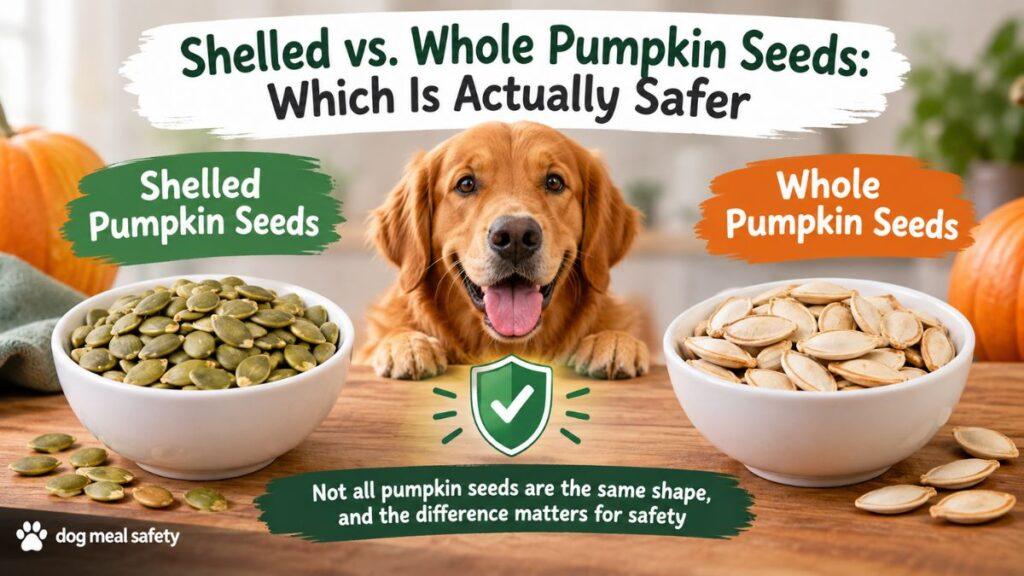
Shelled (green) seeds often called pepitas are soft enough to chew and grind easily. These are the better choice for dogs of almost any size.
Whole white seeds still have their fibrous outer hull attached. That hull is tough, doesn’t break down well in a dog’s digestive tract, and can pose a real choking risk, especially for small breeds or dogs that gulp their food instead of chewing it. In many cases, a hull-on seed simply passes through undigested, providing none of the nutritional benefit while still carrying the choking and blockage risk.
The safest approach for every dog, regardless of size, is to remove the shell and grind the seed into a fine powder. A basic coffee or spice grinder does the job in under ten seconds, and grinding also makes the nutrients easier for your dog to actually absorb.
Raw vs. Roasted: Does It Matter?
Both raw and roasted pumpkin seeds are safe for dogs, as long as nothing else has been added.
Raw seeds are nutritionally intact but spoil quickly because of their natural oil content. If you’re using raw seeds, buy them fresh, keep them refrigerated, and use them within a few weeks.
Roasting extends shelf life and can make the seeds more appealing to picky eaters, but the method matters. Keep the oven low, around 300°F, and skip the oil, salt, and any seasoning entirely. Ten to fifteen minutes is usually enough. Once cooled, grind or crush the seeds before adding them to your dog’s bowl.
How Many Pumpkin Seeds Can a Dog Eat? (Dosage Chart)
This is the question most guides answer vaguely. Here’s a clear, weight-based starting point using ground, plain pumpkin seed:
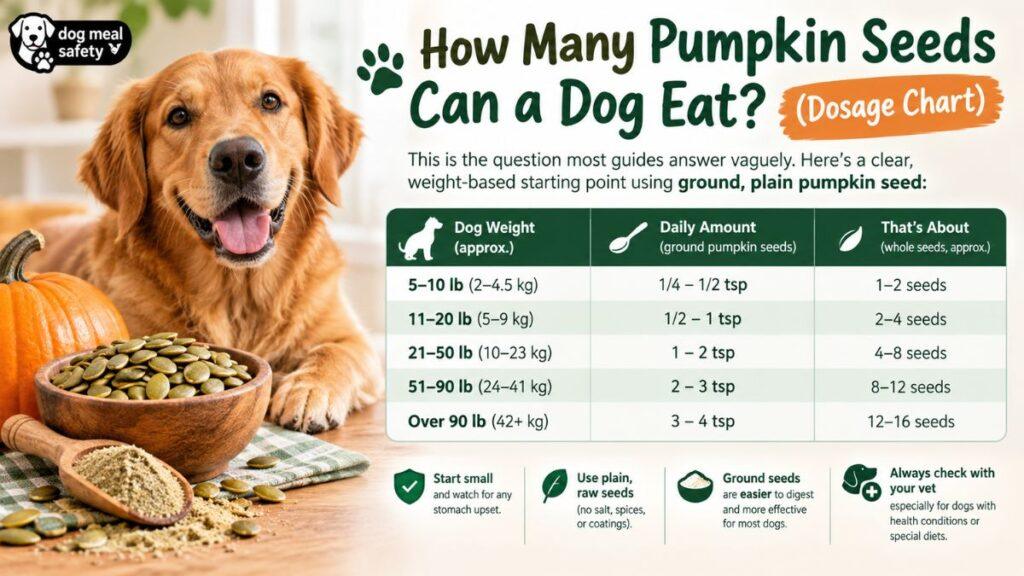
| Dog’s Weight | Starting Amount (ground seed) | Daily Maximum |
| Under 20 lbs (small) | 1/8 – 1/4 teaspoon | 1/2 teaspoon |
| 21–50 lbs (medium) | 1/4 – 1/2 teaspoon | 1 teaspoon |
| 51+ lbs (large) | 1/2 – 1 teaspoon | 1–2 teaspoons |
Start at the low end of the range for three to four days and watch your dog’s stool before increasing. Pumpkin seeds are fat-dense, and jumping straight to the maximum amount is one of the most common reasons dogs end up with a loose stool or gas the next day. If your dog is on a prescription diet, is overweight, or has a history of digestive issues, check with your veterinarian before adding any new topper, pumpkin seeds included.
Best Ways to Serve Pumpkin Seeds to Your Dog
Once you’ve settled on plain, shelled seeds in the right amount, how you serve them affects both safety and how much benefit your dog actually gets.
- Grind and sprinkle: The most reliable method. Grind cooled, plain seeds into a fine powder and mix it into your dog’s regular meal. This eliminates the choking risk almost entirely and helps your dog absorb more of the nutrients.
- Occasional whole treat: If your dog chews well and isn’t a small breed, a few plain roasted seeds can work as a standalone treat rather than a food topper.
- Mixed into homemade treats: Ground pumpkin seed can be folded into homemade dog treat recipes alongside plain pumpkin puree for a combined fiber-and-nutrient boost, as long as the total fat content stays reasonable for your dog’s size.
Whichever method you choose, introduce it gradually and keep track of how much your dog is getting from other treats that day, since pumpkin seeds should replace part of the daily treat allowance rather than stack on top of it.
Pumpkin Seeds vs. Pumpkin Puree: A Fiber Mix-Up Worth Clearing Up
Because “pumpkin helps with digestion” is such common advice, many owners assume pumpkin seeds will do the same job as pumpkin puree. They don’t, and understanding why can save you a frustrating week of guessing.
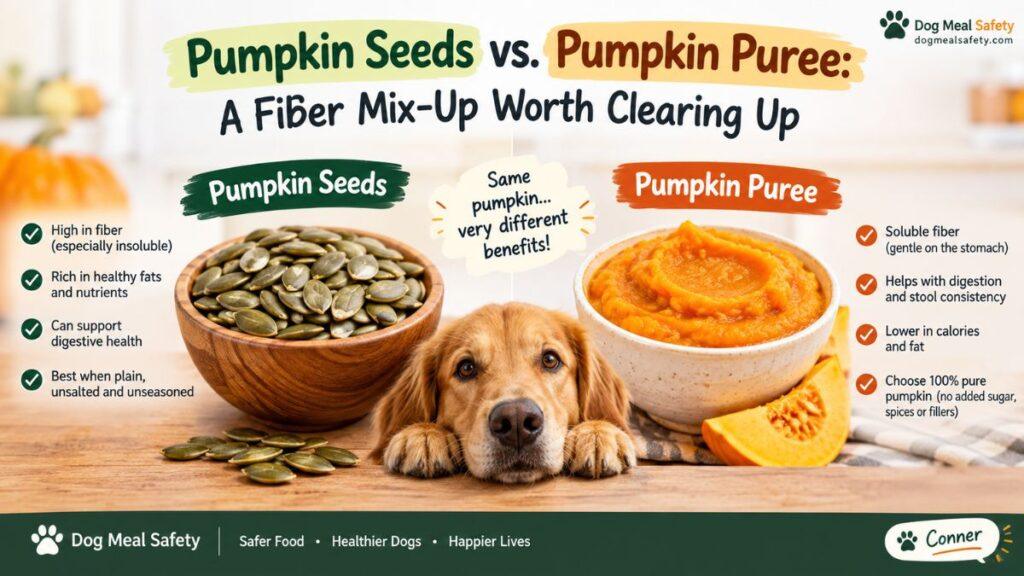
Pumpkin flesh is high in soluble fiber, the kind that absorbs water and forms a gel. That’s what helps firm up loose stool and can also ease mild constipation by holding moisture in the digestive tract.
Pumpkin seeds lean toward insoluble fiber, which adds bulk and speeds up transit time rather than absorbing water. It’s useful for general digestive regularity, but it isn’t the ingredient to reach for if your dog has diarrhea or constipation. If that’s the goal, plain canned pumpkin (not pie filling) or a concentrated pumpkin fiber supplement is the more appropriate tool. Seeds are a nutritional topper, not a digestive fix.
Are Pumpkin Seeds Really a Natural Dewormer? Here’s the Honest Answer
This is the claim you’ll see repeated across almost every pumpkin seed article, usually stated as settled fact: pumpkin seeds contain a compound called cucurbitin, said to paralyze intestinal parasites so the body can expel them naturally.
The science is more limited than the internet suggests. Cucurbitin’s antiparasitic effect has been studied in some animal and lab settings, but it hasn’t been well studied specifically in dogs. There’s no established, veterinarian-backed dosage known to reliably clear a parasite infestation in a dog, and it’s unclear how efficiently a dog’s digestive system even absorbs the compound in meaningful amounts.
In practice, that means pumpkin seeds are not a substitute for an actual dewormer. If you suspect your dog has worm signs including visible segments in the stool, scooting, a dull coat, weight loss, or a swollen belly in puppies the right first step is a fecal test at your vet’s office, followed by a proven, correctly dosed treatment. Pumpkin seeds can still be part of a healthy diet, but treating a real parasite problem with a pantry ingredient and hoping for the best isn’t a plan. It’s a delay.
What About the Urinary and Prostate Health Claims?
You’ll often see pumpkin seeds marketed as support for urinary tract health and, in male dogs, prostate health. The mineral and antioxidant content in pumpkin seeds is genuinely good for overall wellness, and there’s reasonable evidence for this type of seed supporting urinary function in some species. But as with the deworming claim, dog-specific research is thin, and no responsible source recommends pumpkin seeds as a treatment for an existing urinary or prostate condition.
If your dog has a diagnosed urinary issue, prostate enlargement, or recurring UTIs, pumpkin seeds might be a reasonable addition to a broader diet, but they should never replace the treatment plan your veterinarian has already prescribed. Think of them as a small nutritional bonus, not a therapy.
What to Never Feed Your Dog
The nutritional benefits of pumpkin seeds disappear the moment they’re seasoned. Avoid:
- Salted or heavily salted seeds
- Butter, oil, or ghee-roasted seeds
- Garlic or onion powder seasoning (both toxic to dogs)
- Chili, ranch, or other flavored coatings
- Sugar-glazed or candied seeds
- Store-bought trail mix that may contain raisins or xylitol
- Any seed pulled straight from a carved jack-o’-lantern (more on this below)
If a bag of pumpkin seeds is meant for human snacking, assume it’s off-limits unless the ingredient label confirms it contains nothing but pumpkin seeds.
Puppies, Seniors, and Toy Breeds Need a Different Approach
Most general dosage advice is written for a healthy, mid-sized adult dog, but three groups need extra caution.
Puppies have digestive systems that are still developing. Hold off on pumpkin seeds, or any new topper, until your puppy’s regular food and stools are already consistent. When you do introduce them, start with a single pinch of ground seed and watch closely.
Senior dogs often tolerate pumpkin seeds well, but because seeds are fat-dense, a lower-fat treat is usually the kinder default for older dogs, especially those with slower digestion or existing weight management goals.
Toy breeds need a genuinely tiny amount, think a pinch rather than a teaspoon, and the seed should always be ground, never given whole, because of their smaller airway and higher choking risk relative to body size.
Dogs With Pancreatitis or Fat-Restricted Diets
Pumpkin seeds are relatively high in fat for their size, and that fat content is the main reason they’re not appropriate for every dog. Dogs with a history of pancreatitis, dogs on a prescribed low-fat diet, and dogs prone to recurring digestive flare-ups should generally avoid pumpkin seeds altogether unless a veterinarian has specifically cleared it. Even a small amount can be enough to trigger symptoms in a sensitive dog.
Storing Pumpkin Seeds Safely
Raw pumpkin seeds contain natural oils that go rancid faster than most owners expect. Store raw seeds in an airtight container in the refrigerator, and use them within a few weeks. Roasted seeds last a bit longer in a cool, dry pantry, but should still be checked for any off smell or visible mold before use. When in doubt, throw them out. Rancid seeds offer no benefit and can upset your dog’s stomach on their own.
The Hidden Danger of Jack-O’-Lantern Seeds
It’s tempting, especially in the fall, to scoop the seeds straight out of a carved pumpkin and hand them to your dog. Don’t. A carved pumpkin has usually been sitting at room temperature for days, often with a lit candle inside. That combination speeds up mold growth on the interior walls, and the seeds themselves can pick up soot, wax residue, and bacteria from the pulp. Seeds destined for your dog’s bowl should always come from a fresh, uncarved pumpkin or a sealed bag, never from a decoration that’s already been sitting out.
Signs Your Dog Isn’t Tolerating Pumpkin Seeds
Even with the right preparation, not every dog’s stomach agrees with a new food. Watch for:
- Loose stool or diarrhea
- Excessive gas
- Vomiting
- Reduced appetite
- Itching or skin irritation (a sign of possible allergy)
If any of these appear after feeding pumpkin seeds, stop immediately and call your vet, especially if symptoms persist beyond a day or involve repeated vomiting, blood, or noticeable lethargy.
The Bottom Line
Pumpkin seeds can be a genuinely healthy, low-cost addition to a dog’s diet, but only when they’re plain, shelled or ground, unseasoned, and served in small, weight-appropriate amounts. They’re not a miracle dewormer, and they’re not a substitute for pumpkin puree when the goal is digestive support.
Used correctly, though, they’re a simple way to add healthy fats, minerals, and antioxidants to your dog’s bowl. When in doubt about a specific health condition, your veterinarian is always the better resource than a pantry remedy.
Frequently Asked Questions
Can dogs eat pumpkin seeds with the shell on?
Small dogs shouldn’t. Large dogs that chew thoroughly can occasionally manage a whole seed without harm, but the hull is hard to digest and often passes through unused. Grinding shelled seeds is the safer habit for every size of dog.
How many pumpkin seeds can a 40-pound dog have?
Around 1/4 to 1/2 teaspoon of ground seed per day is a reasonable starting point, working up to no more than 1 teaspoon once your dog tolerates it well.
Can puppies eat pumpkin seeds?
Only once their regular diet and stools are stable, and only in a tiny, ground amount. Check with your vet first if your puppy has had any digestive issues.
Are pumpkin seeds an effective dewormer for dogs?
Not reliably. The active compound, cucurbitin, hasn’t been well studied in dogs, and there’s no established dose known to clear an infestation. A fecal test and a proper veterinary dewormer are the correct response to suspected worms.
Do pumpkin seeds help with a dog’s constipation?
Not as effectively as pumpkin flesh. Seeds are higher in insoluble fiber, which adds bulk, while pumpkin puree’s soluble fiber is better suited to softening stool.