

If your dog is staring at the crispy skin left on your plate after dinner, you’re probably wondering whether it’s safe to slip them a piece. The short answer is that cooked, plain salmon skin is fine for most healthy dogs in small amounts, while raw or seasoned skin is a completely different situation. Here’s what actually matters: how to prepare it correctly, how much to give, who should skip it, and when a piece of fish skin can turn into a genuine emergency.
Can Dogs Eat Salmon Skin? The Quick Answer
Yes, most dogs can eat salmon skin as long as three conditions are met. It needs to be fully cooked, served plain with no salt, oil, butter, garlic, or onion, and offered in small amounts rather than as a regular part of every meal.
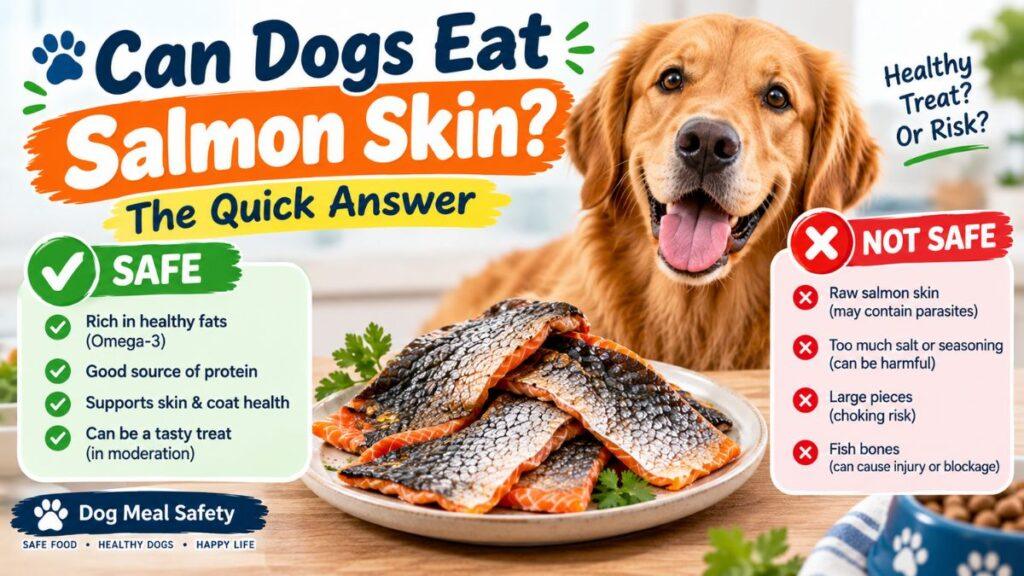
Skip it if the skin is raw, smoked, fried in oil, or coated in seasoning. If your dog has a history of pancreatitis, a known fish allergy, or is on a prescription diet, check with your vet before adding it to their bowl at all. Outside of those situations, salmon skin can be a nutritionally worthwhile treat rather than just a greasy scrap you feel guilty about tossing over.
Why Salmon Skin Isn’t Just Fatty Leftovers
Salmon skin carries a concentrated dose of the same nutrients that make salmon such a popular ingredient in dog food to begin with.
- Omega-3 fatty acids, specifically EPA and DHA, support skin and coat health, help with joint mobility in older dogs, and may ease inflammation linked to allergies or arthritis
- Collagen and lean protein help maintain and repair muscle
- B vitamins, vitamin D, and selenium support energy metabolism and immune function
Most of a salmon’s fat sits directly beneath the skin rather than deeper in the flesh, so the skin actually contains a higher concentration of these fatty acids, ounce for ounce, than a plain fillet does. That’s the upside of feeding it. It’s also the reason moderation matters so much, since the same fat that delivers those omega-3s can trigger stomach upset if a dog gets too much at once.
Dogs can’t produce EPA and DHA on their own in meaningful amounts, so they have to come from food or a supplement. That’s part of why salmon and salmon skin show up so often in dog food formulas marketed for skin and coat support, and it’s also why a small, occasional piece of salmon skin can add real nutritional value rather than just being an empty-calorie treat.
How to Prepare Salmon Skin the Right Way
Preparation is really where the safety of salmon skin gets decided, more than the skin itself.
Cook it thoroughly. Bake, grill, steam, or poach the salmon until it reaches a safe internal temperature, generally around 145°F, then let the skin cool before handing it over. Never feed raw or undercooked skin.
Keep it plain. Salt, butter, cooking oil, garlic, and onion show up constantly in human salmon recipes but don’t belong in a dog’s bowl. Garlic and onion in particular can damage red blood cells if a dog eats enough of them over time. It’s worth cooking a separate, unseasoned piece for your dog rather than handing over a scrap straight off your own plate.
Check for bones. Salmon bones are thin and can splinter, so run your fingers along the skin and flesh before serving, even if you think you already removed them.
Cut it small. Small, bite-sized pieces are easier to chew properly and less likely to be swallowed whole, which also lowers choking risk.
If you’d rather have something shelf-stable on hand, baking salmon skin at a low temperature, around 275°F, until it turns crisp, or running it through a dehydrator, turns it into a jerky-style chew that keeps for weeks. A few pet treat brands also sell single-ingredient dehydrated salmon skin, which is a reasonable shortcut if you don’t want to cook fish at home just for your dog.
The Real Danger Is Raw Salmon Skin
This is the part of the salmon skin question with actual stakes, and it has nothing to do with fat content or seasoning.
Raw or undercooked salmon, skin included, can carry a parasite responsible for salmon poisoning disease. The parasite itself, a fluke called Nanophyetus salmincola, is fairly harmless on its own. The real danger comes from a bacterium it often carries, Neorickettsia helminthoeca, which is what actually makes dogs sick. Left untreated, salmon poisoning disease kills up to 90 percent of affected dogs within one to two weeks.
Signs typically appear five to seven days after a dog eats infected raw fish, though it can take longer in some cases. Early signs include high fever and a sudden loss of appetite, followed by weakness, vomiting, and diarrhea that can become bloody. Swollen lymph nodes are another common sign a vet will check for. The disease responds well to antibiotics like doxycycline when it’s caught early, so any dog showing these symptoms after eating raw fish needs veterinary attention immediately rather than a wait-and-see approach at home.
Salmon poisoning disease is concentrated in the Pacific Northwest, including Washington, Oregon, Northern California, and parts of British Columbia, where the parasite’s snail host lives in freshwater rivers. Wildlife agencies in that region specifically warn dog owners each year to keep pets leashed and away from spawned-out salmon carcasses along riverbanks, since risk peaks in late summer and early fall when salmon gather to spawn and die. Given how seasonal that risk is, it’s worth being especially cautious around rivers and streams during this stretch of the year if you live in or are visiting that region.
Thoroughly cooking salmon kills both the parasite and the bacteria it carries. Freezing raw fish at -4°F for at least 24 hours also works, though cooking remains the more reliable option for anything you’re actually about to feed your dog.
A few related details are worth knowing. Dog-to-dog transmission of salmon poisoning disease is rare, so a sick dog generally isn’t a direct risk to other pets in the house. Cats don’t appear to develop the disease at all. People who come into contact with the same parasite can sometimes get mild, short-lived digestive symptoms, but they don’t develop salmon poisoning itself. None of that makes raw salmon skin any safer to feed. It just helps explain why vets ask very specific questions about exposure and location when a dog shows up with these symptoms.
Who Should Be Extra Careful With Salmon Skin
Even properly cooked and plain, salmon skin isn’t the right treat for every dog.
Dogs with a history of pancreatitis should avoid it, or only have tiny amounts under a vet’s guidance. Salmon skin is one of the fattiest parts of the fish, and rich, fatty foods are a commonly cited trigger for pancreatitis flare-ups in dogs already prone to it, although researchers are still working out exactly how strong that link is.
Dogs managing their weight or following a prescription diet can also be thrown off course by the extra calories, since salmon skin is fairly calorie-dense for its size. Small and toy breeds in particular can hit their daily calorie limit faster than you’d expect from something that looks like a tiny snack.
Fish allergies exist in dogs too, even though they’re less common than chicken or beef allergies. The first time you offer salmon skin, watch for itching, excessive scratching, ear infections, or digestive upset, and stop feeding it if you notice any of those reactions.
How Much Salmon Skin Can a Dog Actually Have
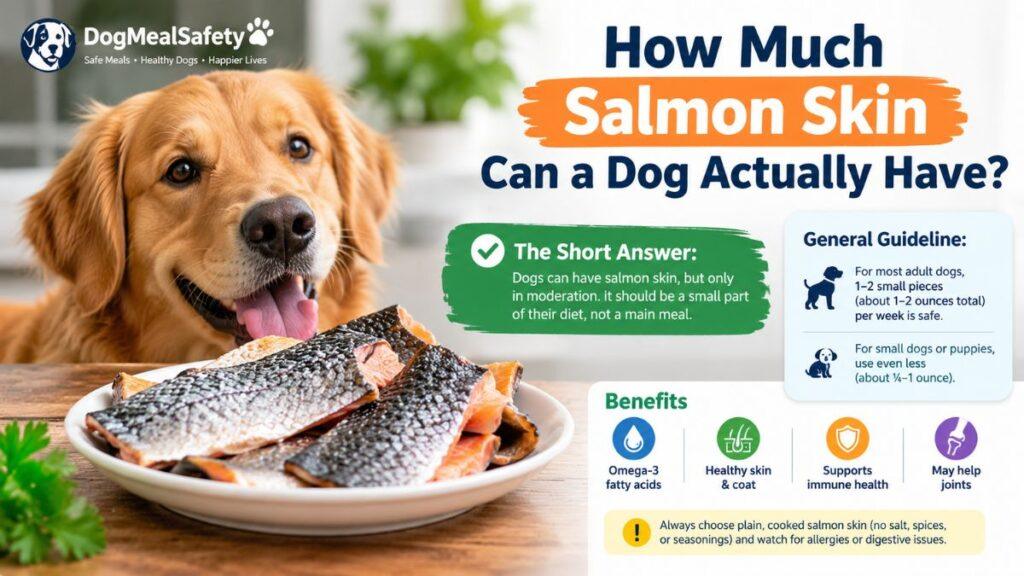
There’s no single official serving size for salmon skin, but veterinary sources generally land in the same range: small amounts, a couple of times a week at most.
| Dog Size | Rough Portion | Suggested Frequency |
| Small (under 20 lbs) | A piece about the size of a thumbnail | 1–2 times per week |
| Medium (20–50 lbs) | A small, bite-sized strip | 1–2 times per week |
| Large (50+ lbs) | A slightly larger strip, still well short of a full piece | Up to twice per week |
A simpler way to keep this in check is the widely used 10 percent rule for dog treats. Treats and extras of any kind, salmon skin included, shouldn’t add up to more than around 10 percent of a dog’s daily calories, with the remaining 90 percent coming from a complete and balanced diet. If your dog is on a weight-loss plan, aiming closer to 5 percent is the safer target.
The first time you offer it, give less than you think you need and watch how your dog handles it over the following day before making it a regular thing.
What About Smoked, Fried, or Store-Bought Salmon Skin?
Not all salmon skin is created equal once it leaves the kitchen.
Smoked salmon skin, whether hot-smoked or cold-smoked, is cured with a significant amount of salt, which makes it a poor intentional choice for dogs even though one accidental bite isn’t likely to cause serious harm. It’s not something to feed on purpose.
Fried salmon skin picks up extra oil during cooking, adding fat on top of what’s already naturally there and increasing the odds of an upset stomach.
Store-bought dehydrated or freeze-dried salmon skin treats can be a convenient and safe option, as long as the ingredient label reads simply “salmon skin” with nothing else added. Check the packaging the same way you would for any other treat before buying.
As for wild versus farmed salmon, the evidence is more mixed than a lot of pet blogs suggest. Some studies have found higher levels of contaminants like mercury and PCBs in wild salmon, while others have found the opposite is true for farmed fish, and results vary depending on where the fish were raised or caught. Regulatory bodies including the FDA and several state health departments classify salmon overall, wild or farmed, as a low-mercury fish that’s considered safe to eat regularly. For the small, occasional amounts involved in feeding a dog salmon skin, cooking it properly and keeping it plain matters far more than which type of salmon it came from.
If Your Dog Eats Raw Salmon Skin or Too Much of It
Two different situations call for two different responses, and it helps to know which one you’re dealing with.
If your dog ate a reasonable amount of cooked, plain salmon skin and just seems a little gassy or has slightly loose stool, that’s usually a mild digestive upset that clears up within a day on its own. Keep an eye on them and hold off on other rich foods or treats for a bit while their stomach settles.
If your dog got into raw salmon, whether from a caught fish, a discarded fish head, or scraps from cleaning a catch, call your vet the same day even if your dog seems completely fine right now. In regions where salmon poisoning disease is common, early treatment makes a dramatic difference in outcome, and waiting for symptoms like fever or vomiting to show up before reaching out can cost valuable time.
Contact your vet right away, regardless of where you live, if your dog shows vomiting, diarrhea, lethargy, bloating, unusual drooling, or a refusal to eat after getting into salmon skin of any kind.
The Bottom Line
Cooked, plain salmon skin in small amounts is a fine treat for most healthy dogs, and it actually brings something useful to the table in the form of omega-3s and protein. Raw, smoked, fried, or heavily seasoned skin is where the real risks live, so keep it simple: cook it through, skip the extras, watch the portion size, and check with your vet first if your dog has a health condition that fat-heavy treats could complicate.
Frequently Asked Questions
Can puppies eat salmon skin?
In small amounts once they’re eating solid food, yes, but puppies have more sensitive digestive systems than adult dogs. Start with a very small piece and watch closely for any reaction before offering more.
Is salmon skin good for a dog’s coat?
Yes. The omega-3 fatty acids concentrated in salmon skin are one of the most commonly recommended natural ways to support a shinier coat and calm dry, itchy skin, though results build up over time rather than after a single serving.
Can dogs eat salmon skin with the scales still attached?
It’s better to remove them when you can. Scales aren’t toxic, but they’re tough and harder to digest, especially for small dogs.
Is salmon skin bad for dogs with pancreatitis?
It can be. The high fat content makes it a food to avoid, or strictly limit under veterinary guidance, for any dog with a history of pancreatitis.
Does freezing raw salmon skin make it safe to feed?
Freezing raw fish at -4°F for at least 24 hours kills the parasite responsible for salmon poisoning disease, but thoroughly cooking the skin is still the safer and more reliable choice for something you’re preparing at home.
How do I know if my dog is allergic to salmon?
Watch for itching, redness, ear infections, or digestive upset after their first taste, and stop feeding it if any of those symptoms appear. Persistent or severe reactions are worth a call to your vet.
Is salmon skin different from other fish skin treats, like cod or trout skin?
Nutritionally, they’re similar in that most fish skins are rich in omega-3s and protein. Salmon skin tends to be higher in fat than leaner fish like cod, which is worth factoring in if your dog is watching their weight or prone to pancreatitis.