

Can Dogs Eat Oatmeal?
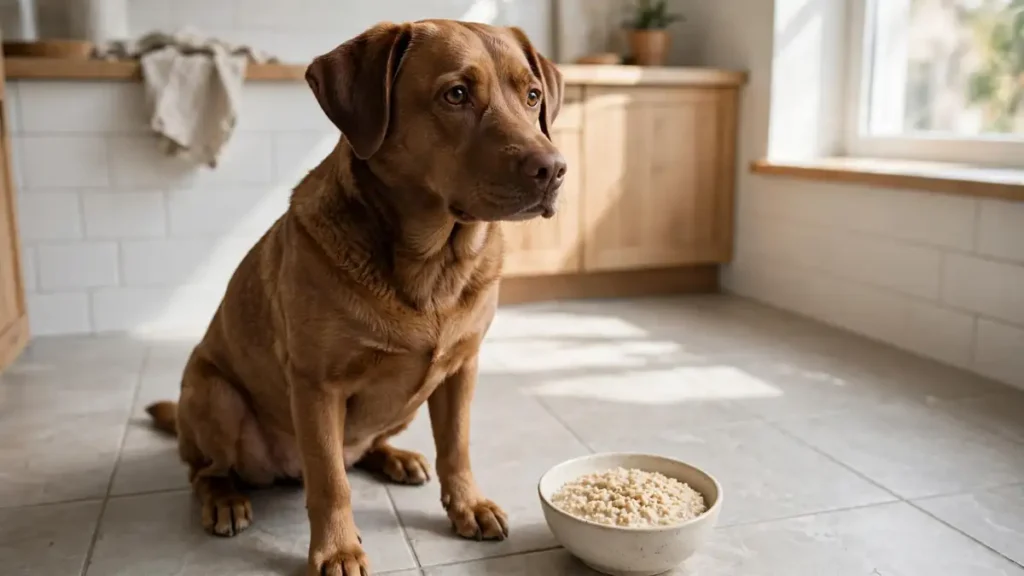
Yes, dogs can eat oatmeal when it is plain, cooked in water, and served cool in a small amount. It works as an occasional treat for most healthy adult dogs. It never replaces a balanced diet, and flavoured or sweetened versions stay off the menu.
Dr Carly Fox of the Schwarzman Animal Medical Center in New York City told the AKC that oatmeal can benefit a dog in a variety of ways. She calls it a great alternative carbohydrate for dogs that may be sensitive to wheat or grains. A dog with a wheat sensitivity often does fine on oats.
Scrambled eggs bring protein to the bowl, while oats bring fibre and slow energy. A dog that walks far may get more from oats than a dog that mostly sleeps.
Oats also carry soluble fibre, the kind that feeds gut bacteria and helps stools hold their shape. Dogs with irregular bowel movements sometimes do better with a little extra soluble fibre. Too much fibre causes the same problems it should fix.
A small amount helps. A large amount hurts.
Safe does not mean right for every dog. Puppies, dogs with diabetes, and dogs carrying extra weight need a vet to weigh in first. A healthy adult dog with no grain issues can try a spoonful, then watch the stools for a day or two. Oats are a treat food, so keep them occasional and small, and keep them plain.
What Makes Oatmeal Good for Dogs?
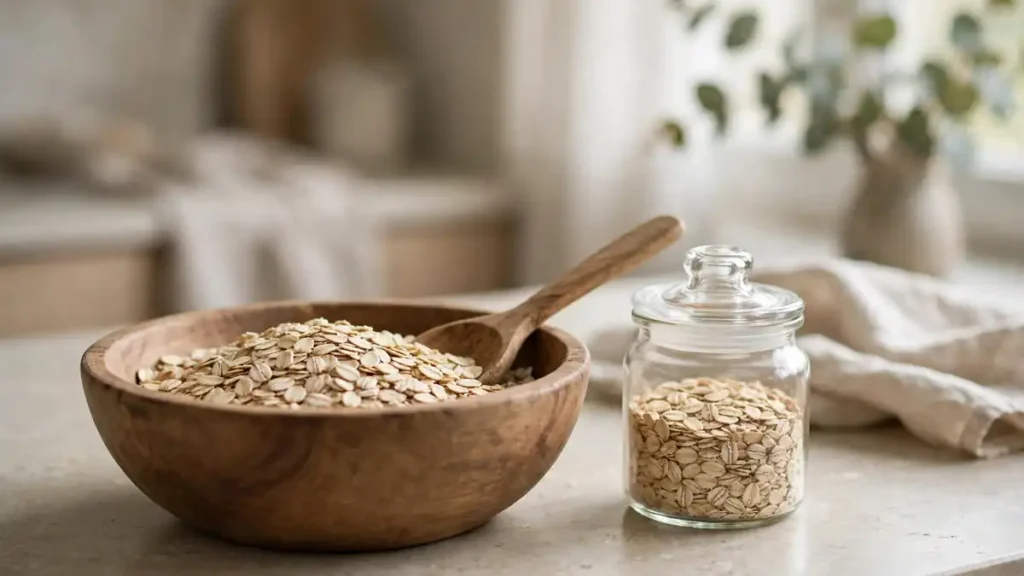
Oatmeal gives dogs soluble fibre and B vitamins, plus beta-glucan, a soluble fibre that supports heart health. It also suits many dogs that react badly to wheat. These benefits count only when the oatmeal stays plain and the portion stays small.
Oats carry a spread of nutrients. Rover names vitamin E and iron first, and B vitamins come next. Zinc and protein round out the list.
The AKC adds vitamin B for a healthy coat and linoleic acid, an omega-6 fatty acid, for skin strength. None of these nutrients makes oats a complete food.
The nutrient that gets the most attention is soluble fibre. One type of it, beta-glucan, may help heart health and cholesterol levels in dogs, according to Dr Nicole Savageau, a veterinarian quoted by Rover, and fibre also helps dogs feel full, which can help with weight control.
Sweet potatoes bring a similar mix of fibre and slow energy. Oats suit dogs that react to wheat, while sweet potatoes suit dogs that need a grain-free option. Both follow the same rule.
Small amounts. Plain preparation. No extras a dog should not eat.
| Nutrient | What it does for a dog | Note |
|---|---|---|
| Soluble fibre, including beta-glucan | Feeds gut bacteria and steadies digestion | The main reason vets mention oats |
| B vitamins | Support energy and red blood cells | AKC links vitamin B to coat health |
| Vitamin E | Protects cells from damage | An antioxidant found in oats |
How to Cook Oatmeal for Your Dog

Cook plain rolled or steel-cut oats in water only, with no milk, sugar, salt, butter, or honey. Let the bowl cool to room temperature before you serve it. Start with a spoonful mixed into the usual food, then watch how your dog responds.
Start with plain rolled oats or steel-cut oats from a canister. Check the label and make sure oats are the only ingredient. The brand does not matter.
What matters is the lack of added sugar, salt, or sweeteners. Plain wins.
Cook the oats in water, never in milk, because most adult dogs struggle to digest lactose, and milk in the bowl often leads to loose stools, so water stays the only safe liquid for the job. Add nothing else while the oats cook. Cook the oats right through, then let the bowl cool.
Serve the oats as a topper on the usual food, not as a meal on its own. A spoonful mixed through kibble works well for a first try. Plain Greek yogurt makes a safe topping too, and it adds protein to the bowl.
Peanut butter can work too, but check the label for artificial sweeteners.
| Oat type | How to serve it | Verdict |
|---|---|---|
| Rolled oats | Cooked in water, served cool | Safest everyday choice |
| Steel-cut oats | Cooked in water, served cool | Fine, takes longer to cook |
| Flavoured instant packets | Do not serve | Sugar, salt, sweeteners |
How Much Oatmeal Can Dogs Eat?

The AKC gives one tablespoon of cooked oatmeal for every 20 pounds of body weight as a guide. For large dogs, about half a cup of cooked oatmeal once or twice a week is plenty. Keep all treats, oatmeal included, under 10% of daily calories.
The AKC gives one tablespoon of cooked oatmeal for every 20 pounds of body weight as a guide, and for most large dogs, about half a cup of cooked oatmeal once or twice a week is plenty.
Start small. Build up only if the stomach stays settled. A spoonful on the first day tells you more than a full serving does. Watch the stools for a day or two.
Loose stools, gas, or vomiting mean the portion was too big. Stop, go back to the usual food, and try a smaller amount another time.
Brown rice follows the same portion logic. It is another plain grain that owners mix into meals, and it causes the same problems in large amounts. Grains work as extras, not as the main event.
Keep every treat, oats included, under 10% of daily calories. Petco points to the same limit, which comes from the World Small Animal Veterinary Association’s nutrition guidelines. Treats crowd out complete food.
Flavoured Instant Oatmeal Packets: Why They Can Be Dangerous
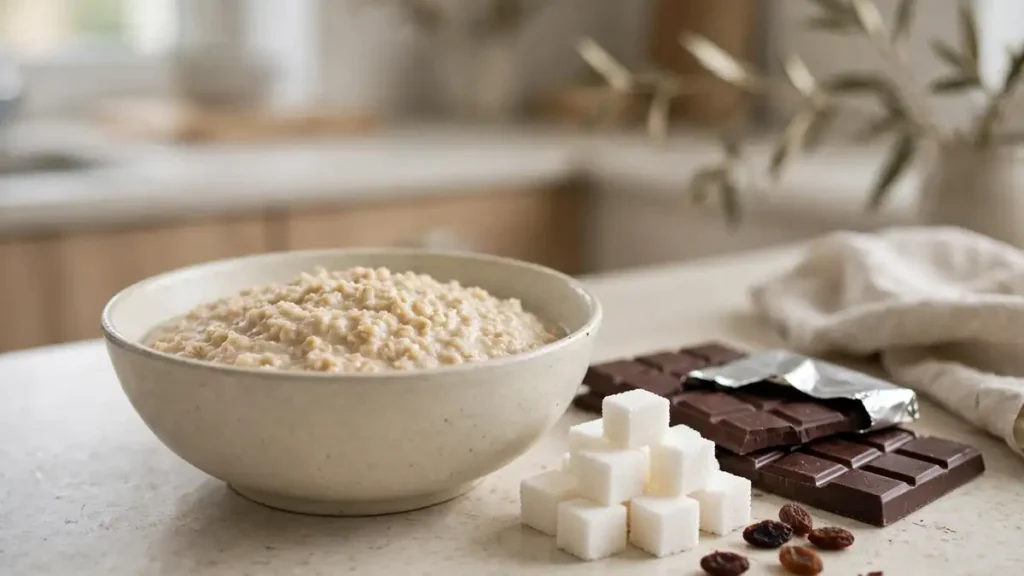
Flavoured instant packets hide the real risk in this topic. They often carry sugar and salt, plus artificial sweeteners, and xylitol, a sweetener in some sugar-free versions, is toxic to dogs. A packet that looks harmless can still poison a dog, so read the label.
A flavoured packet looks and cooks like oats, but it hides what plain oats do not have. Sugar sits at the top of that list, and salt follows close behind.
Then come artificial flavours and sweeteners. Xylitol is the sweetener to fear. It shows up in some sugar-free products, including instant oats, and it is toxic to dogs.
A dog absorbs xylitol fast, the body releases a surge of insulin, blood sugar drops, and liver damage can follow, sometimes within hours of the first signs, according to the UC Davis School of Veterinary Medicine. Signs can show within half an hour. They include vomiting, weakness, seizures, or loss of coordination. A dog that eats xylitol needs a vet at once.
Read the label before you buy. Xylitol also hides under the name birch sugar. If the label lists xylitol, birch sugar, or raisins, leave the packet on the shelf.
If your dog eats a packet, check the label and call your vet straight away. Do not try to make your dog sick unless a vet tells you to.
Plain instant oats are a different case. The AKC advises owners to stay away from instant oatmeal because heavy processing strips out nutrition. A plain instant oat will not poison a dog, but it offers less than rolled or steel-cut oats.
| Packet ingredient | Why it harms a dog | Where it shows up |
|---|---|---|
| Xylitol, also sold as birch sugar | Toxic, triggers an insulin surge and liver damage | Sugar-free packets |
| Sugar | Upsets digestion and adds empty calories | Most flavoured packets |
| Raisins | Toxic to dogs | Some fruit-flavoured packets |
Raw Oats and Oatmeal Cookies: What to Skip
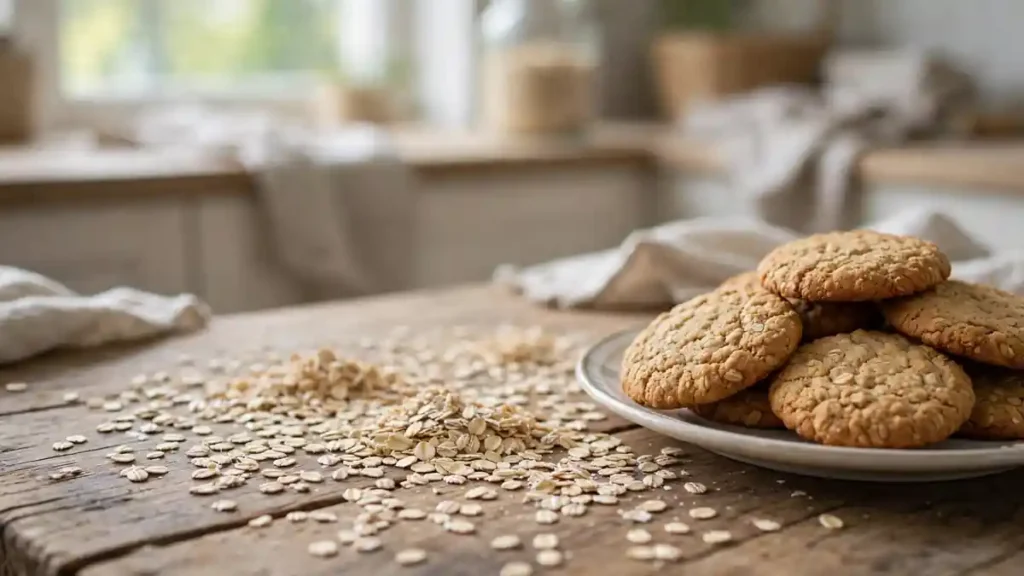
Raw oats are hard to digest and can swell in the stomach, so cook each serving. Oatmeal cookies fail for a different reason. They carry sugar and butter with dairy, and some hide raisins, chocolate, or xylitol. Give plain oats instead, or buy treats instead.
Raw oats look harmless in the bag. The AKC advises against serving them raw. Raw oats are hard to digest, and they can swell once they reach the stomach.
Rover adds a choking risk, mostly for small dogs and dogs that gulp food. Cook every serving right through.
Oatmeal cookies fail for a different reason. The oats in them are fine. The rest of the recipe is not. Cookies carry sugar and butter, plus dairy, and many hide raisins, chocolate, or xylitol.
PetMD warns that even a cookie with no toxic ingredients can still make a dog sick from the sugar and oil in the recipe, so plain cooked oats beat the cookie every time.
Plain cooked peas work as a mix-in as well. Keep the mix-ins plain and few.
| Food | Safe or skip | Why |
|---|---|---|
| Plain cooked oats | Safe | The food this guide covers |
| Plain cooked peas | Safe | Mix in a small amount |
| Oatmeal cookies | Skip | Sugar, butter, dairy, hidden extras |
| Raw oats sprinkled on food | Skip | Hard to digest, choking risk |
When Oatmeal Is Not a Good Idea

Healthy adult dogs can usually try oatmeal. Some should skip it or ask a vet first. Young puppies need food made for growth. Dogs with diabetes, dogs carrying extra weight, and dogs on prescription diets need a vet to weigh in first.
Puppies need food made for growth. Petco notes that a small amount of plain cooked oats is unlikely to harm a puppy, but the main diet must stay complete and balanced. Ask a vet before oats join a puppy’s bowl, and the same goes for any dog on a prescription diet.
PetMD warns that dogs on prescription diets should eat nothing outside the diet.
Dogs with diabetes need a vet to weigh in too, because soluble fibre can help steady blood sugar, yet a diabetic dog’s diet works as a whole, and a new food can shift that balance, so the vet decides. Dogs carrying extra weight face a simpler problem. Oats carry a lot of carbohydrate, and a daily bowl adds weight fast.
Some dogs react to oats themselves. Rover lists swelling and itching, hives, or stomach upset as signs of an oat allergy. Stop the oats and call your vet if any of those signs show up.
When a vet suggests simple foods for a sensitive stomach, cauliflower is one option owners ask about.
| Dog | Concern | What to do |
|---|---|---|
| Young puppies | Growth diet must stay complete | Ask a vet first |
| Dogs with diabetes | Blood sugar needs steady management | Vet checks the diet first |
| Dogs on prescription diets | Outside food breaks the diet plan | Do not add without vet approval |
Oatmeal in Dog Food and Treats
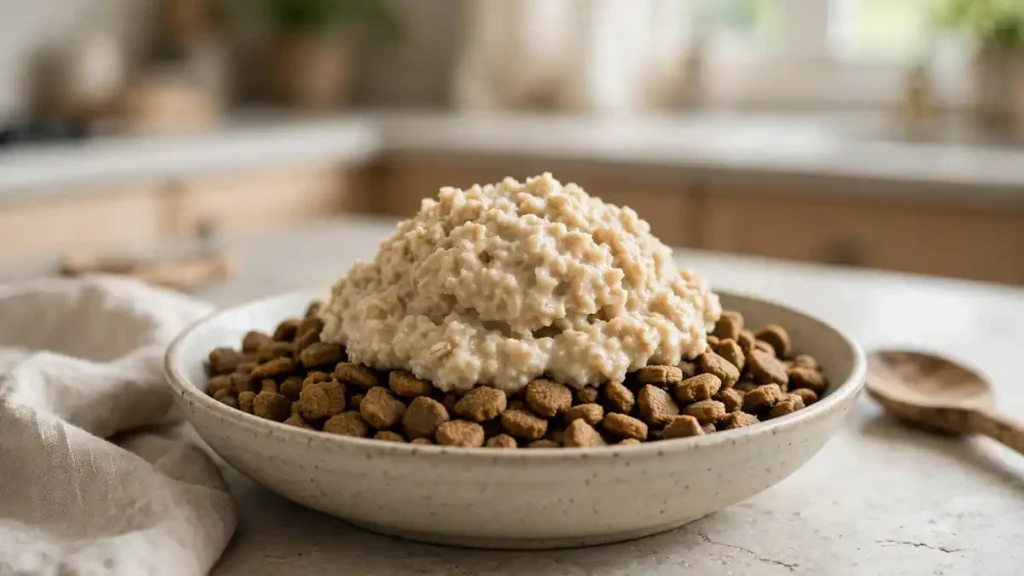
Many complete dog foods already list oats as an ingredient, and that is often the easiest way for a dog to get the benefit. Check the label for an AAFCO statement. Oat treats still count toward the 10% treat limit, so read the packet.
In a complete food, the oats come as part of a balanced recipe, next to protein, fat, vitamins, and minerals. Petco notes that a bowl of oats mixed with water cannot match that balance on its own.
Read the label before you buy. Look for an AAFCO statement that calls the food complete and balanced for your dog’s life stage, and look for oats by name in the ingredient list, since AAFCO rules list ingredients by weight. Oats near the top mean a real amount.
Scan the same label for added sugars and sweeteners. Xylitol in a dog treat is a deal-breaker, and Petco lists it first among the ingredients to avoid.
White rice shows the same pattern. It appears in many complete foods as a plain grain. The recipe around the grain decides the risk.
Treats with oats still count toward the 10% limit. A biscuit made with oats is a treat, not a meal, and the calories add up fast across a day. Plain oat biscuits with short ingredient lists are the safest choice.
Frequently Asked Questions
Owners ask the same six questions about oatmeal more than any others. The answers below cover daily feeding and puppies, milk and raw oats, cookies and a flavoured packet. Each answer keeps the same rule in view: plain and cooked, small and occasional.
Can dogs eat oatmeal every day?
Not as a home-cooked topper. Oats every day crowd out the complete food that covers your dog’s nutrition. Oats inside a complete dog food are different, since that food is balanced for daily feeding.
Can puppies eat oatmeal?
A small amount of plain cooked oats is unlikely to harm a puppy, and Petco says as much. That is not a reason to start. Ask your vet before oats join a puppy’s bowl, and keep the first taste tiny.
Can dogs eat oatmeal with milk?
Milk does not belong in the bowl. Most adult dogs struggle to digest lactose, and milk often leads to loose stools and stomach upset. Cook the oats in water and serve them plain. If your dog has already eaten oats made with milk, watch for loose stools.
Can dogs eat raw oats?
Cook every serving. Raw oats are hard to digest, and they can swell in the stomach after a dog eats them. They also carry a choking risk, mostly for small dogs and dogs that gulp food. Cook each batch right through and let it cool.
Can dogs eat oatmeal cookies?
Skip the cookies. The oats are the only safe part of the recipe. Cookies carry sugar and butter, plus dairy, and many hide raisins, chocolate, nutmeg, or xylitol.
Even a cookie with no toxic ingredients can upset a stomach from the sugar and fat alone. Give plain cooked oats instead.
What should I do if my dog eats a flavoured instant oatmeal packet?
Check the packet label first, and look for xylitol or birch sugar. If either one appears, call your vet or an animal poison helpline at once. Watch for vomiting, weakness, seizures, or loss of coordination.
The Bottom Line
Plain cooked oatmeal earns a place as an occasional treat for most healthy adult dogs. Cook it in water, cool it, keep the portion small, and skip every flavoured packet. When in doubt about your own dog, ask your vet before the next bowl.
If your dog has never tried oats, start with a single spoonful mixed into the usual food and watch the next day. If the stomach stays settled, it can stay. If anything looks off, stop. Call your vet.
Keep the rules short. Plain oats, cooked in water, served cool, in a small amount, once in a while. Skip the packets and the daily bowl.
Sources:
- AKC, Can Dogs Eat Oatmeal? https://www.akc.org/expert-advice/nutrition/can-dogs-eat-oatmeal/
- PetMD, Can Dogs Eat Oatmeal? https://www.petmd.com/dog/nutrition/can-dogs-eat-oatmeal
- Petco, Can Dogs Eat Oatmeal? Benefits, Risks and How to Serve https://www.petco.com/pet-education/dog/food-nutrition/can-dogs-eat-oatmeal
- Rover, Can Dogs Eat Oatmeal? Safety, Benefits, and Risks https://www.rover.com/blog/can-dog-eat-oats/
- UC Davis School of Veterinary Medicine, Xylitol Poisoning in Dogs https://healthtopics.vetmed.ucdavis.edu/health-topics/xylitol-poisoning-dogs
Disclaimer: This article gives general information about feeding oatmeal to dogs. It is not veterinary advice for your own dog. Talk to your vet before you add a new food, and call your vet or an animal poison helpline at once if your dog eats something toxic.


