

Can Dogs Eat Olives?
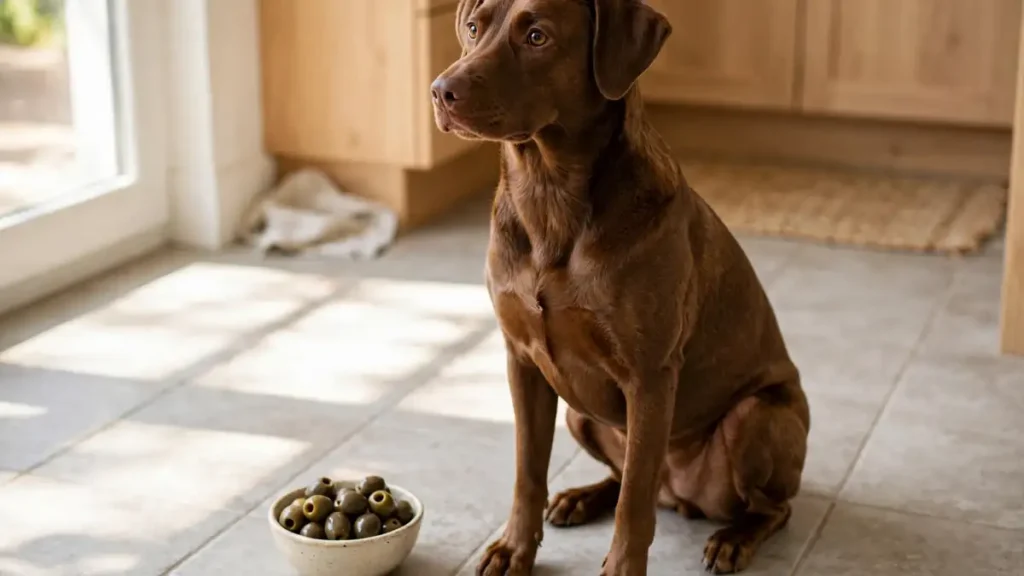
Yes, dogs can eat olives when olives come pitted and rinsed, with no seasoning or brine. One or two make a treat for healthy dogs. The fruit itself carries no toxin for dogs. Salt, pits or stuffings cause the trouble, so the kind matters most.
The American Kennel Club puts it plainly: this fruit carries no toxin for dogs and can be safe in small amounts. Read the AKC guide to olives for dogs PetMD reaches the same verdict yet adds a warning, since the fruit packs salt and fat and offers little that a dog needs from food. A dog on a complete diet already gets those vitamins and minerals from its regular meals.
The question comes up often because olives slip off plates, hide in salads and sit on top of a pizza or in a pasta dish. A curious dog will hoover up anything that hits the floor.
A treat this small looks harmless, yet the salt inside it is not small at all. The pit hides a second risk, and stuffings hide a third.
Three checks turn an olive into a safe treat. The pit must be gone, no seasoning or stuffing can cling to it, and brine must be rinsed away. Miss one check and the olive stays on your plate, not in your dog’s bowl.
| Olive type | Verdict for dogs | Why |
|---|---|---|
| Plain, pitted, rinsed | Rare treat only | Not toxic, tiny serving, little salt |
| Black, canned, rinsed | Rare treat only | Mildest choice, still brined |
| Green, brined, rinsed | Rare treat only | Often saltier than black |
| Kalamata, pitted, rinsed | Rare treat only | Strong brine, high in salt |
| With the pit still in | Never | Choking, cracked teeth, possible gut blockage |
| Stuffed or marinated | Never | Garlic, onion, blue cheese, chilli or alcohol inside |
The Brine Problem: Why Salt Is the Real Risk
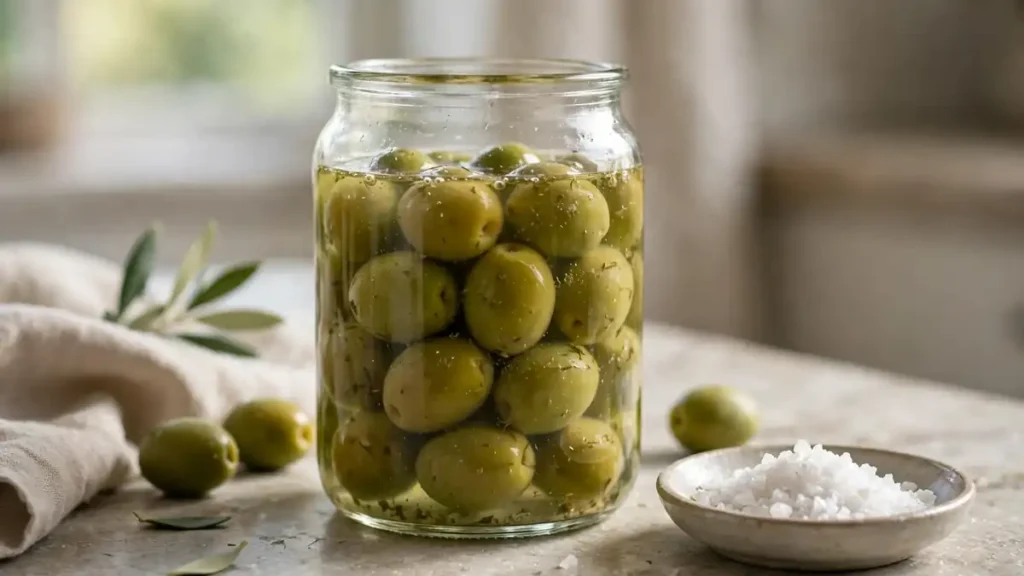
Brine causes most of the trouble with olives. Curing leaves the fruit soaked in salt, and the fruit holds it. Native Pet puts one black olive at about 32 mg of sodium. Clean Paws Diet puts 10 green olives at close to 500 mg.
The fruit grows bitter on the tree. Makers cure it in brine to make it edible, and brine is salty water. The fruit soaks in it for weeks while salt moves into the flesh and stays there. Rinsing under running water washes salt off the surface, yet it cannot pull out all the salt.
The numbers show how fast salt adds up, with Native Pet putting one black olive at about 32 mg of sodium and Clean Paws Diet, working from USDA FoodData Central values, putting 10 green olives at close to 500 mg. Green ones often carry more salt than black ones, and Kalamata ones sit near the salty end. A dog that begs at the table can eat a whole handful before you notice.
Too much salt shows itself quickly, and Rover lists the signs to watch for: vomiting, diarrhoea, tremors, fever or seizures. The American Kennel Club adds dehydration and, in rare cases, salt toxicosis. A dog that eats a salty snack will drink a lot of water, so keep fresh water close and watch for those signs.
Low sodium jars help, yet they still carry salt. Water-packed ones beat brine-packed ones. Dry ones cured in salt carry the most of all. Check the label before you buy, and skip any jar that lists garlic or onion in the brine.
Sunflower seeds tell the same story in a different snack. Salted seeds pile on sodium just as fast, and our guide to sunflower seeds for dogs covers the same trap.
| Preparation | Salt load | Best move |
|---|---|---|
| Water-packed, rinsed | Lower | Rinse again before serving |
| Brined, rinsed | High | Rinse well, keep the amount tiny |
| Brined, unrinsed | Very high | Do not serve |
| Dry-cured in salt | Very high | Do not serve |
| Oil-packed with herbs | High | Check the herbs first |
Olive Pits Can Crack Teeth and Block Guts
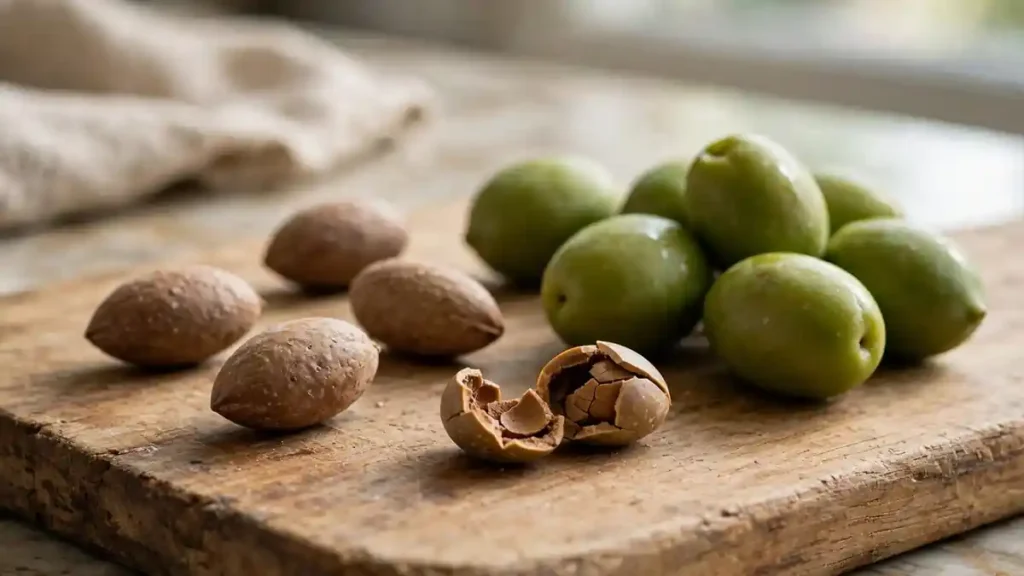
Never offer an olive with the pit still inside. Pits are hard and slippery, so a dog can crack a tooth, choke or swallow one whole. A swallowed pit can lodge in the gut and block it. Buy pitted olives and check each one first.
An olive pit is a smooth, hard stone that can crack a tooth. A dog that crunches down on one can chip a tooth or break it, and a small dog can choke on one. A dog of any size can swallow one whole, and a swallowed pit can lodge in the gut and block it. Native Pet notes that several pits together raise that risk further.
Pitted ones sold in jars are not foolproof, since a fragment can stay behind after the pitting machine does its work. Cut each olive open and look before you offer it. That one habit removes the worst risk in this fruit.
Watch your dog after any pit scare for vomiting, straining, loss of appetite, a sore belly or unusual tiredness, all of which call for a vet visit. A cracked tooth needs an emergency vet the same day. Rover says the same: see an emergency vet at once if you suspect a broken tooth.
| Hazard | What can happen | What to watch for |
|---|---|---|
| Cracked tooth | Pain, broken tooth | Dropping food, pawing at the mouth |
| Choking | Blocked airway | Gagging, retching, distress |
| Gut blockage | Food cannot pass | Vomiting, straining, loss of appetite, sore belly |
Which Colour Olive Is Safest?
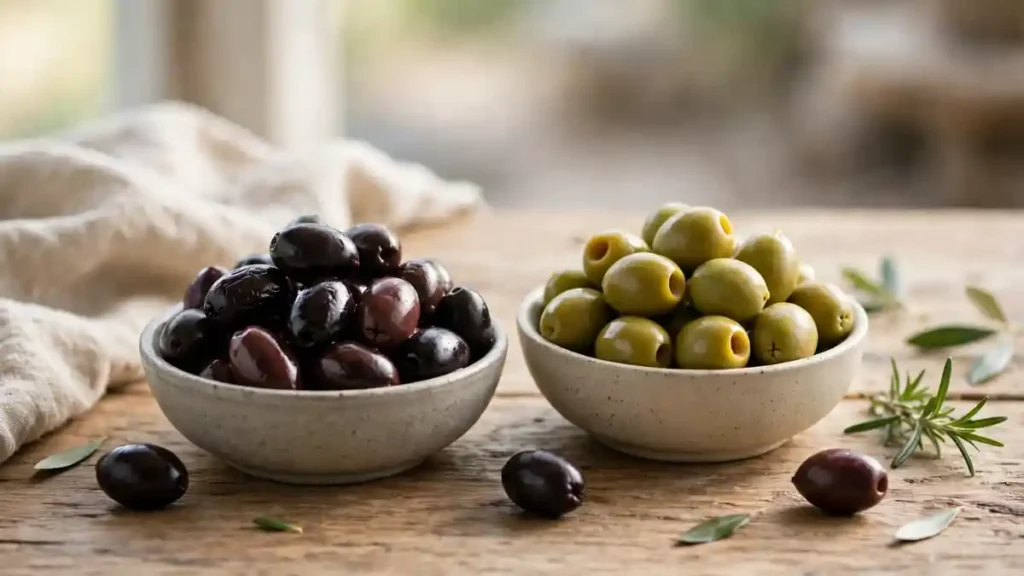
Olives of every colour share one verdict: safe only when pitted and rinsed, with no seasoning. Green ones carry more salt than black ones, and Kalamata ones sit at the salty end too. Treat every type the same way and keep the amount tiny.
Green ones are unripe, picked before they darken. Black ones are the same fruit left to ripen and cure longer. That change in timing shifts flavour and salt, yet it does not change the safety verdict. Both colours are safe only when pitted and rinsed, with no seasoning.
Kalamata ones cure in a strong brine with a sharp flavour. They often carry more salt than canned black ones, so they deserve the same caution as green ones. Fresh ones straight from a tree taste fiercely bitter, and most dogs spit them out. Do not let a dog chew fallen fruit in the garden, since every fallen olive still holds its pit.
Canned black ones are the kind most owners meet. They are usually the mildest choice, yet they still sit in brine.
Rinse them well. Check for pit fragments. Keep the amount tiny.
Stuffed and Marinated Olives to Keep Away
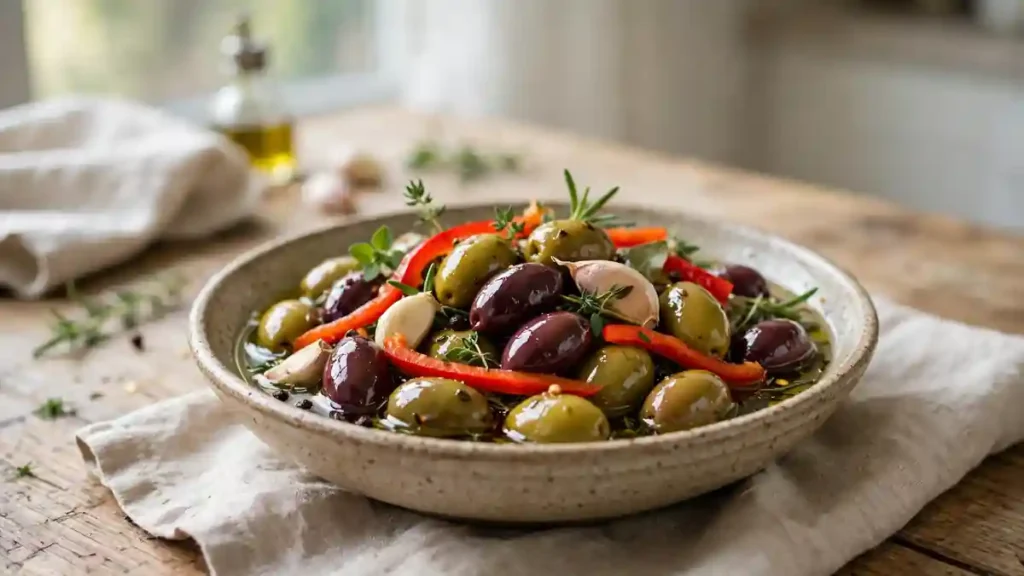
Stuffed and marinated olives are never safe to share. The fruit stays harmless, yet the filling holds garlic, onion, blue cheese or alcohol. Each can harm a dog on its own. Pimento is the exception, yet even pimento olives sit in brine, so skip them.
Garlic and onion top the danger list. Both damage red blood cells in dogs, and PetMD names garlic, onion, blue cheese or alcohol as toxic for dogs. A jar marinated with garlic cloves can poison a small dog fast. If your dog eats a stuffed olive with garlic or blue cheese, call your vet at once and say what your dog ate, since the vet needs to know the filling before deciding whether your dog needs to come in.
Blue cheese brings its own risk. The mould that makes blue cheese blue can carry a tremorgenic mycotoxin, which can cause tremors, loss of coordination, seizures, vomiting or diarrhoea, so a blue cheese olive is never worth the risk. Other cheeses are less risky, yet they still add fat and salt.
Martini olives soak in alcohol, and alcohol is toxic to dogs. Anchovy stuffing adds salt. Tapenade packs garlic and salt into a paste with oil. Chilli and spice marinades burn a dog’s mouth and gut.
Pimento is the one mild filling. A pimento is a sweet pepper, and a pimento-stuffed olive is safe once in a while if pimento is the only filling and the olive has had a good rinse. Check the jar. If garlic or onion shares the brine, the whole jar stays off limits.
| Filling or marinade | Risk | Why |
|---|---|---|
| Garlic | Toxic | Damages red blood cells |
| Onion | Toxic | Harms red blood cells too |
| Blue cheese | Toxic | Mould toxin can cause tremors |
| Chilli and spice | Harmful | Burns the mouth, upsets the gut |
| Alcohol | Toxic | Poisons dogs even in small sips |
| Anchovy | Avoid | Adds a heavy salt load |
| Pimento | Mild | Sweet pepper, sole filling only |
Olive Oil Is Not the Same as Olives
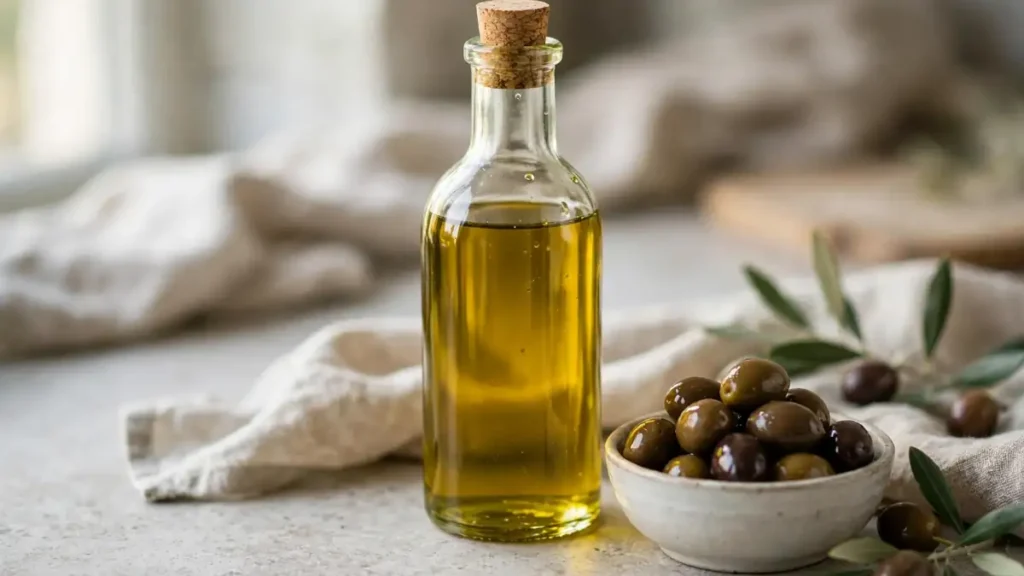
Olive oil and olives are not the same treat. Oil carries the same fats with none of the salt, yet it is pure fat, so too much can upset a gut or trigger pancreatitis in a dog. Oil suits a topper better than olives do.
Olive oil comes from the same fruit, yet it behaves differently in a bowl. Pressing removes the brine and the pit, so oil carries no salt load. What stays is fat, and plenty of it.
A spoonful of oil is pure fat, and fat can upset a gut or set off pancreatitis. PetMD warns owners to ask a vet before giving any oil to a dog.
Oil turns up in commercial dog food for skin and coat support, yet fish oil does that job better and carries stronger evidence, says PetMD. Salmon skin tells a similar story: a fatty food that dogs enjoy, yet one that needs care. Our guide to salmon skin for dogs covers the same fat caution.
Dogs That Should Skip Olives Altogether

Some dogs should skip olives. Dogs with heart or kidney disease eat a low salt diet, and olives fight that plan. Dogs with pancreatitis should skip them, since fat can set off a flare. Puppies face pit and salt risks, so ask a vet first.
A dog with heart disease or kidney disease often eats a low salt diet. The vet sets that diet to keep fluid and blood pressure steady. Each olive fights that plan with every bite. Skip them.
A dog with pancreatitis handles fat badly, so even the healthy fats in olives can set off a flare that can turn serious fast. Native Pet is blunt here: if a vet has diagnosed pancreatitis, leave them off the menu.
Dogs on a prescription diet should eat nothing outside that diet, since the vet chose every part of it for a reason that a treat can undo. PetMD states this plainly, and the rule covers treats as well as meals. Puppies face bigger risks from pits and salt, so wait until your vet says a new food is fine.
Old dogs with no health issues can still enjoy an olive or two.
| Dog group | Olives or skip | Why |
|---|---|---|
| Heart or kidney disease | Skip | Vet sets a low salt diet |
| Pancreatitis or a low fat diet | Skip | Fat can set off a flare |
| Prescription diet | Skip | Nothing outside the diet |
| Puppies | Skip for now | Pits and salt hit young dogs harder |
| Healthy adult dog | Rare treat only | Pitted and rinsed, no seasoning |
How to Offer an Olive Safely
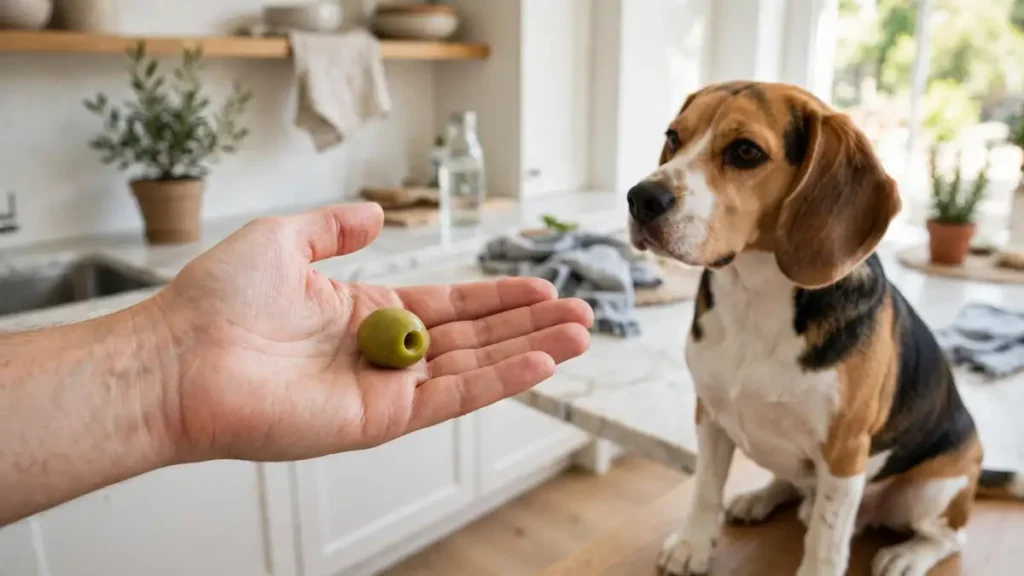
Offer olives rarely, never as a habit. Pick pitted olives, rinse them under water and cut each one for a little dog. Offer one or two, watch for thirst, loose stools or a sore belly. If your dog shows any of them, call your vet.
Start with the jar. Pick water-packed ones or a low sodium jar and read the label for garlic or onion. Rinse them under running water.
Cut each one open and check for pit fragments. Cut the olive into small pieces for a little dog.
Offer one or two and stop there, keep fresh water nearby since salt makes a dog thirsty, and watch for loose stools or a sore belly over the next few hours. If your dog seems off, call your vet and say what your dog ate.
Olives work best as a rare treat, not as a training snack. For everyday rewards, plain foods suit dogs better. A spoonful of Greek yogurt, a few peas, a floret of cauliflower or a piece of scrambled egg all give a dog something tasty with none of the salt. Our guides to Greek yogurt, peas, cauliflower or scrambled eggs for dogs cover each one in full.
Frequently Asked Questions
Owners ask the same questions about olives again and again. The answers below cover black olives, green olives, Kalamata olives, pimento stuffing, olive oil or a swallowed pit. Read the short answer that fits your dog, then check the fuller guidance above for more detail.
Can dogs eat black olives?
Yes, plain, pitted black olives are the mildest choice, since they usually carry less salt than green or Kalamata olives. Rinse them, check for pit fragments and keep it to one or two. Canned ones still sit in brine, so never serve them straight from the tin.
Can dogs eat green olives?
Yes, rarely. Green olives are safe when pitted and rinsed, with no seasoning, yet they tend to carry more salt than black olives. Keep it to one or two and rinse them well. Skip any jar that lists garlic, onion or chilli in the brine.
Can dogs eat Kalamata olives?
Yes, rarely. Kalamata olives are safe when pitted and rinsed, yet they cure in a strong brine and often carry more salt than black olives. Keep it to one or two at most. Skip them for dogs on a low salt diet.
Can dogs eat olives with pimentos?
Yes, if pimento is the only filling. Pimentos are mild sweet peppers, and a pimento-stuffed olive is safe once in a while. Check the jar first, since garlic or cheese often shares the brine. Rinse the olive and keep it to one or two.
Can dogs eat olive oil instead of olives?
Oil skips the salt yet keeps the fat, so it is not a free pass. PetMD warns owners to ask a vet before giving any oil to a dog, since too much can upset a gut or trigger pancreatitis. Fish oil suits skin and coat support better. Use oil only with a vet’s OK.
My dog ate an olive with the pit. What should I do?
Stay calm and watch your dog. Look for gagging, vomiting, straining, loss of appetite or a sore belly. Call your vet and say your dog swallowed a pit, and if your dog cracks a tooth, see an emergency vet the same day. Never try to make your dog sick at home.
The Bottom Line
Olives are safe for dogs in their plain form: pitted and rinsed, with no seasoning or brine, one or two, rarely. Brine, pits or stuffings turn a harmless fruit into a risky snack. If you feel unsure, skip the olive and ask your vet.
Check the jar before you share, rinse the olive, check for the pit and offer one or two at most. If the jar lists garlic, onion or blue cheese, put it back on the shelf. When in doubt, reach for a safer treat and ask your vet at the next visit.
Disclaimer: This article gives general information about olives and dogs. It is not veterinary advice for your dog. Every dog differs, so ask your vet before you offer a new food, and call your vet or an emergency clinic at once if your dog shows worrying signs after eating olives.
Sources:
- American Kennel Club, “Can Dogs Eat Olives?”: https://www.akc.org/expert-advice/nutrition/can-dogs-eat-olives/
- PetMD, “Can Dogs Eat Olives?”: https://www.petmd.com/dog/nutrition/can-dogs-eat-olives
- Rover, “Can Dogs Eat Olives? Benefits and Risks”: https://www.rover.com/blog/can-my-dog-eat-olives/
- Native Pet, “Can Dogs Eat Olives? The Effects of This Salty Snack”: https://nativepet.com/blogs/health/can-dogs-eat-olives
- Clean Paws Diet, “Can Dogs Eat Olives?” (sodium values from USDA FoodData Central): https://www.cleanpawsdiet.com/can-dogs-eat-olives/


