

Quinoa has moved from health food shelves into everyday kitchens, so it is no surprise that dog owners now ask whether their dog can share it. The short version is encouraging, but it comes with rules that matter. Quinoa is only suitable when it is rinsed, fully cooked, and plain, and it works as a small extra beside a complete food, never as a replacement for it. This guide covers what quinoa is, why it can help, the saponin problem that makes rinsing essential, how it compares with rice, which dogs should skip it, and how to introduce it safely.
What Is Quinoa, Exactly?
Quinoa is a gluten-free seed that cooks like a grain, even though it is not a true grain. It is called a pseudocereal, and it contains all nine essential amino acids, which is one reason it appears in some quality dog foods.
Quinoa comes from the Chenopodium quinoa plant, and the part we eat is the seed. Because it cooks soft and fluffy like a grain, it is usually grouped with grains in the kitchen, but botanically it belongs to a different family. That distinction matters less than its nutritional profile. Quinoa is one of the few plant foods that supplies complete protein, meaning it contains all nine essential amino acids that a body cannot make on its own. It is also naturally gluten-free, which makes it an option for dogs with wheat, corn, or soy sensitivities.
Quinoa already appears as an ingredient in some quality commercial dog foods. That is a useful reality check. It shows the ingredient is not exotic or experimental in canine nutrition, but it does not turn a bowl of quinoa into a complete meal. A commercial food is balanced as a whole, while plain quinoa on its own is only one ingredient. Treat it as an extra, not as the diet.
| Quinoa at a Glance | What to Know |
|---|---|
| What it is | A seed, not a true grain, known as a pseudocereal |
| Gluten | Naturally gluten-free |
| Protein | Complete, with all nine essential amino acids |
| Role in the diet | A small extra or topper, never a staple |
| In commercial food | Appears in some quality dog foods |
Can Dogs Have Quinoa?
Yes, dogs can have quinoa when it is rinsed, fully cooked, and served plain, and only as a small extra beside a complete food. It must never replace the main diet, and raw or seasoned quinoa must never be served.
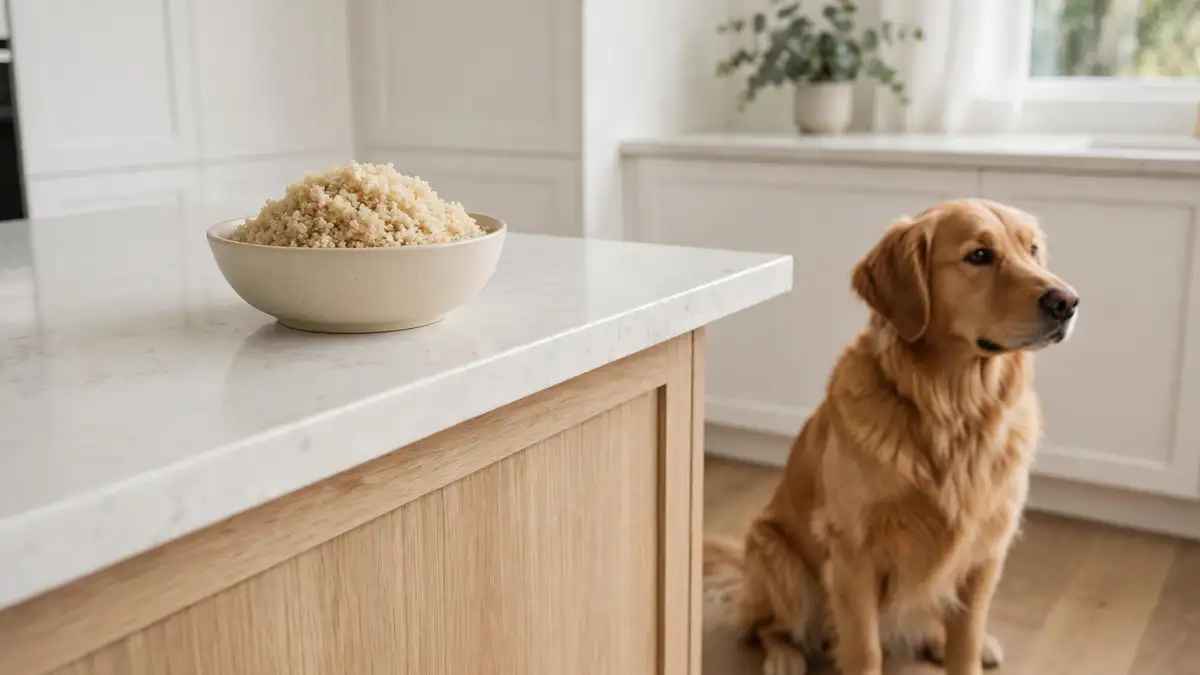
Every source reviewed for this article gives the same verdict: yes, in moderation. PetMD describes quinoa as a nutritious topper for kibble, and other veterinary and pet health sources agree that plain, cooked quinoa is well tolerated by most healthy dogs. The agreement is reassuring, but the conditions attached to it are not optional. Rinsing, full cooking, and plain serving are what make the answer yes. Skip any one of them and the answer changes.
The other condition is portion framing. Quinoa should sit beside a complete and balanced main food, not displace it. For a dog already eating a complete food, quinoa is an extra, not a nutritional fix. If your dog has kidney issues, a history of bladder stones, or a prescription diet, check with your veterinarian before offering quinoa at all.
Why Quinoa Can Be Good for Dogs
Quinoa offers complete protein with all nine essential amino acids, plus fiber, iron, magnesium, and other minerals. It is gluten-free, so it can suit dogs with wheat, corn, or soy sensitivities. Its low glycemic index also means steadier energy than faster-digesting grains.
Protein is the headline benefit. It supports muscle maintenance and repair, and quinoa’s complete amino acid profile is unusual for a plant food. Fiber supports healthy digestion, while minerals such as iron, magnesium, manganese, and phosphorus support overall health and immune function. Quinoa also supplies antioxidants and complex carbohydrates, which release energy more gradually than refined grains.
The gluten-free point deserves emphasis because it is practical, not trendy. Dogs with wheat, corn, or soy sensitivities often do well with quinoa as a carbohydrate source, since it avoids all three. Quinoa is also described as hypoallergenic in the sense that it seldom causes allergic reactions, though a rare allergy is still possible, as the introduction section explains. None of this makes quinoa a superfood for dogs. It makes it a solid, nutrient-dense extra when prepared correctly.
The Saponin Problem: Why Rinsing Matters
Quinoa seeds carry a bitter natural coating called saponin, which can irritate a dog’s stomach and gut lining. Thorough rinsing before cooking removes most of it, and cooking reduces it further. If the rinse water still looks foamy, keep rinsing until it runs clear.

Saponin is the plant’s natural defense, and it tastes bitter for a reason. In dogs, especially sensitive ones, leftover saponin can irritate the stomach and gut, leading to discomfort, gas, or loose stool. That is why every reliable source insists on rinsing, even though it adds a step. Place the dry quinoa in a fine-mesh strainer and rinse under running water, agitating it until the water runs clear. Foamy water is the visible sign that saponin is still present, so keep going until the foam stops.
Many commercial brands sell pre-rinsed or triple-washed quinoa, and those products do carry a lower residual saponin load. Home rinsing is still recommended on top of that. It costs a minute and removes the main irritant before cooking even starts. Cooking then reduces saponins further, which is one more reason raw quinoa is never acceptable. A second compound, oxalate, is covered in the section on dogs who should skip quinoa, since it affects a different group of dogs.
| Safe vs Unsafe Preparation | Safe | Unsafe |
|---|---|---|
| Rinsing | Rinsed thoroughly until water runs clear | Served unrinsed, with saponin coating intact |
| Cooking | Fully cooked in plain water until soft | Served raw or undercooked |
| Seasoning | Plain, with nothing added | Salt, butter, oil, or seasoning blends |
| Cooking liquid | Plain water only | Store-bought broth, which often contains onion or garlic |
| Product type | Single-ingredient plain quinoa | Quinoa blends with unknown or toxic additives |
Cooked vs Raw Quinoa
Only fully cooked, plain quinoa is suitable for dogs, and raw quinoa must never be served. Raw grains are hard to digest and carry more saponin. Cook quinoa in plain water until soft, with the curled germ ring visible, and let it cool.
Cooking does two jobs at once. It softens the seed so a dog can actually digest it, and it further reduces the saponin that rinsing did not remove. Fully cooked quinoa looks soft and slightly translucent, with a tiny curled tail, the germ ring, separating from each seed. That visual cue is the simplest doneness check. Let the quinoa cool to room temperature before it goes anywhere near a bowl, since hot food can burn a mouth and upset a stomach.
What goes into the pot matters as much as the cooking itself. Plain water is the only safe cooking liquid. Store-bought broth often contains onion or garlic, both of which are toxic to dogs, and seasoning blends, bouillon cubes, and butter or oil have no place here either. The same rule applies to packaged quinoa blends. If the ingredient list contains anything beyond plain quinoa, do not use it. A plain grain, cooked in plain water, is the whole recipe.
Quinoa vs Rice and Other Grains
Quinoa has more protein and fiber than white rice, and a lower glycemic index than white rice or corn. White rice, however, is easier to digest, which is why vets often suggest it for upset stomachs. The right choice depends on the dog.

This comparison is where owners most often look for a winner, but the honest answer is that each grain has a strength. Quinoa wins on protein, fiber, and glycemic index, and its gluten-free status helps dogs with grain sensitivities. White rice wins on digestibility, which is exactly why veterinarians reach for it when a stomach is already unhappy. Corn sits on the other side of the glycemic comparison, with a higher glycemic index than quinoa, though it is a common ingredient in many commercial foods in its own right.
Brown rice is another whole grain owners ask about alongside quinoa. It belongs in the same conversation as a less processed rice option, but this article does not rank it against quinoa, since the sources reviewed do not make that comparison directly. The practical takeaway is simple. If your dog needs easy digestion, white rice is the vet-favored choice. If your dog tolerates grains well and you want a more nutrient-dense extra, properly prepared quinoa is a strong option. Your dog’s stomach, not a ranking table, should settle it.
| Quinoa vs White Rice | Quinoa | White Rice |
|---|---|---|
| Protein and fiber | Higher | Lower |
| Glycemic index | Lower | Higher |
| Digestibility | Good when cooked, but harder than white rice | Easier to digest |
| Gluten | Gluten-free | Gluten-free |
| Best suited for | Dogs with wheat, corn, or soy sensitivities | Dogs with upset stomachs, on vet advice |
Dogs Who Should Skip Quinoa
Dogs prone to calcium oxalate bladder or kidney stones should skip quinoa, because it contains oxalates. The same caution applies to dogs with kidney issues or prescription diets. Overweight dogs also need care, since quinoa is calorie-dense and easy to over-serve.
Oxalates are the second compound that matters in quinoa, after saponin. Dogs predisposed to calcium oxalate stones should not eat quinoa, because dietary oxalates can contribute to stone formation. Certain breeds are overrepresented among stone formers, including Miniature Schnauzers, Bichon Frises, Shih Tzus, and Yorkshire Terriers, but any dog with a stone history should avoid it regardless of breed. Dogs with kidney issues or those on prescription diets need a veterinarian’s clearance first, since a prescription diet is balanced as a whole and extras can disturb that balance.
Weight is the quieter risk. Quinoa is calorie-dense, so a generous scoop adds up fast, and overfeeding can lead to weight gain on top of gas, bloating, or diarrhea from excess fiber. For dogs that need to lose weight, lower-calorie volume foods such as green beans or plain pumpkin are better extras. Quinoa is not forbidden for every overweight dog, but it demands a small hand and an honest look at the total diet.
| Dogs Who Should Skip Quinoa | Why |
|---|---|
| Dogs prone to calcium oxalate stones | Quinoa contains oxalates that can contribute to stone formation |
| Dogs with kidney issues or prescription diets | Extras can disturb a carefully balanced diet, so vet clearance comes first |
| Dogs managing their weight | Quinoa is calorie-dense and easy to over-serve |
| Dogs with a rare quinoa allergy | Stop serving and call your vet if reactions appear |
Puppies, Sensitive Stomachs, and First Tastes
No source reviewed gives puppies their own quinoa section, so a vet should guide any puppy feeding first. The same rinse, cook, and plain rules apply, with a tiny first taste mixed into the usual food. Stop if the stomach reacts.

Puppies deserve a frank note here. No source reviewed for this article covers puppies as a separate case, so this article does not invent puppy-specific guidance. A veterinarian who knows the puppy’s age, size, and diet should approve any quinoa feeding first, and the same rinse, cook, and plain rules apply without exception. For any dog, puppy or adult, the first taste should be tiny and mixed into the usual food, not served as a new meal on its own.
Sensitive stomachs need the same slow approach. Start very small, since quinoa’s fiber can cause gas or soft stool even in healthy dogs when too much arrives too fast. Watch the response over the next day before offering more. A rare quinoa allergy is possible, so the warning signs below matter. If any of them appear, stop serving quinoa and call your veterinarian, especially if signs persist or worsen. Quantity is a question for your vet, who can judge it against your dog’s size, health, and total diet.
| First-Taste Warning Signs | What to Do |
|---|---|
| Vomiting | Stop serving quinoa and monitor closely |
| Drooling or nausea | Stop serving quinoa and monitor closely |
| Excessive gas | Stop serving quinoa and monitor closely |
| Diarrhea or constipation | Stop serving quinoa and call your vet if it persists or worsens |
| Any allergic reaction | Stop serving quinoa and call your vet promptly |
Frequently Asked Questions
Owners ask most often whether quinoa is safe daily, how it compares with rice, and what to do after a mistake. The answers below stick to what reviewed sources actually say. Anything not covered is marked as a question for your vet.
Can dogs eat quinoa every day?
Some sources say small daily amounts are unlikely to cause harm when the main food is adjusted for the extra calories. The safer framing, though, is an occasional topper or extra rather than a daily staple. If you want quinoa as a regular part of the routine, ask your veterinarian to approve it against your dog’s total diet.
Is quinoa better than rice for dogs?
Not universally. Quinoa offers more protein and fiber and a lower glycemic index, while white rice is easier to digest and is the usual vet suggestion for upset stomachs. The better choice depends on the dog in front of you, not on a general ranking.
Can puppies eat quinoa?
No source reviewed gives puppies their own guidance, so this article does not claim a puppy rule. Ask your veterinarian first, and if quinoa is approved, use the same rinse, cook, and plain preparation with a tiny first taste. Puppies have developing digestive systems, so caution is the right default.
Do I need to rinse quinoa if the bag says pre-rinsed?
Yes. Home rinsing is still recommended even for pre-rinsed or triple-washed quinoa. Rinse in a fine-mesh strainer until the water runs clear, and keep rinsing while the water still looks foamy. That extra minute removes the saponin that irritates sensitive stomachs.
Can dogs eat red or black quinoa?
The sources reviewed did not compare red, white, and black quinoa varieties, so this article claims no differences between them. If you buy quinoa, choose plain quinoa with no added ingredients and apply the same rinse, cook, and plain rules. Ask your veterinarian if you are unsure about a specific product.
What should I do if my dog eats raw or seasoned quinoa?
For raw quinoa, watch for stomach upset such as vomiting, gas, or diarrhea, and call your veterinarian if signs appear or persist. For seasoned quinoa, check the ingredients for onion or garlic first, since both are toxic to dogs. If either is present, or if your dog shows worrying signs, contact your veterinarian or a poison control line promptly. Do not try to induce vomiting unless a veterinarian tells you to.
The Bottom Line
Quinoa can be a healthy extra for most dogs when it is rinsed, fully cooked, and plain, and served in small amounts. It is not a staple, and stone-prone or kidney-compromised dogs should skip it. When in doubt, your vet knows your dog best.
That summary is the whole article in one paragraph. Rinse it, cook it plain, keep it small, and keep the complete main food at the center of the diet. Dogs with stone or kidney concerns sit this one out. Everyone else can enjoy quinoa as an occasional, well-prepared extra, with a veterinarian as the final word on quantity and frequency.
Related Guides
Sources
Disclaimer
This article is for general information only and is not a substitute for veterinary advice. Every dog is different, and health conditions, medications, and diets can change what is safe. If your dog has a medical condition, eats something toxic, or shows worrying symptoms, contact your veterinarian or an animal poison control line right away. ASPCA Animal Poison Control can be reached at (888) 426-4435, and the Pet Poison Helpline can be reached at (855) 764-7661.


2 thoughts on “Can Dogs Have Quinoa? Benefits, Risks, and Tips”