

Can dogs eat zucchini? Yes. Plain zucchini is non-toxic to dogs, low in calories and easy to prepare, so it is one of the better human foods to share. Problems come from garlic, butter, zucchini bread and, rarely, a bitter zucchini, not from the vegetable.
Can dogs eat zucchini safely?
Yes, dogs can eat zucchini safely when it is plain, washed and cut into small pieces. Raw, steamed, boiled and frozen zucchini are all fine. Avoid zucchini cooked with garlic, onion, butter, oil or salt, and never share zucchini bread or fried zucchini.
The American Kennel Club calls zucchini perfectly safe for dogs, and PetMD notes that cooked zucchini is usually easier on the stomach than raw. It is still a treat that sits on top of a complete and balanced dog food, not a replacement for it.
Zucchini nutrition facts for dogs
Raw zucchini is about 95% water and has roughly 17 calories per 100 grams, according to USDA data. It adds a little fiber, potassium, vitamin C and a large amount of lutein and zeaxanthin, two antioxidants linked to eye health, with almost no fat.

| Nutrient (per 100 g raw zucchini with skin) | Amount |
|---|---|
| Calories | 17 kcal |
| Water | About 95 g |
| Fiber | About 1 g |
| Fat | About 0.3 g |
| Potassium | 261 mg |
| Vitamin C | About 18 mg |
| Lutein and zeaxanthin | About 2,100 mcg |
Source: USDA FoodData Central, zucchini, raw, includes skin.
Dogs make their own vitamin C in the liver, so the vitamin C in zucchini is a small bonus rather than something your dog is short of. The potassium matters more: a cup of chopped zucchini holds around 320 mg, worth mentioning to your vet if your dog eats a prescription kidney or heart diet.
Health benefits of zucchini for dogs
Zucchini’s main benefit is as a low-calorie treat that helps dogs stay lean. Its water and fiber can support hydration and regular stools, and its antioxidants add variety to the diet. It is a healthy extra, not a treatment for any medical condition.
A low-calorie swap for high-calorie treats
A whole cup of chopped raw zucchini has about 21 calories. One tablespoon of peanut butter, a common dog treat, has about 95. Swapping some daily treats for zucchini lets you keep rewarding your dog without pushing its calorie intake up.
The math is easy to check. A 50 lb (23 kg) adult dog needs roughly 1,150 to 1,200 calories a day, so its treat budget under the 10% rule is about 115 calories. Two tablespoons of peanut butter would use almost all of it. Half a cup of chopped zucchini uses about 10.
Water, fiber and antioxidants
Zucchini is about 95% water, so it adds a little hydration, which helps on hot days. Its soluble and insoluble fiber can help firm up or move along stools in some dogs, and its carotenoids act as antioxidants in the body.
No clinical studies show that zucchini treats skin allergies, arthritis or any other disease in dogs. What it does well is add bulk and flavor to a bowl for very few calories, which is why vets often suggest low-calorie vegetables in weight-loss plans.
Raw vs cooked zucchini for dogs
Dogs can eat zucchini raw or cooked. Raw zucchini keeps its crunch and makes a handy training treat, while lightly steamed or boiled zucchini is softer and easier to digest, which suits puppies, senior dogs and dogs with sensitive stomachs. Skip fried zucchini entirely.

| Form | Best for | How to prepare it |
|---|---|---|
| Raw | Healthy adult dogs, training treats | Wash, trim the ends, cut into small cubes or thin half-moons |
| Steamed or boiled | Puppies, seniors, sensitive stomachs | Cook plain slices in steam or unsalted water for 3 to 5 minutes, then cool |
| Frozen | Hot days, dogs that chew slowly | Freeze plain cubes or puree in an ice cube tray |
| Fried | Never | Batter, oil and salt make it a poor choice |
Grilled or roasted zucchini is fine only if it was cooked with no oil or seasoning. Avoid store-bought stock too, since many brands contain onion or garlic powder, as our guide on whether dogs can have chicken broth explains.
How much zucchini can a dog eat?
Most dogs do well with 1 to 2 tablespoons (small dogs), 2 to 4 tablespoons (medium dogs) or up to half a cup (large dogs) of chopped zucchini at a time. Start with less, and keep all treats under 10% of daily calories.
| Dog size (example weight) | Approx. daily calories* | 10% treat budget | Sensible zucchini portion |
|---|---|---|---|
| Small, 10 lb (4.5 kg) | About 350 | About 35 calories | 1 to 2 tablespoons (about 3 calories) |
| Medium, 30 lb (14 kg) | About 800 | About 80 calories | 2 to 4 tablespoons (about 5 calories) |
| Large, 50 lb (23 kg) | About 1,150 | About 115 calories | 1/4 to 1/2 cup (5 to 10 calories) |
| Giant, 80 lb (36 kg) | About 1,650 | About 165 calories | Up to 1/2 cup (about 10 calories) |
*Neutered adult estimate: resting energy (70 times body weight in kg to the power of 0.75) multiplied by 1.6. Real needs vary.
Calories are almost never the limit with zucchini. Fiber is. A 50 lb dog could fit several cups inside its treat budget, but that much new fiber at once is likely to cause gas and loose stools, so portion by what the gut tolerates.
Is zucchini bad for dogs? Risks to know
Zucchini is not bad for dogs. The risks come from preparation and portions: garlic or onion seasoning, butter and oil, zucchini bread with xylitol or raisins, oversized chunks, too much at once and, in rare cases, a bitter zucchini carrying natural toxins.
Seasoned, buttered and fried zucchini
Zucchini cooked for people often contains garlic, onion, butter, oil or salt. Garlic and onion belong to the allium family and can damage a dog’s red blood cells, while fatty butter and oil can upset the stomach and may trigger pancreatitis in prone dogs.
Ratatouille, stir-fries, zucchini slices picked off a pizza and side dishes sauteed in butter usually carry onion, garlic or extra fat. Our guides on butter for dogs and why pizza is a bad idea for dogs explain why. Scoop out a few plain pieces before you season anything.
Zucchini bread, muffins and other baked goods
Zucchini bread is a poor choice for dogs. It is high in sugar and fat, and some recipes include ingredients that are dangerous: xylitol in sugar-free versions, raisins, and nuts such as macadamias. The zucchini inside does not make the bread healthy.
Xylitol can cause a sudden drop in blood sugar and liver damage in dogs, as the AKC explains in its xylitol guide. Raisins are linked to kidney injury, and nuts such as pecans add fat that can upset the gut. Plain bread in tiny amounts is a different story from sweet quick breads.
Bitter zucchini and toxic squash syndrome
Very rarely, a zucchini contains high levels of cucurbitacins, natural compounds that make it taste intensely bitter. In people this causes toxic squash syndrome, with vomiting and diarrhea. Cooking does not destroy the toxin, so any bitter zucchini should be thrown away.
In 2015 a retired man in southern Germany died after eating a large serving of stew made with bitter zucchini from a neighbor’s garden, while his wife, who ate less, recovered. The National Capital Poison Center says heat, drought and cross-pollination with wild gourds can raise cucurbitacin levels, so homegrown zucchini is the usual source. Cases in dogs are rarely reported, but dogs are not known to be immune, so taste homegrown zucchini first and throw it out if it is bitter.
Choking, upset stomach and rare allergies
Large raw chunks can choke small dogs or cause a blockage in dogs that gulp food. Too much zucchini at once can cause gas, soft stool or vomiting. True zucchini allergies are rare, but itching, hives or facial swelling after eating need a vet’s attention.
Never hand a whole zucchini or the woody stem end to a strong chewer. If you suspect a food allergy, skip home hair or saliva tests, which veterinary dermatologists consider unreliable. A vet-supervised elimination diet of at least eight weeks is the standard way to confirm one.
7 easy tips for feeding zucchini to your dog
Choose a firm, fresh zucchini, wash it, taste a sliver for bitterness, cut it small, serve it plain, start with a teaspoon or two, and watch your dog for a day.
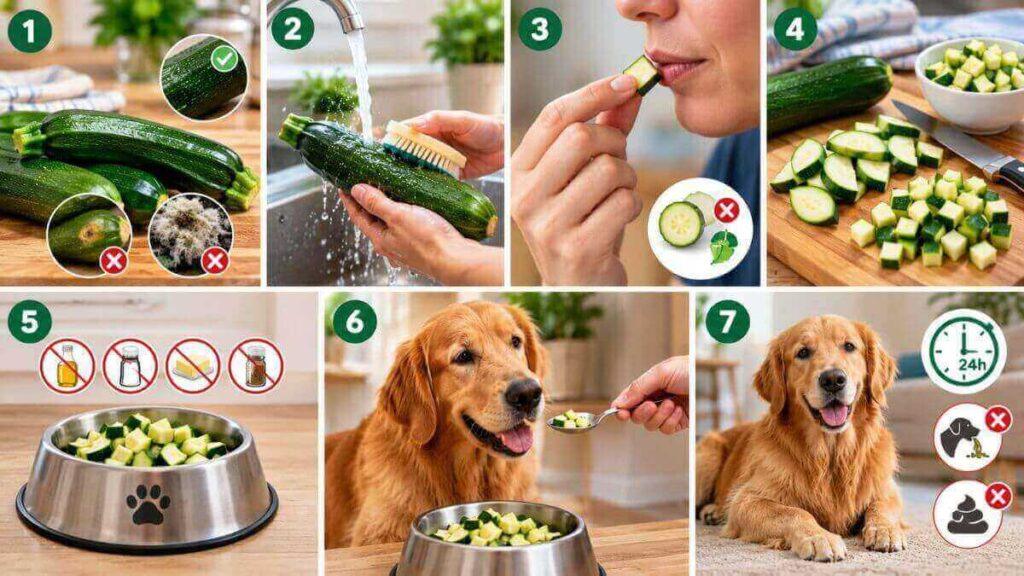
Those seven habits prevent most of the problems owners run into.
- Pick a firm zucchini with glossy skin and no soft spots or mold.
- Wash it under running water and scrub the skin, which can stay on.
- Taste a tiny raw piece yourself, especially if it is homegrown. Bitter means trash.
- Cut it into small cubes or thin half-moons, or grate it.
- Serve it plain, with no oil, salt, butter or seasoning.
- Start with a teaspoon or two, then build up slowly toward the portion in the table above.
- Watch your dog for 24 hours after the first servings, and stop if vomiting or diarrhea appear.
Once your dog tolerates it, grated zucchini works as a meal topper, and plain steamed zucchini fits well into a homemade dog food recipe alongside lean protein and rice.
When to ask your vet before feeding zucchini
Ask your vet first if your dog eats a prescription diet, has kidney or heart disease, has had pancreatitis, has a sensitive stomach, is on a food allergy trial, or is a puppy. Even a gentle vegetable can upset a carefully planned diet.
Kidney and heart diets control minerals such as potassium, and zucchini adds some. Pancreatitis diets are low in fat, and plain zucchini is too, but your vet should approve anything added to a therapeutic plan. During an elimination trial, a single outside food can undo weeks of work.
Zucchini vs other dog-safe vegetables
Zucchini is one of the lowest-calorie vegetables you can give a dog, close to cucumber and below green beans, carrots and sweet potato. That makes it a strong pick for weight control, while denser vegetables such as sweet potato suit active dogs better.
| Vegetable (raw) | Calories per 100 g | Notes for dogs |
|---|---|---|
| Zucchini | 17 | Mild, watery and easy to portion |
| Cucumber | 15 | Similar crunch with even more water |
| Green beans | 31 | A popular low-calorie bowl filler |
| Broccoli | 34 | Small amounts only, since large servings can upset the gut |
| Carrots | 41 | Crunchy, cut small to avoid choking |
| Butternut squash | 45 | Cook first, see our butternut squash guide |
| Sweet potato | 86 | Cook first, higher in sugar, see our sweet potato guide |
If your dog enjoys zucchini, other gentle options in our guides include okra, lettuce and cooked eggplant.
What to do if your dog ate a whole zucchini or zucchini bread
A dog that eats a whole plain zucchini usually needs watching for 24 hours for vomiting, diarrhea or signs of a blockage. Zucchini bread is different: check the ingredients, and call your vet or a poison hotline right away if it contained xylitol or raisins.
Signs of a blockage include repeated vomiting, a painful belly and refusing food. Difficulty breathing, facial swelling or collapse is an emergency. In the US, the ASPCA Animal Poison Control Center is on (888) 426-4435 and Pet Poison Helpline is on (855) 764-7661. Both may charge a consultation fee.
Watch a vet explain zucchini for dogs
In this short video from Pet Circle, veterinarian Dr Liv answers the question “can dogs eat zucchini?” and explains the benefits of this summer squash. It is a quick way to hear the basics from a vet before you offer your dog a first taste.
Frequently asked questions about dogs and zucchini
Can dogs eat zucchini raw?
Yes, dogs can eat zucchini raw as long as it is washed and cut into small, bite-sized pieces. Raw zucchini has a mild crunch many dogs enjoy. If raw pieces cause gas or loose stools, switch to lightly steamed zucchini, which is gentler on digestion.
Can dogs eat zucchini skin?
Yes, zucchini skin is safe for dogs and holds much of the vegetable’s color and antioxidants. Wash it well to remove dirt and residue. Peel it only if your dog has a sensitive stomach, since the skin is the toughest part to digest.
Can dogs eat zucchini seeds?
Yes. The seeds in a normal zucchini are small and soft, so dogs can eat them along with the flesh. Very large, overgrown zucchini have tougher seeds, and it is easier to scoop those out before cutting the flesh into small pieces.
Can puppies eat zucchini?
Puppies can have small amounts of plain, cooked zucchini once they are eating solid food well. Soft, steamed pieces are easiest for young teeth and tummies. Keep portions tiny, because a growing puppy needs nearly all of its calories from complete puppy food.
Can dogs eat zucchini every day?
Healthy adult dogs can eat a small portion of plain zucchini every day if it agrees with them. Keep it within the 10% treat allowance, watch the stools, and rotate with other vegetables so zucchini adds variety instead of replacing balanced dog food.
Can dogs eat zucchini bread?
No, it is best not to share zucchini bread. It is high in sugar and fat, and recipes may contain xylitol, raisins or nuts that are harmful to dogs. A crumb without those ingredients is unlikely to cause harm, but it offers no benefit.
Is zucchini good for dogs with diarrhea?
Zucchini is not a treatment for diarrhea, and extra fiber can make loose stools worse in some dogs. Wait until your dog’s stools are back to normal before offering it. For ongoing diarrhea, vomiting or blood in the stool, contact your vet.
Can dogs eat zucchini noodles?
Yes, plain zucchini noodles, often called zoodles, are fine for dogs when chopped into short pieces so long strands do not tangle or cause choking. Zoodles served with pesto, garlic sauce, cheese or tomato-based pasta sauce should not be shared.
Can dogs eat zucchini plants, leaves and flowers?
Zucchini leaves, stems and flowers are not toxic to dogs, according to the AKC. The leaves have prickly hairs that may irritate the mouth, and eating a lot of any plant can cause vomiting. Check the garden for slug pellets, fertilizer and toxic plants.
Final verdict: is zucchini good for dogs?
Can dogs eat zucchini? Yes. Zucchini is good for most dogs as a low-calorie treat when it is plain, fresh, cut small and introduced slowly. It will not replace a complete diet or cure anything, but it rewards a dog without adding weight.
The trouble almost always starts in the kitchen rather than with the vegetable. Keep garlic, onion, butter, oil and salt away from your dog’s portion, skip zucchini bread, and taste homegrown zucchini for bitterness before you share it. Begin with a spoonful and give the gut a few days to adjust. If your dog has kidney disease, pancreatitis or a prescription diet, ask your vet first. For most other dogs, a few cubes set aside while you cook is one of the simplest healthy habits you can add to the routine.
This article is for general information and does not replace advice from your own veterinarian.
1 thought on “Can dogs eat zucchini? Vet-backed benefits, safe portions by dog size, raw vs cooked tips and the risks most owners miss”