

Quick answer: Can dogs eat cat food? Yes, a small amount is safe for most healthy dogs since it is not toxic. It should not become a regular meal. Cat food carries more fat, protein and calories than dogs need, which can lead to weight gain and, in some dogs, pancreatitis.
If you are asking can dogs eat cat food because your dog just emptied the cat’s bowl, you probably don’t need to rush to the vet. Watch them for a day or two and skip their next treat. Call your vet now if your dog has had pancreatitis, is on a prescription diet, or is a small dog that ate a lot.
Why dogs love cat food so much
Quick answer: Dogs love cat food because it smells and tastes richer than their own. Cat food is built for obligate carnivores, so it usually holds more animal protein and fat, and both carry strong aromas. Wet cat food is more tempting, and cats often leave half-eaten bowls out all day.
Dogs pick food mostly by nose, and meat protein and fat are exactly what they are wired to go after. Put a bowl of wet cat food at nose height and most dogs will not think twice.
Feeding habits make it worse. Many cats graze, eating a little at a time and walking away from a half-full bowl. Dogs eat everything at once. That leftover bowl on the kitchen floor looks like an open buffet to a Labrador or a Beagle.
Can dogs eat cat food as a regular meal? How the two foods differ
Quick answer: Dogs should not eat cat food regularly because it is made to a different nutritional standard. AAFCO sets a minimum of 26% protein and 9% fat for adult cat food, compared with 18% protein and 5.5% fat for adult dog food, both on a dry matter basis.
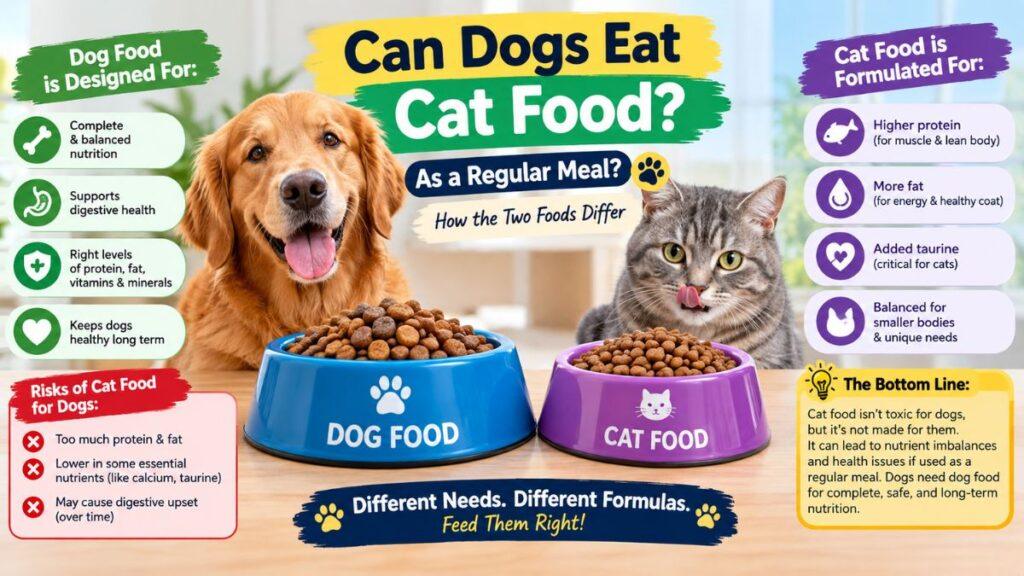
Dog food and cat food often share ingredients and look almost the same in the bowl. The balance is what changes. Dogs are omnivores and do well on a mix of animal and plant ingredients. Cats are obligate carnivores, and several of their essential nutrients come ready-made only in animal tissue, so their food is built to higher minimums across the board.
| Nutrient (dry matter basis) | Adult dog minimum | Adult cat minimum |
| Crude protein | 18% | 26% |
| Crude fat | 5.5% | 9% |
| Taurine | Not required (dogs make their own) | Required |
| Preformed vitamin A | Not required (dogs convert beta-carotene) | Required |
| Arachidonic acid | Not required | Required |
Source: AAFCO Dog and Cat Food Nutrient Profiles.
Those figures are minimums. Plenty of cat foods sit well above them, so a dog eating cat food takes in more protein, fat and calories per bite than it needs. Vitamins follow the same pattern. Because cats cannot convert beta-carotene, cat food contains preformed vitamin A, and many recipes also carry more vitamin D than dog food. That suits a cat. Eaten every day by a dog, it adds up to more than the body needs. This is why the answer to can dogs eat cat food changes from yes to no once it becomes a habit.
You will also see claims that cat food contains no plants at all. Most commercial cat foods include rice, peas or other plant ingredients. What sets them apart is how rich the overall recipe is and which species it was designed for.
What happens if a dog eats cat food once
Quick answer: Usually nothing serious. Most healthy adult dogs that eat cat food once have no symptoms or a mild stomach upset, such as soft stool, gas or one bout of vomiting. These signs tend to appear within 12 to 24 hours and settle on their own within a day.
After the raid, give fresh water. Feed the normal meal at the usual time, or a slightly smaller one if your dog ate a lot. Skip treats and table scraps for a day, because extra fat on top of the cat food is what usually tips a sensitive stomach over. Then keep an eye on things for two to three days.
Don’t try to make your dog vomit at home. Cat food is not a poison, and inducing vomiting without a vet’s advice has risks of its own.
How much cat food is too much for a dog?
Quick answer: There is no official safe amount, because it depends on your dog’s size. A few kibbles mean little to any dog. Concern rises when the cat food adds up to a large share of your dog’s normal daily food, especially wet food eaten by a small breed.
It helps to think in proportions. A German Shepherd who finishes a half-full bowl of dry cat food has had a snack compared with his usual daily ration. A Chihuahua who eats a whole 85 g pouch of wet cat food has eaten something close to a full meal of very rich food, and that is where stomach upset and pancreatitis risk start to climb.
Three things push the risk up: the amount is a big part of the dog’s normal daily food, the food was wet or very fatty, or it keeps happening. Small dogs hit that line much sooner, simply because a cat-sized portion is close to their own.
Symptoms to watch for and when to call the vet
Quick answer: Watch for signs of pancreatitis, the most serious risk after a big cat food meal. Call your vet the same day for repeated vomiting, belly pain, a hunched posture, refusing food, weakness, bloody or lasting diarrhea, or fever. Signs can appear hours to a few days later.
Pancreatitis is inflammation of the pancreas, often set off by a high-fat meal. Call your vet the same day if you notice any of these seven warning signs:
- Repeated vomiting, especially more than two or three times
- A painful, tense or swollen belly
- A hunched back or the “praying” position, with front legs down and rear end up
- Refusing food
- Unusual tiredness or weakness
- Diarrhea that lasts more than a day or contains blood
- Fever
One loose stool in a dog that is bright and eating is not an emergency. A dog that keeps vomiting and doesn’t want to move is. Pancreatitis can get serious fast and early treatment helps, so call if you are unsure.
Now and then the trouble comes from an ingredient rather than the fat. A dog with a food allergy may react to fish or chicken in the cat food with facial swelling, hives, intense itching or trouble breathing. Swelling or breathing trouble needs a vet straight away.
Long-term risks when dogs eat cat food regularly
Quick answer: Regular cat food causes more harm than a one-off raid. Over weeks and months, the extra fat and calories lead to weight gain, raise the chance of pancreatitis, and can keep a dog’s stomach unsettled. Dogs that fill up on it also eat less of their balanced food.
Weight gain comes first for most dogs. Once protein needs are covered, the body stores the extra as fat. VCA Animal Hospitals notes that a healthy adult dog eating only cat food every day would likely end up obese. One Reddit user saw this play out: his dog kept getting heavier on an unchanged diet, and he was close to booking a vet visit when he caught her squeezing out through the cat flap he had fitted to protect the cat’s food.
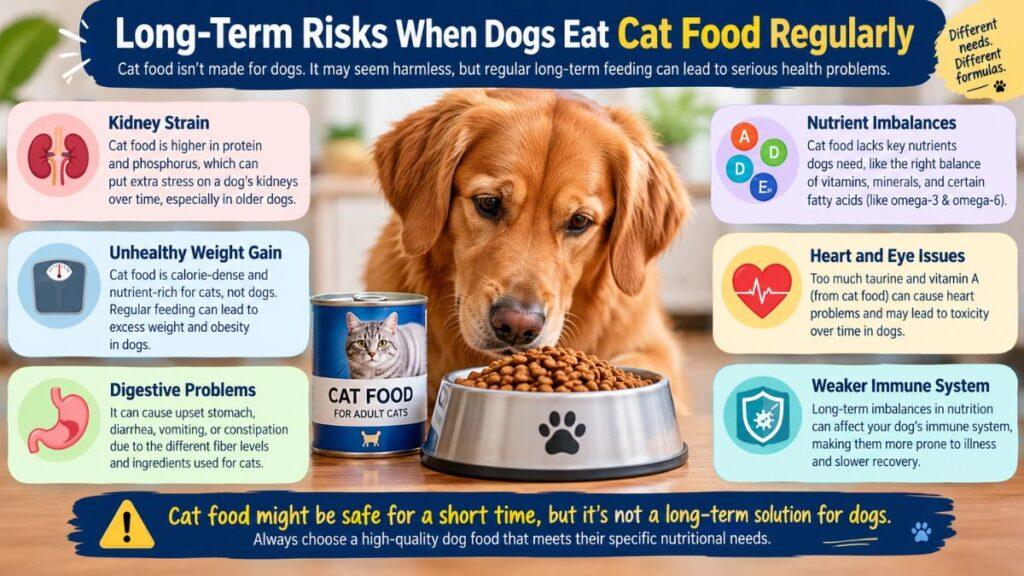
Pancreatitis risk grows with repeated fatty meals, particularly in overweight dogs and breeds prone to it, such as Miniature Schnauzers. Some dogs also develop ongoing soft stools or on-and-off vomiting with regular access to richer food.
Kidneys come up a lot too. Many articles say the protein in cat food damages a dog’s kidneys. In a healthy adult dog, extra dietary protein is not considered a cause of kidney damage. For dogs already living with kidney or liver disease, it is a different story: vets control protein and phosphorus on purpose, and cat food works against that treatment.
Dogs that should never eat cat food
Quick answer: Some dogs face real risk from even one bowl of cat food. These include dogs with a history of pancreatitis, dogs on low-fat, kidney, liver or elimination diets, overweight dogs, puppies and very small breeds. If one of these dogs eats cat food, call your vet.
Pancreatitis history is the biggest red flag, because one rich meal can bring on a relapse. Prescription kidney or liver diets exist to limit protein and minerals, and cat food undoes that. Elimination diets for food allergies can be set back by weeks if the cat food contains the protein under investigation. Puppies need a carefully balanced growth diet, with calcium and phosphorus especially important for large breeds. Overweight dogs and very small breeds have the least room for extra calories.
Is wet or dry cat food worse for dogs?
Quick answer: Both carry the same basic risks, but wet cat food is usually the bigger problem. It smells stronger, dogs eat it faster, and it can be richer in fat once you account for its water content. Kitten food is richer still, since it is made for growth.
Treat a raid on a kitten’s bowl more seriously than one on an adult cat’s. Kitten food packs extra calories, fat and protein to fuel growth, which makes it the richest version of an already rich food.
When can dogs eat cat food? Vet-approved exceptions
Quick answer: Dogs can eat cat food on purpose only in a few cases, and only with a vet’s guidance. Vets sometimes use small amounts to tempt a sick, underweight or elderly dog with a poor appetite. If dog food runs out, plain chicken and rice is a better stopgap.
A dog recovering from illness, one losing weight from cancer, or a senior dog that has gone off its food may respond to a spoonful of something strong-smelling. Many of these dogs also have conditions where fat and protein need careful control, which is why the vet should make the call.
For the ran-out-of-food night, one day of cat food won’t hurt most healthy adult dogs. Plain cooked chicken or lean turkey with plain rice, with no seasoning, onion or garlic, is gentler on the stomach. Buy dog food as soon as you can and switch back.
Why your dog only wants cat food
Quick answer: A dog that refuses its own food after tasting cat food usually has a preference problem. Cat food simply tastes better. Remove access to the cat bowl, offer your dog’s meal at set times, and take it away after 15 to 20 minutes. Most dogs adjust within days.
Giving in tends to make the standoff last longer. If your dog truly stops eating for more than a day or two, or starts losing weight, see your vet to rule out dental pain, nausea or another medical cause.
How to stop your dog eating cat food
Quick answer: Physical separation works better than training alone. Feed your cat somewhere high, give it a dog-free room behind a raised baby gate, or use a microchip feeder that opens only for the cat. Scheduled meals and a sealed food bin stop most raids for good.
Once you know the answer to can dogs eat cat food, the practical question is how to keep the two apart. These methods work in most multi-pet homes.
Feed the cat up high. Cats jump and most dogs can’t, so a counter, shelf, windowsill or sturdy cat tree platform works well. Tall dogs that reach counters will need another option.
Give the cat a dog-free room. A baby gate fitted a few inches off the floor lets a cat slip under or hop over. A door strap or stopper that holds the door open to cat width does the same job. Small dogs can follow a cat through a flap, as the Reddit dog did, so size the gap carefully.
Use a microchip feeder. It opens only for the pet it recognizes, so it works even when nobody is home. It costs more upfront and solves the problem completely.
Try a covered cat bowl. A hooded bowl with an opening sized for a cat’s head keeps most medium and large dogs out for very little money.
Store the bag properly. Plenty of dogs skip the bowl and rip straight into a bag left on the floor. A sealed bin or closed cupboard fixes that.
Switch to scheduled meals. Free-fed cats leave food out all day. Feeding both pets at set times in separate spots, and picking up leftovers afterwards, removes most of the temptation. Some owners feed the cat while the dog is out on a walk.
Train “leave it.” It won’t replace a barrier, but it helps when you catch your dog mid-approach.
Check the litter box too. Dogs that raid the cat bowl often raid the litter tray, and the same gates and high placement solve both.
Can cats eat dog food?
Quick answer: A cat can nibble dog food now and then, but it cannot live on it. Dog food is lower in protein and does not reliably supply taurine, preformed vitamin A or arachidonic acid. A cat fed dog food long term risks heart disease and blindness.
If your cat has been eating mostly from the dog’s bowl, switch back to a complete cat food and mention it at the next vet visit. The feeding setups above keep cats out of dog bowls too.
How we researched this article
Quick answer: This guide is based on published veterinary and nutrition sources, not guesswork. We compared the AAFCO nutrient profiles, the Merck Veterinary Manual, VCA Animal Hospitals and PetMD, checked what top-ranking articles missed, and read real owner discussions on Reddit to answer the questions people actually ask.
Written by Raza, pet food safety writer and editor. Fact-checked against the veterinary and nutrition sources listed below. Last updated September 2026.
We wanted to answer what people really want to know when they search can dogs eat cat food: whether a one-time raid is an emergency, how much is too much, and how to stop it. We update this page when AAFCO profiles or veterinary guidance change. This article is general information and does not replace advice from your own vet.
Sources:
- AAFCO Dog and Cat Food Nutrient Profiles
- Merck Veterinary Manual, Nutritional Requirements of Small Animals
- VCA Animal Hospitals, Feeding Multiple Pets
- PetMD, Can Dogs Eat Cat Food?
Can dogs eat cat food? Frequently asked questions
Quick answer: The short version: cat food is safe for dogs in small, occasional amounts and a poor choice as a regular meal. The answers below cover the questions dog owners search most, from puppies and wet food to emergencies, treats and the rare but real risk of pancreatitis.
Is cat food toxic to dogs?
No, cat food is not toxic to dogs, but it is too rich to feed regularly.
Can dogs eat cat food once?
Yes, most healthy adult dogs are fine after eating cat food once.
Can dogs eat cat food every day?
No, daily cat food leads to weight gain and raises pancreatitis risk.
Can a dog die from eating cat food?
It is very unlikely, though severe pancreatitis after a large amount can be life-threatening.
My dog ate a whole bowl of cat food. What should I do?
Watch for two to three days, skip treats, and call your vet if vomiting repeats or your dog seems in pain.
Can puppies eat cat food?
No, puppies need a balanced growth diet made for dogs.
Can dogs eat wet cat food?
A little is usually fine, but wet cat food is richer and more tempting than dry.
Can dogs eat cat food treats?
An occasional cat treat is fine, but it adds fat and calories just like cat food.
Can dogs eat cat food in an emergency?
One day is usually fine for a healthy adult dog, though plain chicken and rice is a better stopgap.
How long after eating cat food will a dog get sick?
Stomach upset usually shows within 12 to 24 hours, while pancreatitis can take a few days.
Can cat food cause pancreatitis in dogs?
Yes, especially large amounts, repeated meals, or dogs with a history of it.
The bottom line
Quick answer: Can dogs eat cat food? Yes, in small and occasional amounts, but it should never replace dog food. A stolen mouthful rarely causes more than a loose stool. Regular access is the real problem, bringing weight gain and a higher chance of pancreatitis, especially in small dogs.
If your dog just got into the cat’s bowl, stay calm, skip treats and watch for repeated vomiting, belly pain or lethargy over the next few days. Call your vet sooner if your dog has had pancreatitis, is on a prescription or elimination diet, or is a puppy.
Dogs are not being naughty when they do this. They are following their nose. For the long run, a barrier beats willpower: feed your cat where your dog can’t reach, move to set mealtimes, or try a microchip feeder, and most dogs lose interest once the food stops being available.