

Quick answer: Can dogs eat pizza crust? A small piece of plain, fully baked pizza crust will not poison a healthy adult dog. It is bread with salt and oil, nutritionally useless but not toxic. The three situations that change the answer are raw pizza dough, which is a genuine emergency, garlic or onion flavored pizza crust, and a large amount relative to your dog’s body weight. Below is how much is actually too much, what symptoms to watch for and when, and the point at which you stop watching and call your vet.
Can dogs eat pizza crust safely?
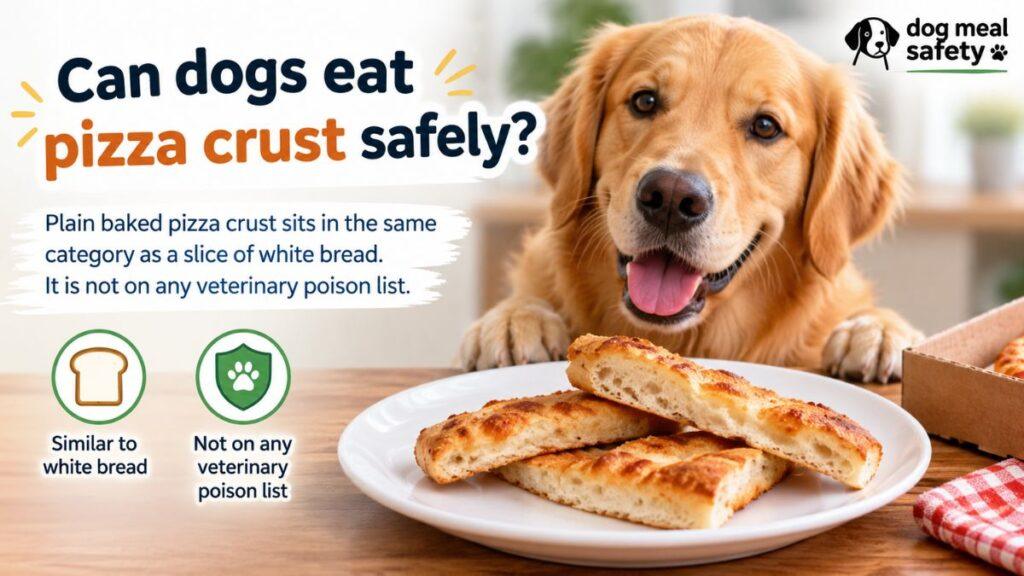
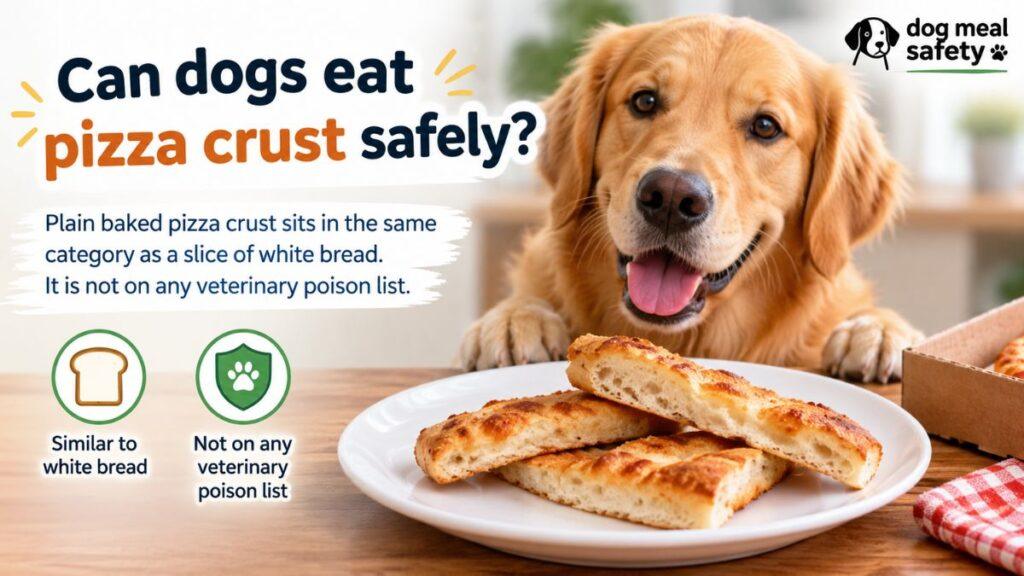
Plain baked pizza crust sits in the same category as a slice of white bread. It is not on any veterinary poison list. Baking kills the yeast, so the fermentation risk that makes raw dough dangerous is gone by the time the pizza reaches your table. If your dog swiped one crust off a plate and is a healthy adult of average size, the most likely outcome is nothing at all.
That said, “not toxic” and “fine to feed” are two different things. Pizza crust delivers refined carbohydrate, sodium, and fat, and delivers none of the protein, fiber, or micronutrients a dog needs. The Association of American Feed Control Officials sets a minimum sodium level for adult dog food of roughly 0.3 percent on a dry matter basis, and commercial food already meets it. Anything you add on top is surplus. In a dog with heart disease, kidney disease, or a weight problem, that surplus matters more than it does in a healthy Labrador.
The bigger issue is what the crust touched. A crust pulled from a garlic butter pizza, or one soaked in sauce at the base, is not the same food as a plain crust from a cheese pizza. The same logic applies to cheese and tomatoes, which behave very differently on their own than they do baked into a takeaway pizza.
What is actually in pizza crust
Standard pizza dough is flour, water, yeast, salt, sugar, and olive oil. Chain pizzerias add more. Domino’s, Pizza Hut, and Papa John’s all brush or season the outer edge of certain crust styles with garlic oil, butter blends, or seasoning mixes containing garlic powder and onion powder. Stuffed crust adds cheese. Flavored crusts add parmesan, herbs, or chili flakes.
A rough breakdown of what one outer edge of pizza crust from a medium slice contributes:
| Component | Typical amount per crust edge | Why it matters |
| Calories | 40 to 60 kcal | Counts against your dog’s daily treat allowance |
| Sodium | 100 to 200 mg | Can exceed a small dog’s entire daily requirement |
| Fat | 1 to 3 g plain, higher with butter or cheese stuffing | Fat load is the pancreatitis trigger, not the carbs |
| Garlic or onion | Trace to moderate, depending on crust style | Dose dependent, and cumulative over repeated feeding |
Compare that sodium figure to what a dog actually needs. The National Research Council formula for daily sodium requirement is body weight in kilograms raised to the power of 0.75, multiplied by 26.2 mg.
| Dog weight | Daily sodium requirement | One crust edge as a share of it |
| 10 lb (4.5 kg) | about 81 mg | More than a full day’s worth |
| 20 lb (9.1 kg) | about 137 mg | Roughly a full day’s worth |
| 30 lb (13.6 kg) | about 185 mg | Over half a day |
| 50 lb (22.7 kg) | about 272 mg | About half a day |
| 70 lb (31.8 kg) | about 351 mg | About a third of a day |
| 90 lb (40.8 kg) | about 423 mg | About a quarter of a day |
This is where most articles stop being useful. A single piece of pizza crust does not cause salt poisoning in any of these dogs. Serious salt toxicity signs generally require around 2 grams of salt per kilogram of body weight, which is far more than pizza can deliver. What the table shows is the weight difference. The same piece of crust that is trivial for a Great Dane is a meaningful sodium load for a Chihuahua.
How much pizza crust is too much for dogs
Use two limits. The first is the standard treat rule, which caps treats and table food at 10 percent of daily calories. The second is a practical volume threshold at which you stop guessing and phone someone.
| Dog weight | Daily treat allowance | Plain pizza crust that fits inside it | Amount that warrants a vet call |
| 10 lb | about 35 kcal | Half a crust edge | More than one full slice |
| 20 lb | about 55 kcal | One small crust edge | More than two slices |
| 30 lb | about 79 kcal | One crust edge | More than two to three slices |
| 50 lb | about 116 kcal | Two crust edges | More than four slices |
| 70 lb | about 150 kcal | Two to three crust edges | More than five slices, or any whole pizza |
| 90 lb | about 180 kcal | Three crust edges | Any whole pizza |
Those right hand figures are triage thresholds, not poison doses. A 30 pound dog that ate three slices is not dying, but the fat and salt load is now high enough that vomiting, diarrhea, or pancreatitis becomes plausible rather than unlikely, and a vet should know about it.
Two adjustments. Halve the threshold if the pizza crust came with toppings still attached, because pepperoni, sausage, and cheese carry most of the fat. Halve it again for a dog with a history of pancreatitis, and skip straight to calling.
Raw pizza dough is a veterinary emergency
This is the section most competing articles either skip or bury, and it is the only part of the pizza crust question that can kill a dog.
Raw yeast dough behaves differently in a stomach than it does on a counter. The stomach is warm, moist, and dark, which is close to ideal for yeast. The Merck Veterinary Manual describes two hazards running at once. The dough keeps expanding, causing gastric distension that can progress to gastric dilatation and volvulus, where the stomach twists and cuts off its own blood supply. At the same time, the yeast ferments the sugars in the dough into carbon dioxide and ethanol, and that ethanol is absorbed into the bloodstream and causes alcohol poisoning.
Signs of ethanol effect usually appear within one to six hours and look like drunkenness: wobbling, disorientation, lethargy, low body temperature, and in severe cases seizures or collapse. Signs of bloat include a visibly swollen abdomen, restlessness, and retching that brings nothing up. Retching without producing anything is the sign that should get you in the car immediately.
If your dog ate raw dough, do not wait for symptoms and do not try to induce vomiting at home. Call your vet, an emergency clinic, or the ASPCA Animal Poison Control Center at 888-426-4435. Deep chested breeds such as Great Danes, German Shepherds, Standard Poodles, and Weimaraners carry a higher baseline bloat risk and should be treated as urgent regardless of quantity.
Baked pizza crust does not carry this risk. Heat kills the yeast during baking, and dead yeast cannot ferment.
Not all pizza crust carries the same risk
Ranking the common styles from least to most concerning:
Plain thin crust is the lowest risk. It is the smallest amount of bread and usually the least oil.
Regular hand tossed crust is slightly higher, mostly on calories.
Deep dish and pan crust carry noticeably more oil, since the pan is often greased heavily. Fat load goes up.
Garlic butter and garlic parmesan crusts move into the caution category. The garlic content in the brushed oil is usually well under a toxic dose for a medium or large dog, but it is not zero, and allium exposure adds up when it happens weekly.
Stuffed crust is the one to refuse outright. The cheese inside raises both fat and salt sharply, and lactose intolerant dogs will react to the dairy.
Breadsticks and so called pizza bones are the same dough with extra seasoning and dipping sauce, so treat them as flavored crust rather than plain.
Cauliflower and gluten free pizza crust are not automatically safer. They still contain salt and oil, and some brands include onion or garlic powder in the binder.
Garlic and onion in pizza crust: the real numbers
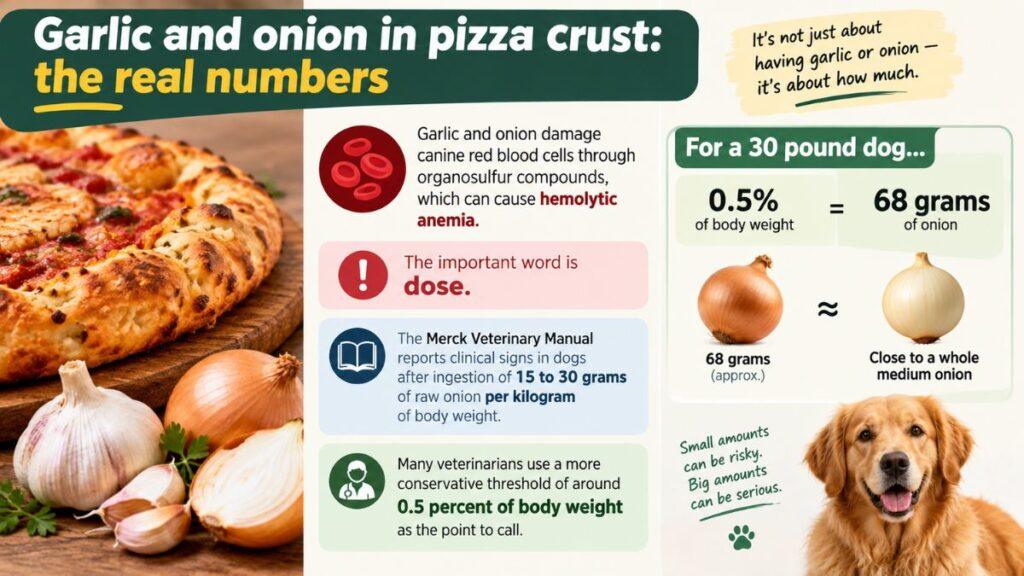
Garlic and onion damage canine red blood cells through organosulfur compounds, which can cause hemolytic anemia. The important word is dose. The Merck Veterinary Manual reports clinical signs in dogs after ingestion of 15 to 30 grams of raw onion per kilogram of body weight, and many veterinarians use a more conservative threshold of around 0.5 percent of body weight as the point to call. For a 30 pound dog, 0.5 percent of body weight is roughly 68 grams of onion, which is close to a whole medium onion.
A garlic brushed pizza crust does not contain anything near that. Which means a dog that ate one garlic butter crust is almost certainly fine, and articles that imply otherwise are creating panic without cause.
What deserves real attention is two things. Garlic is more concentrated per gram than onion, so the gap closes faster with garlic. And powdered forms are more concentrated than fresh, which is exactly what seasoning blends use. A small dog fed garlic crust regularly is accumulating exposure in a way that a one off incident does not.
Anemia from allium exposure is also delayed. Symptoms typically appear one to several days later, not immediately, and include pale gums, weakness, rapid breathing, and dark or reddish urine. If you see those, that is a vet visit even if the pizza was days ago.
What to do if your dog just ate pizza crust
Work through this in order.
First, establish whether the dough was raw or baked. Raw means call now. Baked means continue.
Second, weigh the amount against the tables above. One crust edge for a medium dog needs no action beyond normal observation.
Third, check what was on it. Onion, garlic seasoning, or attached toppings raise the concern level.
Fourth, do not induce vomiting unless a veterinary professional tells you to. Hydrogen peroxide at home carries its own risks, including aspiration and stomach irritation.
Fifth, give free access to fresh water and skip the next meal if your dog has already had a large calorie load.
Sixth, watch across the correct time windows rather than staring for ten minutes and assuming all is well.
| Time since eating | What can appear | What to do |
| 0 to 2 hours | Raw dough only: wobbliness, swollen belly, unproductive retching | Emergency clinic immediately |
| 2 to 12 hours | Vomiting, loose stool, gas, excessive thirst | Monitor, withhold food, keep water available |
| 12 to 72 hours | Repeated vomiting, hunched posture, abdominal pain, refusing food, lethargy | Suspect pancreatitis, call your vet |
| 1 to 5 days | Pale gums, weakness, dark urine, fast breathing | Suspect allium related anemia, call your vet |
The 12 to 72 hour window is the one most owners miss. Pancreatitis from a high fat meal does not usually show up the same evening, so a dog that seemed fine at bedtime can be genuinely unwell two days later.
Dogs that should never eat pizza crust
Puppies under twelve months, because their digestive systems handle sudden rich food poorly and the sodium load is large relative to their size.
Any dog with a history of pancreatitis, where a single fatty meal can trigger a relapse.
Dogs with heart disease, kidney disease, or diagnosed hypertension, where sodium restriction is part of the treatment plan.
Diabetic dogs, because refined carbohydrate disrupts glucose control.
Overweight dogs, since the calories have nowhere useful to go.
Dogs with wheat or gluten sensitivity, which shows up as itching, ear infections, and chronic soft stool rather than dramatic illness.
Deep chested breeds, for the bloat risk if raw dough is ever within reach.
Better alternatives to pizza crust for dogs
If the goal is letting your dog share pizza night, the dog can have their own version. Plain cooked chicken, a slice of plain cooked sweet potato, or carrot sticks all work as the sharing gesture without the salt.
A homemade dog pizza is straightforward. Flatten a base of mashed sweet potato or plain oat flour dough with no salt, bake it until firm, then top it with plain shredded chicken, a spoonful of unsweetened pumpkin puree, and a light dusting of plain mozzarella if your dog tolerates dairy. No tomato sauce, no seasoning, no garlic. Bake at 180C or 350F for about 15 minutes and let it cool fully.
Keep it inside the 10 percent treat allowance from the table above. If you want more ideas in the same category, our guide to safe bread for dogs covers the same trade-offs without the takeaway seasoning.
How to stop your dog eating pizza crust again
Most pizza incidents are counter surfing or an unattended box, not deliberate feeding. Move the box to the top of the fridge or inside a closed microwave rather than the counter edge. Use a lidded, weighted bin, because the bin is where the crusts end up. Teach and maintain a reliable “leave it”. If you let dough rise at home, do it inside a closed oven or on a shelf your dog cannot reach, since that is the version that actually sends dogs to hospital.
Can dogs eat pizza crust? Common questions
Can dogs eat pizza crust every day?
No, daily pizza crust adds salt and empty calories with no nutritional return.
Can puppies eat pizza crust?
No, their digestive systems and body size make even small amounts a poor idea.
My dog ate a whole pizza. Is that an emergency?
Call your vet the same day, especially if the dog is under 40 pounds or the pizza had onion or garlic toppings.
Is pizza crust toxic to dogs?
Plain baked pizza crust is not toxic, but it has no nutritional value and adds significant salt.
Can dogs eat garlic bread crust?
No, garlic bread carries a far higher garlic concentration than a brushed pizza edge.
Can dogs eat stuffed pizza crust?
Avoid it, since the cheese inside raises fat and salt well above plain crust.
How long until symptoms show?
Digestive upset within 12 hours, pancreatitis within 12 to 72 hours, anemia from allium after one to five days.
Should I make my dog vomit?
Not without veterinary instruction, because home induced vomiting carries its own risks.
Can dogs eat cauliflower pizza crust?
Not automatically, since many versions still contain salt, oil, and onion or garlic powder.
Can dogs eat pizza crust with sauce on it?
Tomato itself is fine, but commercial pizza sauce usually contains garlic, onion, and added sugar.
The bottom line on pizza crust for dogs
So, can dogs eat pizza crust? Plain baked pizza crust is not dangerous for a healthy adult dog in small amounts, and one stolen crust is not a reason to panic. It also has nothing to offer nutritionally, and for a small dog a single crust edge can carry a full day’s worth of sodium. The real risks are narrower and more specific than most warnings suggest: raw yeast dough, which causes stomach expansion and alcohol poisoning and needs emergency treatment, fatty toppings that can trigger pancreatitis a day or two later, and repeated garlic exposure in a small dog over time.
Use your dog’s weight as the deciding factor rather than a general rule, and use the right observation window rather than the first ten minutes. If your dog ate raw dough, or ate a large amount of pizza crust relative to their size, call your veterinarian or the ASPCA Animal Poison Control Center at 888-426-4435. For everything else, offer water, skip the next meal, and give them something made for dogs next pizza night.
This article is for general information and does not replace veterinary advice. If your dog is unwell, contact your veterinarian.